
Return to Running Postpartum: Journal Entry #1

Cleared at 6 Weeks Postpartum—But Am I Ready to Run?

Mom of 3 and TRR Coach Amanda Hamilton is documenting her return to running postpartum journey here on the Team RunRun blog. This is journal entry #1 in a multi-part series.

TRR Coach Amanda Hamilton next to a running track with her newborn daughter.

Before we dive in, keep in mind that neither Amanda Hamilton nor the TRR team are medical professionals. There exists a wide range of conflicting advice concerning returning to running, so always consult your own providers. The article below is just meant to share one runner’s experience. 

6 Weeks Postpartum (and Beyond)

September 4th marks 6.5 weeks since I gave birth to my third daughter. The topic of returning to running postpartum is on my mind. Typically, your provider (obstetrician or midwife) will see you at the 6-week mark to assess your physical readiness to exercise. Having recently had my 6-week appointment and passing all their checks, I am now “medically cleared” to do any movement/workouts that I feel comfortable with. But what does that really mean for me? Am I ready to run? 

Not quite. This will be my third time returning to running after a baby, and I’ve learned a lot from my past two experiences. While recommendations and timelines vary widely, most pelvic floor physical therapists — whom I would consider to be the experts in this area — recommend waiting until the 12-week mark before returning to running. 

Pelvic Floor Physical Therapy: A Must for New Moms

In many European countries, pelvic floor physical therapy is the gold standard in postpartum recovery and included in the typical care plan. Unfortunately, in the United States, this care is less common, and a lot of women don’t know they even exists. Once you know, however, you can search for a local provider, and try to prioritize seeing someone in person. For some, you will have to pay out-of-pocket, whereas others take insurance (and you may only have a small co-payment). Fortunately, I found out about pelvic floor physical therapy (PT) after my first baby. As a result, I’ve been seeing a wonderful physical therapist on and off since then.  

Expecting and Empowered's Instagram page with pelvic floor physical therapy resources.
Expecting and Empowered’s Instagram page with pelvic floor physical therapy resources.

Virtual Pelvic Floor Physical Therapy Resources

If you are unable to get in to see someone in person, here are my favorite evidence-based, pelvic floor resources: 

  1. Expecting and Empowered (E&E): “Two sisters on a mission to empower all women to thrive both physically and mentally throughout their pregnancy and postpartum journeys.” One of the sisters/founders is a pelvic floor physical therapist, and applied her expertise to their at-home workout app. The app includes a test that assesses your readiness to return to running. I utilized this test after my first baby and found it very useful. In addition to the app (which you have to pay for, though they do offer a free 7-day trial), E&E has a lot of free resources available on their Instagram account.
  1. Dr. Mae Hughes: Dr. Hughes is a Doctor of Physical Therapy and certified pelvic floor specialist based in Nashville, Tennessee. She is another great follow on Instagram, with a lot of helpful videos, FAQs, etc. Similar to E&E, Dr. Hughes has created her own “Run Readiness Checklist”. She will send it to you via email for free.  

As both Expecting & Empowered and Dr. Mae Hughes will frequently remind their followers, clinical expertise and scientific evidence indicate best outcomes for women who wait at least 12 weeks post-baby before returning to running. This 2022 article from the International Journal of Sports Physical Therapy entitled “Maximizing Recovery in the Postpartum Period: A Timeline for Rehabilitation from Pregnancy through Return to Sport”  is frequently cited by PTs and worth a read in its entirety if you have a deeper interest in this subject area. The article includes helpful tables with week-by-week benchmarks.  

Waiting to Run Postpartum: Coping Strategies for Impatient Runners

Coach Amanda and her family at the beach.

If you thought waiting until your 6-week check up to return to running postpartum was long enough, a 12-week wait is going to feel endless. The good news is that no one is advocating for 12 weeks of rest. Everyone is different, but I can share what has been helping me during this period.  

Physically, two of the best things for me have been diaphragmatic breathing and walking. I have also prioritized recovery services like massage and sauna. Mentally, the wait to return to running can be even tougher! I have maintained excitement, optimism, and motivation by ensuring I have specific things to look forward to when I return. For me, this has meant planning my upcoming race calendar and signing up for my next few races (a 5K in January, 10K in February, and a half marathon in late April).  In addition, I bought some new running apparel that I am holding on to for my return, and I’m looking forward to wearing! Lastly, I’ve been curating a “return to running” Spotify playlist over the past few weeks. (I’m accepting song suggestions if anyone would like to contribute!) 

I will be continuing to document my return to running postpartum in these journal entries. Expect more from me around the 12-week mark.  Thanks for following along!

Amanda Hamilton is a coach with Team RunRun based near Los Angeles, California. She knows what it’s like balancing a family, returning to running, working and running, and she’s excited to help both beginner and intermediate runners achieve their goals.

A Parent’s Guide to Cross Country Running

Understanding cross country, and how to best support a young runner.

So, your high schooler just signed up for cross country, and now you’re wondering what that even means? Or maybe you know what cross country is and you’re questioning why anyone would ever choose to participate in this sport? Well, you’ve landed in the right place. In this guide, I’m going to share everything a parent needs to know to be supportive of their athlete, alongside why I think this sport is transformative for a high schooler’s growth and character development. (Note, for brevity’s sake I’ve used “high schooler”, but this could easily be replaced with “middle schooler”.)

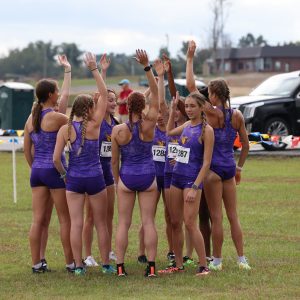
San Marcos High School girls' cross country team's pre-race huddle.
San Marcos High School girls’ cross country team‘s pre-race huddle.

How to Best Care for Your Young Runner

Top 4 things to know about your young cross country runner:

1. They are going to be HUNGRY!

They are going to be HUNGRY. Parents, be ready to increase your grocery budget, because a cross country runner needs to be fed a lot! Especially a high school runner, as they are exercising more than they have in the past, and at the same time their bodies are growing and continuing to develop.

  1. Eating enough to fuel the work they are doing is more important than what they are eating.That said, well balanced meals are best with plenty of protein, fats, and lots of carbs.
  2. Snacks! Things like granola bars, protein bars, bananas, peanut butter crackers, apples, etc, are easy for your athlete to take with them to school. Let them snack throughout the day in addition to eating their breakfast, lunch, and dinner. A well-fueled athlete is a healthy and happy athlete.
  3. Timing is important here too. A big meal immediately before a workout or race is not ideal, but having a meal 2-3 hours before is a great idea. Then, a lighter, carbohydrate-based snack closer to their workout or race helps to keep their energy up. After a run, it is important to have a high protein snack within 30 minutes (if possible) to kickstart the recovery process.
Young athletes running a hot cross country race.

2. They are going to be SWEATY.

Even though cross country is a fall sport, expect the cross country season to still be a hot season! Especially if your athlete is running through the summer. 

  1. Laundry! Parents, prepare to have the washer and dryer running more often this fall! If they don’t already, be sure to teach those teens to take care of their own laundry (you’ll thank me for this later). 
  2. Hydrating with electrolytes to replenish sweat losses. I require my high school athlete to bring a 30oz water bottle with them to school and practice. They should be filling that bottle multiple times a day as they stay hydrated. In addition to water, purchase some electrolyte drink mixes or tablets to help them replenish what they’ve lost at practice. You can find some helpful suggestions in “Electrolytes for Runners“.

3. They are going to be TIRED.

Sleep is the number one recovery tool any runner needs to master–easier said than done in high school! Encourage them to be diligent about completing their homework with enough time to wind down and relax before bed. Underscore the importance of sleep–ideally 8-10 hours per night–for performance and injury free running.

4. They are going to be SORE, especially at first!

Being able to distinguish soreness from injury is an important skill to develop. Here is a general rule of thumb that I share with my team: if the feeling is bilateral (both sides of the body) it is likely soreness, but if it is unilateral (one side of the body) it could be an indicator of something worse.

Notes on running shoes for your young runner:

  1. Proper, quality footwear for daily training can reduce the likelihood of young runners developing injuries. I would suggest going to a local run specialty store and getting fitted for a shoe. If there is not a store near you, purchasing shoes from runningwarehouse.com is a great option. Be sure to look for a road running daily trainer (yep, even if they’re running on grass), and replace every 300-400 miles, or approximately every 3 months. When one of my athletes complains of lower leg or foot pain, the first question I ask them is how old are your shoes: old shoes are often a major contributing factor.
  2. Specific racing shoes are not a requirement but they can be fun! Depending on the courses that your runner will compete on, purchasing cross country spikes or flats might be appropriate: ask their coach for recommendations. Racing shoes should be used only for racing or a few key workouts; a supportive daily trainer is still a must-have.
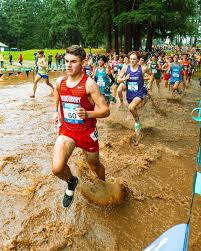
High school runners during a muddy cross country race.

Back to the Basics: Cross Country 101

Now that we’ve gotten the critical information out there, let’s dive into the sport of cross country more deeply. Afterall, understanding your child’s sport is crucial to being able to connect with and support them best. 

What is Cross Country?

Cross country is an endurance running sport where teams compete on courses that have varied terrain: grass, dirt, asphalt, gravel, uphill, downhill, and more. For high school cross country, courses are typically 5 kilometers or 3 miles long, while in middle school, athletes run shorter distances, such as 1 mile or 2 kilometers.

Scoring Cross Country as a Team Sport

San Marcos High School girls' cross country team.
San Marcos High School girls’ cross country team.

Compared to other forms of distance running, cross country is the closest to a team sport. Generally, a scoring cross country team consists of the team’s first 7 finishers in a given race. The overall finishing places of the top 5 athletes on a team are added up to total the team’s score. The team with the lowest score wins. Athletes finishing 6th and 7th for their team can be thought of as the defense. They add to another team’s score by finishing in front of a runner in their top 5 and are scored in the case of a tie. Athletes who finish 8th and up for their team do not factor in the scoring for that race, even if they finish in front of another team’s 5th runner, and their place will be skipped in the scoring.

Cross Country Conversations with Your Athlete

Every cross country course is different, so when having a conversation with your runner about their race it’s best to ask them open-ended questions like, “how did you feel?”, and “what were you thinking about in the last mile?”. Far too often, athletes get asked, “what was your time?” and that information isn’t really relevant to their performance in a cross country race. And don’t worry, if they ran a personal best time they will let you know without being asked!

Benefits of Cross Country for Young Runners

  1. Inclusivity

I have seen it time and again, students who don’t feel they “fit in” in other sports find their way to cross country and have a transformative experience. Cross country is inherently inclusive as, unlike the majority of other sports, it is often a “no-cuts” sport. All are welcome to join regardless of ability, and all have the opportunity to work hard and improve their running.

  1. Resilience
San Marcos High School boys' cross country team.
San Marcos High School boys’ cross country team.
  • It takes discipline to show up to practice each day with a positive attitude and continue to do a difficult thing. 
  • Athletes develop an ability to recover from difficult practices and still choose to come back the next day. 
  • They are resilient in unity and togetherness, challenging one another to accomplish more as a team than they could alone. The team bonding that happens naturally amazes me every year. Cross country runners make friends for life.
  1. Integrity

Oftentimes, the coach isn’t able to follow each athlete on every run. That is where integrity comes in: choosing to complete the prescribed run without cutting corners, the core routine, strides, stretching, etc. Former cross country runners are some of the most trustworthy people I know: they follow through on their commitments, and hold themselves to a high standard.

  1. Socializing 

Cross country is a very social sport. Easy running makes up the majority of a cross country runner’s training, often described by coaches as a “conversational” pace. Put simply, we are encouraging your kids to talk with each other! They have 30-90 minutes of uninterrupted time with their friends, and without their phones in their hands, to talk to each other, ask questions, and tell each other stories. There’s a reason run clubs have become so popular among adults; the cross country team at your local high school already figured that out years ago!

Benefits of Cross Country for Parents

  1. It’s cheap, far cheaper than other sports!

The only equipment needed are high quality running shoes, a watch to time workouts, and a water bottle. Sure, there are other “nice to have” items like specialty running shorts, hats, socks, and those cool looking multi-colored sunglasses. But the basic necessities to participate in cross country are few.

  1. Shared experiences with your child 

Your child participating in cross country gives you a great opportunity to step out of your comfort zone, learn about a new sport, and quite frankly get some exercise chasing them around a course to cheer them on. I invite you to buy in. Just as you would like your athlete to be all in on their training and connecting with their teammates, choose to be all in as a parent. Host a team dinner, provide some post-meet snacks, cheer the team on at their meets. The athletes and the coaches will truly appreciate it!

For those without a school cross country team, or young runners looking for alternate training and racing opportunities, check out this list for cross country clubs across the US.

Evan Covell is a coach with Team RunRun based in Santa Barbara, California. He helps runners set and achieve their goals through personalized, science-based training and injury prevention.