Often overlooked in favor of the World Marathon Majors, the Philadelphia (Philly) Marathon is one of the most popular in the United States, for good reason!
Philadelphia Marathon race start.
1. Pre-Race Zoom Call
With the Philadelphia Marathon coming up soon, we’re bringing veterans and first-timers together to ask questions, share insights and build some excitement heading into race weekend!
Join our drop-in Zoom call on Monday, Nov. 10, 2025 at 7:00 pm EST where first-time Philly runners can get answers from athletes and coaches who have run this race before.
Can’t make the call? We’ll record the call and share the link in the following week’s newsletter.
2. Philadelphia Marathon Race Intel
Date: Sunday, November 23, 2025
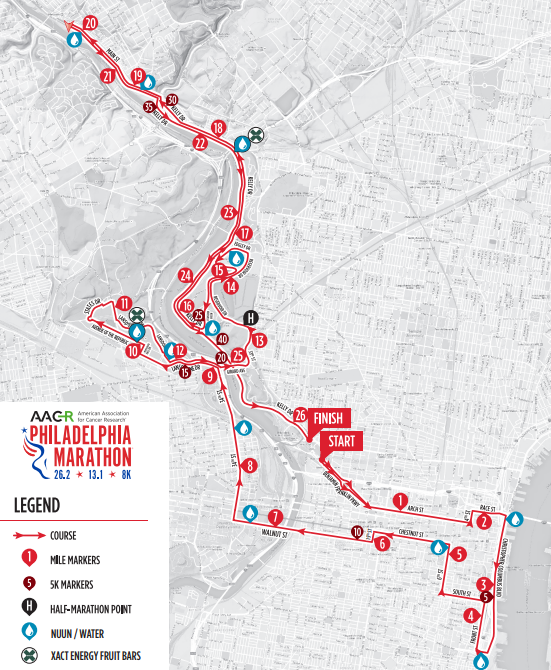
Philadelphia Marathon course map.
Location: Philadelphia, Pennsylvania
Start: 22nd Street & Benjamin Franklin Parkway, near the Philadelphia Museum of Art
Finish: Eakins Oval on Kelly Drive, near the Philadelphia Museum of Art
Course type: Mostly a loop; take a look at this page for more Philadelphia Marathon course info
Boston Qualifier: Yes
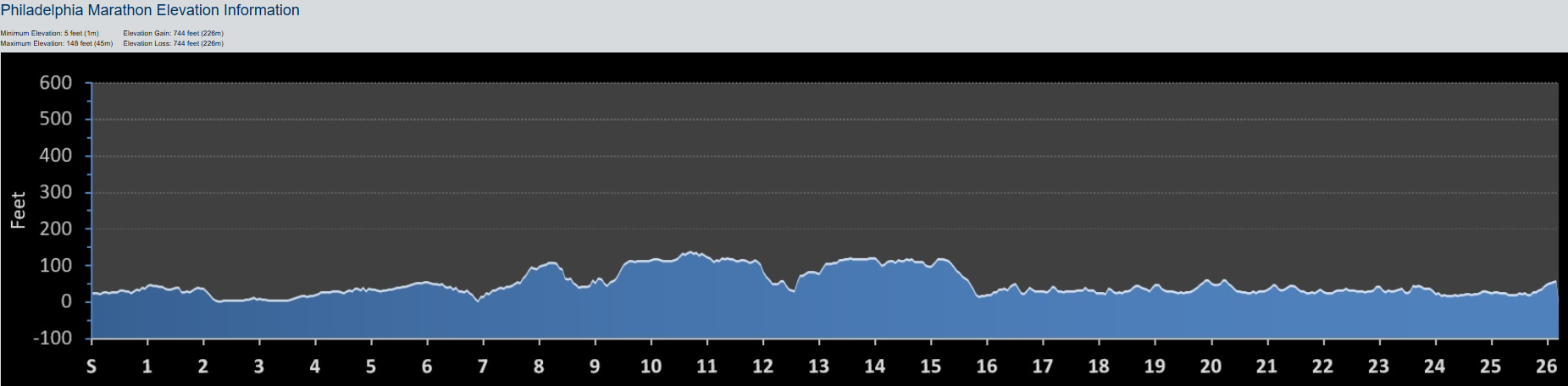
Elevation gain: 744 feet/ 226 meters
Elevation loss: 744 feet/ 226 meters
Temperature:
Average high: 51°F/ 10°C Average low: 34° F/ 1°C
Tips from Coaches
“Practice hills! Philly is not classified as hilly, but the rolling hills from miles 7–16 and the tougher climbs in Manayunk (miles 19–22) add up.” – Coach Jonathan Gooch
“Stick to the tangents. Kelly Drive is wide and winding, and poor tangents can add up to half a mile to your race, so minimize side-to-side movement to stay on the shortest course.” – Coach Jonathan Gooch
“The race ends with a 10 mile out-and-back on the river that feels longer than the first 16; save some mental energy to get back from the turn around.” – Coach Matt Weller
Philadelphia Marathon elevation map. PC: findmymarathon.com
3. Shakeout Run
Date: TBD
Time: TBD
Location: TBD
4. Philadelphia Marathon Coaching Info
At Team RunRun, we have 100s of wonderful, experienced coaches ready to help you crush your goals, regardless of your ability, budget, or lifestyle. Specifically, for Philadelphia Marathon race advice, here are some coaches to start with:
TRR Coach Natalie Lutz running the 2023 Indy Marathon.
Often overlooked in favor of the World Marathon Majors, the Indianapolis (Indy) Monumental Marathon is a flat, fast race perfect for PR-seekers and first-timers.
1. Pre-Race Zoom Call
With the Indianapolis Monumental Marathon coming up soon, we’re bringing veterans and first-timers together to ask questions, share insights and build some excitement heading into race weekend!
Join our drop-in Zoom call on Monday, Oct. 27, 2025 at 7:00 pm EST where first-time Indy runners can get answers from athletes and coaches who have run this race before.
Can’t make the call? We’ll record the call and share the link in the following week’s newsletter.
2. Indianapolis Monumental Marathon Race Intel
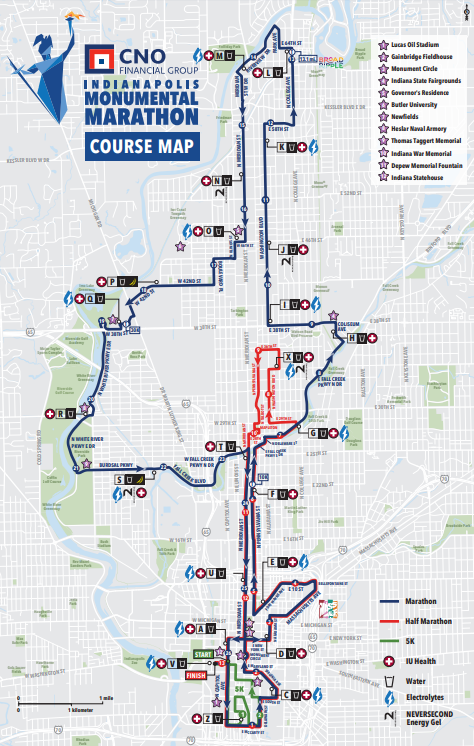
Indianapolis Monumental Marathon course map.
Date: Saturday, November 8, 2025
Location: Indianapolis, Indiana
Start: Near the Indiana State House
Finish: Near the Indiana State House
Course type: Loop; take a look at this page for more course info
Boston Qualifier: Yes
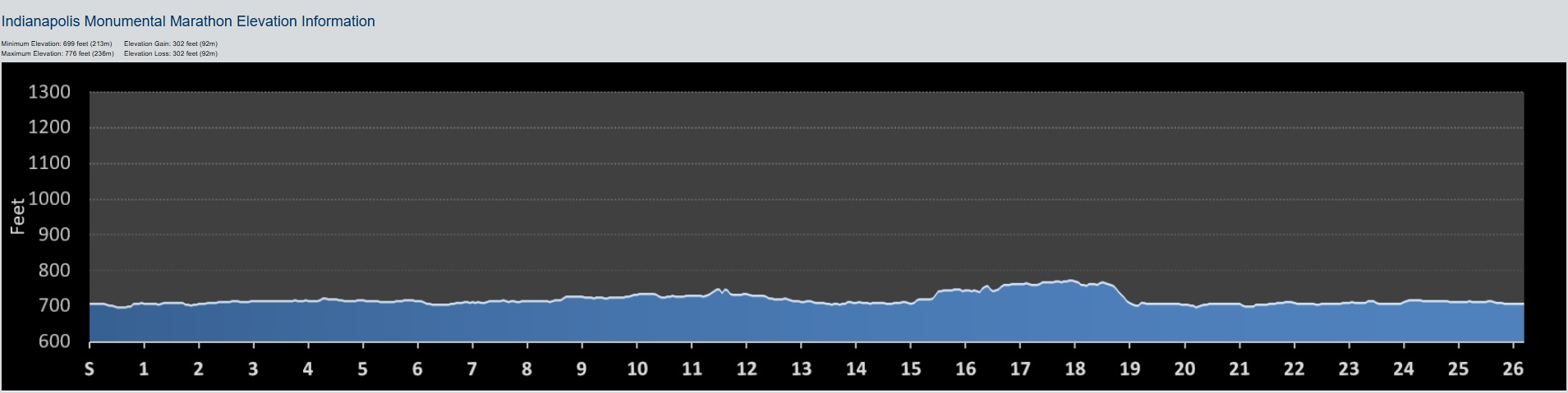
Elevation gain: 302 feet/ 92 meters
Elevation loss: 302 feet/ 92 meters
Temperature:
Average high: 58°F/ 14°C Average low: 39° F/ 3°C
Tips from Coaches
“The half marathon and marathon start at the same time. So, especially if you are in the top corrals, be aware that the race goes out very fast. Try not to get caught up and pulled along with the half marathoners in the beginning. Run your own race and pace to avoid hitting the wall too early!” – Natalie Lutz
“Be extra vigilant of your footing and the road bifurcations during the first 3 miles. In 2024, there were a few pot holes in the beginning of the race.” – Natalie Lutz
3. Race Reports
Want even more intel on the Indy Marathon? Read some of the race reports from Team RunRun coaches:
Indianapolis Monumental Marathon elevation map. PC: findmymarathon.com
4. Shakeout Run
Date: TBD
Time: TBD
Location: TBD
5. Indianapolis Monumental Marathon Coaching Info
At Team RunRun, we have 100s of wonderful, experienced coaches ready to help you crush your goals, regardless of your ability, budget, or lifestyle. Specifically, for Indianapolis Monumental Marathon race advice, here are some coaches to start with:
Did you know that the 2024 New York City Marathon became the world’s largest marathon ever with 55,646 total finishers? Now you do!
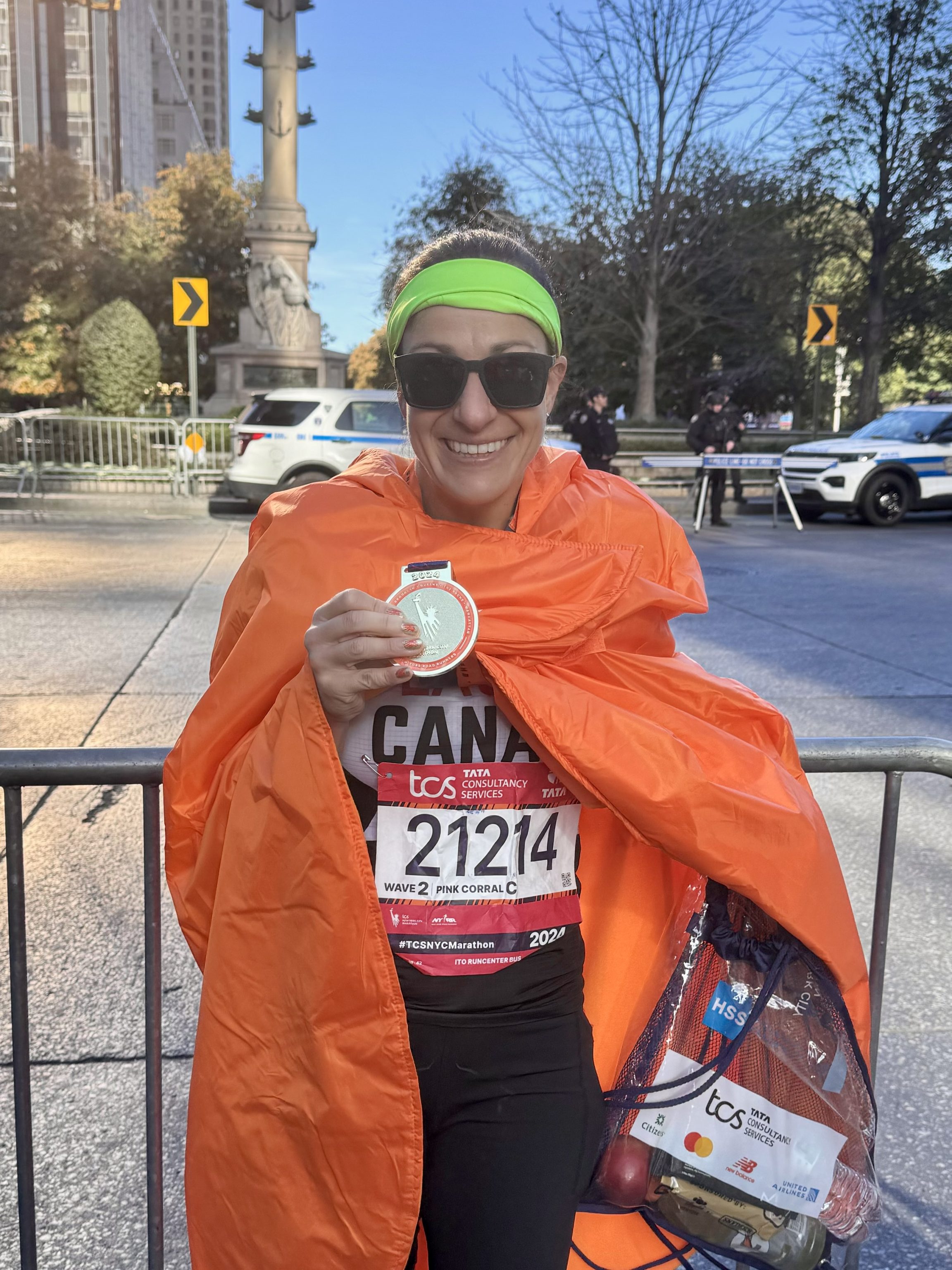
Team RunRun athlete, Laura, after crushing the New York City Marathon!
And with all the intel below, you’re on your way to your own historic NYC finish!
1. Pre-Race Zoom Call
With the New York City (NYC) Marathon coming up soon, we’re bringing veterans and first-timers together to ask questions, share insights and build some excitement heading into race weekend!
We had a great drop-in Zoom call full of NYC Marathon racing insights, information, and tips.
Start: Fort Wadsworth on Staten Island, near the Verrazzano-Narrows Bridge
Finish: Central Park, between West 67th Street and West 68th Street
Course type: Point-to-point; take a look at this page for more course info
Boston Qualifier: Yes
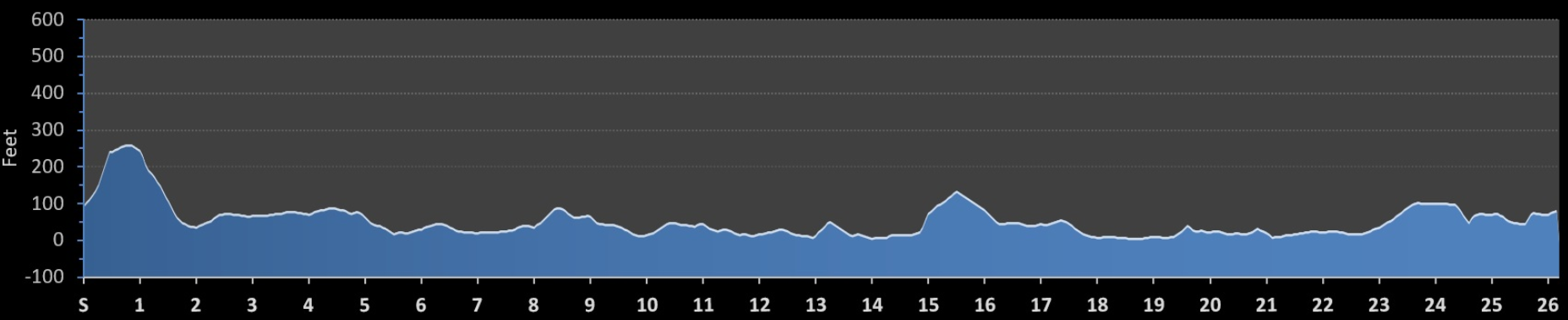
Elevation gain: 810 feet/ 246 meters
Elevation loss: 824 feet/ 251 meters
Temperature:
Average high: 57°F/ 13°C Average low: 36° F/ 2°C
Tips from Coaches
“While crossing the Madison Avenue Bridge (Last Damn Bridge) around mile 21, move to your right for tons of encouragement and goodies to help propel you to the finish!” – Coach Dana Caruso
”The Verrazano is a suspension bridge, so there’s subtle bounce that reduces perceived exertion. Combined with the adrenaline of starting the New York City Marathon, it doesn’t feel as tough — be sure to hold back and not get too excited so early in!” – Coach Martina Nadeau
”The bridges lie and make your GPS go wild. Therefore, pace by effort, not GPS. Splits will be wrong in multiple spots, so do not panic.” – Coach Martina Nadeau
”The first mile is crowded and a lot of folks stop mid-course to take photos – try not to get too frustrated! Instead, be cautious of the runners around you to avoid twisting an ankle or short stopping.” – Coach Martina Nadeau
New York City Marathon elevation map.
3. Race Reports
Want even more intel on the New York City Marathon? Read some of the race reports from Team RunRun coaches:
Team RunRun athlete, Phil, setting a 14-minute PR at the 2023 New York City Marathon.
At Team RunRun, we have 100s of wonderful, experienced coaches ready to help you crush your goals, regardless of your ability, budget, or lifestyle. Specifically, for New York City Marathon race advice, here are some coaches to start with:
Team RunRunner Michael Norton after finishing the 2024 marathon.
Your go-to spot for all things Bank of America Chicago Marathon, one of the fastest Abbott World Marathon Majors, occurring each October in the United States of America.
1. Pre-Race Zoom Call
With Chicago coming up soon, we brought veterans and first-timers together to ask questions, share insights and build some excitement heading into race weekend!
We had a great drop-in Zoom call full of Chicago Marathon racing info and tips: Catch the replay here!
2. Chicago Marathon Race Intel
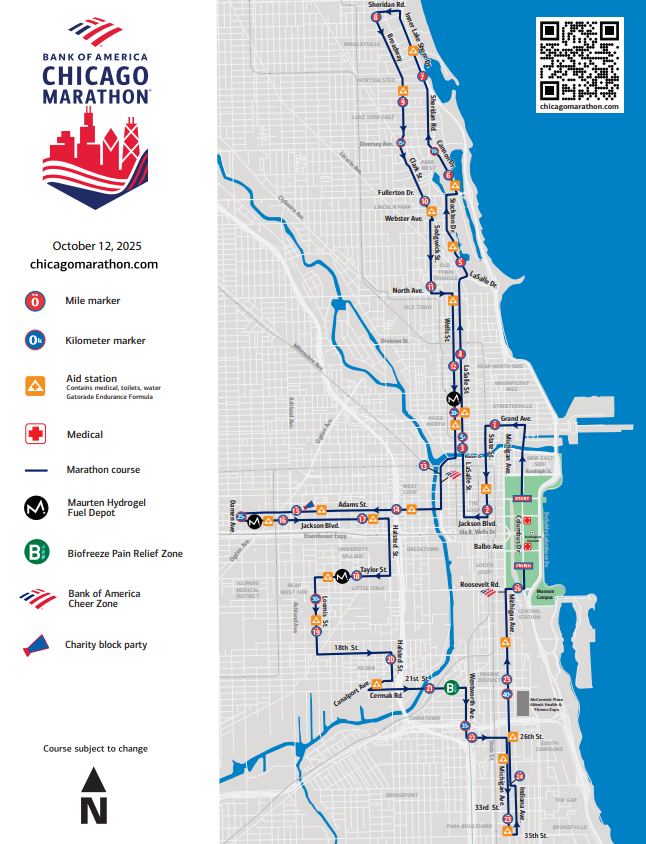
Chicago course map.
Date: Sunday, October 12, 2025
Location: Chicago, USA
Start: Grant Park
Finish: Grant Park
Course type: Loop; undeniably fast and flat!
Boston Qualifier: Yes
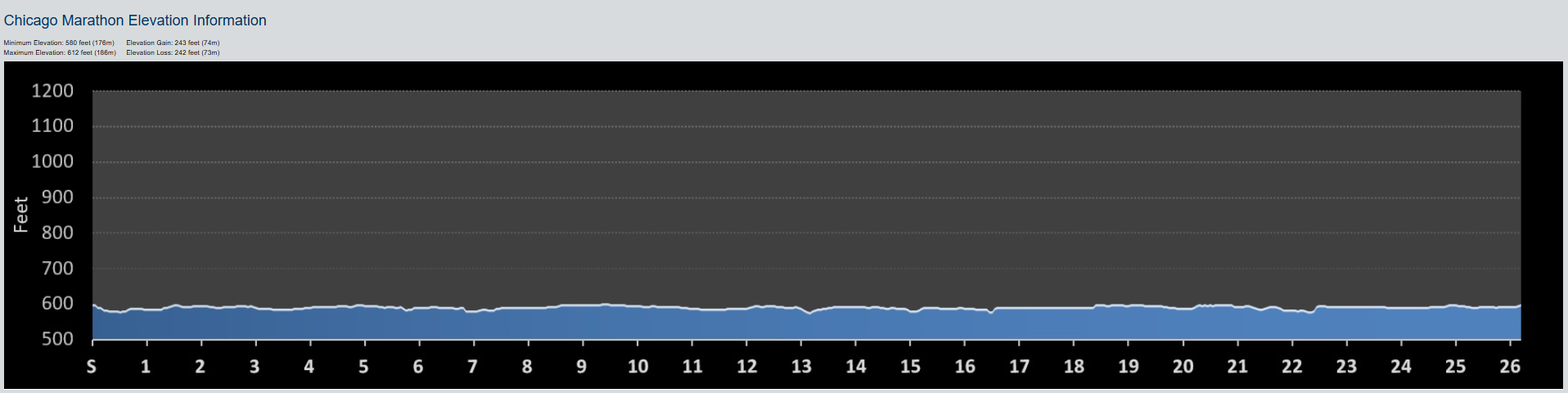
Elevation gain: 243 feet/ 74 meters
Elevation loss: 242 feet/ 73 meters
Temperature:
Average high : 64°F/ 17°C Average low: 46° F/ 7°C
Tips from Coaches
”Enjoy the final stretch down Columbus Drive. In any case, soak it all in!” – Coach Christina Mather
Chicago Marathon elevation map. PC: findmymarathon.com
3. Race Reports
Want even more intel on the marathon? Read some of the race reports from Team RunRun coaches:
Date: Saturday, October 11th Time: 9 am CST (Chicago local time) Location: Millennial Park, Cloud Gate “the Bean”
All paces are welcome and the more the merrier! Feel free to bring a friend, even if they’re not a Team RunRun athlete!
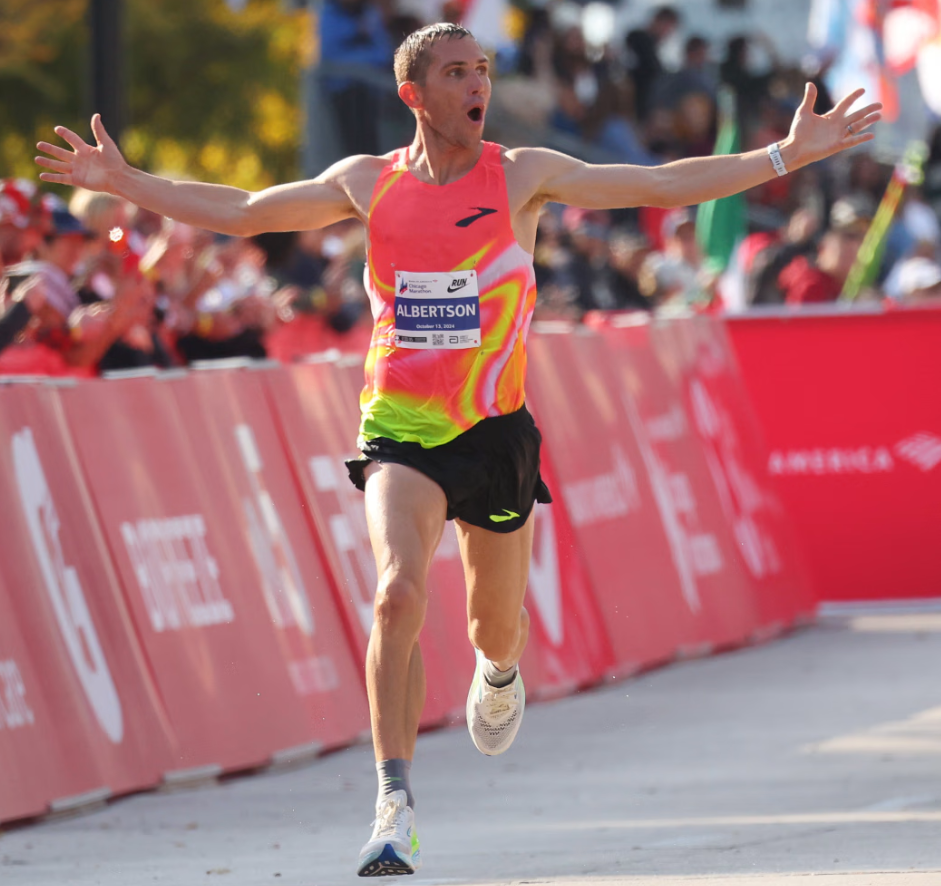
TRR Coach CJ Albertsonfinishing the 2024 Chicago Marathon in 7th overall and 1st American in a time of 2:08:17! PC: Michael Reaves/ Getty Images
5. Chicago Marathon Coaching Info
At Team RunRun, we have 100s of wonderful, experienced coaches ready to help you crush your goals, regardless of your ability, budget, or lifestyle. Specifically, for Chicago race advice, here are some coaches to start with:
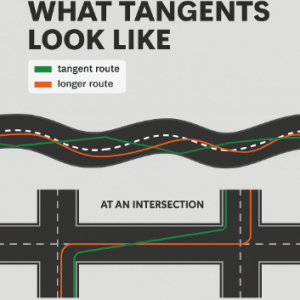
How to save time and distance in races by understanding tangents.
Team RunRun athlete running the tangents at the Chicago Marathon.
Are you Adding Unnecessary Distance (and Time) to your Races?
Ever crossed the finish line of a marathon only to realize your watch reads 26.6 miles instead of 26.2? That extra 0.4 miles might not look like much on paper, but on race day, it can mean minutes tacked onto your time. And if you’re chasing a personal best—or even a Boston-qualifying standard—every second counts.
GPS errors aside, that extra distance often comes down to not running the most efficient line. Maybe you’ve heard the phrase “run the tangents” but didn’t know exactly what it meant: read on, you’re about to learn!
What Does it Mean to Run the Tangents?
Running the tangents simply means following the shortest possible path around a course, especially when it curves or turns. It’s all about minimizing unnecessary distance by taking the most direct line from Point A to Point B, such as the start line to the finish line of a race.
While it sounds simple, it’s something many runners overlook in the excitement of race day—and it can cost them.
Courses are measured along the shortest possible route. That means weaving wide around corners adds distance—just like running around the outside of a track lane instead of staying in lane one.
Think of a road that curves to the left. If you stay on the outside edge of the bend, you’re running farther than someone hugging the inside. Multiply that by dozens of turns over the length of a half or full marathon, and you might run an extra quarter to half of a mile. That’s free distance—and time—you’re giving away.
How to Run the Tangents
Running the tangents doesn’t mean cutting corners or breaking course rules. It means staying mindful and strategic as you move through the course from the start to finish. And for those wondering, it is a perfectly acceptable strategy that the pros harness in every race, and you should too!
Here are a few ways to improve:
In training:
Practice running efficient lines. On your long runs or routes with curves, get used to spotting and running the straightest line possible. Make it second nature.
Before the race:
Study the course map. Identify turns, loops, or sections where you might need to adjust your line.
On race day:
Look ahead. Don’t just react to a curve once you’re in it. Keep your eyes forward so you can anticipate and run the cleanest line.
Avoid drifting with the pack. Runners often spread out and take wide turns—don’t blindly follow.
Chicago Marathon course map.
Go Faster, not Further!
The good news is that running the tangents doesn’t require more fitness or effort—just a little awareness. And that bit of additional awareness can be the difference between almost hitting your goal and crushing it.
Elaina Raponi is a coach with Team RunRun based in Kingston, Ontario. Elaina loves helping athletes of all abilities and experiences achieve their goals, while finding confidence and joy in the process!
A deeper look at how AI-powered running apps can be more harmful than helpful.
Picture this: You’re inspired to start running — maybe a friend gets into the sport, or you cheer on strangers at a local race. Either way, something clicks and you think to yourself, “I want to do this”.
Example of an AI running app, Runna. PC: runna.com
But where do you start?
Like many newer runners, maybe you grab your phone and download an app like Runna, Strava, or Garmin Connect. These AI running apps promise optimized plans and data-driven insights. All you have to do is choose a distance and a goal and, ta da, your training plan awaits!
But there’s a catch. If you’re new to running, you might not have a clear sense of what a realistic goal looks like. That can lead you to follow a plan with too much intensity, or pacing that’s simply too fast for where you’re at — leaving you, at best, frustrated and, at worst, injured.
Beyond Injuries: What AI Running Apps Miss
This disconnect between what an app prescribes and what your body is ready for isn’t hypothetical — it’s real. And it’s something I hear often from athletes who come to me after getting injured or feeling burnt out. Many of them started with the best of intentions, excited to follow a plan and see progress. But over time, they began to notice something wasn’t quite right.
The experiences they’ve shared with me speaks volumes:
“I felt that the training was either very mild or incredibly intense. No in between.”
“I pushed myself too hard, too fast.”
“I found that some of the plans progressed too quickly for me.”
So where does that leave these runners?
Too often, it leaves them frustrated, injured, and wondering what they did wrong. In reality, these runners were just following the plan they were given. They did what the app told them to do. But the app didn’t know anything about them beyond a goal time or a goal distance. It didn’t know their background, stress levels, family commitments, or how they were feeling on any given day.
The Reason Personalized Coaching Wins
For many runners, that experience becomes the turning point — the moment they realize they don’t just need a plan, they need a plan that’s right for them. That’s when they choose to work with a coach — not for a cookie-cutter schedule, but for a personalized approach that adapts to their needs.
Working with a coach can help runners:
Set realistic, achievable goals
Adjust their training when life gets busy
Know when to push — and when to pull back
Whether it’s navigating a missed run, working through a tough workout, managing fatigue, or addressing a niggle before it turns into an injury, having a coach means having someone who sees the whole picture — not just the data, but the person behind it.
Because while metrics like pace, distance, and heart rate can tell part of the story, they don’t capture everything. They can’t pick up on doubt, fatigue, or the mental battles an athlete might be waging with themselves — factors that can impact a run just as much, if not more, than the numbers on a watch.
An athlete and coach have a 1:1 coaching conversation.
Why Runners Are Ditching the AI Apps for 1:1 Coaches
That’s where real, two-way conversations become invaluable. Having someone you can turn to — to ask questions, voice concerns, and to openly share what you’re thinking and feeling in real time becomes a powerful form of qualitative data that no algorithm can replicate.
Anyone who’s ever read the ‘Athlete Intelligence’ on their Strava run knows that the feedback from AI often falls flat or is one-dimensional. It simply cannot compare to the feedback a coach can provide, whether it’s through text, email, or by hopping on a call and actually hearing their voice.
At the end of the day, running is personal — and your training should be, too. While AI-powered running apps can offer some semblance of personalization, they can’t replace the insight, flexibility, and support that come from working with a coach who understands you as a whole person. Your life isn’t a static spreadsheet, and neither should your training plan.
Where an app sees numbers, a coach sees nuance.
Where an app pushes you to stick to the plan, a coach helps you adapt the plan.
Where an app reacts, a coach anticipates.
Next Steps for Faster, Injury-Free Running
Whether you’re a beginner taking your first steps into running, aiming for a Boston Marathon qualifying time, or dipping your toes into the ultra running world, Team RunRun has a coach for you. With over 200 coaches at every experience and price level, let us help you avoid the pitfalls of AI running apps. View our coaches here and get started today!
Elaina Raponi is a coach with Team RunRun based in Kingston, Ontario. Elaina loves helping athletes of all abilities and experiences achieve their goals, while finding confidence and joy in the process!
If you’re reading this, I’m assuming you want to actually improve your running or, as is the case with a coach or friend, help another runner improve. This is the article for you.
Let’s get this out of the way: stock running plans aren’t cutting it anymore.
Sure, they’re accessible. Sometimes free. They look neat, pre-packaged, and “official.” But if you’ve ever felt confused mid training, plateaued in performance, or suffered an injury that “shouldn’t have happened,” then you’ve experienced what many runners discover too late: one-size-fits-all training plans rarely fit anyone well.
Two runners with Team RunRun coaches who write them unique and personalized plans.
If you’re serious about improving–whether it’s chasing your first 5K, qualifying for Boston, or anything in between–it’s time to rethink your approach and consider what happens when your plan actually fits you.
The Illusion of Personalization in Stock Plans
Stock plans try to offer simplicity: pick your race, plug in your finish time goal, and boom, here’s your 12-week roadmap! The problem: you’re not a spreadsheet. You’re not a series of formulaic, quantitative data that an algorithm can detect and use to optimize your training. You’re a human being with a unique history, schedule, stress levels, strengths, weaknesses, and recovery curve.
Stock plans can’t possibly account for:
Injury history
Work, family, and life demands
Other external stressors
Variation in recovery ability and training adaptations
Your natural pacing skill
Sleep, nutrition, health
The result? You attempt to force your life into a plan, rather than fitting your plan into your life.
Short-term, this might work for you and you may see results. Long-term, however, life interferes and any number of the above factors make strictly adhering to the stock plan, at best, challenging, if not impossible. Your progress stalls, motivation drops, and the goals you set for yourself now seem totally out of reach.
Real Coaching = Real Results
When you work 1-on-1 with a running coach, the difference is immediate and powerful. You’re no longer a name on a download list. Instead, you’re a person whose training plan evolves as you do.
What personalized online coaching actually delivers:
Customized plans built for just you, not mass-produced
Ongoing adjustments based on feedback, fatigue, or surprise life events
Direct communication with someone who knows your goals
Injury prevention and recovery support
Race strategy, pacing advice, and mental coaching
Accountability, motivation, and insight from an expert who sees your blind spots
But What About the Cost?
Sure, online coaching isn’t free. But neither is lost time through ineffective training, injury costs like doctor and PT appointments, frustration, or months of guessing. Let’s frame it differently: if you spend hundreds on shoes, gear, and race entries, shouldn’t you also invest in your training to make those other expenditures worthwhile?
And here’s the kicker: 1-on-1 coaching is more accessible, and affordable, than you think. At Team RunRun, our coaching starts at $1/day, much less than a coffee–or energy gel–a day! In fact, that’s also cheaper than many paid stock plans and online programs!
Want to Actually Improve Your Running? Here’s Why Coaching Wins
This Team RunRunner used a 1-on-1 coach to actually improve their running amidst a busy life and parenting.
Let’s bring this home. You want results. You want confidence. And overall, you want to get to the start line healthy and to the finish line proud.
That doesn’t happen by luck. It happens when your plan:
Adapts to your [unique] body
Flexes around your [unique] life
Builds your [unique] strengths
Addresses your [unique] weaknesses
And none of that comes in a downloadable PDF.
Still Not Sure? Ask Yourself This…
Do I want to keep guessing, or start progressing?
Am I running the same race year after year with no improvement?
Do I need someone to help me balance running with my busy life?
Would I benefit from an expert guiding me to peak performance?
If you answered yes to even one, it’s time to leave the stock plan behind.
How to Actually Improve Your Running: Work With a Team RunRun Coach
At Team RunRun, we pride ourselves on having a coach for every runner. We’ve helped thousands of athletes:
Progress consistently
Stay healthy and injury-free
Crush new PRs
Qualify for Boston
Fall in love with running again
Our coaches listen, adapt, and coach the runner in front of them.
Ready to actually improve your running? View our coaches here and get started today!
FAQs
Here are some of the questions runners transitioning from a stock plan to individual coaching often ask me.
Q. What if I’m just a beginner? A. That’s exactly why you need a coach. You’ll avoid common pitfalls and set a foundation that lasts.
Q. What if I miss runs or get sick? A. Your coach adjusts the plan in real time: no guilt trips, just smart training.
Q. Can I still follow a race specific plan? A. Absolutely, because your coach builds your plan around your race, your individual goals, and your unique timeline.
Q. How often do I talk to my coach? A. That depends on your coach, but most runners get daily or weekly feedback and messaging support.
Q. Is online coaching worth the money? A. Short answer: yes. Runners waste more on race fees, physio appointments, and gear than they would on coaching that prevents the disappointment of missing a goal or being injured.
Brant Stachel is a coach with Team RunRun based in Kingston, Canada. He works with runners and triathletes of all skill levels, from beginners to international and professional athletes.
And how to build an effective running roadmap to achieve your goals
For many runners, having a race on the calendar provides purpose to their training, adding extra motivation to getting out the door. The prize many seek at the finish line? A shiny new PR (personal record; “PB” or “personal best” in other parts of the world)! While setting a PR is exciting and leads many runners coming back for more, there’s much more that goes into any given PR than just race day. Race day can be seen as the product of all the training days coming together in synchronized harmony to bring out a runner’s best.
After following the 5 tips for planning your next PR, Team RunRunner Mat A. was able to ring the PR bell!
That said, this article will seek to address the full running roadmap, including building a training cycle and racing season, with considerations for what to train and race for and when to do it. It’ll also address the topic of setting goals and expectations, as life, and by extension training, can often be in flux.
5 Tips for Planning Your Next PR
1. Write Goals in Pencil, Not Permanent Ink
As hinted at, while setting preseason race goals are great, it is also important to be flexible in your planning. You never know when an injury might come up and sideline you from running, or when life events–be them work related or personal–make it more difficult for you to get your training done as envisioned. In the event of injury, various forms of cross training allow you to maintain fitness as opposed to advancing it like a consistent running program would. This is one of many reasons why it’s important to have a variety of goals beyond solely finish lines and PRs.
2. Create a Goal Hierarchy
As a coach, regardless of whether I’m working with one of my high school athletes or Team RunRunners, I always emphasize having multiple tiers of goals (A, B, and C goals). The A goals are for when everything is clicking: it might be a stretch to achieve but is still attainable (after all, part of the SMART goals framework is that they are attainable and reasonable). B goals are the solid middle ground: expect B goals to take significant effort to achieve, but appreciate that there’s a high degree of confidence you’ll get there. Finally, come C goals: still good achievements worth celebrating, but are often benchmarks to fall back on when things don’t go as envisioned. This is all the more reason why no matter how big, training milestones should be celebrated and pride should be taken in a runner’s ability to stay consistent.
3. Avoid “In An Ideal World” Goal Setting and Acknowledge Your Constraints
In order to give yourself a chance at achieving a goal, it’s crucial to understand that different seasons of life add context to your running roadmap. For example, compared to the high schoolers I coach prepping for the mile in track season, an adult long removed from their scholastic running days would have different factors and considerations if they had hopes of returning to the mile for the first time since high school. Even avid club runners who still raced track in college and adulthood have different looking mile training than when they were in school due to the more advanced training age. The point being, even three runners all training for the same thing require different roadmaps and lists of expectations for getting to their final destination.
Niwot High School cross country team after their “A” race.
4. Trust the Process (Goals)
While we fortunately have the COVID pandemic in the rearview mirror, it was a time where we had to be flexible in expectations and goal setting. The same principles still apply now, though we don’t have to resort to virtual races and solo time trials. In this article, “Setting Running Goals during COVID-times”, I discussed different types of goals. This included the importance of having process-oriented goals alongside your outcome-orientated ones. Afterall, process goals often lead to those results-based goals, such as PRs and distance milestones. Consider both quantitative process goals–ones that you can measure, like covering a certain number of miles–and qualitative goals–those you can’t, such as running a new route each week.
5. Be Open to Trying Different Events
Set yourself up for success in your primary event by going after PRs in “off events”. For example, a marathoner might pursue a new mile PR following a marathon training cycle. Or perhaps it’s a road runner taking to the trails and trying to set an FKT (fastest known time). This variety builds a more complete runner and can help address individual weaknesses. Don’t shy away from dedicating a mini training cycle to some lower tiered goals. In the long run, it can prevent you from burnout and becoming stale.
How to Build a Running Roadmap
Team RunRunner Therese M. running a “C” race dressed as a banana!
Now this just leaves the question of how to build a training cycle and racing season. The fall and spring are commonly seen as the marathon seasons, but don’t forget that there are plenty of great marathons year-round. Similarly, depending on where you are in the world, the seasons in the Northern and Southern hemisphere don’t align: fall cross country in one region might be spring track season for the other. Even just in the United States, the Midwest and East Coast puts much more emphasis on indoor track in the winter than the West Coast does.
Periodization and Race Planning
Linking back to the aforementioned marathoner who lacks footspeed, they may want to hone in on shorter distances for all or part of a cycle to improve this area of weakness. Great! Thanks to the concept of periodization, it can, and should, be done together with the above 5 tips for planning your next PR. According to Runner’s World, “periodized training is structuring your training for a goal race so that on race day you’re at optimal fitness for the demands of that race.” Periodizing your training takes the concept of having multi-tiered goals and applying it to a training cycle, with the goal race representing your “A” race and tune-up races consisting of your “B” and “C” races. Often periodized training breaks the season into different cycles, each with one or two key objectives being focused on that build on each other towards accomplishing your primary goal.
This might look like running an “off-event” as an early season “C” race to remember what racing feels like. Consider “B” races more like a tune-up, racing something more similar to the goal “A” race. You might take these opportunities to implore different racing strategies, approaches to nutrition, and other considerations as a way to test and see what works and what doesn’t before the big day. Then it’s the goal “A” race: you’ve tapered, dotted your I’s and crossed your T’s, and are ready to lay it all out there before ending your season with a break and/or base building phase.
Final Thoughts
In this article, we have highlighted 5 tips for planning your next PR, alongside building a comprehensive running roadmap that will hopefully lead you to achieve your goals. Like any good travel itinerary, it factors in all the stops along the way. From periodization and varying your training and race calendar, to setting realistic expectations when injury or life happens. This extends to the setting of expectations when taking on something new, whether that be distance or terrain.. While this article not only seeks to inform, hopefully you feel enlightened, dare I say enchanted, to tackle something new with a holistic approach not only to training but to goal setting as well.
Brian Comer is a coach with Team RunRun based out of Portland, Oregon. His goal is to help you grow as a runner and a person through consistent training.
It’s race week, your goal event is fast approaching, and this survival guide will set you up for success. You’ve trained hard and with dedication for months. You’ve said ‘no’ to social opportunities to get to sleep early for your morning long runs. And now you are wondering how to make sure you capitalize on all of these choices for a triumphant race day. You’ve come to the right place!
Start line of the Oakland Marathon.
Read on for some practical tips you can implement to make your race week and race day as smooth as possible. If you are looking for training advice on how to taper for a big race, check out my article: Mastering the Marathon Taper.
1. Stick to your Routines
“Nothing new on race day.” A phrase we’ve all heard, and dare I say rolled our eyes at, multiple times before. As cliche as it is, it’s sound advice and, as a coach, I extend the timeline even further for my athletes: nothing new on race week.
Preparing for the big day is very similar to preparing for those big long run workouts you completed week after week. Sure, this week you’re probably thinking about the race more often than you do a workout, but your preparations should remain fairly similar.
Race week survival guide tip: stick to you normal eating habits and foods.
Continue to go to bed at your normal time, run when you normally do, stretch and foam roll as often as you normally do, you get the idea. While your workouts might be shorter and less intense, maintain your usual eating habits, keeping what and when you eat consistent. The only caveat here is emphasizing carbohydrates more in the last 2-3 before your race: Find more on carb loading in this Guide to Carb Loading. This week is not the time to try a new pair of shoes, experiment with a new nutrition plan, or cram in a new type of workout that you haven’t done before.
When the pre-race doubts creep in about our fitness, there is a temptation to try to prove to ourselves that we are ready to go. Instead, stick to the plan, trust the training, and all will be ok.
2. Plan Race Day Logistics
To alleviate the stress of the unknown, I strongly suggest you write down your race logistics plan, personalize this race week survival guide. Trust me, your race day self will thank you!
Write everything down from when you are picking up your bib at the expo, where you are parking, when you are waking up and then leaving the house or hotel on race morning, what you are eating for breakfast, etc. Noting down all of these details makes them feel more manageable. Having a check-list set out before you keeps you from stressing that you may have forgotten something.
While race expos are fun and exciting, be smart with how much time you spend on your feet that day. Definitely enjoy the expo, visit the booths, support the local brands and stores. But be sure to put your feet up the rest of the day. You’re going to be using them quite a bit the next day!
Race week survival guide tip: prepare your gear for race day the night before. PC: Evan Covell
3. Prepare the Night Before
The night before the race, lay out all of your race day gear including your warm up clothes, gear check bag, nutrition, hydration, shoes, outfit, even sunscreen. Make sure your bib is attached to your shirt and all your bags are packed. Don’t forget to pack some extra clothes (slides or comfortable shoes are a good idea too!) to put on after your race so you can enjoy the post-race festivities in comfort.
Sleeping the night before a race is often difficult. Excitement is high and restlessness kicks in. Do not worry. The night before a race isn’t the most important night of sleep. Sleeping well the whole week leading into race day is more important.
4. Arrive Early Race Morning
I love to arrive early enough to the start that I can warm up a bit, find the gear check, use the restroom, and still have a few moments to relax and collect my thoughts before the race starts. In order to ensure that happens, work backwards from the start time and calculate when you want to arrive, when you have to leave, eat breakfast, and lastly when you need to wake up,
Races can be stressful environments. Following this race week survival guide allows you to control what you can and be assured that you did all you could to arrive ready. Now, go give it your best effort!
Evan Covell is a coach with Team RunRun based in Santa Barbara, California. He helps runners set and achieve their goals through personalized, science-based training and injury prevention.
And the importance of “practicing like you play” by simulating race conditions in training.
Preparing for a successful marathon race day requires more than just logging miles. It takes simulating race conditions ahead of time to ensure peak performance on race day. The concept of “practicing like you play” applies to marathon preparation by replicating the physical, mental, and logistical elements of race day in training.
“The training IS the marathon…the race is the celebration.”
If you have been training for a marathon long enough someone has probably told you this phrase just before crossing the start line. “The hay is in the barn” is another one. The point is, you’ve put in the work and now you get to show it off on race day. Top performances require full effort and full attention throughout the training block, sharpening your mind and body during the weeks and months leading up to your goal race. Additionally, you need to simulate those race day conditions–as best as you can–during training so that they do not surprise you on the big day.
Two runners preparing for marathon race day with a “dress rehearsal” run, simulating race conditions in training.
Top Training Tips For a Successful Marathon Race Day
1. Simulate Race Conditions
Planning your training block around what you will be experiencing on marathon race day is a great way to ensure that you are physically and mentally ready to take on race day.
Runner testing out their race shoes ahead of race day.
Consider the Course: Mimic the conditions as closely as possible during training runs. Are you running a course full of hills but you usually train on flat ground? Is the race an out and back route or and point to point? Or maybe you get your training runs done in the evening, but your race has a 7am start time.
Run at Your Race Pace: Include some goal race pace miles into your speed sessions and long runs. This allows the body and mind to get used to that pace on tired legs in the midst of some hard training weeks. You’ll need to come back to that during miles 22-26 on your marathon race day.
Practice in Similar Weather: Train at a time of day that allows you to acclimate to expected temperatures and conditions. Are you training during the winter in Baltimore for a Spring race in Florida? Or are you enjoying the California climate every day but racing in the Texas humidity? There are ways to prepare the body, like heat training and cooling strategies, for these changes to optimize performance.
Wear Race Gear: Just like actors have dress rehearsals to prepare for opening day, runners need to rehearse as well. Strap on your race day shoes, your lucky shorts, top, and hydration choice (pack or bottle), load up the gels (yes all of them!) and go out for a long run. Make sure you are comfortable (and chafing free!) so that you can avoid surprises on marathon race day.
2. Nutrition and Hydration Strategies
Some of the different nutrition and hydration products available to fuel training and marathon race day.
Race day fueling is crucial: you need gas in the tank if you want your engine (or legs) to run. The best way to avoid the dreaded stomach issues or energy crashes is to practice your nutrition strategy during training. And no, I’m not just talking about testing the fuel you plan to take on the course. Look at the days prior…your carb load, meals the day before, and race morning fueling as well.
Test Your Fueling Plan: Try different types of gels, chews, or drinks to determine what works best for you. Are you able to fuel and run easily at the same time? When you are 15 miles in does your choice of strawberry gel still sit well with you? It is important to be able to get down those carbs when your body needs them the most. Don’t forget about the logistics–do you have a way to carry your sports nutrition with you during the race or are you planning to rely on aid stations, or perhaps a mix of both?
Hydrate Strategically: Follow a hydration schedule that mimics what you’ll do on race day. If you take the same bathroom stop at every long run, expect your body to want you to stop at that same point on marathon race day.
Eat a Race Day Breakfast: Experiment with pre-run meals to ensure they digest well and provide lasting energy. Plan out what you’ll want to eat the night before and the morning of your race.
3. Mental Preparation
Marathon running is as much a mental challenge as a physical one. Training your mind to handle the ups and downs of race day can not only give you a competitive edge but also make the rough times a bit easier to get through.
Practice Race Day Scenarios: Reframe running when you don’t feel like it, or through tough terrain and mental lows, as building resilience.
Use Visualization Techniques: At mile 18 of a 22 mile long run, what are your strategies to push through? Imagine crossing the finish line strongly and executing your pacing plan effectively. But also imagine just missing your time goal–how are you going to put your arms around that discomfort and still cross that finish feeling successful?
Develop a Mantra: Having a personal phrase or mantra can keep you focused and motivated during tough moments.
Marathon success isn’t just about how many miles you run—it’s about how you prepare for the real thing. By practicing like you play, implementing these top tips for a successful marathon race day, you’ll fine-tune your strategy, build confidence, and set yourself up for a smooth and successful race day. Simulate race conditions, dial in your nutrition, train your mind, and execute a race rehearsal to maximize your performance. When race day arrives, you’ll be ready to run strong and achieve your marathon goals. Now, go get that PR!
What’s Next?
If you want more structure and guidance, consider hiring a running coach! At Team RunRun, we have a coach for every athlete. Check out the training page on the Oakland Marathon website for a selection of coaches who are here to help.
Jamie Spruiell is coach with Team RunRun based in Walnut Creek, CA. As a mom of 3 and avid runner, she knows what it’s like to juggle running with a busy schedule!
Team RunRun Coaches Cheyne Inman, Lindsey Funch, Brant Stachel, and Jessica Hadley came together for a live panel discussion titled “Training Tips for your Fall Marathon” moderated by Kyle Fulmer. Our coaches answered eight of your most popular questions, and Ruby Wyles summarized their responses below. Team RunRunners and Coaches were able to join the live discussion via Zoom and can catch the replay here. We plan to make “Talk with the Experts” an ongoing monthly series, so stay tuned for more discussions coming soon!
1. When should I start training for my marathon? How long should my build be?
Cheyne: There is no one-size-fits-all: it really depends on where you are starting from. Many 16-18 week programs use the first 6-8 weeks to build up mileage and develop your aerobic base. For someone who races and trains year round, they start the build already with a base, so a shorter marathon plan may be more appropriate. For someone who has never run a marathon, I think a 16-20 week build up is necessary to give runners enough time to gradually progress the weekly long run and overall mileage.
Lindsey: It depends! I generally recommend runners already being comfortable running 25-30 miles per week, including double digit runs, before starting a 14-16 week marathon specific block. For runners not there yet, aim for a 20-24 week marathon cycle, allowing you to build mileage and add in intensity gradually. A gradual progression mitigates the chance of overuse injuries!
Brandt: Everyone’s a little different and it depends on a multitude of factors: marathon experience, current fitness and aerobic capabilities, recent injuries, and more. Generally speaking, however, a 10-16 week marathon build is advisable.
Jessica: Some athletes thrive off a short build while some new athletes running a marathon may want a 16-18 week build, depending on what training they have done before the marathon. The bigger their base before starting a marathon specific block, the shorter the build an athlete can do to safely build up for the marathon.
Team RunRun coaches have guided runners of all abilities to successful marathons, including many Boston Qualifiers!
2. Are training races (e.g. a half marathon) a good idea during marathon training?
Cheyne: Shorter races in a marathon buildup are a great way to test the fitness you’ve built in training, dial in your race day routine, fueling, and pacing strategies. The marathon is a long race, and anything can happen on race day –from stomach problems to bad weather and more– so racing a shorter race in your build up allows you to get something out of your training block in case things don’t go perfect on marathon race day.
Lindsey: In short: great but not essential. Training races can be a good way for runners who deal with race day anxiety to feel the excitement and nerves without as much pressure, as well as allowing them to go through the motions of race day preparation. If you plan on racing a half marathon during the build, aim for it to be 4-6 weeks out from your goal marathon so you have enough time to recover fully afterwards. Another option is to use races as aided workouts— rather than running them all-out, the races could be a chance to practice running at marathon effort with the benefits of having aid stations. With the excitement and hype of races, it can be easy to start too fast, so training races can help you practice holding back (and hitting your prescribed paces or efforts) when there’s competition.
Brandt: I like the idea of training races to give athletes practice at their race day routine: portapotty, fueling, breakfast, travel, etc. That said, I’m cautious about using races as a benchmark or measuring stick for marathon performance. While they can be a general guide, they don’t always equate out.
Interestingly, I was looking at the number of men and women at the US Olympic Marathon trials who had hit the Olympic Trials equivalent (based on Jack Daniels’ running calculator) in the half marathon. There were plenty more athletes who hit the equivalent half marathon time to the respective marathon Olympic Trials standards. This shows that even pros don’t always convert their under-distance races to the full distance. If they can’t, then we shouldn’t be so egotistical to think that we must be capable of it every time as well!
Jessica: I often suggest a half marathon in a build around 6-7 weeks out from the marathon for several reasons. Firstly, it helps me get a good idea of where the athlete’s fitness is, and secondly it is a huge confidence booster that they are gaining fitness. It also helps the athlete get in race mode and work on mental toughness. This is a race where they could completely race it for a PR or use it as a workout depending on what they are looking for. I generally don’t like anything too close to the marathon because I don’t want them fully going to the well before the full..
3. Do I have to do my long run on the weekend?
Cheyne: I often have athletes do their long run on other days of the week, and I don’t think that’s a problem. However, whatever day you do, the keys are that you consistently run long every week or two, and that you aren’t running it the day before or after a workout, or else you’re sacrificing recovery.
Lindsey: There are no hard-and-fast rules when it comes to training plan structure, so find a place in the week that you can carve out 1.5-4 hours— think running time, driving to and from the run (if you don’t run from your door), showering, and grabbing post-run food. Additionally, the long run doesn’t have to be the same day each week. I recommend having 5-13 days between long runs, meaning if one week you get out on Saturday, but the following weekend is crazy, you could shift the next long run to Thursday (5 days) or the following Tuesday (10 days since your last long run) if that works for you. Personally, I’ve coached some runners who found that a 10-day cycle (long run every 10 days) worked best for their schedule and, as a bonus, we could be more intentional about spacing out their hard efforts.
Brandt: We all have lives, work, and families, and sometimes the traditional Saturday or Sunday long run doesn’t fit. I love to put the long run wherever it fits for athletes, and use it as the base of the weekly schedule. So if the long run is on a Wednesday, I don’t put a speed session on Thursday. Instead, I adjust training based on the day of the long run as this really is the bread and butter of marathon training. The mix of volume and intensity both going into and coming out of the long run needs to be just right to ensure fatigue levels are appropriate to hit paces and prevent injury and burnout.
Jessica: One of the great things about having a coach is that we can work with you and your schedule to make it personal for you. I have many athletes that are nurses working shifts that do their long runs during the week, and I actually have to change their schedules weekly.
4. Do I need to do speedwork to run a marathon? Why?
Cheyne: It depends on what you mean by speed work, do you need to be doing 100m sprints every week? No. Could it help? Possibly. It is important to touch on faster paces than marathon pace to make marathon pace feel easier and to also develop different energy systems and strengths. You can do this through faster interval workouts once a week or shorter leg turnover work like 6-8x 100m strides 3x a week. Most importantly, just make sure it isn’t at the expense of your longer, more marathon-specific workouts, or you not recovering and getting hurt.
Lindsey: To complete a marathon, callusing your legs to the time on your feet (read: getting in mileage and some long runs) is more important than incorporating “speedwork”. That said, adding higher intensity training sessions for more experienced runners, can help to improve top-end speed, increase the body’s ability to sustain higher intensities/paces for longer, and give runners a greater number of gears to work from when it comes time to race.
Brandt: Yes and no, it depends. Speed work is great at boosting your neuromuscular system, which can help with running efficiency and strength. However, in my opinion, speedwork is the first thing to be omitted from the marathon build due to time or risk of injury. From talking to experts and leading coaches, it would seem the hierarchy of marathon training is as follows: 1) total aerobic volume, 2) long runs, 3) tempo runs, and then 4) speedwork.
Jessica: Speedwork will help build running economy and improving running economy can have a significant impact on your race. I like to include it once a week. If you are running your first marathon, or don’t have a big base, it’s not as important as building volume and endurance. However, if you want to see a drop in your marathon time, I do believe adding speedwork, combined with marathon specific work in long runs, will help you see fitness gains. For a new runner, speedwork could look like strides at the end of an easy run or power hill strides.
5. When do I need to fuel my runs? What should I fuel with? How do I carry fuel?
Cheyne: Fueling is both individual and universal. Everyone needs to get in calories throughout a marathon to replenish what you use throughout the race, but the most important things are to have a schedule and use fuel that works with your stomach. That takes practice in training to dial in when/ how often to fuel and what nutrition works for you. As far as carrying the fuel, what has worked well for me is tucking gels into tight fitting accessories like arm sleeves, gloves, or short pockets. Another thing I’ve started doing is running with a handheld. Nothing big, just about 10 ounces, and I like to fill mine with liquid fuel like Maurten 360, and often combine that with aid station cups in races too.
Lindsey: The current research shows that YES you do need to fuel your runs, all of them. For endurance runners, running fasted has not been shown to be beneficial. Make sure that you eat some carbs (20-30g) prior to a run, and more if you’re going long or running some higher intensity efforts. From there, in-run fueling is recommended for any run longer than 60-90 minutes, shooting for 50-90g of carbs per hour (so a 20-30g gel every 25-30 minutes). There are a wide variety of ways to carry your fuel, and it really is up to personal preference and the gear you have available. I like to wear shorts that have 2 large side pockets that can fit up to 3 gels each. I also carry a 12-oz handheld water bottle (great for refilling if you’re on a rail trail or passing by a park), which also has a large pocket that can fit 2 more gels. There are also bras (for the ladies) that have up to 5 pockets for snacks, and for carrying fluids, there are lots of belt and vest options made by Solomon, SpiBelt, Flipbelt, UltraSpire, and more. My advice is to experiment and see what works best for you.
Brandt: When running over 100 minutes, the leading research suggests upwards of 100g of carbs per hour. This, however, needs to be trained. I recommend runners pick their gels and fueling source at the beginning of their build, so they can practice it every long run. As much as you’re training your legs and lungs, you need to train your gut to tolerate this as well! Generally, the best fuel is the one you can tolerate best and don’t hate the taste of, given you’re taking in enough carbohydrates. When thinking about the 100g of carbs per hour target, practice fueling every 15 to 30 minutes on easy and marathon paced long runs to ensure the gut is rock solid.
Jessica: Fuel is very specific to the runner – if you are new to fueling I always suggest buying trial packs of different fuel to see what works for your stomach. It can take time to figure out what you like and what doesn’t upset you GI system, but once you do, I recommend practicing with it on all your long runs and during any week day speed sessions. I recommend fueling early and often, generally taking your first source of fuel around 30 minutes into the race. I like athletes to aim for around 50-60g per hour, equating to a gel every 30 minutes. One of the things I see the most is people not being able to handle a gel later in the race which is why fueling early and often can help load up your glycogen stores for later in the race.
Another important factor when thinking about “fuel” is water, electrolytes, and salt. This is also specific to the runner but some runners may opt to carry their preferred hydration in a handheld, take salt chewable tablets for cramps, or salt pills. When training for a fall marathon you are most likely training through brutal summer weather so these are important tools.
6. What are the not-so-little things you as coaches swear by?
Cheyne: I have found that my daily routines have become the most important part of my training as I’ve aged. I do a set of drills daily that I got from Meb Keflezighi’s book “Meb for Mortals”, which has helped with both my form and ability to stay healthy. In the 30 days leading into a goal race, I am intentional about doing everything I can to support my training and recovery: at least 8 hours of sleep, no junk food, doing the little things like stretching and rolling, and no alcohol.
Lindsey: I think many of the listed “not-so-little things” have their place in most everyone’s training, but I think sleep is HUGE. When you’re sleeping, the body repairs, heals, and makes adaptations, so aiming to get MORE THAN 8 hours of sleep each night can be so beneficial. Personally, after a bad night’s sleep or if an athlete’s feeling overly tired, I would rather they skip a training session in service of getting more sleep— running or training while sleep deprived puts you at a higher risk of injury and is also NOT FUN, so getting caught up on sleep and running when you’re mentally and physically firing on all cylinders makes a lot more sense. Fueling and hydrating enough is always important, but especially as the mileage and/or intensity ramps up. It’s totally not a sexy part of training, but making sure nutrition and hydration is on point can make or break your training.
Brandt: Sleep and flexibility – not in your muscles kind, in your training! Just because the plan is written doesn’t mean it has to be followed exactly to the day. The marathon is a grind; sometimes life kicks in and you are under-recovered or not ready for the challenge of the day. A good coach is always in communication with their athletes about their fatigue levels, pain and soreness, so they can adjust their athletes’ training on the fly to save them from blow ups or injuries. Sleep really is the bedrock of our physical and mental health. It’s also when recovery and adaptation truly happen. This is a must to consider when working with athletes. I question whether 10-15 extra minutes running is worth it if it’s forcing the athlete to get up extraordinarily early.
Jessica: I preach that the pillars of a good race are sleeping 8 hours a night, hydration, and nutrition. Sleeping is often harder in the summer because we have so many other factors that keep us from sticking to a regular schedule. I talk to my athletes about what their goals are – if they want to sleep in and run later in the heat that is fine, but if they want to get up early for their long runs they have to go to bed early enough to get enough sleep. Also, because of the excessive amount of sweat most people lose in the summer months during training, it is important to stay hydrated with water and also some type of electrolyte drink. And with nutrition, a great race can come down to a good carb load vs. a bad one; I think most people think a carb load is one day before the race, when actually it should be 2-3 days before the race. Loading up the glycogen stores plus fueling properly on race day will help you not hit the wall and reach your goal!
7. How do I know the difference between expected soreness/ discomfort from training and injury?
Cheyne: I honestly don’t think anyone ever knows for certain, but the way I gauge it is a problem getting worse, staying the same, or getting better. Soreness after a hard workout or race can be misleading. An easy jog the next day can help differentiate between the two: if the soreness eases up during the run, it is likely normal training stiffness; if not, or if I feel a new pain pop up on one of those runs, I will stop and rest a day to see if it was just a little pain or an injury coming on.
Lindsey: A little bit of soreness is normal when you are pushing your body and working to get better. As a general rule, if something is sore post-run, but the soreness wanes after a day of rest or easy activity, that is pretty normal, and not too worrying. If the soreness or discomfort persists, we want to pay more attention to it. As a coach, I am not a physical therapist or medical professional, so it is outside of my scope of practice to diagnose or treat an injury- so if something is very painful (shooting pains, immobile, or causing a change in gait, for example) my suggestion is to get in with your primary care physician, or see a physical therapist or orthopedist that specializes in endurance athletes as soon as possible, so that you can get a diagnosis and a path forward!
Brandt: This is a tough one and often requires the vision and wisdom of someone who has been injured before or seen runners with these types of pains and soreness to help athletes navigate. Generally speaking, though, something that doesn’t return close to baseline after a couple days off running is a red flag for me. If it’s in or near one of the typical troublesome spots such as the ITB, tib post, Achilles, or plantar, I’m also extra cautious. This is an area where good lines of communication in coaching cannot be understated.
Jessica: I joke often that if I woke up and wasn’t sore I would be worried. When you are marathon training you are going to be sore and tired, and little aches and pains may happen. This is normal due to the repetitive nature of running and stress we put on our bodies. However, if you start to feel the same pain repeatedly, and it is hindering your training, changing your stride, or it is more than a 3/10 on the scale of pain, I would like to know as a coach. It may be something we just watch and scale back on harder sessions, or it may be something more serious we need to address.
Team RunRunner Jackson recently ran his first marathon after a successful build with his TRR coach.
8. What’s my marathon pace? How do I work out a realistic goal time?
Cheyne: What has worked for me and some of my athletes is this slightly unconventional method. When starting a new training block after time off, I will have myself or my athlete run a hard 3 mile tempo. Assuming that the athlete has previously run a marathon, their average pace for that 3 miles is a good indicator of what pace they are capable of running for their best marathon. By “best marathon”, I’m assuming the athlete had a smooth 3 month build and a hiccup-free race day. Closer to race day, I also have my athletes do longer repeats like 3-4 x 3 miles at what they feel like is their goal marathon pace. If they are consistently maintaining that pace throughout all the intervals, week after week, feeling somewhat controlled, then we can be more confident that they can run that pace for the marathon.
Lindsey: For the first time marathoner, I generally recommend to worry less about pacing and focus more on finding what feels like a sustainable effort. This principle holds true for most runners, but we can get more specific about pacing as runners gain more experience. I often use previous race results to set some training paces, checking in throughout training to make sure that paces and efforts line up. As training progresses and race day gets closer, it becomes easier to estimate realistically what a runner is capable of- we can use some quality sessions or long runs to assess. If you aren’t working with a coach, using a calculator like VDOT or the McMillan Running Calculator to estimate training paces and race equivalents can be helpful by plugging in a recent time trial or race— remember that longer races like a half marathon will be a better predictor of your marathon pace than shorter distances like the 5k or 10k.
Brandt: You need to consider a variety of factors including: temperature, humidity, fitness. In my opinion, there is a difference between your marathon race pace and marathon training pace. For example, building through the heat and humidity of summer, it’s not uncommon for runners to train at 10-15 sec/mile slower than their race day marathon pace. I also like to start my marathon builds with 45-70 minutes straight of marathon (or “conditions adjusted”) marathon pace. If an athlete can do this comfortably and report they could do this for another 1-2 hours, we likely are close to their marathon pace. If not, then we need to reevaluate to ensure we aren’t overreaching throughout the build. As one of the final workouts of the build 2-3 weeks out, I also like to do 90-120 minutes at goal marathon pace (heat adjusted if need be) as the final test for an athlete. We want to know how comfortable this pace is. Could you do it for another 1-2 hours? Again, if not, we need to reassess an athlete’s goal pace for race day. It’s better to have this information 2-3 weeks out than to discover it 10-15 miles into a marathon! This helps us be data-informed in our pacing decisions, as well as setting athletes up for success.
Jessica: I am a VDOT coach so I use the VDOT calculator to give a “marathon pace”, but that may not be your marathon pace- especially if it is based on a short distance race. This is why I generally like to work with athletes before they start building into the marathon so we can look at their fitness and make any changes. Also, goal marathon pace could change during the build. It’s important to have an open line of communication about goals and expectations for your race with your coach. We are here to help you and guide you to your best marathon by having realistic goal setting and race expectation discussions.
Ruby is a runner, triathlete, and passionate coach, who is most fulfilled by helping athletes overcome limiting beliefs with joy. She is also a proud science nerd, and advocate for athletes’ mental and physical health.