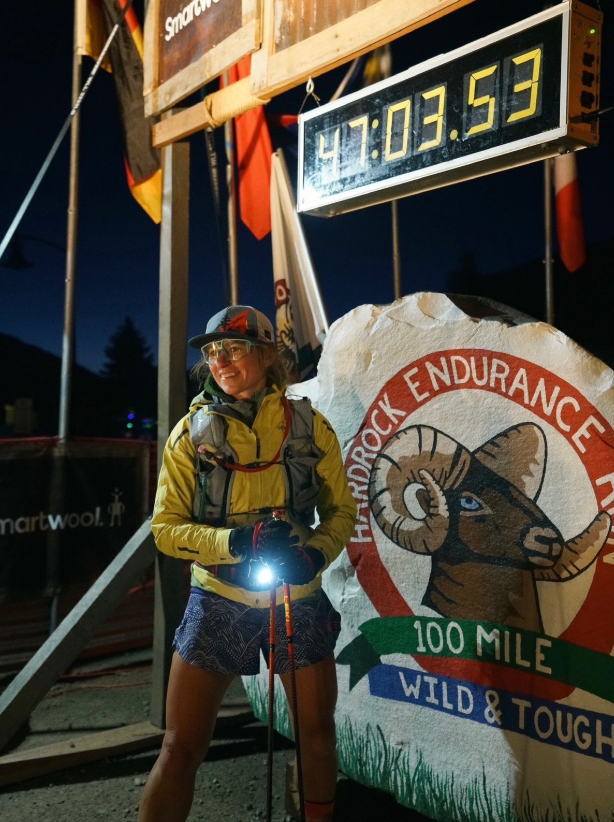
Team RunRun Coach Dandelion Dilluvio-Scott finished the 2025 Hardrock 100 Mile Endurance Run in 47 hours, 3 minutes, and 41 seconds, less than 1 hour under the 48-hour time limit. Far from the 33-hour finish she’d trained for, Dandelion’s mental and physical strength allowed her to endure a myriad of challenges and still finish smiling. Alongside her traditional race recap, which can be found here, Dandelion details her race experience beautifully below.
“It Was The Best of Times; It Was The Worst of Times”
The quote from Charles Dickens’ A Tale of Two Cities perfectly sums up my Hardrock 100 Mile Endurance Run experience: “It was the best of times; it was the worst of times.” But let’s start from the beginning.
Lottery Luck: I’m Racing the Hardrock 100!
On December 1, 2024, I returned from a long desert run to a flood of congratulatory texts. I couldn’t fathom what I’d done to earn so much praise—until I opened my inbox and saw the UltraSignUp receipt. Against all odds, I’d gotten into the Hardrock 100 with only two tickets! In an instant, my 2025 plans were rearranged, and training for high-level mountain running became my mission. It would not be an exaggeration to say that the preparation
involved copious amounts of blood, sweat and tears! The volume of running, hiking, strength work, vert, cross-training, and corrective exercises was massive. Countless talks with my coach, visits to my chiropractor, and physical therapy sessions kept me on track and my body tuned for the intense workload. And then, abruptly, it was time to taper.
The Final Countdown
By the time I arrived in Silverton, Colorado, I felt like a caged tiger—I just wanted to GO! Thankfully, my team kept me in check: easy shakeout run, race check-in, gear review, nutrition planning, crew meeting, bedtime.
Surprisingly, I slept well the night before the race. There was a palpable sense of calm and tranquility. I trusted my crew, my training, and my experience with the distance. Yet I also recognized I was stepping into the great unknown—part of what made it so exhilarating—and I deeply respected the course. I felt confident I had done everything I could to prepare. Now it was time to execute the plan, adapt to the inevitable problems, and see what unfolded.
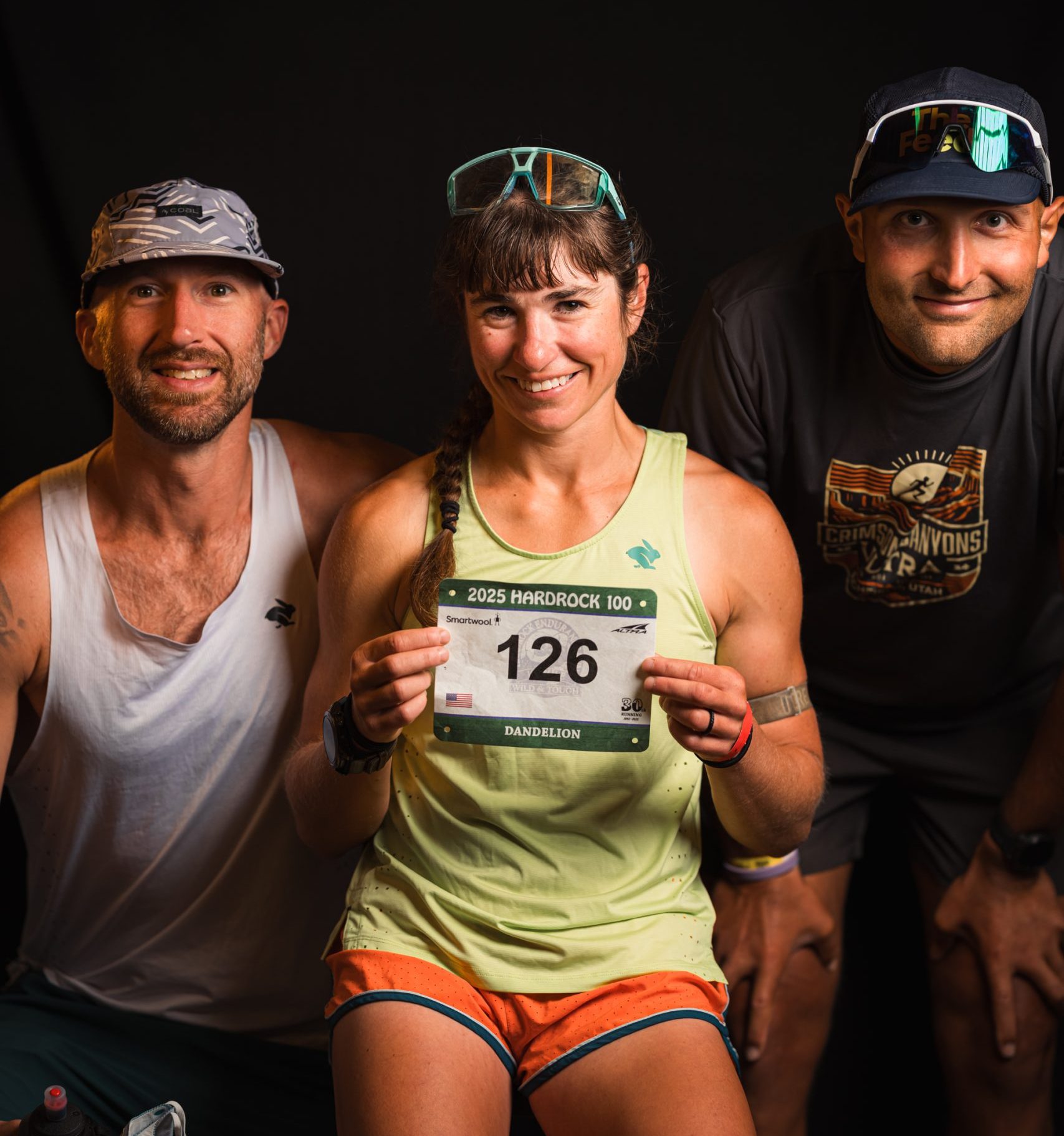
I trained not just to finish but to perform. I wasn’t under any illusion I’d outrun the elite-level runners on the start list, but if everything went well, I believed I could finish in 33–35 hours. On race morning, Dale Garland called us to the corral, and I found myself lining up right next to legends Katie Schide and Zach Miller, two of the best runners in the world. It was surreal! The countdown began—and we were off, galloping down the road toward the mountains.
And We’re Off on the Hardrock 100!
As expected, everyone shot out hot. We were running Hardrock! I settled into my pacing strategy as the wide streets of Silverton gave way to trails, letting the field spread out. This was not the time to race—this was time to chase, savor the moment, and practice restraint. Meanwhile, smoke from wildfires drifted in overnight, and the air smelled of ash. Thankfully, as we climbed higher, the smoke thinned and finally disappeared, revealing astoundingly beautiful 360-degree views.
At the Cunningham Aid Station, my husband met me and guided me to Luke and Andrew. Vest swap. Food. Protein shake. NASCAR pit crew style—I was out of there. I wouldn’t see my team again for about 50K. (You can better understand the names and layout along the course of the aid stations here.)
50 Miles to Remember (Positively)
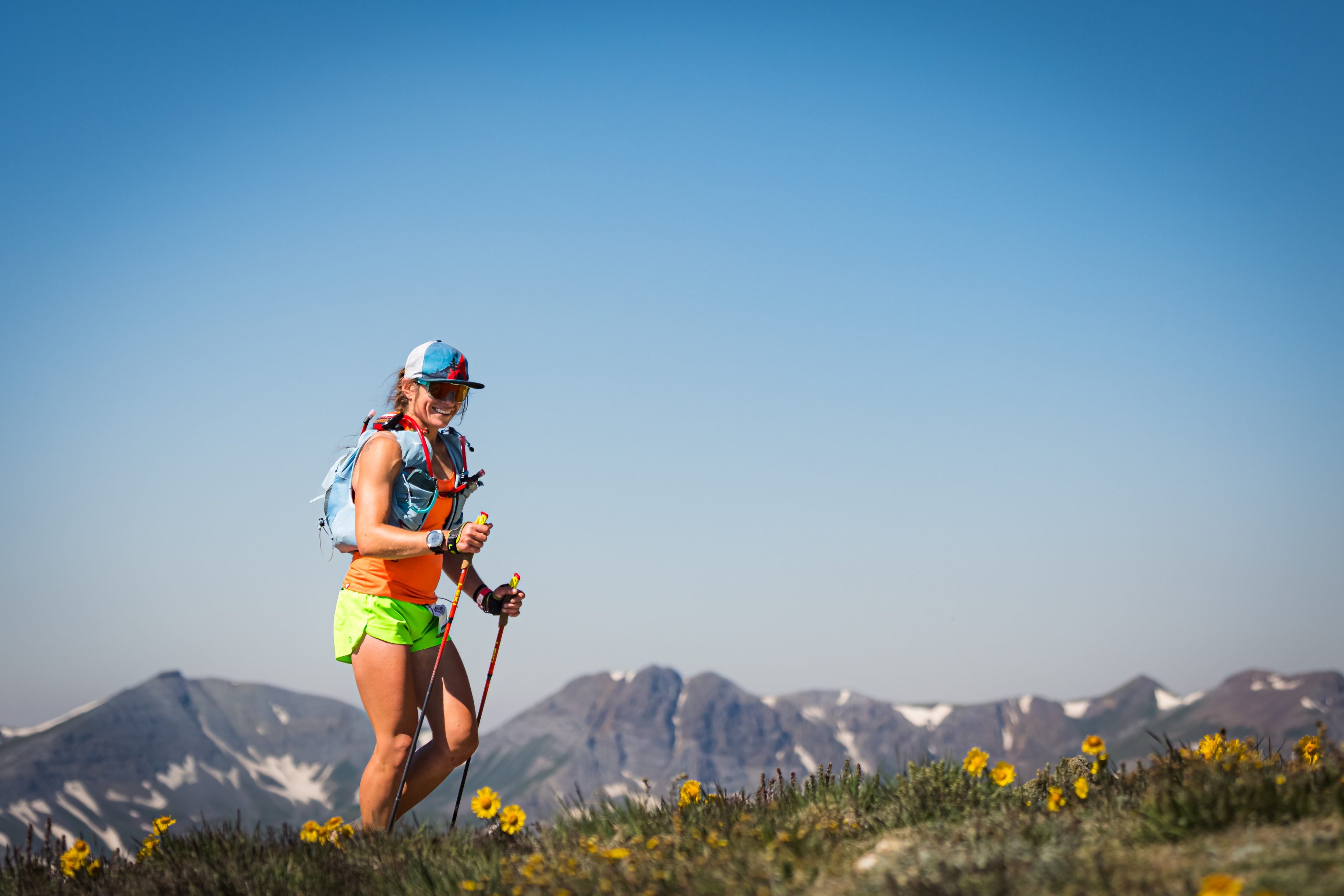
Running ultras without crew support is my norm, so the solo 50K felt comfortable. The section to Burrows Aid Station included steep climbs and the most “rolly” terrain of the course. I trotted along, cooling off in creeks and snow patches as midday heat rose, bouncing in and out of a bubble of runners. Sometimes we chatted, other times we ran in shared silence, awestruck by vast wildflower meadows and stunning vistas. In most races, I barely notice scenery, absorbed in execution, but here I made sure to soak in the San Juans before returning to my race strategy. My fueling, salt, and hydration were on point. Everything was going to plan, and I was having a blast playing in the mountains.
After Burrows, the main objective loomed: Handies Peak—the course’s high point at 14,048 feet. I teamed up with two athletes on the ascent, and together we made efficient work of the climb. Between the great company and tagging a 14er summit mid-race, this was easily my favorite section. Nothing compares to standing atop a 14er during Hardrock!
Steep ascents are followed by steep descents, and this one felt endless but offered incredible scenery. At sunset, I rolled into Animas Forks Aid, reuniting with my crew. Toenail blister lanced, shoes swapped. I tried eating solid food but struggled to swallow—it all felt like sandpaper. Still, I could handle gels and liquids, so I didn’t overthink it.
Night #1: The Unravelling
Luke joined me for pacing duty, and we climbed toward Engineer Pass. Though we were moving efficiently, I observed that my breathing was getting more labored compared to earlier in the day. Then, at the next aid station, I realized solid food was no longer an option, and gels were becoming repulsive. Luke insisted on consistent gel consumption, monitoring each one to ensure I finished it. I was doing my best to keep calories coming in, but I knew I was starting to fall behind. The gorge descending into Ouray was electrifying at night! A narrow and technical trail beside a dark drop-off into nothing. Luckily, my background as an alpinist helped me feel comfortable with the mystery exposure!
Andrew took over pacing from Ouray. The climb out of town—up a dull, washboard road—was my least favorite section. Without Andrew’s engaging stories, those miles would’ve been excruciatingly monotonous. Higher up, the nearly full moon illuminated the craggy peaks, transforming the environment into something magical. By then, I couldn’t eat gels while walking anymore—the simple multitasking spiked my heart rate. Hilariously, consuming one now involved soft whimpers. Even in the moment, I saw the humor in it! Yet, despite everything, I kept drinking fluids (including liquid calories) and electrolytes never feeling dehydrated.
Hardrock Survival Tools: Consistent Training, Muscle Memory, and 5* Crew/Pacers!
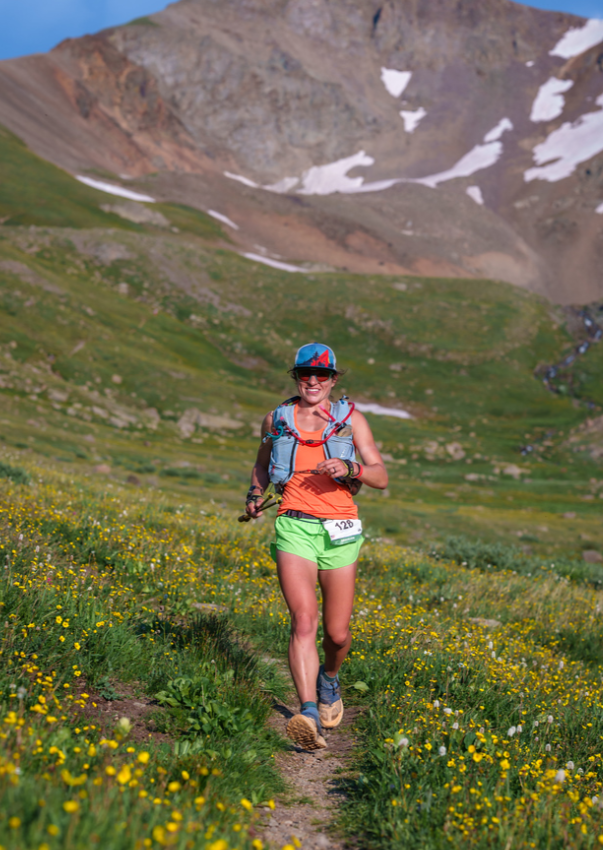
As dawn broke, we climbed steep singletrack. Andrew watched carefully for signs of me sleepwalking off the trail. Though utterly exhausted, I stayed sure-footed. Nearing Kroger’s Canteen aid station, we climbed a 50-degree icy snow slope with a handline for good measure—like boot-packing a glacier with a full backcountry ski pack. Using the “rest step” from mountaineering, I reached Hardrock’s most remote aid station. Andrew remarked how impressed he was that my technical skills were intact after so many miles—a testament to years of ingrained muscle memory, even if I was moving slowly.
A brief stop at Kroger’s brought a few pierogis and broth—solid food was finally tolerable again! We descended into sun-drenched talus, making our way to Telluride. The sun felt revitalizing, but the night had taken a heavy toll. In Telluride, my legs were massaged, and I devoured solid calories, feeling almost normal again.
Andrew, continuing his marathon-long, 10,000 feet-vert pacing shift, set out with me for a remote 10-mile stretch. The first 1,000 feet of climbing went well, but then my body stopped responding. Whether from heat, steepness, or both, my pace collapsed. Concerned about heat illness, Andrew had me pause in the shade regularly and dunk my hat in cold streams. I continued forcing down revolting gels under Andrew’s watchful eye.
A Plan is Great… Until You Get Punched in the (Metaphorical) Face
The low calories overnight had triggered a cascade I couldn’t reverse. Hardrock is unforgiving: without sufficient calories, my body couldn’t regulate itself or cope with heat and altitude as I had the day before. Even though I live and train at altitude, slept in an altitude tent, and did a sauna protocol pre-race, the single issue of being unable to consume fuel overnight dominated.
The early wildfire smoke may have also contributed, but it likely wasn’t the main issue.
Negative thoughts crept in, swirling with imposter syndrome. I knew I was slipping behind, and I questioned if I belonged here. When we paused at yet another creek, I burst into tears.
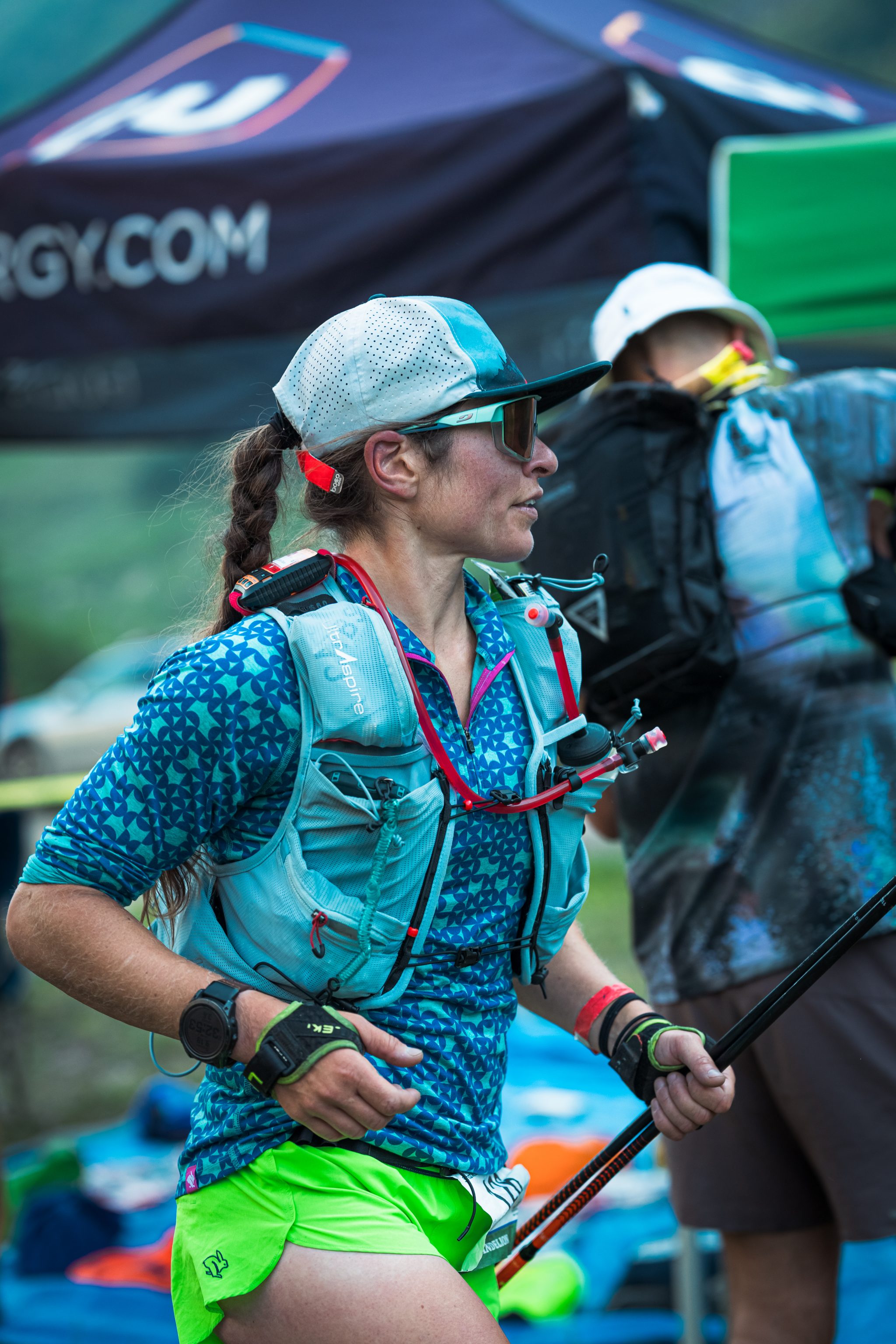
Andrew calmly put his arm around me and asked, “Are you going to finish this?”
“Yes,” I replied through tears.
And just like that, the pity party ended. I needed the emotional release, capped with self-affirmation. I started back up the hill so fast I knocked the wind out of myself—Andrew had to grab my vest to slow me down! Though I couldn’t push hard, my mood soared and determination set in.
Pacer Swap and Into Night #2
After an eternity of climbing, we reached a blustery ridge, then descended a steep talus slope. The San Juans were relentless. At Chapman aid station, I reunited with my crew and serendipitously crossed paths with Kat, a friend from Wy’east Wonder 50M. I ate, got a brief massage, and took a five-minute nap before following Luke up the next wooded trail.
At first, I felt decent, but soon a vague calf tightness escalated into searing pain. Luke, patient but firm, reminded me I had to maintain at least 2 mph on flats and descents to finish. Inside, I thought, Are you crazy? The downs are harder than the ups—and I can’t believe I’m heading into a second night! But I didn’t argue. He was right, and I willed myself to move.
Emerging from the forest, we slogged up ever-steepening talus and scree. I was zoning in and out of consciousness but recognized Grand Swamp Pass—infamously difficult and something I’d looked forward to. I broke the remaining miles into smaller goals: “Just get to the top.” Despite calf pain, I kept moving methodically, drawing on mountaineering experience.
To DNF or Not To DNF the Hardrock 100?
We topped Grand Swamp Pass at sunset, catching the course’s most iconic panorama. One landmark down, next goal: KT Aid Station. I don’t remember much of the descent. At KT, Luke asked what I wanted to do, saying he believed I could finish but would support any choice. The aid station volunteers kindly insisted I still had time. I wasn’t worried about cutoffs—I was evaluating my calf. My personal rule is never to quit because it’s hard or performance isn’t as hoped, but I won’t risk injury that sidelines me for weeks or puts me in danger.
I recalled my husband mentioning a knot during the earlier leg massage, which reassured me. “Let’s go one more mile,” I said—classic!
We got up and headed out. I knew Luke wouldn’t hesitate to be a drill sergeant,
so I decided to not give him a chance to bark orders! Each step was agony and every
rock I stubbed a toe on felt like a knife. I didn’t try to push the pain aside anymore.
Instead, I embraced it. A mile went by… then another. My calf didn’t get worse so I
settled on it being a wicked knot and kept trudging. The truth is, when I left KT Aid
Station I had completely committed to making it to the finish. I just couldn’t mentally handle
thinking about that monumental task yet. One mile seemed much more attainable.
The Final 5 Miles: Putnam to Kissing the [Hard]Rock!
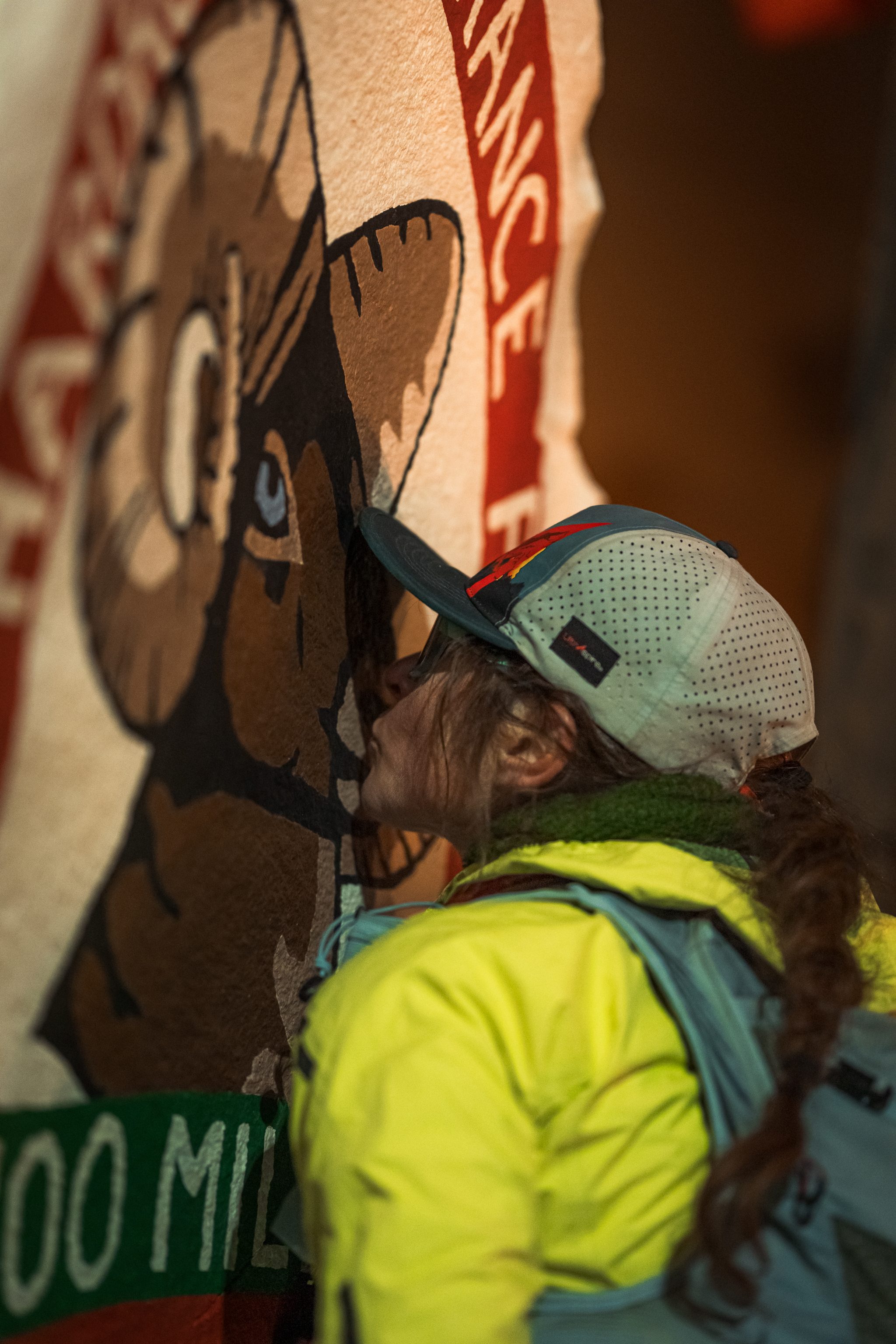
False summits revealed more headlamps, but I accepted there’d be no reprieve until Silverton and pressed on. At the final aid station, Putnam, we quickly refilled bottles before heading into the last six miles. Normally, I follow my pacer, but in this instance, Luke stayed behind, gently herding me down the trail. Moving urgently, but knowing I’d make it within the time cutoff, we even managed some casual conversation, lightening the mood. The final miles flew by: crossing the river, traversing the hillside, climbing up the road, descending into Silverton, through the chute—and finally, I kissed the rock.
Hardrock 100 Post-Race Reflections
Did the race unfold as I’d hoped? Nope, not at all! But oddly, I’m not upset. It’s almost comical: my best 50 miles ever were in the same event as my worst 50 miles—endless comedic value! More importantly, races that don’t go to plan teach the greatest lessons. The grit, determination, and resilience I needed to finish were unmatched in any event I’ve done—including Cocodona 250. I’ll carry what I learned at Hardrock 100 into every future race and adventure. That holds far more value to me than a podium finish. Performance goals push me beyond perceived limits, but what I truly seek is self-discovery on the wilderness path of endurance—adapting and moving with the environment, building grit, remaining a student of the sport, and having a life-changing adventure. Hardrock delivered all that and more.
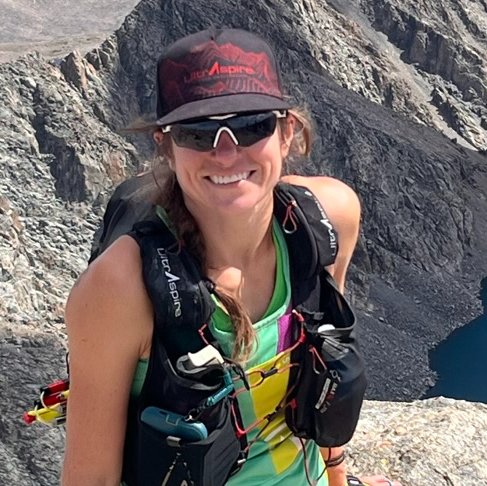
Dandelion Dilluvio-Scott is a multisport outdoor athlete, ultra-runner and certified coach. She is passionate about collaborating with driven athletes who love to explore, train and play outside.