
Rethinking Women’s Sportswear

How well does your sportswear fit? Is it optimized for running economy, efficiency, and performance like the shoes you carefully researched and tested? No? I didn’t think so.

A group of female runners at the track.

When we think about performance in sport, our minds usually go straight to training, nutrition, or the latest piece of high-tech equipment. But one piece of the puzzle rarely gets the same attention — and it should. That piece is what women and girls wear to compete.

For decades, women’s sportswear was an afterthought: a smaller, pinker version of men’s gear. Yet the fit, feel, and design of apparel play a direct role in how athletes perform. Well-designed clothing supports the body’s mechanics, reduces distractions, and boosts confidence. In contrast, poorly designed gear can do the opposite.

Even the biggest brands are waking up to this. In June 2025, the world watched Breaking4, Nike’s high-profile attempt to help Faith Kipyegon become the first woman to break the four-minute mile. Nike poured resources into every detail: pacing formations, weather conditions, super spikes — even Kipyegon’s clothing. The message was clear: marginal gains matter, and apparel is part of the equation.

This isn’t just about elites, though. Girls lining up at their first 5K, college athletes grinding through practice, and women at every level deserve sportswear designed for their bodies and their needs. It’s time to rethink women’s sportswear.

How the Right Fit Impacts the Body

It’s easy to dismiss fit as “just comfort.” But science shows it’s much more. A 2024 study led by Kipp and et al., titled Sports Bra Restriction on Respiratory Mechanics during Exercise, found that the tightness of a sports bra’s underband can actually compromise breathing.
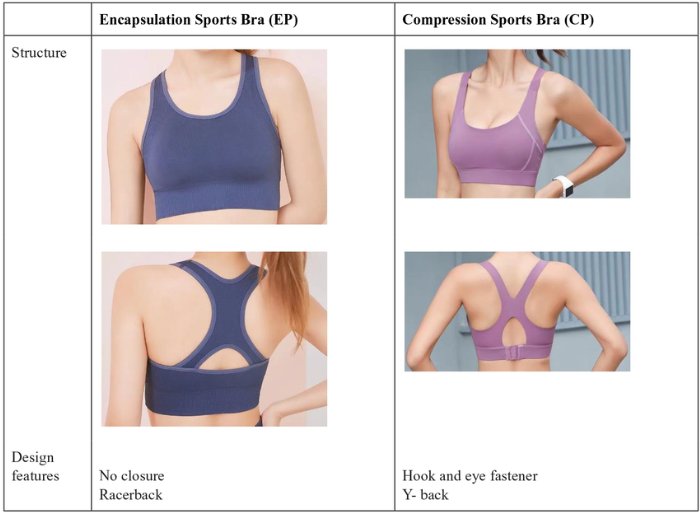
Two different sports bra types and their features.

Nine highly trained female runners performed hard running sessions wearing loose, self-selected, and tight-fitting sports bras. The tighter bras increased the work of breathing, changed breathing patterns (more rapid breaths, smaller tidal volumes), and even raised oxygen cost during steady-state running.

Loosening the underband reduced the energy cost of breathing and allowed deeper, more efficient breaths — essentially improving running economy.

A 2025 follow-up study echoed these findings: women experienced less respiratory muscle fatigue, better ventilation coordination, and lower perceived breathlessness in looser underbands during high-intensity running.

Bottom line: a “supportive” sports bra that feels restrictive may actually be draining your performance.

How the Right Fit Impacts the Mind

Clothing affects not only how our bodies move, but how our minds focus. Research published in Psychonomic Bulletin & Review shows that tight and revealing athletic clothing can shift women’s attention toward their bodies and away from the task at hand.

In that study, women wearing tight and revealing clothes moved more slowly and less consistently on a motor performance task than those in loose, concealing clothes. The researchers suggest that “body monitoring” — being hyper-aware of how you look — diverts mental energy from performance.

This dynamic is especially relevant in sport, where women and girls are often aware of being watched and judged on appearance. Gear that feels comfortable and unobtrusive lets athletes focus on the movement, the skill, the game — not on self-consciousness.
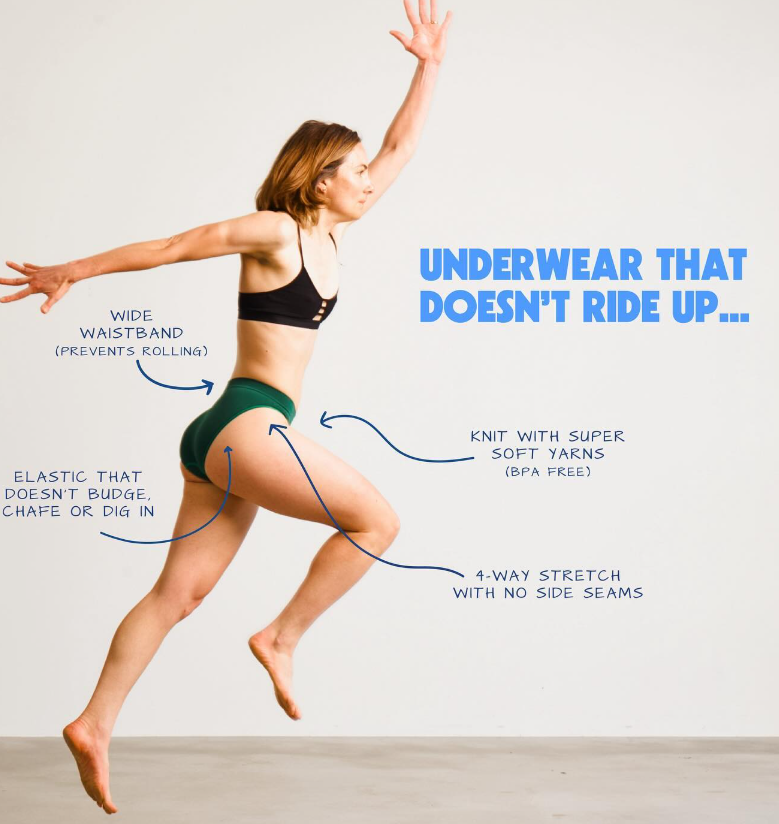
How Paradis Sport are rethinking women's sportwear, starting with performance underwear.
How Paradis Sport are rethinking women’s sportwear, starting with performance underwear.

Why the First Layer Counts

Sports bras usually get the spotlight, but the first layer matters too. Poorly designed underwear can chafe, shift, and distract — especially during high-impact movement. 

A brand that’s doing it right here, rethinking women’s sportswear from the ground up, is Paradis Sport. Founded by and for women, Paradis Sport spent three years and 17 prototypes testing with 37 elite and professional athletes to create performance underwear that stays put, resists chafing, and feels invisible. No itchy tags. No harsh chemicals. And absolutely no distractions.

Elite runners and TRR coaches, Ruby Wyles and Hillary Allen, are singing Paradis’ praises. After years of trying brands that fell short — most designed by men or as an afterthought in a big product line — I (Ruby) finally found Paradis Sport. Their underwear performed so well during my runs and races that I barely noticed it was there. That’s the point.

This post is not sponsored by Paradis Sport, but TRR members can save 20% with the code listed on the TRR Community Discounts page

Time to Raise the Standard

The science is clear: the right apparel can improve breathing efficiency, movement economy, focus, and confidence. However, the wrong apparel can quietly sabotage all of it.

From sports bras that support respiration to underwear that actually stays in place, brands have a chance — and a responsibility — to design gear for women’s bodies, not just shrink down men’s.

Nike’s Breaking4 project showed the world that every detail counts. For millions of women and girls, the right sportwear might not be a marginal gain at all — it might be transformative.
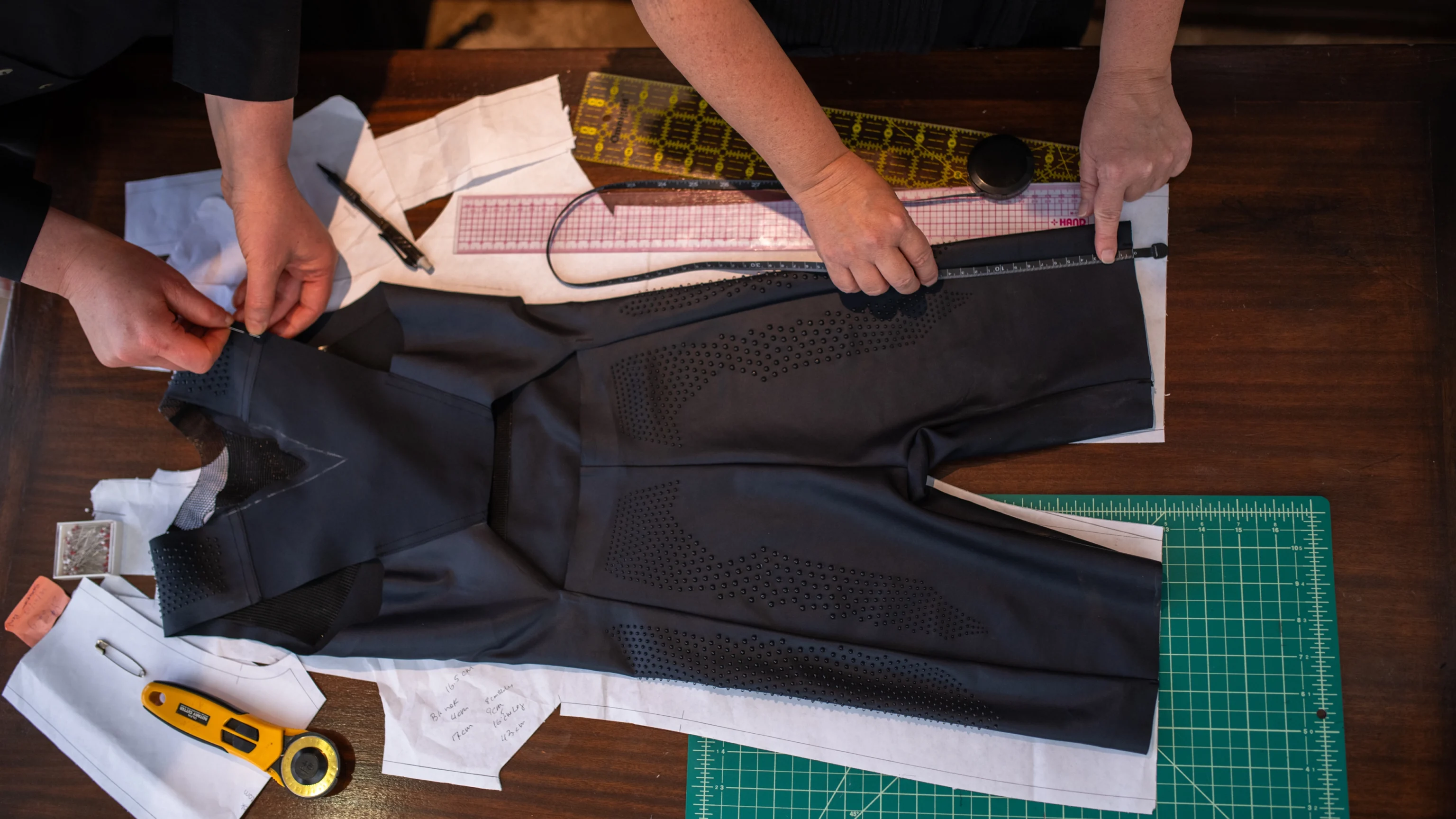
Nike design team custom fitting apparel for Faith Kipyegon's Breaking 4. PC: Nike
Nike design team custom fitting apparel for Faith Kipyegon’s Breaking 4. PC: Nike

Your Move

As athletes, coaches, parents, and consumers, we can push for change. Support brands that are rethinking women’s sportswear and prioritizing their needs. Share feedback. Celebrate companies leading the way.

Because when apparel fits right, women can focus on what matters: breaking barriers, reaching goals, and enjoying the sports they love.

Ruby Wyles is a coach with Team RunRun based in Ann Arbor, Michigan. She is most fulfilled by helping athletes overcome limiting beliefs with joy. Ruby is also a proud science nerd, and advocate for athletes’ mental and physical health.

UltrAspire Legacy 3.0 Race Vest Review

For durable, comfortable way to carry what you need for trail adventures, the UltrAspire Legacy 3.0 Race Vest could be the perfect answer!

Gear Category: Hydration (Vests/Belts/Bottles)

Name of Gear: UltrAspire Legacy 3.0 Race Vest

Typical Price: $120

Where to Buy: Running Warehouse or directly from UltrAspire

TRR Coach Dandelion Dilluvio-Scott trail running with her UltrAspire Legacy 3.0 Race Vest.
Best Use:

The UltrAspire Legacy 3.0 Race Vest is a great option for road and trail runs of any length. However, I think it really shines in 50+ mile ultra distance events and big adventure days in the mountains. Abundant storage space (10 liters) in both the main compartment and variety of easily accessible pockets make is possible to carry ample fuel, layers and safety gear needed for lengthy remote endeavors. If water is scarce on the route, the vest can accommodate a 2-liter bladder in addition to four bottles in front and two bottles in the back side pockets. With so many storage accommodation options, you can easily customize and configure the vest to best suite your personal needs.

Personal Experiences:

The Legacy 3.0 is my go-to vest for unsupported fast and light missions in the deep alpine. I can always fit everything I need (plus a few extras for safety) in this vest. For example, I venture into grizzly country often and the back side pockets happen to fit my bear spray perfectly. I also love that this vest not only features a traditional shock cord attachment for poles, but an ice axe carry attachment as well. This makes the Legacy 3.0 an ideal companion during early season alpine runs when steep snow travel is likely, or if my chosen route happens to cross a glacier or snowfield.

In the isolated and unforgiving terrain I often adventure in, my fitness and gear is frequently my only lifeline. My vest must, therefore, be as rugged as the landscape I traverse. No matter what the distance or how treacherous the terrain, I feel confident that the Legacy 3.0 will survive the journey with it’s robust build. Rewind to an early season adventure last summer, I returned with my shirt and jacket torn but my vest was completely unscathed. When I travel with the Legacy 3.0, I can focus on my footing and surroundings instead of on shielding my vest (and gear within). For me, these qualities make this vest the ideal choice for big adventures in backcountry.

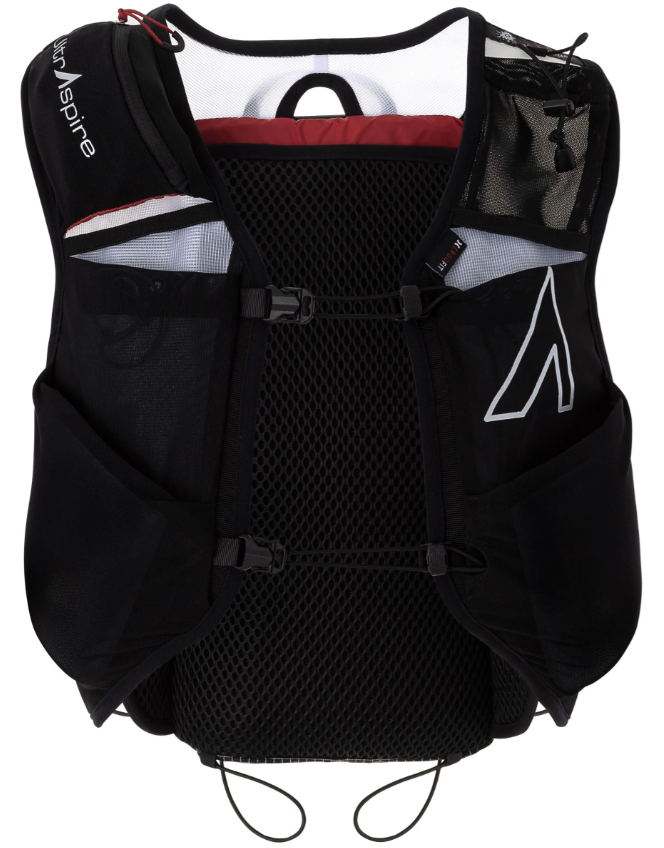
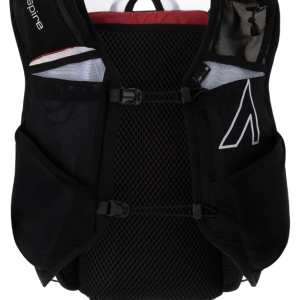
Behind view of the UltrAspire Legacy 3.0 Race Vest.
Sizing:

One size fits most– and they mean it!

Additional Sizing Comments:

As a smaller female, I’m typically hesitant to purchase “one size fits all”. Many products of “one size” will, at worse, fit too loose and, at best, fit awkwardly. Impressively, this is not true of the Legacy 3.0 Race Vest. On me, it fits like it was made specially for my smaller frame. On the other hand, my husband, who is much larger than me, remarks that this same vest fits him like a glove too! It’s truly amazing the wide range of sizes this one vest can accommodate!

Comparison to Previous Models:

The UltrAspire Legacy 3.0 Race Vest has an updated wrap around for improved fit. The reservoir compartment now boasts the insulated UltrAcool sleeve to keep water cold during warm outings. Finally, the upgraded fabrics have durability, breathability, and comfort in mind. More durable, dual adjustable shoulder straps allow for you to run with heavier loads without the vest bouncing.

Comparison to Other Brands:

The Black Diamond Distance 8 is a similar sized adventure vest with durable material. However, I have found their product lacking in pockets and the fabric more abrasive. Salomon carries several vests similar in size too. Unfortunately, Salomon textiles, in my experience, don’t seem to stand the test of time, and the chafing can be unreal. Finally, both of these alternates are not one size fits most.

Durability:
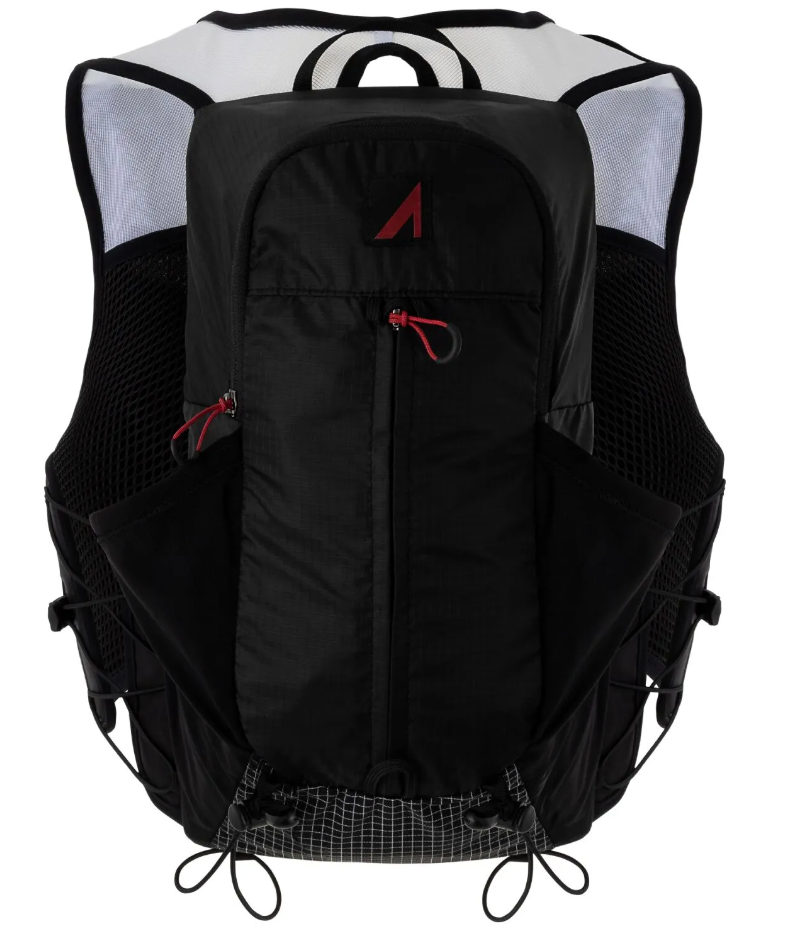
Front view of the UltrAspire Legacy 3.0 Race Vest.

This vest has been with me on 300+ miles of adventures. Some of these outings were traditional trail runs, but most were big mountain outings. The vest scrapped up against rocks while scrambling, and was subjected to thick foliage while bushwhacking. It also carried my ice axe. Safe to say, I’ve put the UltrAspire Legacy 3.0 Race Vest to the test and it’s still like new, without even the slightest hint of fabric deterioration or a single tear.

Changes for the Next Model:

I’d like more color options (currently only available in black).

The True Test – Would You Recommend It?

Yes, I think the UltrAspire Legacy 3.0 Race Vest is an outstanding adventure and race vest that would be a wonderful addition to any athlete’s quiver, especially if they are rough on their gear in the mountains. This is also a handy vest in a household where a vest is shared between several athletes since this one size really does fit most!

Keeping it Honest – Did You Get This Gear for Free?

Full disclosure, I am sponsored by UltrAspire, but used their products well before I had a relationship with the brand. I do not get anything from the company for leaving a positive review. I received this vest for free as a prototype before it was released.

For more vest reviews, check out Salomon Adv Skin 12 Set Hydration Vest Review

Dandelion Dilluvio-Scott is a multisport outdoor athlete, ultra-runner and certified coach. She is passionate about collaborating with driven athletes who love to explore, train and play outside.

ActivityTracker App Review

How the ActivityTracker app can help runners stay consistent and connected to their goals.

ActivityTracker app screen on an Apple Watch.


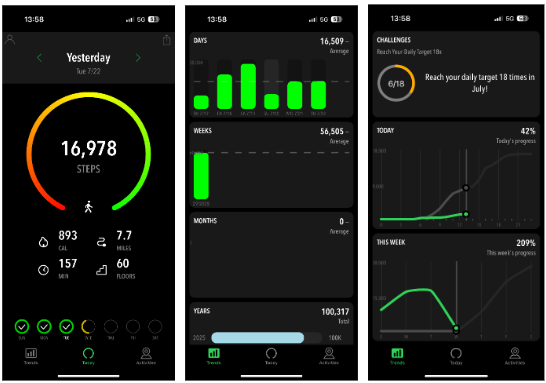
We are surrounded by distractions in our day-to-day life that can push fitness goals to the wayside: that’s where the ActivityTracker app comes in! Your personal accountability partner in your pocket, ActivityTracker helps you stay consistent and progressing towards your goals. Here’s how:

1. Real-Time Feedback

ActivityTracker uses your phone or Apple Watch to monitor your steps, distance, active minutes, and heart rate. The real-time feedback from the app can be particularly useful for those just starting out to understand their movement habits. Similarly for coaches, the app allows them to see a wide variety of their athletes’ metrics.

2. Visualizing Progress

Let’s be honest, tracking your progress over time can be motivating. Daily and weekly charts, monthly mileage goals, and habit streaks make fitness more tangible and rewarding. The ActivityTracker app is very user friendly, with a clean interface that makes tracking activities a breeze–even for those who are not very tech savvy! 

3. Goal Setting and Accountability

You can set a variety of daily and weekly goals: steps, calorie targets, distance covered, and more. ActivityTracker also offers reminders to help you stay active. Personally, I think this feature is awesome–especially for those who are tied to a desk for work–prompting you to get up and move in order to stay on track with your goals.

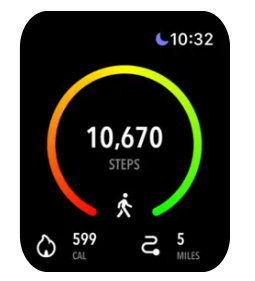
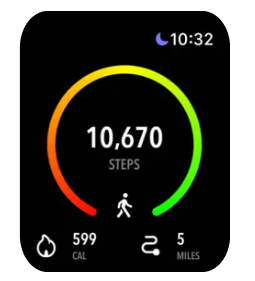
Screenshots from the ActivityTracker app.

4. Workout Tracking

As the name “activity tracker” implies, you’re able to log your walks, runs, hikes, and bike rides with ease. The app seamlessly integrates with Apple Health and Apple Watch, as well as providing its own in-app tracking feature to collect workout data and log your fitness.

One of the most beneficial parts of the ActivityTracker app is the ability to see your trend data. By evaluating your workout history and trends, you can get a look at whether you might be under or overtraining. For example, you might notice a link between days you strength train and days you don’t hit your step count or distance goals. Or perhaps you see that after a rest day, your daily step count is through the roof!

Not only do you see activity patterns for the past few days and weeks, the app gives you trends over months and years! If you develop an injury, you can easily look back through your workouts and activity trends for the past weeks and months prior, allowing you to identify potential contributing factors. This may include jumps in weekly mileage or step count, additional training sessions, intensity increases, and more. 

In addition, the historical trend data is also great for those who want to see their progress, providing a visual representation of where you started and how far you’ve come.

ActivityTracker App: Final Thoughts

To summarize, the ActivityTracker app isn’t about being perfect—it’s about being present. It helps you stay engaged and motivated with your goals, and build momentum one day at a time. Whether you’re a casual walker or an avid runner, using the activity tracker could be the smartest way to stay in motion and keep the motivation to continue chasing big goals!

Compatible with both Apple and Android devices, you can check out the app here.

Jake Eckberg is a coach with Team RunRun based in Pittsburgh, Pennsylvania. He helps runners of all levels train for distances from the 5K to ultra marathon distances, through the pillars of consistency, growth, mental toughness, injury prevention, and recovery.

On Cloudsurfer 2 Shoe Review

Instagram advert for On's #SoftWins campaign featuring Elmo and the Cloudsurfer 2. PC: Instagram @on
Instagram advert for On’s #SoftWins campaign featuring Elmo and the Cloudsurfer 2. PC: Instagram @on

Well, well, well, I finally got to try a pair of On running shoes: the On Cloudsurfer 2. After seeing the On logo everywhere–in the mall, on various roads and running paths, on Rich Roll’s t-shirt–I finally got to see (well, feel) what all the Swiss fuss is about. 

The On Cloudsurfer 2 is the main protagonist in On’s new #SoftWins campaign. This updated Cloudsurfer model has had a starring role in TV commercials alongside Roger Federer, Yared Neguse and Elmo. While I was under no impression that the On Cloudsurfer 2 would give me the footspeed of Yared or the hand-eye coordination of Federer, I was hoping the shoes would impart some Elmo-like whimsy into my daily runs. 

On Cloudsurfer 2: A Brief Overview

The premium every day trainer in the On lineup, the Cloudsurfer 2 is a cushioned, neutral shoe designed with the everyday runner in mind. It’s $160 price tag places the Cloudsurfer 2 in the upper tier of the daily trainers, but a notch or two below other superfoam competitors. The midsole, made of On’s proprietary Helion superfoam, together with the computer-optimized outsole create a smooth, cushioned ride. 

Did the On Cloudsurfer 2 deliver any of that long sought after running-whimsy? It’s time to find out!

Upper 

On first impression, the On Cloudsurfer 2’s upper looks and feels heavy. While not overdone with overlays and plasticy patchwork, the mesh upper materials feel thick to the touch. However, once on the foot, the stretch of the mesh does a good job of forming to your foot shape, without feeling constricting. Breathability? Dialed for warm weather running. The upper has kept my feet from getting too warm on the run, although I also wear ultrathin lightweight socks with the Cloudsurfer. Better safe than overly sweaty feet!

Kyle Fulmer modeling the On Cloudsurfer 2.

Midsole

I had heard that previous On models were a bit stiff and rigid underfoot. With the new #softwins campaign, I wasn’t quite sure what to expect. In my opinion, this midsole is neither overly stiff, nor overly soft. I have grown a bit annoyed with the uber-softness of the Hoka Clifton 9s, and so the responsive, but not overly “soft” transition of the On Cloudsurfer 2 was a welcome relief. Their signature CloudTec Phase cushioning, while not super obvious, allows for a smooth rocker like flow, while maintaining the advertised neutral ground feel. 

Outsole

Side profile of the On Cloudsurfer 2, showcasing the outsole's CloudTec system and upper design. PC: On website
Side profile of the On Cloudsurfer 2, showcasing the outsole’s CloudTec system and upper design. PC: On website

After 50 miles, I am starting to see some very slight wear on the back of the sole. I am a heel striker, who tries his darndest to be a midfoot striker …one of these days! The rest of the outsole looks great. Word of warning, the CloudTec system does pick up rocks and debris if you’re jogging on gravel paths and trails (see picture to the right). It is definitely a road shoe, not an “all-rounder”. I usually mix in some dirt running on almost every outing, so I have to pay attention to not picking up any unwanted stones on the go.  

Fit

True to size. I wear a US Men’s size 12.5, and the fit is spot on. 

Weight 

Weighing in at 314g for my US Men’s size 12.5, the On Cloudsurfer 2’s do not feel heavy. While they would not be my go-to for hard workout days, they are just fine for my daily miles, alongside random strides and intervals from time to time. 

Weight comparison with my other daily trainers in the shoe cubby: (Again, for a US Men’s size 12.5)

  • On Cloudsurfer 2 – 314 grams
  • Hoka Clifton 9 – 294 grams
  • Nike Pegasus 40 – 341 grams (!!)

On Cloudsurfer 2: Overall Thoughts

In summary, I think On is very close to making a very fine daily trainer with the Cloudsurfer 2! With a minor tweak to the upper (thinner mesh materials), this shoe would be a standout. My usual barometer for shoe durability is upwards of 350-500 miles, and I hope this shoe can take me there. For daily running, I am more often than not gravitating to the On Cloudsurfer 2 over the other trainers listed above. Next up, I’ll look to try some of their trail offerings, since I saw some of those on the trail yesterday! 

For more nitty gritty details and shoe technology, take a look here.

Kyle Fulmer is a coach with Team RunRun and our social media manager extraordinaire. He is an experienced trail and ultra coach and athlete based in Boulder, Colorado.

Should You Be Consuming Media While Running?

The curious case of the dead headphones and missing running mojo.

As a knowledge worker, I’m behind a computer screen consuming media for most of the day. It’s constant stimulation: DMs, email, meetings, phone calls, etc. Going out to run in the morning or at lunch is my way to free the body and the mind. I’m suddenly out of the chair, away from the dings and beeps, running free down the trails with time as the only constraint.

When running started to suck

I love this free feeling. It’s what drew me to running many years ago. A couple months ago, though, I found that feeling wasn’t there during the run, and I didn’t feel rejuvenated or empowered afterwards either. I couldn’t figure out why. Instead, I felt mentally exhausted, and it kept piling on day after day. The joy was disappearing. What was happening? 

Runner adjusting their headphones pre-run.

The case of the dead headphones and missing mojo

Deep in a training block, taking a long retreat to reevaluate my perspective and purpose wasn’t really an option. Instead, I just kept trucking along like a rusty old robot in desperate need of something to light my soul. Then one day, I went to grab my headphones and realized I forgot to charge them. No big deal. I enjoy running without them, so I just decided to go.

The accidental solve

Arriving home an hour later, I could not tell you where I went or what I thought about. My mind was blank for the entire hour. I just settled into the grooves on the trail, went where my feet wanted to go, and came home with that old spark of freedom and clarity I used to have. Whoa! What happened? Was it the trail? Was it my energy that day? Some superfood or special supplement I had unknowingly taken?

Then it hit me. I had been using my runs to consume things, media to be specific, trying to “maximize my time”, caught in the productivity trap. Audiobooks, podcasts, phone calls, music. My mind was getting that dopamine stimulation all day long at work and now my runs, which had previously been a break, were part of the stimulation tornado too. I’d been sucked in. 

Reclaiming running free

Realizing this, I started leaving the headphones at home, any expectations alongside them. I didn’t have anything planned to think about. I just ran and let my mind do whatever it wanted to do. Daydream? Sure. Brainstorm about work? Sure. Nothing? Sure. My runs were once again my mind’s playground, and I felt energized and free.

Media while running: In or out? Or can a happy balance be found?

I’ve always been someone who takes big pendulum shifts of change in my life. That cheesy pizza last night upset my stomach, so today I’m cutting out dairy completely. Terrible choice by the way, pizza is magical for runners, dairy too. I’ve come a long way in realizing that I need gradual change not drastic change. This experience also fell into that category.

It was drastic at first. No media while running. But now, I’m in a much better place. I still don’t do podcasts or audiobooks, but I did reintroduce music. Anything that enhances, not detracts, from the running experience is what I’m looking for. Cue Bertha by the Grateful Dead for an easy trail run. I’m looking for a way to escape the noise, the stimulation, and business of modern life. I’m looking for the pure form of something, something that connects me to nature, to myself, and makes me feel whole afterwards. If music enhances that, then plug me in. 

Runner logging some miles without consuming media.

How to reevaluate your own media while running relationship

As a coach and runner, I’m always looking to fulfill mind, body, and spirit: the holistic running experience. I want to set myself and my athletes up for long-term success and enjoyment in the sport. As I look back at this experience with media while running, I realize that sometimes you just need to reevaluate what you’re doing and why. I don’t want to lose the joy and freedom I find in running. When that joy and freedom disappeared, it was a big red flag for me. Both my performance and my mental health suffered. If you’re feeling this way, take account of how you’re treating your mind during runs. Are you giving it the space it needs? Are the things you’re doing during your runs serving you or hindering you? 

For me, I needed to reclaim that calming space that running gives me. I’m a more free and peaceful version of myself on and off the trail by giving my brain some time to just be, without the headphones. If you’re the opposite and find that consuming media truly adds to your running and life, great, keep going! Figuring out how you want to feel before, during, and after running can start with you asking yourself “what’s here for me today?”. Or, as in my case, with forgetting to charge your headphones and involuntarily reclaiming the calm, peace, and simplicity of a daily run and realizing what you’ve been missing all along. 

Ryan Williams is a parent, proud dog dad, athlete and coach who believes running is a metaphor for life. He specializes in forming positive bonds with runners of all ages, distances, and abilities from couch-to-5k to ultramarathon. 

Museum of Distance Running (MODR) Clothing Brand

The story of how one Team RunRunner, Jared Younger, is merging his love for running and fashion, with self-expression and creativity.

The first thing that probably springs to mind when you think of running gear is high-performance clothing, clothing designed for functionality rather than fashion. Jared Younger, founder of Museum of Distance Running (MODR), wasn’t satisfied. At the heart of MODR is a passion for self-expression and freedom, on the run and beyond. MODR is about more than fancy fabrics and stylish designs; it’s about using running gear to showcase one’s unique style. Jared has produced something genuinely original by fusing his personal passion for running, fashion, and art.

A t-shirt from Museum of Distance Running's first product release in 2024, known as "Exhibit 001".
A t-shirt from Museum of Distance Running’s first product release in 2024, known as “Exhibit 001”.

MODR: Solving the Problem with Most Running Brands

The story of Museum of Distance Running begins with Jared’s personal running experience. Coming from a background in design, especially apparel and fashion, Jared was always aware of the power of self-expression through what you wear. But as he began his running journey, he quickly realized that most running brands didn’t speak to his personal taste. “The running gear available at the time was mostly performance-driven. You’d put on your Asics or Nikes, then change into ‘real’ clothes afterward. I didn’t feel natural wearing the ‘running uniform,’” he explains.

Determined to solve this issue for himself, he started experimenting with running in vintage tees, soft 50/50 blends, and retro mesh hats. Eventually, the gear he wore for runs became the gear he wore when he wasn’t running—at coffee shops, or just hanging out. And that’s how MODR was born. “I pulled in my fashion and design references, creating pieces I wanted to wear,” Jared says. He wasn’t afraid for MODR to stand out, in fact, he welcomed the brand feeling “ left of center from mainstream running apparel”.

The name “Museum of Distance Running (MODR)” was born during Jared’s trip to Sweden visiting the Moderna Museet with his girlfriend in 2023. One painting in particular had “this infinite, cyclical quality that felt very reminiscent of life and my relationship to running” Jared recalls. “And that got the ball rolling in terms of using art references to make a [clothing] brand that lives in the world of design and art” in collaboration with what he felt was lacking in the running apparel space. 

Fusing Running with Business and Creativity

Unsurprisingly, running and MODR are inexplicably intertwined, both being vehicles for freedom and self-expression. For Jared, “Running gives me space, and it frees me up, which is exactly what I want MODR to do. Like running, MODR has a casual tone that gives you space to lean into who you really are.” 

The act of simply putting one foot in front of another offers him mental space to let his ideas flow freely, which often leads to new inspiration for his work. “Sometimes, that leads to ideas that go straight into the projects I’m working on. Other times, it’s just a way to clear my mind and let my thoughts wander.”

Early Wins and 1st Birthday Celebrations

As MODR celebrates its 1st birthday, Jared reflects on the brand’s high points so far and its immediate impact. “We launched in March 2024 with a collaboration with The Speed Project. The hats and shirts we did for them sold out in a day,” Jared recalls. “Nobody had even heard of us before, so that was extremely unexpected and exciting.”

This staging accessory shows how every aspect of MODR is intentional and well-thought through.

But even beyond the early success, Jared is simply grateful for the opportunity to create something that resonates with people, while staying completely true to himself. “I feel lucky that I get to do this,” he says. “When someone connects with what we’re doing, it’s such a rewarding feeling.”

The Difficulties of Establishing a Brand on Your Own

It’s never simple to build a brand, especially without a team or financial backing, but Jared is far from naive to the challenge. Jared and his business partner, Lucie Beatrix, are Museum of Distance Running, crafting the brand from scratch alongside their regular day jobs. “It’s a passion project for sure,” Jared acknowledges. “We aren’t in this to try to sell anybody anything. We don’t do marketing, which is convenient because we don’t even know how. But we are trying to create a world and perspective and find the people that relate to it.”

The focus on quality over quantity and staying true to their core values shines. Jared shares, “we’ve turned down a few collaboration opportunities because we are still building our world. We are looking for something that can stand on its own before trying to muddle our messaging.”

As idealistic as that sounds, the difficulties are real for these two young, emerging entrepreneurs. From clothing and web design, to managing taxes and accounting, the pair wear many hats. But Jared wouldn’t want it any other way. “Not having a boss and instead getting to build your own vision is a privilege. And when we see success, it makes it that much sweeter. Every person that wears MODR is greatly appreciated. We ship the orders out ourselves. We see your names, and we write notes to all our customers. The small scale makes everything very personal.”

Why Museum of Distance Running is Not a Performance Gear Brand

Establishing a running apparel brand isn’t an original idea; as running has exploded since the pandemic, many startups and indie brands have flocked to the space, hoping to capitalize on the growing trend. What sets MODR apart and, I believe, gives them staying power, is the depth of their vision and values. They’re not trying to sell to everyone or compete with the giants like Nike, and MODR proudly is not a performance brand.

Here’s Jared again: “Right now, with this running boom we have, we see a lot of emphasis on performance. We have amateurs training like pros. The science on nutrition, training methods, shoes, etc is readily accessible to all. We love this stuff, too. But we appreciate that running is also an expressive act. It’s performance art as much as performance. It’s a raw, gritty, and bold experience. So MODR is more interested in expressing that individuality and offering the freedom to do running your way, with a sense of personal style at the same time.”

Jared works to “create pieces that extend this perspective off the roads, letting you express this side of yourself whether you are running or going to a coffee shop. There are a ton of brands doing performance gear really well. And we cheer them on. But adding to that category isn’t what we are interested in. We are looking for a lifestyle expression.” 

Team RunRun and the MODR Experience

Jared highlights how “the Team RunRun newsletter is filled with inspiring personal stories. All of us are doing this for our own reasons, and each person does running their own way. There are no rules to this. So those stories give me optimism that people are being intentional about how they are existing in the world, with goals and purpose. And I hope that everyone is doing it their way, embracing their uniqueness.” It is this spirit of running, the individual experiences each of us bond over, that MODR looks to embody in every piece they produce.

MODR's Exhibit 003 long sleeve tee
MODR’s Exhibit 003 long sleeve tee

When it comes down to it, Jared’s goal for MODR is simple: he wants people to feel confident, free, and excited when they wear the brand. Jared hopes MODR inspires others “to go against the grain and encourage them to find ways to express themselves.”

Upcoming Releases and Connecting with Museum of Distance Running

Extending the museum metaphor further, every collection release is an “exhibit”. Museum of Distance Running’s Exhibit 004 is in the works, alongside another special project that Jared is extremely excited about. Each exhibit is completely original with limited quantities, with sales run entirely through their website. Once it’s gone, it’s gone. No restocks. (Though hopefully the next exhibit is on the horizon!) There are still a few pieces from Exhibit 003 available here. Jared is kindly offering the Team RunRun community 10% off with code “TRR10”.

To ensure you don’t miss the release of Exhibit 004, and to get early access to new drops, consider subscribing to their email list on their website. And of course, give them a follow on Instagram @museumofdistancerunning to see MODR’s latest releases and more unique content.

by Ruby Wyles

This article is not sponsored by Museum of Distance Running (MODR) or compensated in any way by the brand. Instead, we wanted to share how one Team RunRunner, Jared Younger, is merging his love for running and fashion, with self-expression and creativity. He invites you to do the same.

The Gamification of Fitness: Can Wii Play Too?

The gamification of fitness is a trend that has been gaining popularity over the past couple decades with fitness video games and virtual leaderboards. More recently, we’ve seen the marriage of fitness games with VR technology, but it goes as far back as the Nintendo Wii’s Wii Fit and Wii Sports series. Likewise, the PlayStation and Xbox consoles of the era also had their own fitness series’, and newer models have continued to follow suit. But do these have a place in a fitness regimen? The answer might surprise you as we’ll seek to explain in the following article. 

The gamification of fitness using virtual reality (VR) technology. PC: Victor Bordera/Stocksy
The gamification of fitness using virtual reality (VR) technology.
PC: Victor Bordera/Stocksy

For the Fun of the Games

For the average person, the gamification of fitness can be a powerful motivator and used to make exercise fun. If fitness isn’t enjoyable, people are far less likely to start or stick with it in the long term. People far and wide also love good healthy competition, whether online with players around the globe or with family and friends in the living room sitting next to them.

Woman doing the popular fitness game of "Wii Fit". PC: Emmanuel Dunand
Woman doing the popular fitness game of “Wii Fit”.
PC: Emmanuel Dunand

Popular fitness platforms like Peloton even have leaderboards affiliated with all their classes. Peloton have developed their own “video game mode” of riding called LaneBreak, where riders’ workouts are scored and ranked. Before starting, riders also get to choose between five difficulty levels, adding another common video game element to the experience. As explained on the Peloton Support site “along the track, you will encounter various objects, called Moments. Moments are based on the workout goals and intensity of the song and require different cadence/resistance or speed/incline values. Score points by hitting target metrics while in the Moment”. If Peloton had a crossover episode with Guitar Hero, that’s a fairly spot on assessment of LaneBreak, although you aren’t expected to press down on the pedals to the exact beat of the music for the entirety of a song. 

Wii Would Like to Play!

On the classic Wii Fit, common key health metrics are also taken into account such as BMI. Believe it or not, actual research studies were conducted on the use of Wii Fit and similar fitness games. These exercise modalities showed merits in clinical settings and places such as nursing homes, where participation allows those unable to perform daily rigorous activity to still increase heart rate and improve overall health.

In a study of 30 individuals with multiple sclerosis, Wii Fit demonstrated benefits over a 7-week period. They each completed the same Wii Fit program consisting of yoga, balance, strength and aerobic training, 3 times per week. According to this 2011 article, researchers reported that “all physical assessment scores moved in a positive direction at 7 weeks, providing some indication that overall fitness levels improved” (Plow & Finlayson, 2011). Wii Fit received praise for it’s accessibility, meeting participants where they were at, no matter their functionality levels. In addition, it helped promote weight loss and weight loss self-monitoring while improving strength and balance through core stability training.

Do Fitness Games Have a Place in Athletes’ Training?

While it by no means should be a cornerstone of your fitness program, the gamification of fitness can be a useful tool for those looking for a little extra motivation (something that can be hard to come by in the winter months) or for a little variety in cross training. No matter how hard you Wii Fit, it can’t replace the specificity of training. As runners, the general principle is if you want to improve at running, you’ll need to run more. For many, having a race on the calendar provides plenty of motivation. However, if wanting to climb up a few more spots on the leaderboard, improve that high score or health metric motivates you to train consistently, use them!

TLDR: The Gamification of Fitness

Especially for newer runners or athletes, gamifying fitness can give purpose to the training and allow you to recognize the progress that you’re making. In essence, it can provide a gateway to fitness for the beginner. Whether it’s as that beginner runner’s first step, or as means to improve quality of life and health in clinical settings, these tools have a place in the world of fitness and are here to stay.

References

Peloton Support. (Retrieved 2025, February 10). Peloton Lanebreak. https://support.onepeloton.com/s/article/4428892792596-Peloton-Lanebreak?language=en_US 

Plow, M., & Finlayson, M. (2011). Potential benefits of nintendo wii fit among people with multiple sclerosis: a longitudinal pilot study. International Journal of MS Care, 13(1), 21–30. https://doi.org/10.7224/1537-2073-13.1.21

Brian Comer is a coach with Team RunRun based out of Portland, Oregon. His goal is to help you grow as a runner and a person through consistent training.

COROS Heart Rate Monitor Review

Name of Gear: COROS Heart Rate Monitor

Gear Category: Accessories/ Technology (heart rate monitors)

What the COROS Heart Rate Monitor looks like when not being worn.

Typical Price: $79

Where to Buy: coros.comrei.comskimo.cobackcountry.comrunningwarehouse.com

Best Use:

Athletes are always in search of wearables that will provide more data! However, metrics mean little if they aren’t accurate. Wrist monitors on today’s watches have come a long way, but there are still large inaccuracies and anomalies that can occur. For example, when I grip a trekking pole, my watch will often read a low heart rate (HR) regardless of intensity level. Chest straps have long been the standard option for athletes who desire the most accurate HR data. Often they can be paired with a watch to make the real time HR readings accessible in action. That said, some folks, myself included, find wearing a chest strap to be uncomfortable at best or, at the worse, a recipe for chaffing. Additionally, chest monitors can interfere with avalanche beacon signals. This makes them risky for both skimo athletes and runners who enjoy high alpine adventures in the snow.

How?

The COROS Heart Rate Monitor provides a more accurate reading than wrist monitors while avoiding the shortcomings of the chest strap outlined above. This low profile heart rate monitor (HRM) is mounted on a soft elastic band and fits comfortably around the bicep of the user. Yes, the bicep! The HRM activates automatically once on the athlete’s arm. Then, after the initial set up, syncs to most watch brands and devices via Bluetooth (it doesn’t have to be another COROS product). The location on the bicep makes the device hardly noticeable to the user, decreases chafe probability and mitigates the interference issue with an avalanche beacon.

When? Where?

The COROS Heart Rate Monitor can be used in any situation where an accurate HR reading is desired. This includes roads, trails, long runs, races, training, etc. The only scenario I can think of where this monitor might not be a good fit is in a 200+ mile race due to the limit of 38 hours of active battery life. However, this is a highly specific situation and 38 hours is plentiful for most users. While the HRM is perfectly fine in rainy, wet conditions, it’s not suitable for swimming with as Bluetooth signals don’t carry underwater.

TRR Coach Dandelion running with her COROS Heart Rate Monitor on her left bicep. PC: Damien Scott
Sizing:

True to size.

Additional Sizing Comments:

The standard band is easy to adjust and fits a large variety of arms. There is also a large size band for athletes who require more volume. In either case, I suggest first adjusting the band snuggly, but not too tight, with your arm bent as though you were doing an arm swing while running. Micro adjustments can then be made from this point. I have found that sizing the band with your arm straight does not account for the increase in bicep size when the arm is bent. Therefore, it can end up being too tight.

Comparison to Previous Models and Other Brands:

Arm band heart rate monitors are relatively new developments. This COROS Heart Rate Monitor is the first, and most popular, model available. Other options include the Wahoo Tickr Fit and Polar Verity Sense, though I haven’t tested or heard much about them. All three come in at a similar price range of $79 to $99.

Durability and Accessibility:

I have been using the COROS Heart Rate Monitor for about 9 months during both training and ultra distance races. It has accompanied me in temperatures ranging from -20F to 102F (that’s -29C to 39C) and performed without issue within that range. It was subject rain, hail, dust and a variety of other harsh environmental factors. Aside from the elastic band getting dirty there is no noticeable wear on the device itself. (The band can be easily washed with soap and water.) A new band can be purchased for $25 in a different color if desired or if the elastic wears out over time, though this hasn’t happened to mine.

Changes for the Next Model:

A battery indicator on the device would be handy, but it is certainly not imperative. My watch does give me an alert when the heart rate monitor battery is very low. But it would be nice to know before it is “mission critical.”

The True Test – Would You Recommend It?

Yes, absolutely! I often recommend the COROS Heart Rate Monitor to the athletes I coach and to friends who are looking for a more accurate heart rate monitor and/or do not care for chest straps.

Keeping it Honest – Did You Get This Gear for Free?

I did not get this device for free nor do I currently receive any compensation for recommending/reviewing this product.

Dandelion Dilluvio-Scott is a multisport outdoor athlete, ultra-runner and certified coach. She is passionate about collaborating with driven athletes who love to explore, train and play outside.

Suunto Wing Headphones Review

Running headphones have certainly evolved quickly in recent years, look no further than Suunto Wing headphones. We’ve gone from running with giant, over-the-ear Sony Walkman headsets, to the tangled cords of your iPod Shuffle, and earbuds that fall out from one drop of sweat. Today, the newest iteration of running headphone tech takes listening to audio as you workout to a new level! While bone conduction headphones have been on the market for a few years now, they are still finding their place in the market. For this review, TRR Coach Kyle Fulmer took a look at (and ran hundreds of miles with) the new Suunto Wing Open-Ear Headphones

TRR coach and social media master Kyle Fulmer running with the Suunto Wing headphones. PC: Kyle Fulmer.
TRR coach and social media master Kyle Fulmer running with Suunto Wing headphones. PC: Kyle Fulmer.

Key features:

  • Tough and Weatherproof: These headphones are fully waterproof and dustproof (IP67 rated), making them perfect for sweaty workouts, rainy runs, or even dusty trails. The build quality feels robust, ready to handle rugged use.
  • Open-Ear Bone Conduction Technology: Instead of blocking your ears like traditional headphones, they rest on your jawbone, leaving your ear canals open so you can stay aware of passing cars, wildlife, or the sounds of nature around you.
  • Safety Features: Built-in red LED lights provide visibility for night runs or cycling. While the lights are a thoughtful touch, they could be brighter, so are not a substitute for headlamps and reflective gear.
  • Battery Life: You get up to 10 hours of playback, plus an extra 20 hours from the included power bank. Quick charging is another bonus—just 10 minutes gives you about 3 hours of playtime.
  • Comfort and Fit: At 33 grams, they’re lightweight but might not fit snugly on smaller heads. We had no issues with the fit.
  • Hands-free: Forget fumbling for buttons—just nod your head to answer a call or shake it to skip a track. Suunto Wing’s hands-free operation free up your hands for activity.
  • Usability: Control your audio with multi-function buttons that allow you to play/ pause tunes, adjust volume, skip and rewind tracks. You can also answer and hang up phone calls, turn on and off the lights too.

What do we like about Suunto Wing most?

Suunto Wing headphones are ultra lightweight, fit snugly, and can even be worn with glasses: a must for anyone running with sunglasses or prescription eyewear. Most importantly, the sound quality is amazing, all while still allowing outside noises to be heard.

Kellen Fulmer also put these headphones to the test, proving that one-size really does fit all! PC: Kyle Fulmer
Kyle’s little one also put these headphones to the test, proving that one-size really does fit all!
PC: Kyle Fulmer

From personal experience, the 10 hours of battery life advertised seemed to be about right. I have run several times, chatted on the phone during walks, and listened to some podcasts while doing chores, all before needing to recharge the Wing! And with the powerbank included, you can get an extra 20 hours on the go! This makes Suunto Wing headphones a great option for runners doing the longest ultras and multiday adventures without access a power outlet.

What don’t we like about Suunto Wing headphones?

Not much, except the cost! At $199, they’re an investment (but, in my opinion, a worthwhile one). The price is easy to get over when you can change songs by just shaking your head, answer phone calls by nodding yes, and have headphones with such outstanding durability and battery life!

Additionally, it takes a few tries to memorize the functions, such as changing songs or answering a call by simply moving your head! Other buttons allow you to manage calls and adjust your audio and volume. As with any new tech, it takes a bit of time to remember all the actions but, just as they did with your phone or iPod of the past, soon all the functions become second nature!

Pro runner and TRR Coach Genevieve Harrison running with Suunto Wing headphones. PC: Genevieve Harrison

What are the best uses for the headphones?

Running, of course! Add to that listening to tunes whilst walking the dog, vacuuming, doing the dishes, and basically during any other activity you’d like audio for. Forget being able to hear traffic when running or riding, the open-ear bone conduction technology comes in clutch when you’re parenting and want to listen to a podcast while still being able to hear when the baby wakes up!

What do the Pros say?

ON-sponsored professional trail runner and TRR Coach Genevieve Harrison also put Suunto Wing headphones to the test. Here’s what she had to say:

“For ears like mine, they’re a game-changer! Suunto Wing rest comfortably around your neck when not in use, making them super handy at aid stations. Plus, they let you stay tuned into nature while on the trail—perfect for me since I often encounter mountain bikers where I run so need to be able to hear them coming. These headphones are definitely worth a try! They’d also make an incredible gift for the runner in your life who loves staying connected to their surroundings.”

Kyle Fulmer is a coach with Team RunRun and our social media manager extraordinaire. He is an experienced trail and ultra coach and athlete based in Boulder, Colorado.

Team RunRun’s 2024 Holiday Gift Guide

Finding the right gift for a runner can be tricky, but Team RunRun has got you covered with this 2024 holiday gift guide! Whether it’s for training and racing, recovery, safety, nutrition or hydration, our coaches shared their favorite gifts for the runner in your life.

Two runners wearing Noxgear's Tracer2 LED Vest, an item on our 2024 holiday gift guide. PC: Noxgear
Two runners wearing Noxgear’s Tracer2 LED Vest, an item on our 2024 holiday gift guide. PC: Noxgear
TRR Coach Kyle Fulmer running with Suunto Wing headphones. PC: Kyle Fulmer

Safety First

  • Noxgear Tracer2 LED Vest
    Help your runner stay safe and visible during early morning or nighttime runs. This lightweight LED vest is super bright, customizable, and a total game-changer for dark runs.
  • Suunto Wing Headphones
    Premium bone conduction headphones that let runners enjoy music or podcasts while staying aware of their surroundings. Bonus: they come with LED lights for visibility and a power bank for charging on the go! (Full gear review coming soon!)

Recover Like a Pro

Curved muscle scraping tool from Sidekick. 
PC: Sidekick
Curved muscle scraping tool from Sidekick.
PC: Sidekick
  • Scraping Tool Recovery Set
    This handy tool helps ease sore muscles after long runs or tough workouts. It’s portable enough for adventures and pairs perfectly with Squirrel’s Nut Butter for a smoother glide.
  • 90-Minute Sports Massage
    A gift that screams, “You deserve this!” Sports massages don’t just relax muscles—they help runners bounce back stronger. Perfect for after a race or during intense training weeks.
  • Air Relax Compression Boots
    These compression boots boost recovery by improving circulation and reducing soreness. A budget-friendly favorite for runners who train hard.
  • Higher Dose Sauna Blanket
    Running in the cold? This cozy sauna blanket helps runners warm up, relax, and recover after those frosty winter miles.
2024 holiday gift guide item: Brooks Mittens. PC: TRR Coach Jessica Hadley.
Brooks mittens.
PC: TRR Coach Jessica Hadley.

Winter Essentials

  • Brooks Mittens or Carhartt Insulated Mittens
    Runners can never have too many gloves! These mittens keep hands warm and are perfect for freezing runs. Bonus: throw in a pack of hand warmers for extra thoughtfulness.
HydraPak SkyFlask Speed 500ml flask, an item on our 2024 holiday gift guide.
PC: HydraPak

Hydration & Nutrition

  • HydraPak SkyFlask Speed 500ml
    A lightweight, collapsible water bottle that fits in almost any pocket. Great for carrying hydration on long runs and folds up small once empty (see left image).
  • Run Fast, Eat Slow Cookbook
    Co-authored by Olympian Shalane Flanagan, this cookbook is full of delicious, runner-friendly recipes. The Recovery Quinoa Salad is a must-try!

Top-Tier Gear

  • Nike AlphaFly Next% 3 Shoes
    The ultimate marathon and half-marathon racing shoe. If your runner loves to chase PRs, this is the gift they’ll be talking about for years.
Nike AlphaFly Next% 3 running shoes, an item on our 2024 holiday gift guide. PC: Running Warehouse
Nike AlphaFly Next% 3 running shoes. PC: Running Warehouse
Resistance bands. PC: Amazon

Strength & Recovery Tools

  • Resistance Bands
    These simple, travel-friendly bands are perfect for pre-run warmups or strength training. Great for staying injury-free and building power.
  • Heated Bamboo Massage Sticks
    An amazing tool for soothing sore muscles, especially tight hamstrings. They provide a heated massage experience that feels luxurious but gets the job done.

Stocking Stuffers & Small Surprises

Feetures women's core run and relief six pack of socks. PC: Feetures
Feetures women’s core run and relief six pack of socks. PC: Feetures
  • Feetures Running Socks
    These cushioned, blister-free socks make every run more comfortable. They’re a splurge most runners wouldn’t buy for themselves, which makes them a perfect gift.
  • Collapsible Water Bottles
    Lightweight and easy to stash, these are a runner’s best friend for staying hydrated on the go.
  • Hand Warmers
    A winter running staple. Toss in a pack or two for those subzero training days.

Use our 2024 holiday gift guide to find something for your a runner in your life that they will love and actually use this Christmas! Whether they’re training for their first 5K or their next PR marathon, these thoughtful picks will keep them inspired, comfortable, and ready to hit the pavement.

The links provided are so you can see what we suggest; they are not affiliate links and Team RunRun does not benefit from any purchases.

by Ruby Wyles, TRR Editor-in-Chief

RPE or Heart Rate: Which is Best for Your Running Training?

Whether runners should use rate of perceived exertion (RPE) or heart rate monitors is the question. At best, this is a heavily debated topic of which approach is best, with an incredible amount of nuance within each modality. As an athlete and coach, my experiences have ranged from receiving many questions around this topic, to meeting others with strong opinions one way or another. I come in with my own biases, but hopefully this article, although not comprehensive by any means, will shine a light on the pros and cons of each tool and how/when to integrate them both simultaneously. 

What is Rate of Perceived Exertion (RPE)?

RPE is a subjective measure of the perceived intensity level when doing a workout. RPE was created by Dr. Gunnar Borg, a Swedish psychologist, who created 2 different RPE scales. For the sake of this article, we’ll be using the Modified Borg CR Scale 1-10 RPE rating.

Referring to the Modified Borg CR Scale 0-10, this is how I typically outline workouts according to RPE:

  • 0 – at rest
  • 1-3 (walking) very easy to breathe
  • 4 (recovery run) easy to breathe
  • 5-6 (endurance run) conversational pace run; breathing is not labored
  • 7 (steady state run) labored breathing; able to speak a couple sentences
  • 8-9 (tempo run) elevated deep & labored breathing; able to say several words
  • 10 (intervals at VO2 max) maximum intensity; short and rapid breathing; barely able to say 1-2 words

Obviously, this is highly subjective as it’s based upon one’s perception of intensity. A “talk test” is often used to cross-check the assessment if the athlete is actually within the specified range. What might be an RPE of 6 for you could be a 9 for your friend.

RPE or heart rate? Here's Coach Kelsey using RPE to race Hood Hundred.
RPE or heart rate? Here’s Coach Kelsey using RPE to race Hood Hundred.
RPE or heart rate? Here's Coach Kelsey using RPE to race Hood Hundred.
PC: James Holk

Benefits of RPE

  • This is a subjective measurement that is highly individualized. Specifically with trail- or ultra-running, there are often so many moving variables (elevation change, altitude, terrain, temperature changes, core temperature fluctuations, caffeine intake, emotional responses, dehydration, etc.) that to prescribe a specific HR range to maintain can sometimes be a wildly moving target. For instance, if you aim to maintain a specific heart rate when descending a steep climb, it could lead to injury due to excessive impact especially if you haven’t trained adequately on descents. Thus, using RPE allows the athlete to maintain a self-assessment of their effort and adjust according to subjective data (e.g. breath, intensity, etc.). 
  • Additionally, using RPE on days when you’re feeling “bleh” can avoid the chance of perpetuating overtraining or fatigue. Some might call this as a way to do “feel-based” training.

Drawbacks of RPE

  • Since this is a subjective measurement, the actual RPE can become skewed when muscles become fatigued. You might feel as if you’re going at a 8/10 RPE but your heart-rate is indicating otherwise. Having an objective measurement (i.e. HR monitor) for longer-duration events can be a helpful indicator to press harder.
Coach Kelsey wears the Coros armband HR monitor (see left arm) while running the Three Finger Jack Loop in Oregon. PC: Kaysen Brennan

What are Heart Rate (HR) monitors?

Heart rate monitors offer objective data from a workout (i.e. staying within a particular “zone”). There are a number of HR monitors that exist today: a wrist watch, armband, and chest strap. The validity behind each of these will look different (e.g. a wristwatch will often display inaccurate data). Obviously, watches are very useful for other data but utilizing a wrist-based heart monitor will often give you glitches so it may be worth investing in a separate device (e.g. armband or chest strap) to give more accuracy and spare the frustration.

“Zones” is a term that often gets thrown around when athletes are aiming to stay within a HR range. To further complicate matters, a range of zone models exist which differ from another –the most common being the 3-zone and 5-zone models– so be sure to take a closer dive into which model you intend to use.

Benefits of HR monitors

  • Imagine you’re several hours into a race and the fatigue is starting to build but your HR monitor is showing a lower HR than preferred. This can indicate that you can pick up the pace because fatigue is starting to cloud your overall perception of effort. It feels like you’re working a lot harder, but in actuality your cardiovascular system isn’t matching your high RPE. 
  • Alternatively, if you’re given an easy/conversational-pace day, using a HR monitor can keep you accountable from going too fast. Think of HR as a speed limit for these easy/conversational run days. 
  • HR monitors can be a very useful tool for cross-training days especially if you’re wanting to stay within a certain zone to maintain cardiovascular benefits. 
  • Assessing HR at rest can be useful to gauge how the body is recovering after a race or during peak training block. Typically as an athlete builds more fitness, the resting HR will lower and this indicates the heart’s stroke volume is increasing. It is important to recognize that if your resting heart rate is substantially low or high, this might be an indicator of overtraining syndrome and/or fatigue. 
  • Lastly, another benefit of utilizing HR is to assess the HR when doing your workout. If you’re reaching the targeted HR zone during a run (after accounting for cardiac lag, as described below), take note. Your depressed HR might be due to a lack of recovery. Similarly, your HR not lowering to your normal resting HR after a workout may also indicate under recovery.

Drawbacks of HR monitors

  • For starters, I strongly recommend not using a wrist-based HR monitor as a valid measurement of HR. Several variables can significantly impact wrist-based readings like interference with the sensor, placement of watch, temperature, skin tone and more.
  • Secondly, you will need to recalculate your zones as your fitness changes to keep them accurate. This article won’t go into zone calculating: go read Matt Fitzgerald’s 80/20 Rule if that’s your jam. 
  • Most notably, if you find yourself becoming obsessed with numbers to an unhelpful degree (e.g. constantly checking your watch) and it’s taking away from the enjoyment from running rather than adding to it, this can be a slippery slope. Additionally, this over-fixation on HR can lead to stress which will also impact your HR – a real double whammy. So, RPE or heart rate? In this case, I would highly recommend only looking at HR data after your runs and consider sticking with RPE.
  • Cardiovascular lag (not cardiovascular drift) occurs when you start exercising and your heart-rate isn’t in the desired range. This happens to just about every one of us. It’ll often display more accurate readings after 25-30 minutes of steady movement.
  • Cardiovascular drift is the gradual increase of HR over a workout. This accounts for the rise in core temperature and decrease in heart stroke volume. A runner may notice that their heart rate continues to increase during a longer, steady-state run but their respiration rate and effort level feel the same. Staying within a specific HR range may result in underperforming if you slow down unnecessarily to stay within the zone.

How should I use RPE and HR? Can I use both? 

You absolutely can! Knowing when to use RPE or heart rate depends on the context of when and how to use it. Obviously, running on trails vs. road vs. track is very different so take that into consideration. My recommendation is when doing your conversational/easy-paced runs (RPE 5-6) or moderate-intensity (RPE 7-9) runs, allow yourself to use RPE for the first 30 mins to maintain the desired intensity. Thereafter, check your HR even now and then to see where it’s at, but still maintain a close gauge on your RPE. Obviously, this might show a wide HR range depending on the many variables (especially if you’re running on trails), but over time you might find some trends that correspond to both HR and RPE. 

For high-intensity runs, start with your desired RPE (e.g. 10). Perhaps you also consider aiming for a specific pace to target rather than aiming for HR. You can take HR into account, but keep in mind that cardiac lag will occur and very short intervals (1-3mins) don’t allow ample time for the HR to reflect accurately.

Further Readings & Resources

80/20 by Matt Fitzgerald

UESCA Ultrarunning Coaching Course by Jason Koop

TRR Coach Kelsey McGill

Kelsey McGill is a UESCA-Certified Ultrarunning Coach with Team RunRun. She has 10+ years of experience in coaching all levels and ages of runners, specializing in trail running and ultrarunning.

Winter Running Tips and Tricks

Team RunRun Coaches Sarah Forman, Rob Gomez, Kate Marden, Sam Renikoff joined Kyle Fulmer for a Talk With the Experts discussion all about off season training and winter running tips. I highly recommend you check out the full replay here. This article zooms in on the second half of the conversation: winter running.

Running in winter can be an adventure—invigorating, challenging, and yes, sometimes a bit daunting. With the right gear, mindset, and strategies, you can embrace the cold and keep your training on track. Here are some practical tips from our four coaches to make your winter runs more comfortable, and advise you on when it’s safer to skip the run or take your workout indoors.

Gear Up for the Cold

The key to winter running is dressing smart. It’s all about layers! Start with a base layer, add a mid-layer like a three-quarter zip, and top it off with a breathable, hooded jacket. TRR Coach Rob Gomez swears by his “Patagonia Houdini for a quick, reliable, packable outer layer”. For your legs, invest in thermal tights—TRR Coach Sarah Forman highly recommends Sugoi Subzero and Janji Fleece tights. Don’t forget mittens and a warm hat or ear warmer. Sarah recommends Smartwool’s windproof convertible mittens and hats—they make a huge difference.

Again from Coach Sarah, if it’s snowing or bitterly cold, her advice is to consider adding a balaclava or neck warmer to protect your face. Remember, all your layers should be breathable to prevent sweat from making you colder. TRR Coach Kate Marden’s top tip for this is dressing for temperatures about 10°F warmer than the actual temperature, but she adds that it might take some experimenting to find what works best for you.

For those who struggle with cold fingers or toes (hello, Raynaud’s Syndrome sufferers), hand and toe warmers are a lifesaver. Keeping your extremities warm can be the difference between loving your winter run and cutting it short.

Lastly, if you’re running on snow or ice, traction devices like Yaktrax are game-changers. They strap onto your shoes and give you the grip you need to run confidently.

Coach Rob Gomez highlighted the “dressmyrun” website designed to answer exactly this question: how to dress for your run!

Winter running on a snowy path

Running on Snowy or Icy Paths

Safety should always come first in winter conditions. If you’re running on snowy or icy paths, here’s how to make it safer and more enjoyable:

  • Safety First: No run is worth the health risk that running in extreme conditions may pose. It’s far better off taking a few unplanned rest days than weeks or months off running after a bad fall on the ice or respiratory infection.
    • Coach Kate Marden: “I personally won’t run on icy paths – just not worth the risk. In those cases, I strongly recommend either hitting up the treadmill or opting for another indoor workout.”
  • Traction Matters: Trail shoes or traction aids like Yaktrax and other microspikes can help prevent slips and falls.
  • Take It Slow: Forget about pace goals on slippery days. Slow down and focus on effort instead of speed. Running by feel ensures you’re staying safe while still getting a good workout.
  • Run When It’s Light: Whenever possible, run during daylight hours so you can see icy patches or uneven surfaces. If you have to run in the dark, invest in a good headlamp—it’ll light your way and make you visible to drivers.
  • Be Prepared: If you’re running on unfamiliar routes, check out Strava or a running app beforehand. Familiarity with the path makes a big difference.
    • A tip from TRR Coach Sam Renikoff: “If you run with your phone, put your phone in a pocket and not in your hands. That way if you fall, you are still able to properly brace yourself.”
Ruby Wyles and friends racing on a cold and muddy winter day.

How Cold Is Too Cold?

All our coaches are in agreement here, as well as on most of these winter running tips and tricks: it depends on you. Some runners love the chill and can layer up to handle sub-zero temps, while others draw the line at 10°F. Here are a few guidelines:

  • If cold air hurts your throat or lungs, or your fingers and toes go numb despite good gear, it might be too cold.
  • Ice is often the dealbreaker for many runners. Black ice or poor visibility makes running outdoors risky.
  • Wind chill can turn a manageable temperature into a painful experience. If it’s sub-zero with wind, consider an indoor workout instead.
    • Here’s what Coach Sam Renikoff had to say about this: “When it’s that cold, it can be hard to breathe deeply and can hurt your throat, which is not only dangerous, but it inhibits the quality of the workout.”

One point from Coach Rob Gomez brings me back to my British “toughen up” upbringing: “Any cold weather is too cold if you don’t have the right gear. Gear up first and then determine what weather your gear will allow you to safely exercise in.”

Ultimately, listen to your body. And a note on the aforementioned “toughness”; You are not “tougher” for unnecessarily suffering through a painful, and potentially dangerous, outside run. If the weather feels unsafe or miserable, it’s okay to take your run indoors or reschedule.

Adjusting Your Pace and Effort

Winter running isn’t about hitting perfect splits. Snow, ice, and heavy layers mean your pace won’t always reflect your effort—and that’s okay! Focus on how you feel:

  • Run by Effort: Instead of aiming for a specific pace, think about your perceived exertion. For example, if your goal is half-marathon effort, know that it might be slower than your usual race pace, and that’s totally fine.
    • Coach Kate Marden makes an excellent point about how additional cognitive demands, like staying safe, can make winter running feel even harder: “I find it’s more stressful and taxing on my body to run outside if I have to dodge icy patches!”
  • Stay Flexible: Some days, conditions won’t allow for speed work. Swap it out for an easy run, hill repeats, or a treadmill workout.
    • Coach Rob Gomez: “ Never plan on doing speed or interval work on snow or ice, the risk of a fall or strain/pull is not worth the potential benefits.”
  • Think Big Picture: Winter running is about consistency, not perfection. Treat tough weather days as “bonus miles” and don’t sweat the numbers.

TL:DR on Winter Running

Key takeaway: If conditions are too risky, don’t be afraid to swap your run for a treadmill session or another indoor workout. No run is worth a serious injury, illness or infection.

Winter running has its challenges, but with a little preparation and flexibility, it can also be incredibly rewarding. Invest in the right gear, listen to your body, and prioritize safety. Before you know it, spring will be here, and you’ll appreciate the warmer temperatures more than before!

by Ruby Wyles

UltrAspire Waist Lights Gear Review

A review and comparison of UltrAspire’s Lumen 600 4.0, Lumen 850 Duo and Lumen 800 Solstice waist lights.

The three UltrAspire waist lights reviewed in this article: Lumen 600 4.0, 850 Duo and 800 Solstice.

This article goes on to explore why waist lights are becoming increasingly in vogue in place of a traditional headlamp. One of the brands lighting up the way here is UltrAspire, offering a wide variety of lights at a range of price points. The best waist light, or any light or that matter, for the individual athlete depends on the desired features and intended use. Below Team RunRun Coach Dandelion Dilluvio-Scott shares what sets three of UltrAspire’s most popular waist lights apart. 

Comparing 3 UltrAspire waist lights:

Where to buy UltrAspire waist lights: 

UltrAspire lights are not hard to find! Check out the UltrAspire website, REI or Running Warehouse.

Usage:

Headlamps vs waist lights

The headlamp was once a runner’s go-to illumination choice for nighttime training, lengthy adventures and ultra distance races. However, head mounted light systems have their flaws: they don’t cast shadows or provide definition in the darkness. With blotted-out headlamp lit surroundings, athletes are often forced to slow down, needing more time to decipher the terrain.  

The introduction of UltrAspire’s 3D waist light systems resolved this issue. Mounting a light lower on the body allows the casting of shadows, creating 3D-like imagines at night. This allows athletes to read the landscape with the same or similar efficiency as daytime. Observing the increasing number of waist lights at every race I participate, it’s clear runners of all levels are beginning to recognize their benefit.

Best use? What did you use this piece of gear for most? Roads, track, trails, long runs, post-run, workouts, racing? 

I personally utilize three lumen waist lights in the UltrAspire line up: the Lumen 600 4.0, 850 Duo and 800 Solstice. The waist light I select depends on the application and type of light beam I require. That said, purchasing a separate light for every situation is  not at all required. Having a single one of these options in your night kit would be sufficient.  

All of these lumens perform excellent on all terrains -both trails and road- and for outings of any length. In addition to running and hiking, I also use these  lights for climbing, mountaineering and skiing. Meticulously thought-out features make using UltrAspire’s lumens intuitive and convenient. The battery life of each model is stellar (see below descriptions for specifics). Plus, a color-coded light on the side of the product indicates battery level, removing the need to guess when a fresh battery might soon be needed.

Basic features and brightness of UltrAspire waist lights

The large on/off/toggle button allows ease of use even while wearing thick winter gloves… or when your fine motor skills have been lost at mile 80! To prevent accidentally turning on the light, I loosen the screw on battery compartment cap about 2-3mm. Protective cases are also available to prevent an unintentional turn on and/or shield your investment in the chaos of drop bag transport. 

The standard brightness settings on each model are: low, medium, high and blinking. I normally keep the light level to medium and still feel like a lighthouse! Regardless of brightness level, each selection broadcasts an outstanding amount of light across the running surface and surrounding terrain.

This is an absolute must on the highly technical local trails I train on. There are also a variety of large and sometimes aggressive wildlife in my region, and with any UltrAspire Lumen, I feel confident I will see their glowing eyes well in advance of getting too close to lions, grizzlies, moose, etc. Note, I do sometimes pair my waist light with a Lumen 800 Catalyst Headlamp. I don’t need it for extra brightness and keep it on low or off. However, having a headlamp option does allow me to illuminate the sides of the trails by rotating my head instead of my body. In my opinion, this is any waist light’s only limitation.  

UltrAspire waist light Lumen 600 4.0 view.
UltrAspire Lumen 600 4.0 view.
UltrAspire waist light Lumen 850 Duo view.
UltrAspire Lumen 850 Duo view.
UltrAspire wasit light Lumen 800 Solstice view.
UltrAspire Lumen 800 Solstice view.

Sizing Comments: 

UltraAspire Lumen waist lights fit a wide range of waist sizes from 26-38 inches. The soft and flexible band is secure, comfortable and provides enough stretch to allow for deep breathing during high aerobic output activities. It can be worn on the waist as intended or situated on the chest or low waist/hips if desired without fit issues. The buckle is fatigue free and allows for easy on/off with gloves or when everything is a challenge later in an ultra. The light itself is also adjustable to achieve the preferred angle for your personal line of sight.  

Durability:  

As an athlete, I relish running, climbing and skiing in extreme environments. The durably and reliability of my gear is of utmost importance in the rugged environments I move through. I am not at all gentle with my equipment. In the name of efficiency, I don’t have time to treat items delicately. My UltrAspire waist lights have been subject almost every condition thinkable, from -20F to 90F temperatures, sand, mud, altitude, snow, rain, wind, getting bashed on rocks while climbing and more. They all (even my oldest) work like new and the waistbands, despite some fading on my oldest version, still hold all their integrity. These products are built to last and withstand hostile mountain/desert conditions. As such, the upfront investment in UltrAspire’s durable and reliable lights will actually save you money in the future!

Any problems with UltrAspire waist lights?

The one odd issue I had was with my Lumen 600 4.0 during its first use. The protective glass over the bulb shattered for an unknown reason while I was wearing it in completely open terrain. The bulb was still functional and performed fine on its own during the run. I just wrapped the light in a mid-layer after sunrise for protection and it survived the next 40 miles without further damage. After contacting customer service, I was promptly sent a replacement part. The problem has never happened again, so I put this issue down to a rare factory defect.  

Changes for the next model:  

While I can’t think of anything, I’m sure their research and development team will come out with exciting new innovations! 

The true test:

If your friend were looking for a piece of gear in this category, would you recommend they buy it and/or would you give this as a gift to that friend because you like it so much? Would there be something else you recommend they get instead because this gear doesn’t fit their needs? 

I highly recommend any of UltrAspire’s waist light lumens to anyone who recreates in the dark, whether I coach them or not. I view a waist light is a non-negotiable part of a nighttime running kit.  

Coach Dandelion adventuring at night with an UltrAspire waist light.

Keeping it honest: 

While I am currently an UltrAspire sponsored athlete, I was using the Lumen 600 3.0 several years prior to joining the team. I purchased the 850 Duo myself, won the 600 4.0 in a raffle and received the 800 Solstice as a prototype. I wrote this article independent of my relationship with the brand and received no benefits for this review.

Dandelion Dilluvio-Scott is a multisport outdoor athlete, ultra-runner and certified coach. She is passionate about collaborating with driven athletes who love to explore, train and play outside.

Salomon Adv Skin 12 Set Hydration Vest Review

First Impressions: From Skeptic to Believer

I’ve had my fair share of hydration vests that left me frustrated—chafed skin, bruised ribs, or simply falling apart after a few runs. So, when I heard glowing reviews about the Salomon Adv Skin 12 Set hydration vest, I was hesitant. Could it really live up to the hype? After ordering it here from REI in my favorite color (red, of course), I was ready to find out.

Adv Skin 12 front
Adv Skin 12 front

Adv Skin 12 back
Adv Skin 12 back

Getting the Fit Just Right: Adv Skin 12’s Comfort Adjusts With You

I opted for the unisex/men’s style since women’s vests never seem to fit me well, thanks to my broader shoulders and smaller bust. Right out of the box, the Adv Skin 12’s fit was promising. It was a bit stiff on the first run but softened nicely over time. The bungee closure system was adjustable, though at first, it hit awkwardly below my sports bra, causing a slight rope burn when running shirtless. Thankfully, I found the perfect adjustment quickly. It stays snug without feeling restrictive and moves with my breath—no more bouncing, no more girdle feeling!

Pocket Magic: More Storage Than You’d Think

The best feature of this vest? The storage. It’s incredibly well-designed, with pockets for everything you could need on the trail. The front has soft flask pockets (flasks included!), plus a couple of zippered compartments perfect for smaller essentials like chapstick or gels. I could even slip my phone in without any hassle. The side pockets and the large “kangaroo” pocket make it easy to access nutrition mid-run. And if you’re a gear-heavy runner like me, you’ll appreciate the roomy bladder pouch, along with plenty of extra spots for jackets, keys, poles—you name it.

Coach Des (second from left) rocking the Adv Skin 12 vest with two soft flasks on show.

Durability Meets Flexibility: A Vest That Can Handle Anything

While the material is stretchy and comfortable, it’s also surprisingly durable. I’ve taken this vest through hundreds of hard miles in a range of conditions, and it’s held up perfectly—aside from a little dirt here and there. The mesh against your skin feels breathable and, thankfully, hasn’t caused any chafing, even without a shirt. My only minor complaint? Heavier items, like my phone, tend to shift around in the stretchy pockets. Nothing that a little pocket rearranging can’t solve, though.

Coach Des wearing the Salomon Adv Skin 12 hydration vest on the trails.
Coach Des wearing the Salomon Adv Skin 12 Set hydration vest on the trails.

Price Check: Is It Worth the Investment?

At $165, this vest sits at about average for high-quality hydration vests. Ordering through REI also gave me free shipping, thanks to my membership (which, by the way, is well worth the $35 lifetime fee). Given the comfort, durability and thoughtful design, I’d say it’s money well spent.

Final Verdict: Is The Salomon Adv Skin 12 Set Hydration Vest In or Out?

All in all, I’m incredibly happy with the Salomon Adv Skin 12 Set hydration vest. Once I dialed in the fit, it became so comfortable I often forget it’s even there. With its smart design and ample storage, it’s clear this vest was made with runners like me in mind. If the fit works for your body type, it’s hard to think of a reason not to love this vest.

Des Clarke is a Team RunRun coach based in Phoenix, AZ. She helps a diverse array of athletes with a holistic approach integrate running and racing as part of their lives.

Naked Running Band Gear Review

Looking for your an easy way to carry water, gear and fueling? Check out the Naked Running Band, reviewed by Coach Keith Laverty.

The Naked Running Band's new colorways.
The Naked Running Band’s new colorways.

Gear Category: Hydration (Vests/Belts/Bottles)

Name of Gear: Naked Running Band

Typical Price: $55

Where to Buy: runningwarehouse.com or directly from nakedsportsinnovations.com

Best Use:

I love to opt for the Naked Running Band over a hydration pack/vest for most long runs. I pair the band with a handheld soft flask, especially for any speedier or quality long runs in a marathon or ultramarathon build. Easily stow the handheld flask back into the belt when it runs low. The only exception for not wearing the band might be for more remote or longer, rugged mountain runs where safety is of bigger concern and I need to bring more gear with me such as extra food/fluids, jackets, a satellite device among other items.

When wearing my Naked Band, I often associate those runs with feeling fast and free, yet prepared for what the day will bring and the demands of my run adventure. Sometimes when I wear a hydration pack, my back gets too sweaty (especially during harder efforts and I’m not even considered a “heavy sweater”), which is why I appreciate the running belt while still ensuring I’m prepared with enough fluids and calories. Most importantly, items generally don’t bounce and stayed locked in!

I’ll usually carry most or all of my run nutrition including gels (up to 6 gels if during a 50k trail race), packet of chews, as well as my buff/cap if I no longer want to wear it, sometimes a soft flask of fluid or a headlamp (once again, mostly during 50k-100k ultra events or longer/faster efforts). On more casual and city/exploration runs, I’ll often carry my cell phone, my credit card and any other packable snacks! I haven’t personally had the need for it but there is an internal micro-clip to secure a key fab. You can also stow away your trekking poles since the band has a silicone lining to keep them in place.

Another upside I’ve found is that if you wanted an item to be adjacent against your back or tummy, such as a cell phone, I’ve found that you can easily “swivel” the band around your waist as needed to make it more comfortable.

TRR Coach Keith Laverty using his Naked Running Band on a trail run.
Sizing:

My Naked Running Band was smaller than expected.

Additional Sizing Comments:

Getting the right fit on the very first order can be a challenge. This might be my only slight drawback from my experiences and in talking with other runners in the community. Naked says to never refer to your usual pant size when determining the right order size, instead using their sizing chart. So just a heads up that it might require trial and error and returning the first band ordered.

The Naked Running Belt has a loop for securing keys, as well as ample storage capacity.
The Naked Running Band has a micro-clip for securing keys, as well as ample storage capacity.
Comparison to Previous Models:

They’ve recently released three brand new colors of the Naked Running Band to choose from: red, olive green and blue. This model also had a slight design tweak of having the pull-out tabs/loops facing up-down, instead of side-to-side. This makes it slightly easier to use your finger to pull out the pocket and to access whatever you need.

Durability and Accessibility:

I’ve been impressed with the durability and the simplicity of the band, all at an extremely reasonable value relative to other pieces of gear in the trail and ultrarunning space. The only sign of wear and tear after 3+ years of consistent use are the screen prints of the letters that are slowly coming off, but this updated model with the new color bands (and even a new black one) are supposed to resolve that issue. Otherwise, the band is still in great shape. I love that the material dries very quickly and also very easy to wash; I’ll usually hang dry it.

The band’s capacity is ample, with deep pockets that are easily accessible from any point around the entire band, whereas many other running belts may use a buckle system (and, as a result, may then have a little less room for storage or a “gap” in storing items).

Changes for the Next Model:

Hard to come up with any other design changes other I wouldn’t complain if they happen to find a way to make the band even more comfortable or lighter-weight with the materials, while still being durable!

The True Test – Would You Recommend It?

I would gift or recommend the Naked Running Band to my friends and even the athletes that I coach! It has plenty of applicable and practical uses for a variety of running and training scenarios.


I should also mention that the company is based on Vashon Island, WA. And another upside: they have very responsive and great customer service!

Keeping it Honest – Did You Get This Gear for Free?

I purchased the original Naked Running Band model in 2021 and used it for three years. However, I receive this newest models for free.

Keith Laverty is a Seattle-based coach with Team RunRun. Whether you are heading towards your first 5k or – like Keith – in your ninth year of ultras, Keith will design a custom training plan based on your goals, lifestyle, skills, and needs.

Building the Perfect Shoe Rotation

As a runner, having the right pair of shoes can make all the difference in your performance and overall comfort. However, many runners underestimate the importance of building a proper running shoe rotation. 

Why Rotate Running Shoes?

Rotating running shoes offers numerous benefits. First, it reduces the wear and tear on each pair, extending their lifespan. Second, different shoes have varying features and support structures, which can help prevent overuse injuries by reducing repetitive strain on specific muscles and joints. Last, rotating shoes allow you to match your running shoe to the type of run you’re doing, whether it’s an easy-paced Sunday long run or a tempo run.

Assess Your Running Needs

Before building your rotation, assess your unique running needs. Factors you should consider include your weekly mileage, running terrain, foot strike pattern, and any specific biomechanical issues you may have. Understanding these factors will help guide you in your shoe selection process.

Choose Your Shoe Types

Ideally, your rotation should include three types of shoes: a cushioned daily trainer, a lightweight speed trainer, and a supportive stability shoe.

  • Cushioned Daily Trainer: This shoe provides ample cushioning and support for your everyday training runs. It’s designed to absorb impact and offer comfort over long distances.
  • Lightweight Speed Trainer: Perfect for tempo runs, interval training, or race days, this shoe is lighter and more responsive, promoting faster turnover and agility.
  • Supportive Stability Shoe: If you overpronate or require extra support, include a stability shoe in your rotation. It helps correct your gait and reduces the risk of injuries associated with overpronation.

Start Small and Gradually Expand

Begin by purchasing one pair of shoes for each category in your rotation. Invest in quality shoes from reputable brands that suit your specific needs and preferences. As you accumulate more miles on your shoes, gradually expand your rotation by adding new pairs while retiring older ones. This gradual rotation ensures that you always have fresh shoes in your lineup while allowing you to become familiar with each pair’s feel and performance.

Listen to Your Body

Pay attention to how your body responds to each pair of shoes. If you notice discomfort, pain, or signs of wear and tear, it may be time to replace or retire that particular pair from your rotation. Regularly reassess your shoe lineup to ensure it continues to meet your evolving needs.

Key Takeaways

Building the perfect running shoe rotation tailored to your individual needs is essential for maximizing performance and minimizing the risk of injuries. By following these steps and listening to your body, you can create a rotation that supports your running goals and keeps you feeling comfortable mile after mile. So lace up, hit the road, and enjoy the benefits of a well-curated shoe rotation!

Elaina is a coach with Team RunRun. To learn more about her or to work with her, check out her coach profile.

Medical Training for Ultrarunners

The Missing Link in Trail Running by Team RunRun Coach Connor Phillips

Hot spots and blisters. Strains and sprains. Maceration and trench foot. Dislocations, fractures, and impalements. Dehydration, hyponatremia, and rhabdomyolysis. Hypothermia and heat illness. Should runners take Advil (ibuprofen) or Tylenol (acetaminophen)? How well equipped or trained might you be to manage these problems in a race? How prepared are you to help yourself, your training partner, or an unknown party in distress on a mountain summit or in a remote desert canyon? 

As runners, we subject our bodies to abuse, during training and races alike, which increases the risk of injury or illness. We also normalize ultralight backcountry travel with minimal to no first aid supplies. Personally, the first aid kit I carry on runs includes vet wrap to protect my dog’s torn pad and toilet paper for, you know… Rarely do I carry bear spray in grizzly country but I bring my Garmin Inreach Mini, if I remember to grab it. 

As a trail runner, running coach, firefighter/ EMT, backcountry guide, volunteer race medic, and wilderness medicine instructor, I ask you to do as I say and not as I do. And I ask you to take a wilderness medicine course. 

Ultra runner receiving medical attention during a race
Providing all of the medically necessary care at Moab 240, 2022.

Wilderness medicine is a specialty branch of pre-hospital care and emergency medicine. These courses focus on identifying and stabilizing life threats as well as preventing, assessing, and treating injuries and illnesses common to backcountry travel. The main difference between basic first aid and wilderness medicine is learning to take care of yourself or others when: communication with the EMS system is unreliable; a backcountry rescue may be hours to days away; and resources like first aid supplies or other gear are limited. Wilderness medicine training prepares you to respond more confidently to a backcountry emergency through classroom sessions paired with repetitive, hands-on scenarios and drills. 

There are a number of different wilderness medicine courses offered to improve medical preparedness for ultrarunners in the field. The two most common are 1) Wilderness First Aid (WFA) is a 16-24 hour course best suited for backcountry day trippers and 2) the Wilderness First Responder (WFR) is an 80-hour class for people who spend days in the backcountry, those who appreciate learning more about pathophysiology, and students keen to understand the “how” and “why” behind medicine and care. These classes are the industry standard of training for guides and weekend warriors alike. Many races recognize these certifications as acceptable qualifications to volunteer as a race medic. The time and financial commitment for these courses can seem daunting but what you learn in a course can save yours or someone else’s life. 

Two extreme examples come to mind. During the fight for his life, professional ultrarunner Gabe Joyes relied on his long expired WFA training to preserve body heat and minimize blood loss after stabbing his femoral artery with his running pole. In her book Out and Back, skyrunning legend Hillary Allen notes that one of the first people to provide care after her 150 foot fall was a fellow racer with medical training. Though extreme, the remote nature of our sport dictates the importance of learning this craft.

Many skills taught during these courses can be applied in urban settings as well. One example is using a bleed kit or AED, now commonly found in airports, bus stations, malls, and schools around the country, to stop a bleed or correct a heart arrhythmia during cardiac arrest, respectively. Similarly, you will learn to assist someone afflicted by a sudden anaphylactic reaction by administering their life-saving medication, whether they are eating at a restaurant or an aid station.

At Moab 240, I have seen runners wait in line for over an hour to have me look at their feet, something they or their crew could do in 10 minutes if they had the proper training and confidence. After these courses, you will be prepared to treat many illnesses and injuries and better recognize the seriousness of issues you cannot manage or diagnose. You will feel more confident in your ability to manage your feet throughout a race and be better prepared to support your friends to the finish. This training will give you foundational medical knowledge and skills that can be applied anywhere, which will help your running preparedness and potentially save lives.

No previous medical training is required to take a WFA or WFR; anyone can participate. You may find yourself in a class alongside professional guides and recreationalists with various outdoor experiences (e.g., mountaineering, climbing, kayaking, backpacking, etc.) These open enrollment courses often need more time to delve deeply into details specific to trail running.

For that reason, I am excited to announce a WFA for Trail Runners course in Leadville, CO from June 21-23, 2024. In addition to the standard WFA curriculum, which is a fantastic introduction to wilderness medical training, we will devote an additional day to covering niche runner-specific issues. Think: how to best treat a blister on every part of the foot, tape injured ankles and knees to increase finishing chances, recognize rhabdomyolysis, and manage over the counter medication administration during a race so as to not create acute liver or kidney issues. This course is conveniently timed to coincide with the Leadville Trail Marathon and Heavy Half; come a week before your race to acclimatize and learn an essential skill or stick around to volunteer as a race medic after the course.

If the WFA for Trail Runners does not fit your schedule, a general WFA or WFR is still a worthwhile, and, in my opinion, essential pursuit. When choosing to invest in a wilderness medicine course, I urge you to consider the following:

  1. Seek a course with a Wilderness Medicine Education Collaborative member school or one that adheres to WFA and WFR certification standards. 
  2. Avoid online-only courses, as they are inadequate at providing essential hands-on training. Instead, choose a WFA that offers a minimum of 16 hours of in person learning or a WFR course with a minimum of 45 hours in person when considering hybrid formats. The hybrid model is great because you can learn approximately 30 hours of online material at your own pace before committing to the in-person learning, thereby reducing your travel time away from daily life.
  3. The effectiveness of your training weans over time so it is imperative that you seek out opportunities to practice your skills regularly outside your scheduled recertification window (between recertification courses). Volunteering as a race medic is a great place to start. Some schools also offer in house continuing education to help keep skills sharp.
  4. Ensure the school integrates CPR and AED training and certification within your chosen course at no extra cost.
  5. Compare the topics and skills taught on the school’s course outline with those listed in the standards documents for WFA and WFR available on the WMEC website. Not all schools follow the WMEC standards and thus may not offer the entire gamut of topics, including mental health and psychological first aid.
  6. Inquire about staff qualifications. Anyone can start a wilderness medicine school and claim to be an expert. Look for a school recommended to you because it has an excellent reputation, has stood the test of time, and requires its instructors to maintain high-level medical certifications in addition to completing annual in-house continuing education requirements. 

The company I teach for, Desert Mountain Medicine (DMM), meets or exceeds all the above recommendations. I am proud to say that I teach for the best wilderness medicine school in the country. DMM celebrated its 25th anniversary in 2023, is a founding member of the WMEC, and offers courses nationwide. 

Blister care is essential medical training for ultrarunners
Prevention is ideal, but blisters may be inevitable. In the WFA for Trail Runners, we will learn how to manage blisters, amongst a broad range of other medical topics relevant to daily life, backcountry travel, and trail running.

If you are excited to sign up for the WFA for Trail Runners, you can do so directly on the DMM website. For run coaching inquiries, connect with Connor on TeamRunRun. If you have questions about the intersection of running, racing, crewing, coaching, and medicine, feel free to reach out to the author at  phillycondor@gmail.com or @phillycondor on Instagram. 

Connor Phillips is a lifelong runner and medical professional. He has accumulated thousands of hours guiding in remote wilderness settings in addition to his work as a running coach, firefighter/EMT, and wilderness medicine instructor. When not traveling to run, crew, or pace fellow trail runners, Connor splits his time between the mountains of Jackson Hole, WY and his hometown in California’s Central Valley. 

Should I get SuperShoes?

Welcome back to the Team RunRun Community’s ongoing footwear series! Coach Miles Bennett-Smith is here once again to dive into a topic that has been buzzing in the running world: SuperShoes. In this latest training tips article, we will explore the question that many runners have been asking: Should I get Super Shoes?

SuperShoes have gained significant attention in recent years, with claims of improved performance and faster race times, especially in the marathon. These high-tech shoes have sparked debate and curiosity among runners of all levels. So, let’s dive in and examine the facts, benefits, and considerations surrounding SuperShoes.

What are SuperShoes?

Before deciding if you should get SuperShoes, let’s first get some definitions. SuperShoes, also known as carbon-plated racing shoes, are a category of running shoes that incorporate advanced technologies to enhance performance. These shoes are characterized by their lightweight construction, responsive cushioning, and a carbon fiber plate embedded within the midsole. The carbon plate is designed to provide increased propulsion, energy return, and a more efficient running stride.

The Science Behind SuperShoes

Extensive research and scientific studies have examined the impact of SuperShoes on running performance and reported significant improvements in running economy and race times when wearing SuperShoes compared to traditional running shoes. In fact, when Nike launched one of the first carbon-plated shoes on the market in 2017 they called it the Zoom Vaporfly 4%, because a University of Colorado research team found that running economy (the oxygen cost of running a given pace) improved by an average of 4 percent in the Nike prototype compared to conventional Nike and Adidas racing flats. The combination of a carbon plate and responsive foam midsoles are believed to contribute to enhanced energy transfer and reduced muscle fatigue, leading to improved efficiency and speed. This can save your calves during long races, 

Considerations for Choosing SuperShoes

While SuperShoes have shown promising benefits, it’s important to consider several factors before adopting them as your go-to running shoes:

Purpose and Usage: SuperShoes are primarily designed for racing and high-intensity workouts. For everyday training runs or recovery runs, it is almost always more appropriate to stick with regular training shoes to ensure optimal comfort, support, and durability. Advances in foam technology in particular make for a variety of great daily trainers that are fast and yet not carbon-plated (or quite so expensive and less durable.) 

Speed and Running Style: Each runner has a unique running style, and SuperShoes may not suit everyone. (https://www.youtube.com/watch?v=VKwzjKhUwpo) It’s crucial to evaluate how your foot strikes the ground, your pronation pattern, and any specific biomechanical considerations. But a critical factor is also a simple one – how fast are you running? For those targeting sub-3 hour marathons, SuperShoes are likely a benefit. But a recent study from 2023 on slightly slower runners, those between 8-10 minutes per mile, found that running economy only improved by less than 1%, and a few runners actually performed worse in SuperShoes than in cushioned alternatives. Consulting with a running specialist or coach can provide valuable insights to determine if SuperShoes align with your individual needs. 

Transition and Adaptation: Transitioning to SuperShoes can require an adjustment period, and with the proliferation of shoe brands bringing SuperShoes to the market, each shoe has a unique design and responsiveness so it’s advisable to gradually introduce them into your training regimen. Some users have cited more frequent issues with plantar fasciitis, while others just noted additional strain on their feet, toes, and lower leg that arrived after wearing SuperShoes frequently. This is often a natural result of being able to potentially run faster in workouts. Start with shorter, faster workouts or races to allow your body to adapt to the shoes’ unique characteristics, and remember that rotating between training shoes is a good way to add variety to the training stimulus and potentially find slightly different neuromuscular benefits over time. 

Cost and Brand Differentiation: SuperShoes often come with a higher price tag (~$200+) compared to regular running shoes. It’s important to assess your budget and determine if the investment aligns with your running goals and priorities. Watch for new models coming out to potentially reduce the price on older models that might be nearly as good (or even better!) Additionally, remember that in the running category, cost is not necessarily an indication of higher quality or even “faster” shoes. Different brands have worked hard over the last 5 years to catch up to (and in many people’s minds, surpass) the initial Nike SuperShoes that took the market by storm. Adidas, Saucony, On, Puma, New Balance, and nearly every competitor has multiple carbon-plated options, and they are enjoyed by lots of hobby-joggers and professionals alike! 

My Final Thoughts

So, should you get SuperShoes? I love SuperShoes! They really do feel amazing for a variety of purposes – long tempo runs, intense workouts on the track, races of almost any distance. But I can’t wear them every day – they are too expensive, too fragile, and frankly I want to save some of their benefits for when I need them most, which is not everyday use. That’s my conclusion – SuperShoes can provide performance benefits, but they are definitely not the right choice for every runner or every run. Consider your goals, your speed, your running style, and your budget when deciding whether to incorporate SuperShoes into your training. And of course remember that the shoes are just one piece of the puzzle, and consistent training, proper form, and injury prevention strategies play crucial roles in achieving your running goals. Hope you enjoyed this article, feel free to find my profile on Team RunRun and stay tuned for the next installment of our footwear series.

Miles is a coach with Team RunRun. To learn more about him or to work with him, check out his coach profile.

The 5 Best Daily Running Shoes

In this training tips article, Team RunRun Coach Miles Bennett-Smith continues his series diving into the wonderful world of running shoes, this time sharing his picks for the best daily running shoes on the market made specifically for your daily training needs.

Choosing the right pair of running shoes is a critical decision for any runner, be it a novice just starting their journey, or an advanced runner aiming to improve their performance and crush a qualifying mark. The market is flooded with countless options, each promising superior comfort, support, and performance-enhancing features. However, not all shoes are created equal…and most importantly, all runners have been created differently.

In this article, I will guide you through a curated list of top running shoes on the market, specifically tailored for new and intermediate runners. Whether you’re searching for cushioning, stability, or versatility, I’ve got you covered. Let’s lace ‘em up!

1. Nike Zoom Pegasus 39 (Neutral):

First on my list is a perennial favorite among runners – the Nike Zoom Pegasus. Renowned for its versatility and responsive cushioning, Nike’s Pegasus line has been a trusted companion for runners for decades. You will note that this is not Nike’s latest iteration, the Pegasus 40, because the 39 offers virtually the same shoe but can be found about $50 cheaper online. The Pegasus line features an updated mesh upper for enhanced breathability and a midsole that strikes an excellent balance between cushioning and responsiveness. It won’t be featured in many Instagram stories for doing anything bold or “sexy,” but it’s still regarded as a neutral shoe that is unlikely to rub blisters, is light enough for the average beginner’s pace, and can tackle long distances while delivering consistent performance.

2. ASICS Gel-Kayano 29 (Stability)

For runners in search of additional stability and support, the ASICS Gel-Kayano 29 stands out as a reliable option. This shoe boasts a well-crafted blend of cushioning and stability features, making it ideal for runners with overpronation or those seeking a little extra support. The Gel-Kayano 29 utilizes ASICS’ proprietary Gel cushioning system with pads to absorb shock in both heel and forefoot, and provide a smooth stride. The shoe’s updated upper offers improved breathability and a more secure fit, combined with a slightly low-profile heel ensuring a comfortable ride throughout training sessions.

3. Brooks Ghost 15 (Neutral)

Next up in my top daily running shoes on the market list, we have the Brooks Ghost 15, a shoe that epitomizes comfort and durability. The Ghost series has consistently been a go-to choice for runners seeking a plush, cushioned ride. With its soft yet supportive midsole, the Ghost 15 excels in providing a smooth and effortless running experience, with an updated DNA Loft v2 foam that’s even lighter than prior models. The shoe’s engineered mesh upper ensures a secure fit while allowing ample airflow to keep your feet cool and dry. If you prioritize comfort on your runs, the Ghost 15 won’t disappoint as a daily workhorse.

4. New Balance Fresh Foam 1080v12 (Max Cushioning)

If you’re looking for maximum cushioning without sacrificing responsiveness, the New Balance Fresh Foam 1080v12 is worth considering. The shoe’s Fresh Foam X midsole delivers exceptional cushioning while maintaining a lightweight feel. The 1080v12 offers a stretchy toe box for a bit more room and comfort, making it an excellent choice for runners who prefer a more natural foot movement. The newest model has been improved to be able to pick up the pace a bit more, though it admittedly won’t be confused for a true speed shoe. But whether you’re logging long miles or recovering from a demanding workout, the Fresh Foam 1080v12 is a fantastic option.

5. Hoka Clifton (Neutral Rocker)

A great introduction to Hoka’s signature high stack height look, the Clifton 9 is a neutral lightweight daily trainer that is a favorite of many runners (and easily the best walking shoe on this list). A bit more narrow through the forefoot and heel like many Hokas, the Clifton has plenty of foam as cushioning for comfort. Its inclusion on this list of top daily trainer shoes, however, is mainly due to the “rocker” style which creates a sense of forward propulsion underfoot. It will be immediately noticeable, and is not to everyone’s taste, but once again Hoka has a strong contender for top entry-level trainer.

Conclusion:

Remember, finding the right shoe may require trying on several pairs and considering factors such as arch support, pronation control, cushioning, and durability. The five best daily running shoes I’ve shared are tried and true shoes on the market, but there are others out there as well. It’s advisable to visit a specialty running store or consult with an expert to ensure a proper fit and personalized recommendations. Investing in a quality pair of running shoes is an investment in your running journey. So, lace up, step out, and let your feet carry you toward your running goals with comfort, confidence, and style!

Miles is a coach with Team RunRun. To learn more about him or to work with him, check out his coach profile.

How to Choose your First Pair of Running Shoes

Welcome to the Team RunRun Community, where we strive to empower and support runners of all levels in their pursuit of excellence. I’m Coach Miles Bennett-Smith, and in this training tips article, I am thrilled to kick off a series dedicated to one of the most crucial aspects of preparing to pound the pavement: footwear. Today we’ll focus on 7 key tips for choosing your first pair of running shoes.

As a coach and runner, I have witnessed firsthand the transformative power of the right pair of shoes. Unfortunately, part of this comes from watching way too many people out on the trails and roads putting in mile after mile in the WRONG footwear – and honestly, it’s not their fault! Carbon plates, cushioning, colorways, pronation, stack height, brands on brands on brands – buying your first or 100th pair can be exciting, but also overwhelming, considering the multitude of options available in the market.

Today’s blog post is targeted a bit more toward those at the beginning of your running journey, as I will help guide you through some dos and don’ts of making that first (real) running shoe decision and setting you up for long-term success in your running journey. Let’s lace ‘em up!

1.     DO… Get Fitted at a Specialty Running Store

Sometimes it’s just this simple – if you want running shoes, go to a running shoe store, at least to start. Because when it comes to buying running shoes, one size does not fit all. It’s vital to visit a specialty running store (like Fleet Feet, RoadRunner Sports, Heartbreak Hill, San Francisco Running Company, Brooklyn Running Company, and many many more), and get properly fitted by knowledgeable staff. They will analyze your foot type, arch shape, and running style (sometimes with a camera, or on a treadmill) to recommend shoes that provide the necessary support and comfort. In the golden age of online shopping, trying shoes on in-person with a salesperson is not some pretentious perk or unnecessary luxury, it’s legitimately important! If they don’t have the perfect brand/fit/colorway, you can always order from them online or even go to another shop. But finding a true personalized fitting ensures a better fit, reduces the risk of injuries, and enhances your overall running experience.

2.     DON’T… Choose Based on Brand or Look Alone

While flashy designs or hot new colorways may catch your eye, it’s crucial not to prioritize aesthetics or loyalty over functionality. Sports marketing is big business, but remember, your running shoes are a performance tool; their primary purpose is to support your feet and enhance your running mechanics. While certain brands may have a deservedly strong reputation, it’s a long list, and it’s more essential to consider the individual shoes especially as lines within the same brand can vary significantly. Look beyond the exterior and focus on features such as cushioning, stability, and durability that align with your specific needs. If you’re dying to support a specific brand, wear their shirts or bras or hats or socks even, but choose shoes based on what feels the best for your feet. And if you’re truly desperate (or still flush with pandemic cash), many obscure colors/designs can be found or even customized online.

3. DO… Consider Your Training Goals and Environment

Are you aiming to complete your first 5K, conquer a marathon, or simply enjoy regular runs to maintain fitness? Your training goals should influence your shoe selection. If you’re a beginner or focusing on shorter distances to start (2-5 miles per run), you may prioritize comfort and cushioning. For longer distances (7+ miles), you might lean towards shoes that offer more responsiveness and support for endurance running. See if you can hone in on what kind of surface you will be doing most of your training on as well – hard packed dirt? Asphalt? A track? These are important answers to questions your shoe salesperson should ask, but you also want to share early in the conversation.

4. DON’T… Be Nervous or Hide Who You Are (A New Runner 🙂

Yes, you might be a novice – but so was everyone when they first started running! Don’t let the intimidation of newness overwhelm you, and try not to slip either into a false sense of confidence (i.e. pretending to know more than you do) or underselling your own knowledge (especially about your body). Have an open mind, and ask lots of questions, as this is a great opportunity to learn a lot from potential experts who have worked with a lot of different feet and shoes. But if the sales team pushes you in a direction that you don’t feel comfortable, speak up.

5. DO… Brush Up On Basic Running Shoe Options Before You Go

As a natural follow-up to No. 4, make sure you’re putting yourself in a good position to optimize your experience at the shoe store. Lots can be learned from reading a few articles on foot type / arch stability (what’s the difference between stability, neutral, minimalist, motion control, maximal). Ask a few friends who run for their opinions, not to hold as Gospel but because it can be good contextual information. Get comfortable with some of the types of designs, brands and prices that are common in the marketplace, so that the emotional connection to any one element isn’t quite so heightened when you’re in the moment at the store.

6. Don’t… Rush Your Decision

When choosing your first pair of running shoes patience is key. Set aside an hour to go to the store – make sure you take the time to try on multiple models and brands, and go for a test run in-store or on the sidewalk if at all possible. Pay attention to how the shoes feel on your feet, as it’s one of the most consistent predictors of overall fit even after just a minute or two. Tune into the level of comfort they provide, and whether they accommodate any specific foot (pronation, supination) issues you may have. Rushing the decision may result in choosing the wrong shoe, leading to discomfort and potential injuries down the road.

7. BONUS DO… Buy At Least One Nice Pair of Running Socks

Relatively straightforward, but often overlooked. Socks are perhaps even more differentiated by personal preference, but just make sure you’re running in a sock that was designed for running and covers your heel!

Conclusion

Choosing your first pair of running shoes is a significant step on your running journey, but no matter how much you think you know or don’t know, you can make a well-informed decision that aligns with your unique needs and goals. Remember, investing in the right pair of shoes will enhance your comfort, support your feet, and contribute to your overall running enjoyment and performance.

In the next articles of this series, we’ll dig deeper into some of the specific elements of marathon footwear, shoe rotation, and speeeeeed. Stay tuned!

Miles is a coach with Team RunRun. To learn more about him or to work with him, check out his coach profile.