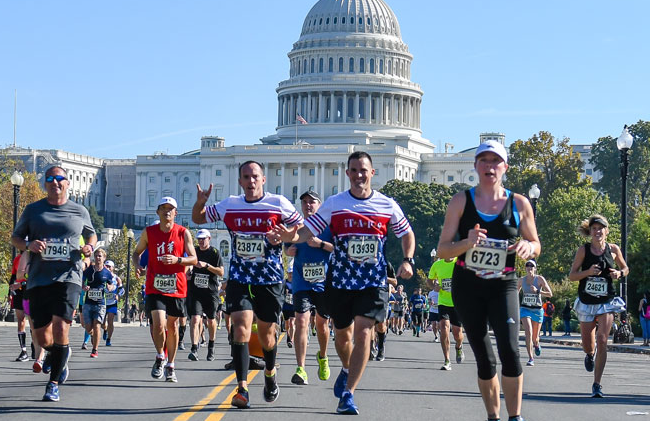
Often overlooked in favor of the World Marathon Majors, the Philadelphia (Philly) Marathon is one of the most popular in the United States, for good reason!
Philadelphia Marathon race start.
1. Pre-Race Zoom Call
With the Philadelphia Marathon coming up soon, we’re bringing veterans and first-timers together to ask questions, share insights and build some excitement heading into race weekend!
Join our drop-in Zoom call on Monday, Nov. 10, 2025 at 7:00 pm EST where first-time Philly runners can get answers from athletes and coaches who have run this race before.
Can’t make the call? We’ll record the call and share the link in the following week’s newsletter.
2. Philadelphia Marathon Race Intel
Date: Sunday, November 23, 2025
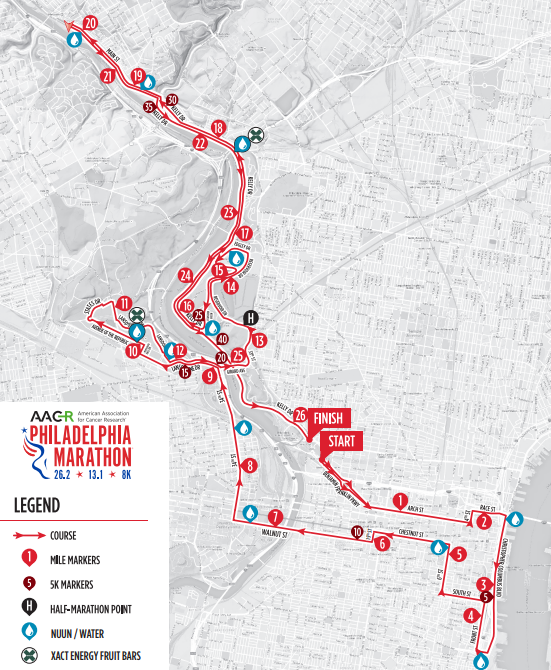
Philadelphia Marathon course map.
Location: Philadelphia, Pennsylvania
Start: 22nd Street & Benjamin Franklin Parkway, near the Philadelphia Museum of Art
Finish: Eakins Oval on Kelly Drive, near the Philadelphia Museum of Art
Course type: Mostly a loop; take a look at this page for more Philadelphia Marathon course info
Boston Qualifier: Yes
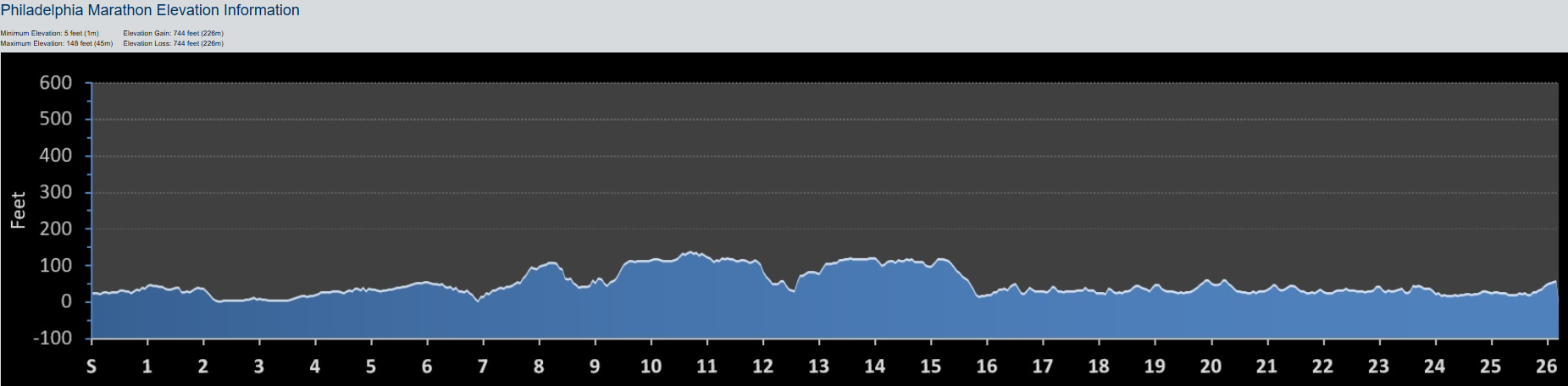
Elevation gain: 744 feet/ 226 meters
Elevation loss: 744 feet/ 226 meters
Temperature:
Average high: 51°F/ 10°C Average low: 34° F/ 1°C
Tips from Coaches
“Practice hills! Philly is not classified as hilly, but the rolling hills from miles 7–16 and the tougher climbs in Manayunk (miles 19–22) add up.” – Coach Jonathan Gooch
“Stick to the tangents. Kelly Drive is wide and winding, and poor tangents can add up to half a mile to your race, so minimize side-to-side movement to stay on the shortest course.” – Coach Jonathan Gooch
“The race ends with a 10 mile out-and-back on the river that feels longer than the first 16; save some mental energy to get back from the turn around.” – Coach Matt Weller
Philadelphia Marathon elevation map. PC: findmymarathon.com
3. Shakeout Run
Date: TBD
Time: TBD
Location: TBD
4. Philadelphia Marathon Coaching Info
At Team RunRun, we have 100s of wonderful, experienced coaches ready to help you crush your goals, regardless of your ability, budget, or lifestyle. Specifically, for Philadelphia Marathon race advice, here are some coaches to start with:
TRR Coach Natalie Lutz running the 2023 Indy Marathon.
Often overlooked in favor of the World Marathon Majors, the Indianapolis (Indy) Monumental Marathon is a flat, fast race perfect for PR-seekers and first-timers.
1. Pre-Race Zoom Call
With the Indianapolis Monumental Marathon coming up soon, we’re bringing veterans and first-timers together to ask questions, share insights and build some excitement heading into race weekend!
Join our drop-in Zoom call on Monday, Oct. 27, 2025 at 7:00 pm EST where first-time Indy runners can get answers from athletes and coaches who have run this race before.
Can’t make the call? We’ll record the call and share the link in the following week’s newsletter.
2. Indianapolis Monumental Marathon Race Intel
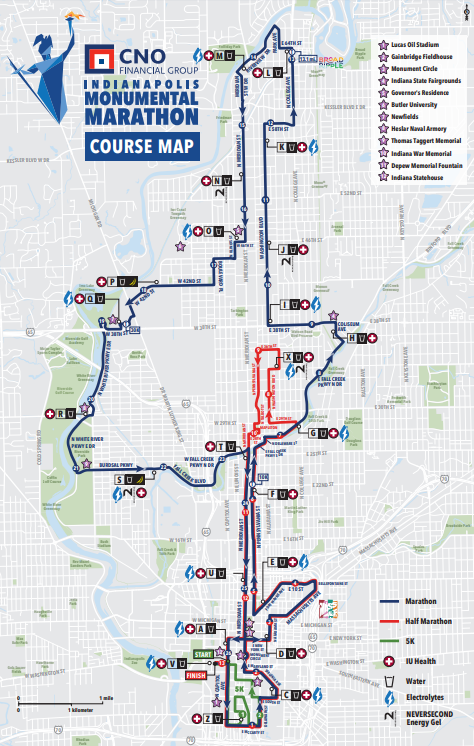
Indianapolis Monumental Marathon course map.
Date: Saturday, November 8, 2025
Location: Indianapolis, Indiana
Start: Near the Indiana State House
Finish: Near the Indiana State House
Course type: Loop; take a look at this page for more course info
Boston Qualifier: Yes
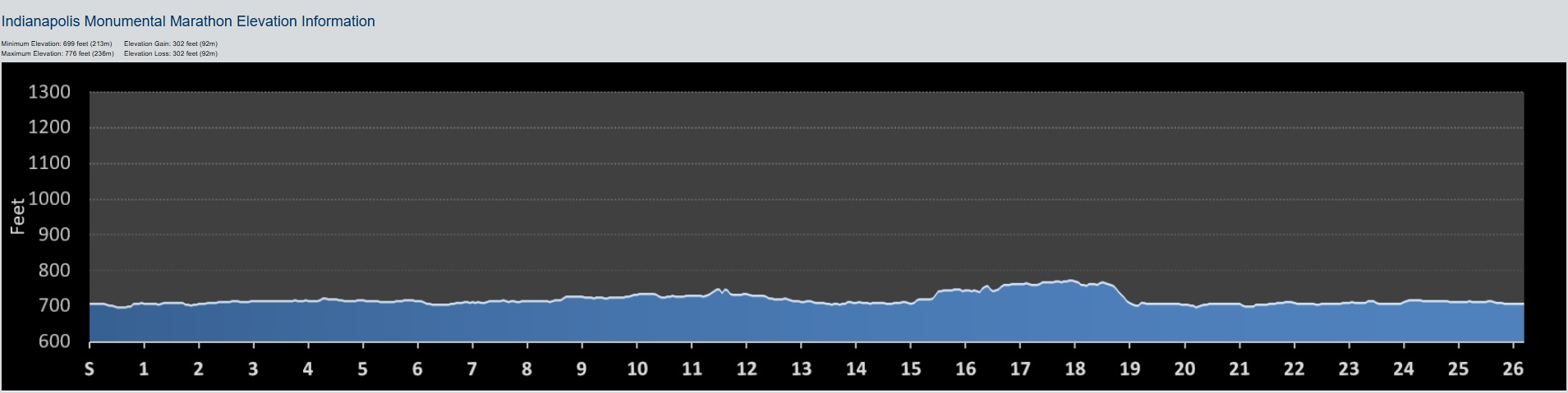
Elevation gain: 302 feet/ 92 meters
Elevation loss: 302 feet/ 92 meters
Temperature:
Average high: 58°F/ 14°C Average low: 39° F/ 3°C
Tips from Coaches
“The half marathon and marathon start at the same time. So, especially if you are in the top corrals, be aware that the race goes out very fast. Try not to get caught up and pulled along with the half marathoners in the beginning. Run your own race and pace to avoid hitting the wall too early!” – Natalie Lutz
“Be extra vigilant of your footing and the road bifurcations during the first 3 miles. In 2024, there were a few pot holes in the beginning of the race.” – Natalie Lutz
3. Race Reports
Want even more intel on the Indy Marathon? Read some of the race reports from Team RunRun coaches:
Indianapolis Monumental Marathon elevation map. PC: findmymarathon.com
4. Shakeout Run
Date: TBD
Time: TBD
Location: TBD
5. Indianapolis Monumental Marathon Coaching Info
At Team RunRun, we have 100s of wonderful, experienced coaches ready to help you crush your goals, regardless of your ability, budget, or lifestyle. Specifically, for Indianapolis Monumental Marathon race advice, here are some coaches to start with:
Did you know that the 2024 New York City Marathon became the world’s largest marathon ever with 55,646 total finishers? Now you do!
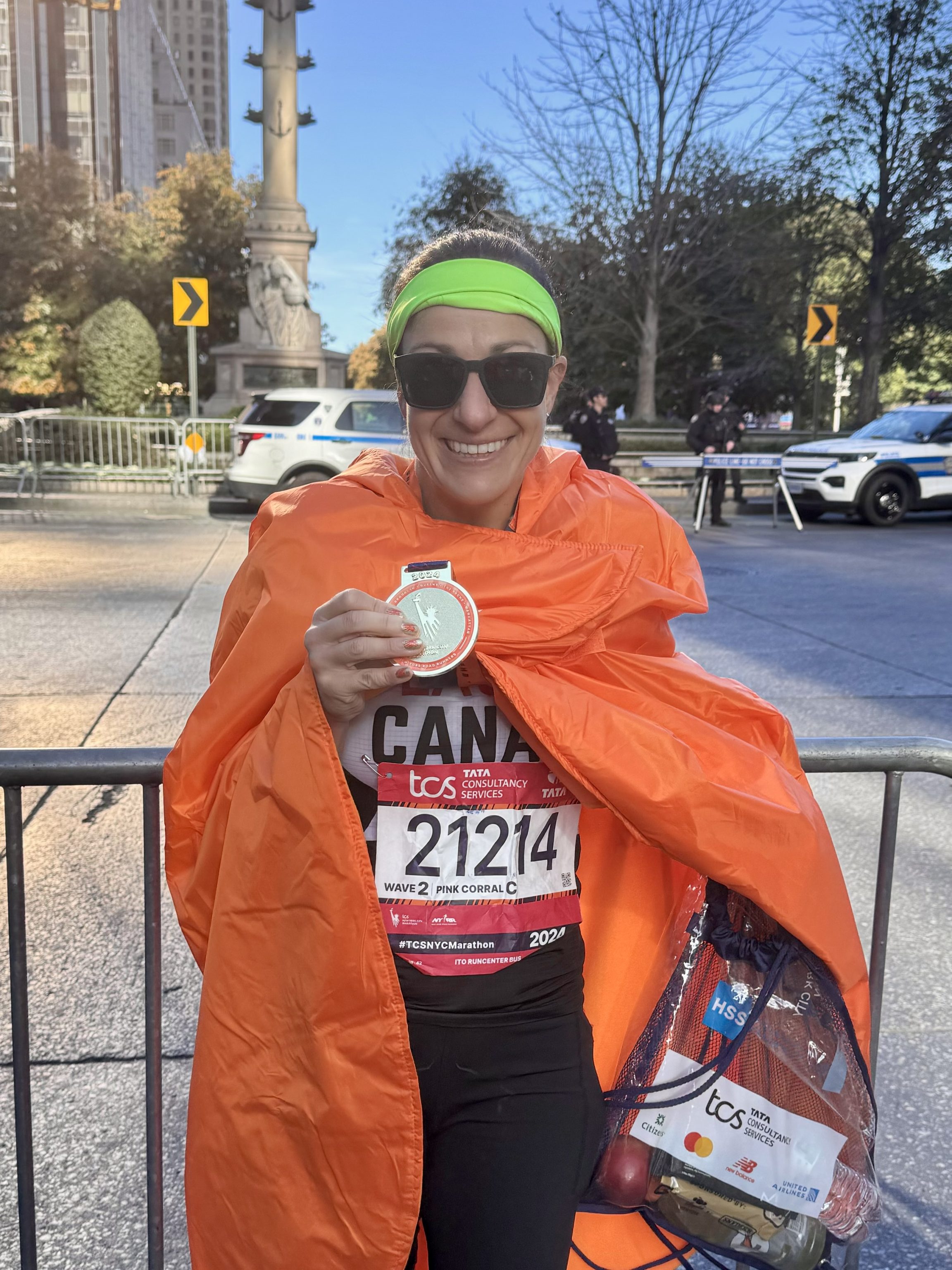
Team RunRun athlete, Laura, after crushing the New York City Marathon!
And with all the intel below, you’re on your way to your own historic NYC finish!
1. Pre-Race Zoom Call
With the New York City (NYC) Marathon coming up soon, we’re bringing veterans and first-timers together to ask questions, share insights and build some excitement heading into race weekend!
We had a great drop-in Zoom call full of NYC Marathon racing insights, information, and tips.
Start: Fort Wadsworth on Staten Island, near the Verrazzano-Narrows Bridge
Finish: Central Park, between West 67th Street and West 68th Street
Course type: Point-to-point; take a look at this page for more course info
Boston Qualifier: Yes
Elevation gain: 810 feet/ 246 meters
Elevation loss: 824 feet/ 251 meters
Temperature:
Average high: 57°F/ 13°C Average low: 36° F/ 2°C
Tips from Coaches
“While crossing the Madison Avenue Bridge (Last Damn Bridge) around mile 21, move to your right for tons of encouragement and goodies to help propel you to the finish!” – Coach Dana Caruso
”The Verrazano is a suspension bridge, so there’s subtle bounce that reduces perceived exertion. Combined with the adrenaline of starting the New York City Marathon, it doesn’t feel as tough — be sure to hold back and not get too excited so early in!” – Coach Martina Nadeau
”The bridges lie and make your GPS go wild. Therefore, pace by effort, not GPS. Splits will be wrong in multiple spots, so do not panic.” – Coach Martina Nadeau
”The first mile is crowded and a lot of folks stop mid-course to take photos – try not to get too frustrated! Instead, be cautious of the runners around you to avoid twisting an ankle or short stopping.” – Coach Martina Nadeau
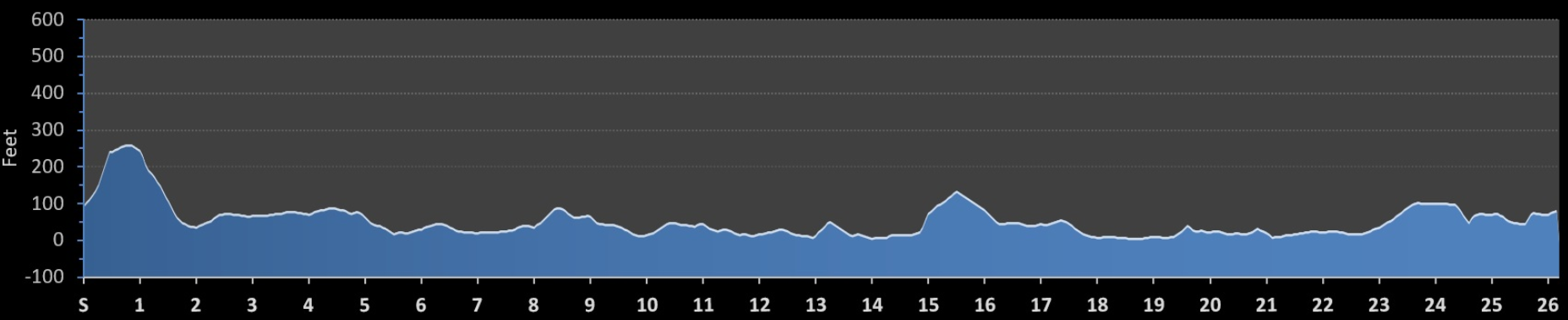
New York City Marathon elevation map.
3. Race Reports
Want even more intel on the New York City Marathon? Read some of the race reports from Team RunRun coaches:
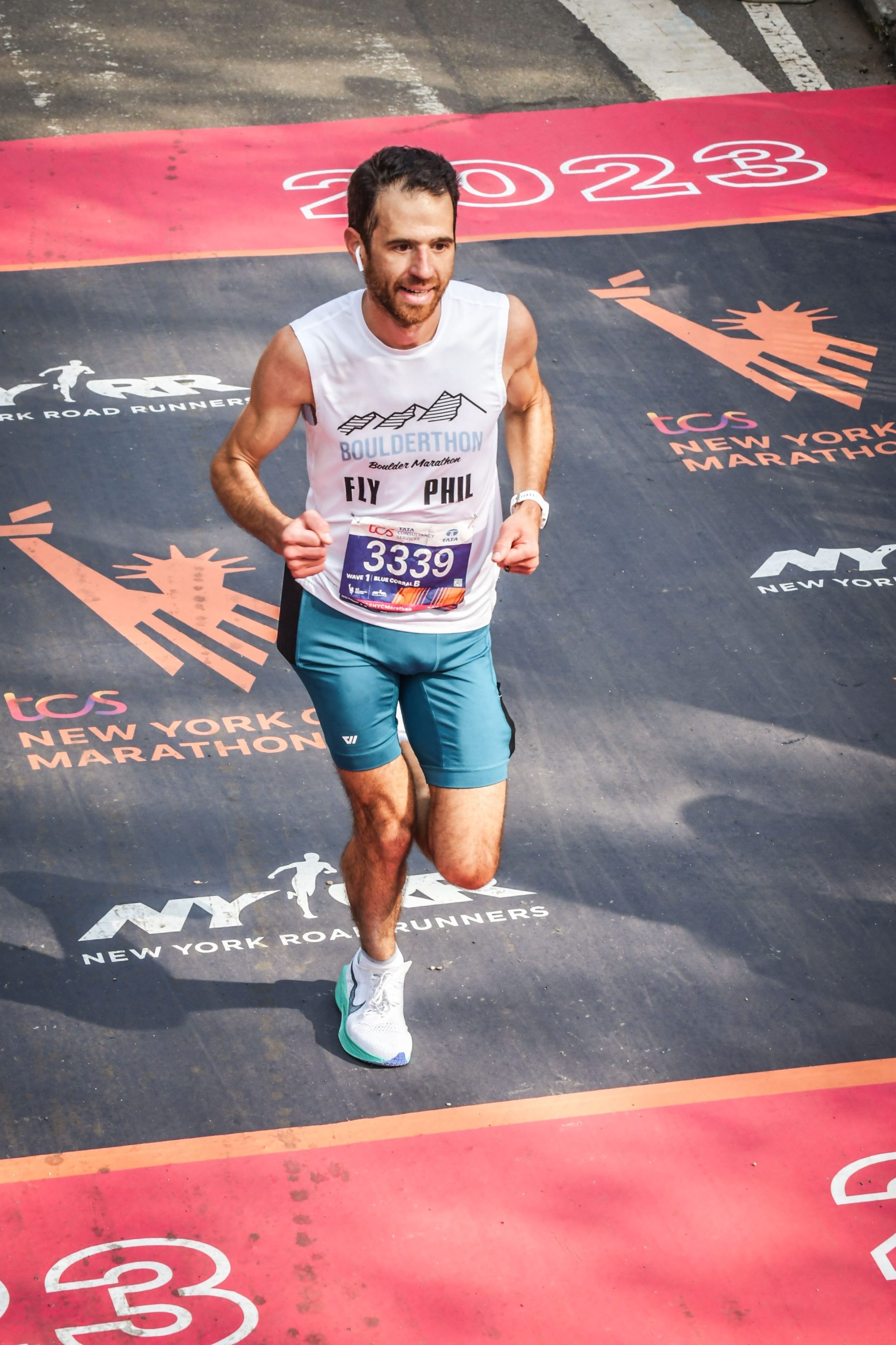
Team RunRun athlete, Phil, setting a 14-minute PR at the 2023 New York City Marathon.
At Team RunRun, we have 100s of wonderful, experienced coaches ready to help you crush your goals, regardless of your ability, budget, or lifestyle. Specifically, for New York City Marathon race advice, here are some coaches to start with:
Your go-to spot for all things Marine Corps Marathon, one of the largest marathons in the US and the world, nicknamed “The People’s Marathon.” 2025 will mark the event’s 50th anniversary!
1. Pre-Race Zoom Call
With the Marine Corps Marathon coming up soon, we’re bringing veterans and first-timers together to ask questions, share insights and build some excitement heading into race weekend!
Join our drop-in Zoom call on Tuesday, Oct. 14, 2025 at 7:00 pm EST where first-time Marine Corps runners can get answers from athletes and coaches who have run this race before.
Can’t make the call? We’ll record the call and share the link in the following week’s newsletter.
2. Marine Corps Marathon Race Intel
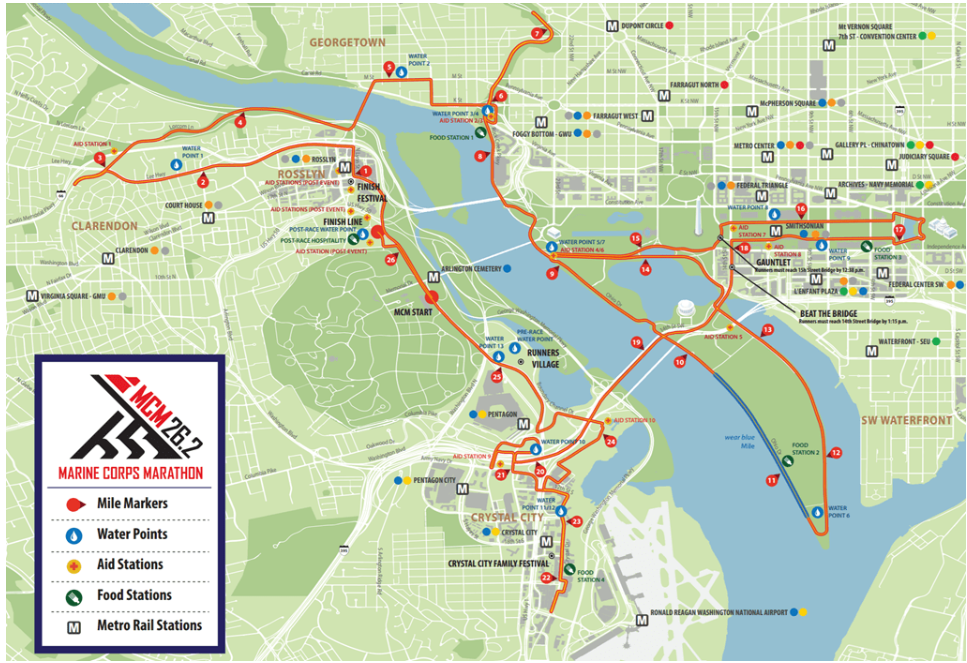
Marine Corps Marathon course map.
Date: Sunday, October 26, 2025
Location: Arlington, Virginia
Start: Arlington, between thePentagon and Arlington National Cemetery
Finish: U.S. Marine Corps War Memorial
Course type: Loop; take a look at this great, interactive course map
Boston Qualifier: Yes
Elevation gain: 699 feet/ 213 meters
Elevation loss: 666 feet/ 203 meters
Temperature:
Average high : 64°F/ 17°C Average low: 46° F/ 7°C
Tips from Coaches
“Miles 20–22 (14th Street Bridge) feel endless. There are no spectators, the pavement is hot and there is little shade – prepare yourself mentally and physically for this tough stretch of the course” – Coach Leah Pan
“The finish at Iwo Jima has a sharp incline. Save a little energy to power up for your strong finish photo!” – Coach Leah Pan
”Mile 20 is tough at every race — at thMarine Corps, there’s a sneaky hill that won’t look like much but you’ll feel it. Because it’s around mile 20, this can lead many runners to think they’re bonking. Push those thoughts aside, push through this tough and quiet section of the course, and you’ll be just fine!” – Coach Nicole Thome
Marine Corps Marathon elevation map. PC: marinecorpsmarathon.com
3. Race Reports
Want even more intel on the marathon? Read some of the race reports from Team RunRun coaches:
Location: Meet in Rosslyn at the Rosslyn Gateway Park. There is street parking, and/or paid parking at nearby Upside on Moore (where you can also grab breakfast and/or coffee after the run).
Shake off the pre-race jitters and meet us for 2.5 miles at a leisurely pace! Complete this short questionnaire if you’re interested in attending so we can plan accordingly.
All paces are welcome and the more the merrier! Feel free to bring a friend, even if they’re not a Team RunRun athlete!
5. Marine Corps Marathon Coaching Info
At Team RunRun, we have 100s of wonderful, experienced coaches ready to help you crush your goals, regardless of your ability, budget, or lifestyle. Specifically, for Marine Corps Marathon race advice, here are some coaches to start with:
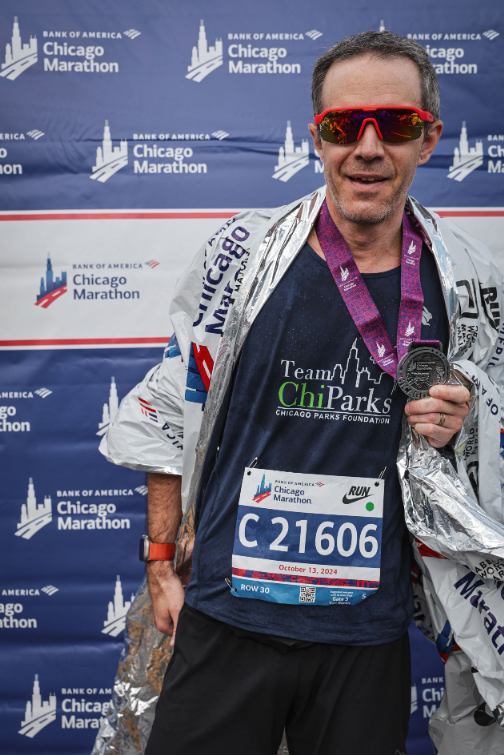
Team RunRunner Michael Norton after finishing the 2024 marathon.
Your go-to spot for all things Bank of America Chicago Marathon, one of the fastest Abbott World Marathon Majors, occurring each October in the United States of America.
1. Pre-Race Zoom Call
With Chicago coming up soon, we brought veterans and first-timers together to ask questions, share insights and build some excitement heading into race weekend!
We had a great drop-in Zoom call full of Chicago Marathon racing info and tips: Catch the replay here!
2. Chicago Marathon Race Intel
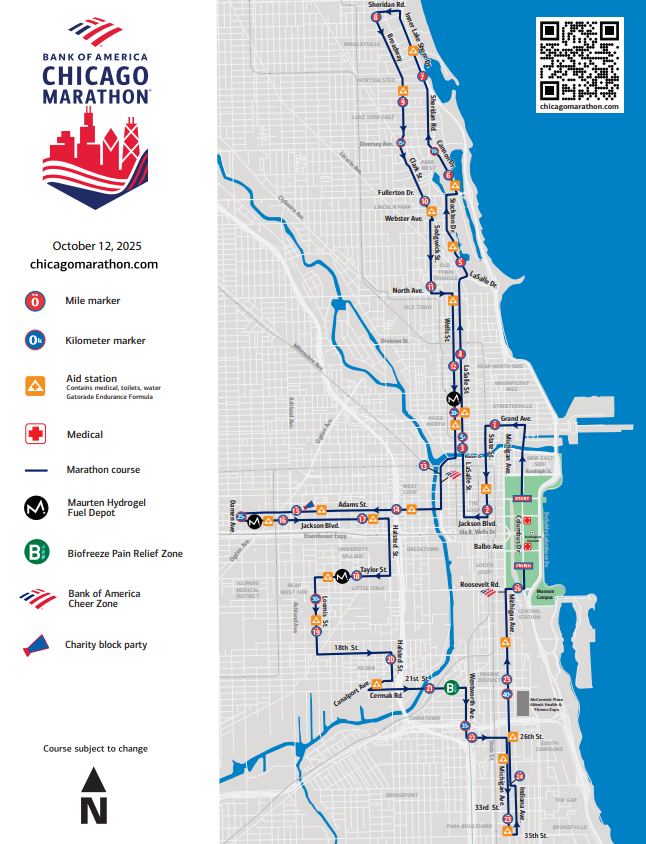
Chicago course map.
Date: Sunday, October 12, 2025
Location: Chicago, USA
Start: Grant Park
Finish: Grant Park
Course type: Loop; undeniably fast and flat!
Boston Qualifier: Yes
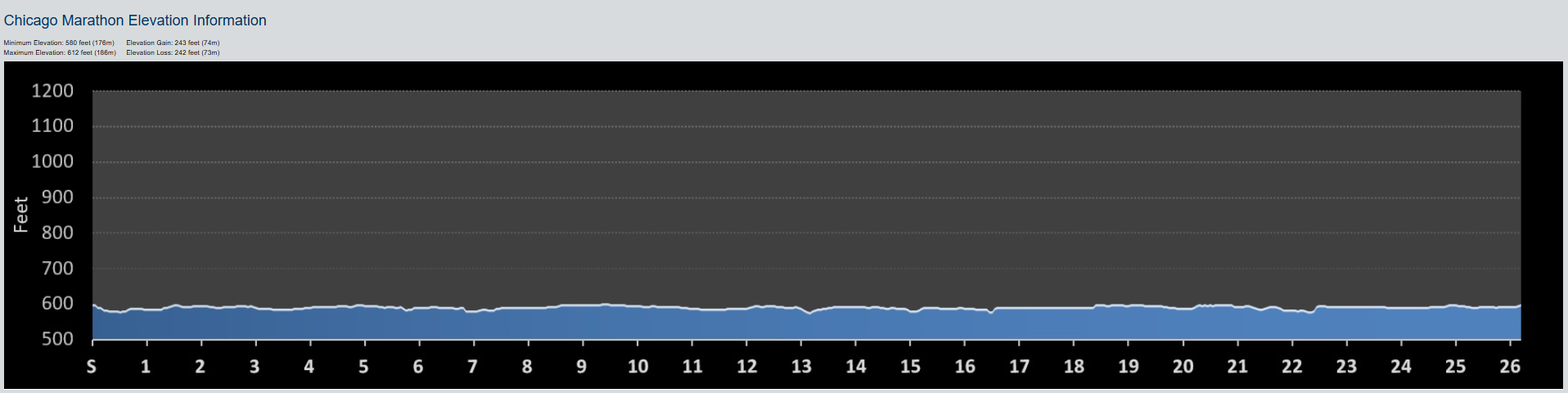
Elevation gain: 243 feet/ 74 meters
Elevation loss: 242 feet/ 73 meters
Temperature:
Average high : 64°F/ 17°C Average low: 46° F/ 7°C
Tips from Coaches
”Enjoy the final stretch down Columbus Drive. In any case, soak it all in!” – Coach Christina Mather
Chicago Marathon elevation map. PC: findmymarathon.com
3. Race Reports
Want even more intel on the marathon? Read some of the race reports from Team RunRun coaches:
Date: Saturday, October 11th Time: 9 am CST (Chicago local time) Location: Millennial Park, Cloud Gate “the Bean”
All paces are welcome and the more the merrier! Feel free to bring a friend, even if they’re not a Team RunRun athlete!
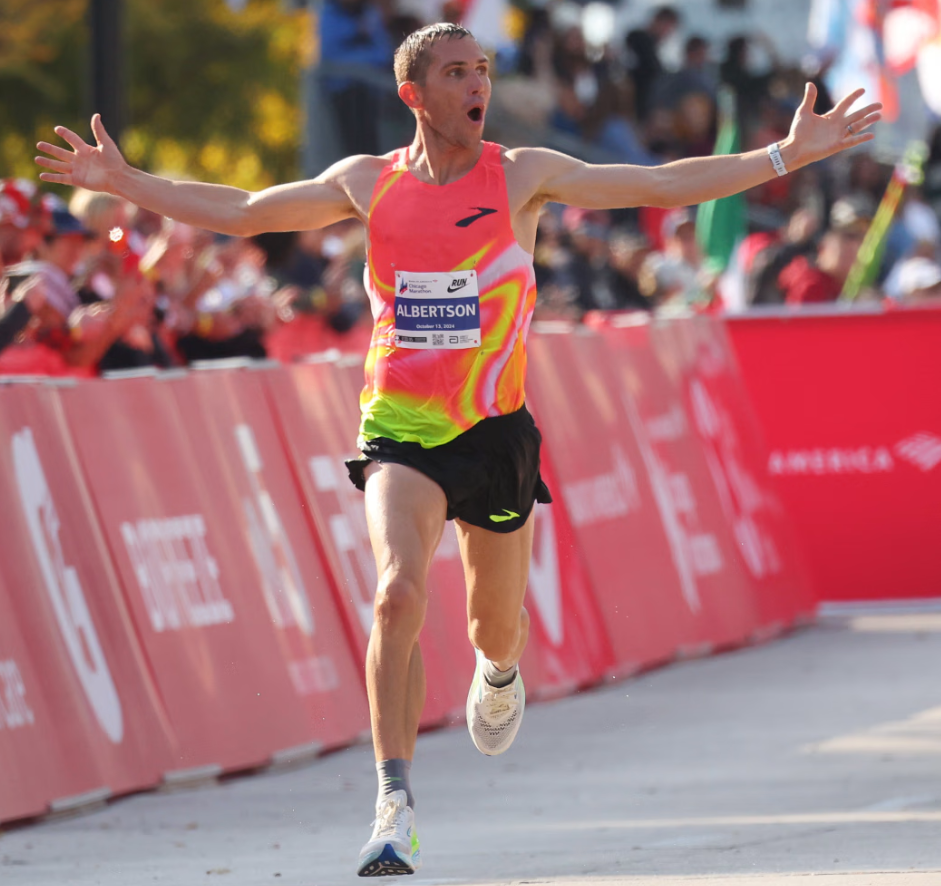
TRR Coach CJ Albertsonfinishing the 2024 Chicago Marathon in 7th overall and 1st American in a time of 2:08:17! PC: Michael Reaves/ Getty Images
5. Chicago Marathon Coaching Info
At Team RunRun, we have 100s of wonderful, experienced coaches ready to help you crush your goals, regardless of your ability, budget, or lifestyle. Specifically, for Chicago race advice, here are some coaches to start with:
Your go-to spot for all things Berlin Marathon, one of the fastest Abbott World Marathon Majors, occurring each September in Germany.
1. Pre-Race Zoom Call
With the Berlin Marathon coming up soon, we’re bringing Berlin veterans and first-timers together to ask questions, share insights and build some excitement heading into race weekend!
We had a great drop-in Zoom call full of Berlin Marathon racing insights, information, and tips.
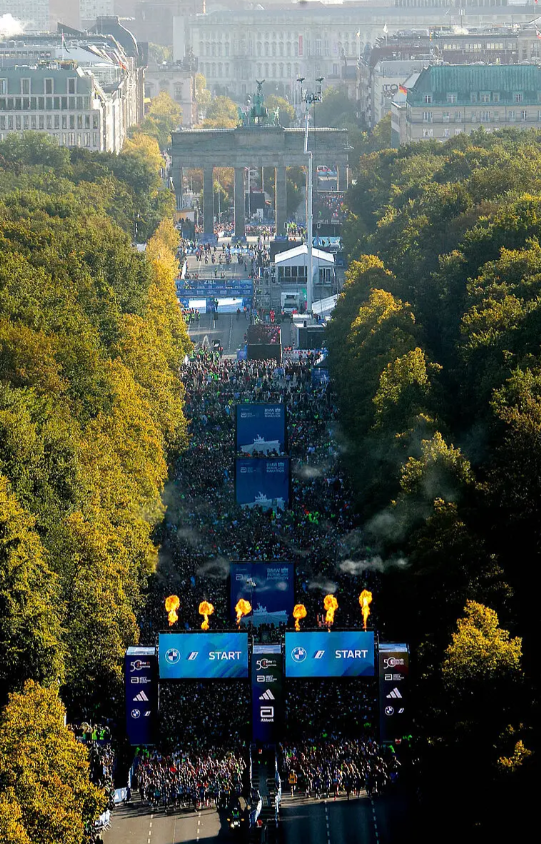
Start: Straße des 17, between the Brandenburg Gate and the “Kleiner Stern”
Finish: Straße des 17, just after the Brandenburg Gate
Course type: Loop; undeniably fast and flat!
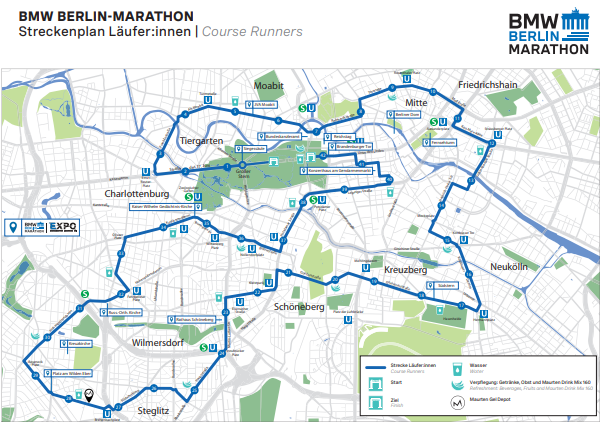
Berlin Marathon course map.
Boston Qualifier: Yes
Elevation gain: 241 feet/ 73 meters
Elevation loss: 260 feet/ 79 meters
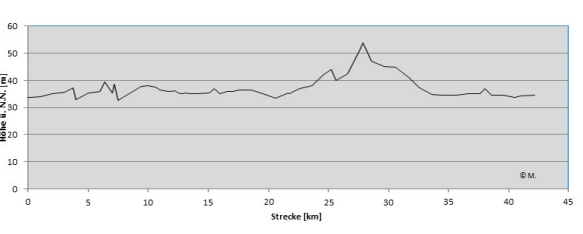
Berlin Marathon elevation map.
Temperature:
Average high : 63°F/ 17°C Average low: 47° F/ 8°C
Tips from Coaches:
“Like most Majors, it’s a crowded race. Unlike many Majors, they don’t do a great job of enforcing waves/corrals. For that reason, you’ll want to manage expectations for the first couple of miles. Take it easy, stay calm and know that things will ‘settle in’ after the first 5k or so.” – Coach Nicole Thome
”There is a decent walk from the gate to the start corral, so allow for plenty of time!” – Coach Heather Gutekunst
”Remember, the Berlin Marathon paints a blue line on the road to mark the tangents (the shortest possible route) of the course, so follow that for an “easier” route!” – Coach Vivian Vassall
”You’ll feel the urge to pick up the pace as soon as the Brandenburg Gate comes into your view (and you’ll notice other runners doing so), but know that the actual finish line is 400m past the gate!” – Coach Vivian Vassall
3. Race Reports
Want even more intel on the Berlin Marathon? Read some of the race reports from Team RunRun coaches:
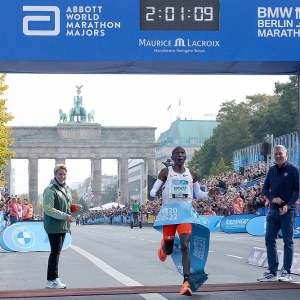
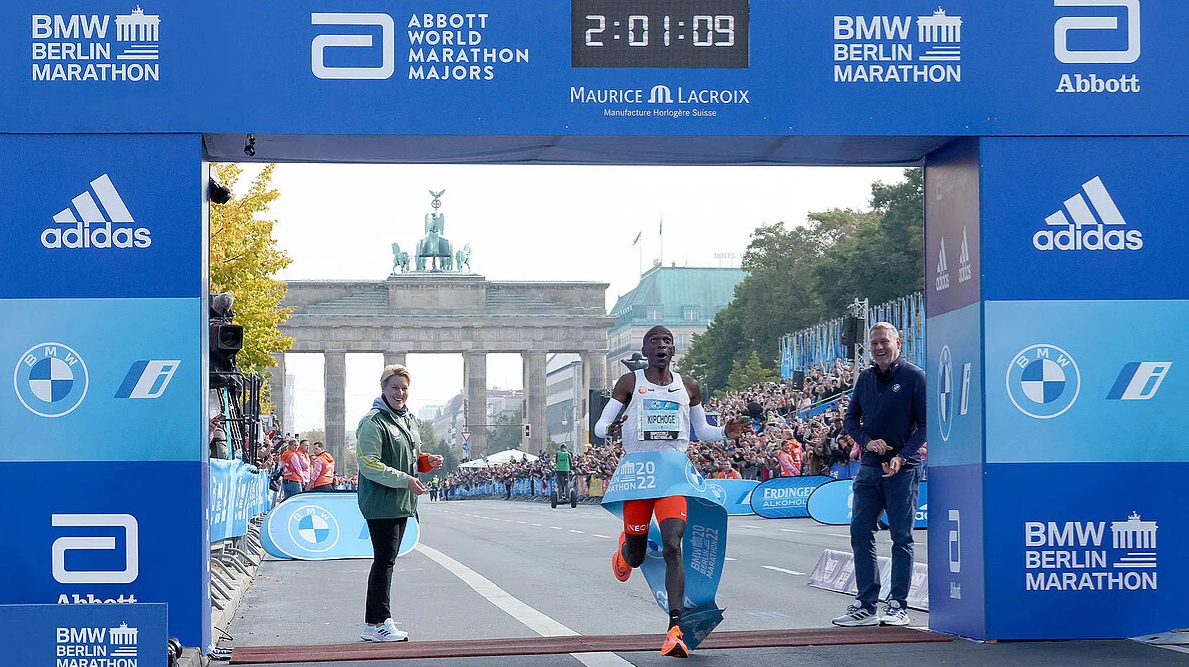
Eliud Kipchoge winning with a new World Record at the 2022 BMW Berlin Marathon! PC: SCC Events
4. Shakeout Run
Date: TBD Time: TBD Location: TBD
All paces are welcome and the more the merrier! Feel free to bring a friend, even if they’re not a Team RunRun athlete!
5. Berlin Marathon Coaching Info
At Team RunRun, we have 100s of wonderful, experienced coaches ready to help you crush your goals, regardless of your ability, budget, or lifestyle. For Berlin Marathon-specific advice, here are some coaches to start with:
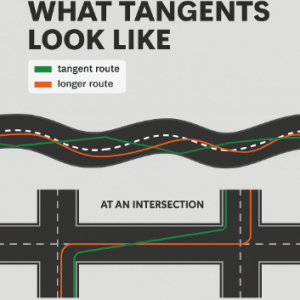
How to save time and distance in races by understanding tangents.
Team RunRun athlete running the tangents at the Chicago Marathon.
Are you Adding Unnecessary Distance (and Time) to your Races?
Ever crossed the finish line of a marathon only to realize your watch reads 26.6 miles instead of 26.2? That extra 0.4 miles might not look like much on paper, but on race day, it can mean minutes tacked onto your time. And if you’re chasing a personal best—or even a Boston-qualifying standard—every second counts.
GPS errors aside, that extra distance often comes down to not running the most efficient line. Maybe you’ve heard the phrase “run the tangents” but didn’t know exactly what it meant: read on, you’re about to learn!
What Does it Mean to Run the Tangents?
Running the tangents simply means following the shortest possible path around a course, especially when it curves or turns. It’s all about minimizing unnecessary distance by taking the most direct line from Point A to Point B, such as the start line to the finish line of a race.
While it sounds simple, it’s something many runners overlook in the excitement of race day—and it can cost them.
Courses are measured along the shortest possible route. That means weaving wide around corners adds distance—just like running around the outside of a track lane instead of staying in lane one.
Think of a road that curves to the left. If you stay on the outside edge of the bend, you’re running farther than someone hugging the inside. Multiply that by dozens of turns over the length of a half or full marathon, and you might run an extra quarter to half of a mile. That’s free distance—and time—you’re giving away.
How to Run the Tangents
Running the tangents doesn’t mean cutting corners or breaking course rules. It means staying mindful and strategic as you move through the course from the start to finish. And for those wondering, it is a perfectly acceptable strategy that the pros harness in every race, and you should too!
Here are a few ways to improve:
In training:
Practice running efficient lines. On your long runs or routes with curves, get used to spotting and running the straightest line possible. Make it second nature.
Before the race:
Study the course map. Identify turns, loops, or sections where you might need to adjust your line.
On race day:
Look ahead. Don’t just react to a curve once you’re in it. Keep your eyes forward so you can anticipate and run the cleanest line.
Avoid drifting with the pack. Runners often spread out and take wide turns—don’t blindly follow.
Chicago Marathon course map.
Go Faster, not Further!
The good news is that running the tangents doesn’t require more fitness or effort—just a little awareness. And that bit of additional awareness can be the difference between almost hitting your goal and crushing it.
Elaina Raponi is a coach with Team RunRun based in Kingston, Ontario. Elaina loves helping athletes of all abilities and experiences achieve their goals, while finding confidence and joy in the process!
Team RunRunner Jenny Windham finishing the Big Sur Marathon. PC: Marathon Foto
3 Bests – What aspects of the race did you like the most?
Course support
Race organization
Proximity of events: The expo, pub run, shakeout run, etc, were all conveniently located, ideal for when you travel to a race and don’t have a car.
Not so much – Aspects of the race that didn’t do it for you
There was a long wait in the cold before start.
The Big Sur Marathon cutoff time could be longer, because many runners were unable to finish. (Due to permitting and road closures, the time cutoff for the marathon is 6 hours, the equivalent of running 13:45 minutes-per-mile for the marathon.)
Road camber slant was noticeable.
Map of the Big Sur Marathon course. PC: Big Sur Marathon official website
Weird factor – What’s the weirdest thing about this race?
More unique than weird: there were Taiko drummers halfway up the climb to Hurricane Point, a pianist at Bixby Bridge, belly dancers near mile 24 and much more! Local musical groups provide entertainment throughout the course and at the finish.
Highlights of your race – What did you do well and enjoy about your race in particular?
The whole event was a highlight: absolutely wonderful scenery, great organization and pre-race communication, awesome pacers and event MC!
Lessons for others – Share your pro-tips on the race to help the next runner
Pre-race: I packed extra snacks for the pre-race wait, as well as clothing I could leave there for donation. I also bought a $5 stuffed animal at Walgreens in town beforehand, which helped make the bus seat more comfortable with the seatbelt digging into my back. It also was something soft, dry and warm to sit on to conserve energy before race start. Many runners brought trash bags or emergency ponchos.
Post-race: It’s important to plan ahead for finisher village meetups with spectators. There is no cell service and lots of traffic, so I would include a change of clothes in your drop bag to change into after in case you have a wait to find family/friends or get back to your hotel etc.
Lessons you learned that will help you next time around
I am a back-of-the-pack pace, and felt the stress of the tight 6-hour time cutoff. In future, I would likely do a shorter distance to reduce this stress and increase enjoyment of the run and scenery. Thankfully, we had a great pace group that helped each other keep up, but it was a lot more miles pushing the pace than I’ve ever had to do. This was my 11th marathon, and most difficult by far.
Most important course specific knowledge to know about the race
There was some information about the road being cambered/slanted, but it did not indicate it would be just about the entirety of the race. Fortunately, the climb up to Hurricane Point was not as daunting as reported, but we also did not have intense winds. We DID have rain just about the entire course, so be prepared with layers and mental strength!
Aesthetics – Is it a pretty course?
Yes, one of the most scenic in the world! From Redwoods, to pastoral sights, to rugged ocean views.
Difficulty – Is it a tough course?
Yes, the cambered roads and constant hills make for a very challenging course. Although I was aware there would be many hills, I did not fully realize just how many. Mile 25 greeted us with a final hill, so we had to really push the pace in order to make the cutoff. I finished with just 9 min to spare. There was a SAG vehicle in view from mile 10 on.
The Big Sur Marathon course profile. PC: Big Sur Marathon official website
Organized and well run – Did it feel like a well-oiled machine or were they flying by the seat of their pants?
Very well organized with plenty of race support and volunteers. They were amazing and energetic, even calling out our names from our bibs.
Competition – Is there a strong field?
Yes, the Big Sur Marathon had 3 corrals to divide the competition: fastest runners in corral A, then B, and finally C (my corral).
Logistics – Does it require a special handshake, registration a year in advance, hotels all booked? Give us the low down on the nuts and bolts of making the race happen.
The Big Sur Marathon is not the easiest or the hardest to get into. There is a lottery entry, with VIP or charity options as well.
Aid Stations – Standard fare or anything special to know about the aid stations in terms of what’s available or when?
Very frequent aid stations (about every 2 miles) stocked with plenty of water, Nuun hydration, GU energy gels, and even oranges and strawberries. There were plenty of port-a-potties and medical aid along the course.
Weather and typical race conditions
The weather is typically on the cooler side, 45-60 degrees, and can range from overcast/foggy to sunny. For instance, this year we had light rain the entire way.
Gear – Did you need anything special or is there anything you’d recommend for the next runner?
I wore a running vest to hold additional snacks/fuel/pickle juice in the hydration space, and carried a collapsible water bottle that was easy to fill at water stations, or I could just grab a cup of water.
Spectacular views of mile 13.
Spectators – Is this a friendly course for your friends?
No, due to the remote area, there is no space for spectator driving or parking. They are limited to the finish area.
How’s the Swag?
The finisher tee was nice: long sleeved, sustainable dry-wicking material with a nice scenic image on the back. In addition, the medal was also nice and unique. The Expo was a decent size, not too small or big.
The Overall Score – How many stars do you give this race and do you recommend that others run it?
5 out of 5 stars! Above all, as the description says, do not attempt the full marathon as your first one, and do not underestimate the hills. If you are near the back of the pack, I would suggest opting for one of the shorter distances or relay. Great to say I finished, and wonderful destination race taking in the sights. The Big Sur Marathon was a bucket list race of mine!
Jenny Windham is a coach with Team RunRun based in Bigfork, MT. Jenny is both a running coach and personal trainer, so she’s familiar with incorporating additional exercises into run training to get you started with your first race or aiming towards your next PR.
It’s race week, your goal event is fast approaching, and this survival guide will set you up for success. You’ve trained hard and with dedication for months. You’ve said ‘no’ to social opportunities to get to sleep early for your morning long runs. And now you are wondering how to make sure you capitalize on all of these choices for a triumphant race day. You’ve come to the right place!
Start line of the Oakland Marathon.
Read on for some practical tips you can implement to make your race week and race day as smooth as possible. If you are looking for training advice on how to taper for a big race, check out my article: Mastering the Marathon Taper.
1. Stick to your Routines
“Nothing new on race day.” A phrase we’ve all heard, and dare I say rolled our eyes at, multiple times before. As cliche as it is, it’s sound advice and, as a coach, I extend the timeline even further for my athletes: nothing new on race week.
Preparing for the big day is very similar to preparing for those big long run workouts you completed week after week. Sure, this week you’re probably thinking about the race more often than you do a workout, but your preparations should remain fairly similar.
Race week survival guide tip: stick to you normal eating habits and foods.
Continue to go to bed at your normal time, run when you normally do, stretch and foam roll as often as you normally do, you get the idea. While your workouts might be shorter and less intense, maintain your usual eating habits, keeping what and when you eat consistent. The only caveat here is emphasizing carbohydrates more in the last 2-3 before your race: Find more on carb loading in this Guide to Carb Loading. This week is not the time to try a new pair of shoes, experiment with a new nutrition plan, or cram in a new type of workout that you haven’t done before.
When the pre-race doubts creep in about our fitness, there is a temptation to try to prove to ourselves that we are ready to go. Instead, stick to the plan, trust the training, and all will be ok.
2. Plan Race Day Logistics
To alleviate the stress of the unknown, I strongly suggest you write down your race logistics plan, personalize this race week survival guide. Trust me, your race day self will thank you!
Write everything down from when you are picking up your bib at the expo, where you are parking, when you are waking up and then leaving the house or hotel on race morning, what you are eating for breakfast, etc. Noting down all of these details makes them feel more manageable. Having a check-list set out before you keeps you from stressing that you may have forgotten something.
While race expos are fun and exciting, be smart with how much time you spend on your feet that day. Definitely enjoy the expo, visit the booths, support the local brands and stores. But be sure to put your feet up the rest of the day. You’re going to be using them quite a bit the next day!
Race week survival guide tip: prepare your gear for race day the night before. PC: Evan Covell
3. Prepare the Night Before
The night before the race, lay out all of your race day gear including your warm up clothes, gear check bag, nutrition, hydration, shoes, outfit, even sunscreen. Make sure your bib is attached to your shirt and all your bags are packed. Don’t forget to pack some extra clothes (slides or comfortable shoes are a good idea too!) to put on after your race so you can enjoy the post-race festivities in comfort.
Sleeping the night before a race is often difficult. Excitement is high and restlessness kicks in. Do not worry. The night before a race isn’t the most important night of sleep. Sleeping well the whole week leading into race day is more important.
4. Arrive Early Race Morning
I love to arrive early enough to the start that I can warm up a bit, find the gear check, use the restroom, and still have a few moments to relax and collect my thoughts before the race starts. In order to ensure that happens, work backwards from the start time and calculate when you want to arrive, when you have to leave, eat breakfast, and lastly when you need to wake up,
Races can be stressful environments. Following this race week survival guide allows you to control what you can and be assured that you did all you could to arrive ready. Now, go give it your best effort!
Evan Covell is a coach with Team RunRun based in Santa Barbara, California. He helps runners set and achieve their goals through personalized, science-based training and injury prevention.
It’s marathon taper time! You’ve put in the work and now you’re looking to perform your best on race day. To some the idea of a taper might sound glorious, to others it might bring feelings of apprehension. This article will hopefully help to even out those feelings by explaining what exactly a taper is, the why behind tapering, and how to execute it well!
Runner mastering the marathon taper by prioritizing their recovery. PC: Ruby Wyles
What is a Taper?
Tapering for a race refers to reducing total training volume in the 1-3 weeks leading into a race. This allows for the body to enter race day fresh, healthy, and ready to perform optimally. Mastering the marathon taper looks different depending on a multitude of factors: the experience level of the athlete, race distance, race importance, training volume leading into the taper, etc. Therefore, there is no “one-size-fits-all” approach to tapering for a race, but there are some general principles you can apply.
Reduce Volume, Not Intensity
It is important to reduce your total training volume, so that your legs start to freshen up. But people often make the mistake of taking out the high intensity workouts in their week.
If you normally do harder workouts on Tuesday mornings, then continue to do harder workouts on Tuesday mornings, even in the taper. If the total volume of your typical workouts come out to 10 miles, perhaps lower that to 8 miles. We want our legs to freshen up, but not to go stale. Maintaining training intensity reminds our bodies that there is still a big task to complete in the near future.
Two runners logging a track workout during their marathon taper. PC: Dave Albo
Gradually Reduce the Long Run Volume
The long run is a big stimulus that takes a significant toll on the body each week. I usually assign my marathoners their biggest long run (both in terms of miles at marathon pace and overall distance) 3 weeks out from race day–maybe 20-22 miles. The volume of the next long run, 2 weeks out, reduces slightly, but is still a typical long run that they’ve completed multiple times before–usually 16-18 miles. The final long run the week before the race is typically 10-13 miles. This gradual reduction in the weekly long run ensures that the body is recovering well and energetic come marathon day.
Although these long runs are decreasing in volume, it is still a good idea to add some marathon pace miles in these, as well as continue practicing your race day nutrition.
Mastering the marathon taper requires treating your body well, in order to freshen up your legs and get to race day healthy. This necessitates prioritizing adequate sleep, fueling your body well with enough food, and hydrating like crazy! Even though your training volume is decreasing, this is not the time to cut back on your nutrition.
Personally, I choose to cut out all alcohol during the final 4 weeks leading into a marathon. I feel it keeps me healthy, focused on the task at hand, and makes the finish line beer all the more rewarding!
Sleep is the number one recovery tool. Your body repairs itself during sleep. Be sure to continue getting to bed at your normal hour (or earlier) is key during the taper. And perhaps your run is shorter than usual in the morning, so you can afford that extra 30 minutes to snooze.
Runner preparing for their race by journaling and hydrating. PC: Dave Albo
The most difficult part of a taper might be the apprehension that can come with reducing your training. Thoughts that you are losing fitness start to creep in. I’m here to tell you you won’t lose fitness. During the taper, your body is able to actually absorb the fitness gains from workouts you did a few weeks ago. You are as fit as you will be. Your job during the taper is to make sure you’re healthy and refreshed. That is mastering the marathon taper.
There are many cliches often said during taper week, my favorite is “the hay is in the barn.”
With the taper comes more time in your day. Instead of worrying and ruminating on your training or the upcoming race, use this extra time to visualize yourself running strong and fast. Practice your race day mantras and journal your thoughts. Reflect on all the hard work you did in this training block that will prepare you for race day. It’s nice to create some taper rituals that are unique and special to reuse ahead of future races (assuming you find them beneficial).
What’s Next?
If you are feeling lost in your training approach and want some more guidance, consider hiring a running coach! Team RunRun has a coach for every athlete. Reach out today and get started!
Evan Covell is a coach with Team RunRun based in Santa Barbara, California. He helps runners set and achieve their goals through personalized, science-based training and injury prevention.
And why would I want to run an ultra when I hated the marathon?
For many endurance athletes (and if you’re reading this, I assume you are one of them) then the thought “Is running an ultramarathon for me?” may have crossed your mind. You also may have just as quickly dismissed it.
While road marathons and ultra distance races have similarities–tough training, events lasting several hours–they can almost feel like different sports.
Before I start, I have a confession: I have never run a road marathon. 26.2 miles on the road doesn’t appeal to me, and I decided to trust my doctor when he told me it was bad for my knees, so I haven’t. He didn’t say anything about ultramarathons though…
Ultramarathons can be kinder to your body
While “shorter” 50K ultras are only 10K more than a road marathon, expect them to take much longer if you go down the classic ultra route and choose to run on some form of trail. Fortunately, on trails you avoid the jarring of the tarmac and the same repetitive stress from the same foot strike pattern. Instead, you’re exploring a variety of terrains, from lush forest trails and dirt roads, to rocky mountains and sandy beaches. Your body is constantly adapting to each surface, sharing the load across different muscles, joints and bones. Of course, there are road options available if you do love the road marathon.
What you’ll see along the way
If you hate running on pavements through urban areas (‘sidewalks’ for my American friends), then this is where ultramarathons shine. Take your pick of scenery, from stunning mountain ranges through to desert expanses. Again, if you actually don’t mind the tarmac, there are ultra distance road races. Just have a look at some of the coverage on YouTube of the big ultras and tell me that it isn’t stunning–all you have to do is remember to look up!
Two women running the Javelina Jundred 100-mile race in costumes. PC: Howie Stern
The ultrarunning community
Every race that you do will have some sort of vibe, but in my opinion, this is one of the most beautiful things about trail and ultrarunning. You get it all! Small community style races with weird and wacky traditions, to huge events with thousands of runners and festival style feel. The Javelina Jundred and Lakeland 100 spring to mind for mad, festival-feeling ultramarathons. Either way, I have found that everyone, aid station volunteers and fellow competitors included, just want you to do well and have a good time. Yes, they are ‘technically’ races but the competition side, certainly for us that are mid- to back-of-the-packers, doesn’t feel that important. The sense of community and finding your tribe is a consistent theme I hear from all the ultrarunners I interview on my podcast.
The supportive ultrarunning atmosphere at an aid station.
Because it’s hard
Are you looking for your next big running challenge? Running an ultramarathon is the way to go. While a 50K is no easy feat, it’s still something that most marathoners could do, it’s just the hook that reels you in! Finish your first 50K and you’ll then find yourself thinking: “I wonder if I could…”, and off you go, down the ultrarunning rabbit hole! Of course, ultras test you physically, but as the distance increases, the challenge becomes (at least) as much mental, and with that you also get to learn so much about yourself.
Time is irrelevant for ultramarathons
If you have been running for a while then you might pick up on what a “good” performance is, from the world records to ‘good for age’ times. But for ultras, well nobody knows, and even if they did, I don’t think they’d care! People ask about the race distance not the time, joke that they don’t drive that far, look a bit confused then walk off (usually impressed).
Ultrarunning camaraderie and enthusiasm during a race.
And on the subject of time, pure speed is less relevant than in road marathons. So much so that you may continue to see performance improvements well into your fifties (that’s what I am betting on). There is so much more to becoming a good ultrarunner than simply running, and that comes with experience.
David Taylor is a coach with Team RunRun based in Glasgow, UK. He specializes in trails and ultras for both beginner and intermediate runners, whether you’re just bumping up in distance or looking to improve your next trail race.
And the importance of “practicing like you play” by simulating race conditions in training.
Preparing for a successful marathon race day requires more than just logging miles. It takes simulating race conditions ahead of time to ensure peak performance on race day. The concept of “practicing like you play” applies to marathon preparation by replicating the physical, mental, and logistical elements of race day in training.
“The training IS the marathon…the race is the celebration.”
If you have been training for a marathon long enough someone has probably told you this phrase just before crossing the start line. “The hay is in the barn” is another one. The point is, you’ve put in the work and now you get to show it off on race day. Top performances require full effort and full attention throughout the training block, sharpening your mind and body during the weeks and months leading up to your goal race. Additionally, you need to simulate those race day conditions–as best as you can–during training so that they do not surprise you on the big day.
Two runners preparing for marathon race day with a “dress rehearsal” run, simulating race conditions in training.
Top Training Tips For a Successful Marathon Race Day
1. Simulate Race Conditions
Planning your training block around what you will be experiencing on marathon race day is a great way to ensure that you are physically and mentally ready to take on race day.
Runner testing out their race shoes ahead of race day.
Consider the Course: Mimic the conditions as closely as possible during training runs. Are you running a course full of hills but you usually train on flat ground? Is the race an out and back route or and point to point? Or maybe you get your training runs done in the evening, but your race has a 7am start time.
Run at Your Race Pace: Include some goal race pace miles into your speed sessions and long runs. This allows the body and mind to get used to that pace on tired legs in the midst of some hard training weeks. You’ll need to come back to that during miles 22-26 on your marathon race day.
Practice in Similar Weather: Train at a time of day that allows you to acclimate to expected temperatures and conditions. Are you training during the winter in Baltimore for a Spring race in Florida? Or are you enjoying the California climate every day but racing in the Texas humidity? There are ways to prepare the body, like heat training and cooling strategies, for these changes to optimize performance.
Wear Race Gear: Just like actors have dress rehearsals to prepare for opening day, runners need to rehearse as well. Strap on your race day shoes, your lucky shorts, top, and hydration choice (pack or bottle), load up the gels (yes all of them!) and go out for a long run. Make sure you are comfortable (and chafing free!) so that you can avoid surprises on marathon race day.
2. Nutrition and Hydration Strategies
Some of the different nutrition and hydration products available to fuel training and marathon race day.
Race day fueling is crucial: you need gas in the tank if you want your engine (or legs) to run. The best way to avoid the dreaded stomach issues or energy crashes is to practice your nutrition strategy during training. And no, I’m not just talking about testing the fuel you plan to take on the course. Look at the days prior…your carb load, meals the day before, and race morning fueling as well.
Test Your Fueling Plan: Try different types of gels, chews, or drinks to determine what works best for you. Are you able to fuel and run easily at the same time? When you are 15 miles in does your choice of strawberry gel still sit well with you? It is important to be able to get down those carbs when your body needs them the most. Don’t forget about the logistics–do you have a way to carry your sports nutrition with you during the race or are you planning to rely on aid stations, or perhaps a mix of both?
Hydrate Strategically: Follow a hydration schedule that mimics what you’ll do on race day. If you take the same bathroom stop at every long run, expect your body to want you to stop at that same point on marathon race day.
Eat a Race Day Breakfast: Experiment with pre-run meals to ensure they digest well and provide lasting energy. Plan out what you’ll want to eat the night before and the morning of your race.
3. Mental Preparation
Marathon running is as much a mental challenge as a physical one. Training your mind to handle the ups and downs of race day can not only give you a competitive edge but also make the rough times a bit easier to get through.
Practice Race Day Scenarios: Reframe running when you don’t feel like it, or through tough terrain and mental lows, as building resilience.
Use Visualization Techniques: At mile 18 of a 22 mile long run, what are your strategies to push through? Imagine crossing the finish line strongly and executing your pacing plan effectively. But also imagine just missing your time goal–how are you going to put your arms around that discomfort and still cross that finish feeling successful?
Develop a Mantra: Having a personal phrase or mantra can keep you focused and motivated during tough moments.
Marathon success isn’t just about how many miles you run—it’s about how you prepare for the real thing. By practicing like you play, implementing these top tips for a successful marathon race day, you’ll fine-tune your strategy, build confidence, and set yourself up for a smooth and successful race day. Simulate race conditions, dial in your nutrition, train your mind, and execute a race rehearsal to maximize your performance. When race day arrives, you’ll be ready to run strong and achieve your marathon goals. Now, go get that PR!
What’s Next?
If you want more structure and guidance, consider hiring a running coach! At Team RunRun, we have a coach for every athlete. Check out the training page on the Oakland Marathon website for a selection of coaches who are here to help.
Jamie Spruiell is coach with Team RunRun based in Walnut Creek, CA. As a mom of 3 and avid runner, she knows what it’s like to juggle running with a busy schedule!
Training for a marathon, or any long distance running event, is fairly simple: run consistently each week, mostly easy, sometimes hard. There are no magic workouts that will catapult your fitness forward, rather success comes from stringing together days, weeks, and months of solid work.
Now, although training can be that simple, I know that you clicked on this article for a bit more depth and nuance. While this post is focused on training for the marathon, these four principles of marathon training can be applied to most endurance events.
Disclaimer: there are many ways to train for a marathon, these are a few pillars that I employ in coaching my athletes.
1. Good Enough is Good Enough
A phrase I often repeat to my athletes is: “good enough is good enough.” In all training, I think it is important to improve with the minimum effective stimulus. You do not need to go deep into the well very often. Save that for race day. This principle can be applied across the board in endurance training.
For example, on a broad scale, when looking to increase running volume. If you’ve been running 40 miles per week, try increasing to 45 or 50 for your next training block. There is no need to jump to 80 miles per week when increasing to 50 will give your body the stimulus it needs to improve. Narrowly, the same principle can be applied to a specific workout. Consider progressing a 20 minute threshold run to 25 minutes for the next workout, not 40. You need to leave yourself somewhere to go in the future.
Two runners in marathon training enjoying an easy run together.
2. Easy Days Easy, Hard Days Hard
You may have heard that slowing down your easy runs is the key to getting faster. Running truly easy will help you recover, yes, but only running easy is not going to improve your speed. To improve overall you also need to incorporate some reasonably hard running in your training schedule. Remember good enough is good enough, so your hard days do not need to leave you questioning everything. Rather, they should be challenging but manageable.
Your easy days should be truly easy. Your run should be conversational and relaxed. The rest of your day should be fairly relaxing too. Be sure to take care of the small things like fueling well, foam rolling, yoga, and sleep. For a more in depth look into recovery check out Recover Harder to Run Faster by TRR Coach Miles Bennett-Smith.
Your hard days should be challenging. Your run workout is the most important piece of this puzzle: train hard enough and with enough volume to get the adaptation your body needs. You are only able to go hard on this day because the one or two days before were actually easy: your body is now ready for the next challenge. If you incorporate strength training into your routine, adding your lift after a running workout is the ideal way to schedule this in. Hard days hard.
3. Move From Less to More Specific
In training for a marathon, you want to move from less specific to more specific as you approach race day. If we zoom way out and look at training in terms of a calendar year, what you are doing 6 months away from your target marathon should not be very marathon specific. But in the 10-16 weeks before race day, training becomes increasingly more tailored to the marathon. Your long runs increase in duration, you dial in race pace and effort, and total training volume increases relative to what you were doing before.
Keys Marathon Training Workouts
Long runs
During these 10-16 weeks, I typically incorporate marathon effort (later defined by a pace once we dial things in) into athletes’ long run workouts. At first I break up marathon pace into smaller sections, then gradually, the total duration at marathon effort increases.
E.g. Starting with 4 x 2 mile repeats, then 4 mile-2 mile-2 mile, then 4 x 3 mile, then 2 x 6 mile, etc. Finally, this might culminate in 12-14 miles at marathon effort within a 20+ mile long run, usually 3-4 weeks out from race day.
Threshold workouts
I target accumulating 30-40 minutes at threshold pace in various formats.
E.g. 6 x 6 minutes with 1 minute recovery between each.
VO2 max and faster speed workouts
Done on a track (or a hill), these are speedy sessions targeting 5 km pace down to mile pace. The goal of these workouts are increasing leg turnover and changing up the stimulus.
E.g. 10 x 400 meters with 90 seconds recovery between each.
In addition to the long run workout, I usually assign another workout each week targeting threshold, VO2 max, or even faster paces, depending on the athlete, their experience, and needs. As you get closer to the marathon race, the threshold sessions get a bit bigger and the speedy stuff is emphasized a bit less.
A group of runners training for a marathon starting a speedy track workout. PC: Dave Albo
4. Running Economy is Everything
To get faster at the marathon, spend time getting faster at the mile.
If you are already signed up for a marathon and your specific marathon training period has begun, then this isn’t quite for you, yet. You need to prepare for the race that is coming up. But if your marathon is still far off, it’d be beneficial to train for a shorter event like the 5 km or mile. Increasing your speed over these short distances improves your running economy which will translate up to the longer distances when you switch training focus.
Running economy is your body’s ability to use oxygen most efficiently at a given pace. Therefore, if your mile personal best improves, you can expect your 5 km, 10 km, half marathon, and marathon to improve as well (with a specific training block of course).
Throwing different stimuli at your body throughout the year (in a structured and well-thought through manner), forces your body to adapt to a variety of challenges, and prevents your body from going stale and plateauing. I have also found this to be a very effective tool in keeping my athletes engaged and excited about running. Trying out some different race distances can be scary at first, but changing up the type of training is fun and refreshing. Not only that, it will help you in the long term when you refocus on training for a marathon.
What’s Next?
If you are feeling lost in your training approach and want some more guidance, consider hiring a running coach! Team RunRun has a coach for every athlete. Reach out today and get started!
Evan Covell is a coach with Team RunRun based in Santa Barbara, California. He helps runners set and achieve their goals through personalized, science-based training and injury prevention. TRR coaches Evan Covell, Miles Bennett-Smith, and Jamie Spruiell have also partnered with the Oakland Marathon helping runners train for their best race.
As a result of training consistently, Team RunRunner Alayna crushed multiple races!
Consistency is key. Period. Consistently caring for yourself by doing the small things to keep your mind and body happy will pay huge dividends come race day.
Practical Tip:
Prepare your environment the night before your training session to eliminate any barriers to getting out the door. Lay out your clothes, shoes, fill your bottles, have your gels on the kitchen table, etc.
Consistency is Key.
If you’re like me at all you’ve probably heard this phrase all over your social feeds in the last few months. The algorithm figured out that you’re training for a race. Now it’s bombarding you with messages telling you to get out the door for your run. No. Matter. What.
I agree that consistency is probably the most important factor in endurance training. But it extends well beyond forcing yourself out the door and ignoring any potential signals your body might be sending. Being consistent across the board is what we’re striving for here. Get out for your scheduled run, yes, but also be sure to warm up properly, refuel after your workout, do your strength and mobility training, sleep plenty, and actually take your rest days.
Now you might be saying, “Evan, you just told me to do even MORE things!”. Well…yes, showing up each day for yourself over these next 6 weeks will pay off tremendously. But only IF that consistency is about consistently caring for yourself. Doing all the small things to keep your body happy, while taking some time away from training to keep your mind happy, will lead to a successful trip around Oakland on race day. And my guess is about 2 hours after you cross that finish line, you’ll be searching for your next race to train for.
What’s Next?
If you want more structure and guidance, consider hiring a running coach! At Team RunRun, we have a coach for every athlete. Check out the training page on the Oakland Marathon website for a selection of coaches who are here to help.
Evan Covell is a coach with Team RunRun based in Santa Barbara, California. He helps runners set and achieve their goals through personalized, science-based training and injury prevention (oh, and consistency!).
Two time top 10 finisher and Team RunRun Coach Scott Fauble breaks down the NYC Marathon Course and shares his pro tips to run your best marathon ever this November in New York.
The hay is in the barn and the time to build fitness is over. That doesn’t mean you can’t still get faster! Commit to a smart taper, proper carb load, then plan your race strategy like a pro. To help you do just that, I’ll walk you through the NYC Marathon course section by section and discuss what the best way to attack each part is. Read on for my personal NYC Marathon pro tips to conquer your race this Fall!
Professional runner and TRR Coach Scott Fauble finishing 9th at the 2022 NYC Marathon. PC: Mac Fleet
The Start to Mile 2
The gun fires and you run up and over the giant Verrazano Bridge that connects Staten Island to Brooklyn. As you can imagine, this section goes from being super uphill to super downhill, with the added bonus being that you’re going to be crammed into a sea of runners all moving the same way.
Pro tip: Don’t stress, just get yourself going, find some space and get yourself over to Brooklyn.
Mile 2 to Mile 12
At around 2 miles you get off the bridge and enter Brooklyn. The mass of runners begins to spread out and you should have enough space to start to settle into your unique rhythm and flow.
Pro tip: For the next 10 miles, focus on running as smoothly and effortlessly as possible. Let the crowd noise carry you (but not so much that you get carried away) and allow the race to come to you. Marathon pace should feel too easy throughout these miles.
Mile 12 to Mile 14
NYC Marathon course map. PC: NYRR
At 12.5 miles you head up the next bridge, leaving Brooklyn behind and entering Queens. I always found this to be one of the more challenging parts of the course as fatigue starts to creep in and you can’t smell the finish line yet. Add to that, the crowds let up as you move onto the bridge and it can be a little eerie going from the cacophony of Brooklyn to a relatively quiet stretch.
Pro tip: Use this as a chance to check in with your body and smile as you’re about to hit the half-way mark. Relax up the hill and then use the downhill on the other side to get your pace back. As you enter Queens, reconnect with your “marathon rhythm” for the next few miles before you turn on the next bridge.
Mile 14 to Mile 16
The first half of the Queensboro bridge is probably the hardest part of the race so far.
Pro tip: Don’t stress and don’t push the half mile up to the top. Now is the time to demonstrate your mental strength. One mental exercise I like to use to distract myself is going through the colors of the rainbow and searching for each color on the course. When you crest the bridge at the 25km mark, take 10 hard steps to get your pace back and then just let your legs go as you cruise down the other side.
Mile 16 to Mile 19
You’re entering Manhattan for the first time and turning onto 1st Ave. This is the opposite of mile 12 where you go from loud to quiet. Now you are going from the silence of the bridge to the loudest part of the course. Once you get onto 1st Ave you have one of the most fun parts of the course. The road is rolling and the crowds are awesome.
Pro tip: Use the energy of the crowd and the downhill, but stay in check! It’s easy to let your pace spike and lose control with all the excitement. As the road rolls on, keep your eyes up and effort dialed, remembering to enjoy yourself too!
Mile 19 to Mile 21
At 19 miles you hit another bridge and exit Manhattan. I always found this to be one of the hardest parts of the course. While the hill isn’t long, it’s steep enough to break your rhythm.
Pro tip: As you get to the top of this punchy climb, make a little push to get your pace back and really focus on staying strong through this mile.
Mile 21 to Mile 23
Now as you turn and head back into Manhattan, shift your focus: it’s time to start RACING! You have a couple of flat miles before you climb into the park.
Pro tip: Use these miles to switch into killer mode and start picking people (and time) off.
Scott Fauble racing to a 7th place finish at the 2019 NYC Marathon!
Mile 23 to Mile 24
Warning: huge hill approaching as you run next to Central Park! But what goes up, must (thankfully!) go down.
Pro tip: Keep your focus on racing and OFF your watch. Your pace is going to slip but you can still run aggressively. Try to catch 5 people before you take the right turn into the park. After this turn, make another little push to get you out of that slump and then relax as you cruise downhill.
Mile 24 to the Finish
You’ve taken on board all the prior NYC Marathon pro tips, now you are just pushing the whole way! The watch doesn’t matter anymore, all that matters is cultivating positive vibes and staying strong mentally.
Pro tip: Try to smile as you turn out of the park and start heading up 59th. This is the toughest part of any marathon and you have to figure out a way to look forward to it. Maybe it is remembering all the work you’ve done to get here, maybe it’s thinking about family, maybe it’s just trying to beat as many people as possible or get to that post-race party as fast as possible!
You’ve finished the New York City Marathon! Congratulations!
Grab a banana and something to drink, and be proud of what you just accomplished. No matter your time or finishing position, you just ran 26.2 miles!
Professional runner (with a 2:08 marathon PR) Scott Fauble has joined the Team RunRun coaching roster! Scott has multiple top 10 finishes in marathon majors such as Boston and NYC, along with 3 Olympic Marathon Trial races, and is ready to help athletes take their training to the next level.
While all marathons are special, the World Marathon Majors hold the most prestige in the world of marathoning. They encompass six of the most renowned marathons globally: Boston, London, Berlin, Chicago, New York City, and Tokyo. Each marathon offers a unique experience, marked by distinct courses, varying qualification criteria, and tradition.
Desiree Linden became the first American woman to win the Boston Marathon in 33 years. PC: Charles Krupa.
1. Boston Marathon
Course: The Boston Marathon is famed for its point-to-point route from Hopkinton to Copley Square in Boston. The course features rolling hills, the challenging “Heartbreak Hill” near mile 20, and a net downhill overall, making it both a test of endurance and a fast course under the right conditions.
Date: Takes place on the third Monday of April each year, celebrated at Patriots Day in parts of the USA including Boston. The 2025 Boston Marathon will be held on Monday, April 21.
Qualification: Qualifying for Boston is stringent. Runners must meet age- and gender-specific time standards, achieved in another certified marathon. These standards are competitive, and entry is further limited by registration windows, often filling up quickly with the fastest qualifiers. The Boston Athletics Association also offers a small number of charity places to select non-profits; runners must raise significant amounts of money to qualify for one of these places.
Course: The London Marathon’s course is a scenic loop through the city’s landmarks, starting in Greenwich and finishing at The Mall. Participants run past the Tower Bridge, the Houses of Parliament, and Buckingham Palace, making it a visually captivating race. Moreover, the London Marathon is the world’s largest marathon with over 53,700 finishers in 2024.
Date: Takes place on either the last or second last Sunday of April each year. The 2025 London Marathon is set for Sunday, April 27.
Qualification: Runners can gain entry via several routes: a lottery system open to all, time qualification standards for UK residents, charity spots, and guaranteed entries for Good for Age runners who meet specific time criteria. Unfortunately, the lottery, or general ballot, for the London Marathon is the toughest of all six marathon majors with the chances of gaining an entry below 2% for 2025!
With a fast and flat course, Eliud Kipchoge broke the World Record at the Berlin Marathon several times. PC: Christoph Soeder.
Course: Berlin boasts one of the flattest and fastest marathon courses, starting and finishing near the Brandenburg Gate. The route’s design, through wide and smooth city streets, contributes to its reputation for record-setting performances.
Date: Takes place on the last Sunday of September each year. The 2024 Berlin Marathon will be held on Sunday, September 29, and the 2025 Berlin Marathon on Sunday, September 21, 2025 (a week earlier than normal to avoid conflicting with the German parliamentary elections).
Qualification: Entry is primarily through a lottery system. Additionally, runners can secure spots via time qualification, charity fundraising, and tour operator packages, which include race entry and travel arrangements.
Course: Chicago’s marathon features a loop course that starts and ends in Grant Park, taking runners through diverse neighborhoods and iconic cityscapes. As a result of the course’s flat and fast nature, the Berlin Marathon is a favorite for those seeking personal bests.
Date: Takes place on the second Sunday of October each year. The 2024 Chicago Marathon will be held on Sunday, October 13, and the 2025 Chicago Marathon on Sunday, October 12.
Qualification: Runners can enter through a lottery, time qualifiers, charity partners, and international tour programs. Chicago also offers a guaranteed entry option for legacy runners, those who have completed the race multiple times.
Course: The NYC Marathon’s point-to-point course spans the five boroughs, starting on Staten Island and finishing in Central Park. Additionally, the course includes notable bridges and varied terrain, providing a vibrant and challenging urban running experience.
Date: Takes place on the first Sunday of November each year. The 2024 NYC Marathon will go off on Sunday, November 3, and the 2025 NYC Marathon on Sunday, November 2.
Qualification: Entry methods include a lottery, time qualifications, charity entries, and guaranteed entries for New York Road Runners (NYRR) members who meet specific participation criteria. International runners can also access spots through official tour operators.
Course: The Tokyo Marathon follows a scenic urban route that highlights the city’s modern and historic landmarks. Starting at the Tokyo Metropolitan Government Building and finishing at the Tokyo Station, the course offers a mix of flat and mildly hilly sections.
Date: Takes place on the last Sunday of February or the first Sunday of March each year. The 2025 Tokyo Marathon will be held on Sunday, March 2.
Qualification: Entries are primarily distributed via a lottery system due to high demand. Time-qualified runners, charity participants, and tour operator packages provide additional avenues for securing a spot in the race.
Runners who complete all six World Marathon Major receive a special Six Star Medal.
Six Star Finishers
Runners who have completed all six World Marathon Majors are termed “Six Star Finishers” and earn the Six Star Medal at the finish line of their final marathon. Due to the challenge of gaining an entry into each of the races, not to mention the considerable time commitment to train for 26.2 miles, and the financial cost of racing around the world, it often takes runners many years to complete all six.
Other World Marathon Majors Considerations
While each of six World Marathon Majors each present unique challenges and experiences, drawing elite and amateur runners from across the globe, they have their drawbacks too. The selective entry criteria, huge field sizes, complicated race day logistics, and finances required for entry fees, travel and lodging around the world, are all factors to consider when deciding your next marathon. For a fast time, guaranteed entry, friendly and stress-free experience, don’t overlook a smaller marathon closer to home.
Ruby is a runner, triathlete, and passionate coach, who is most fulfilled by helping athletes overcome limiting beliefs with joy. She is also a proud science nerd, and advocate for athletes’ mental and physical health.
Team RunRun Coaches Cheyne Inman, Lindsey Funch, Brant Stachel, and Jessica Hadley came together for a live panel discussion titled “Training Tips for your Fall Marathon” moderated by Kyle Fulmer. Our coaches answered eight of your most popular questions, and Ruby Wyles summarized their responses below. Team RunRunners and Coaches were able to join the live discussion via Zoom and can catch the replay here. We plan to make “Talk with the Experts” an ongoing monthly series, so stay tuned for more discussions coming soon!
1. When should I start training for my marathon? How long should my build be?
Cheyne: There is no one-size-fits-all: it really depends on where you are starting from. Many 16-18 week programs use the first 6-8 weeks to build up mileage and develop your aerobic base. For someone who races and trains year round, they start the build already with a base, so a shorter marathon plan may be more appropriate. For someone who has never run a marathon, I think a 16-20 week build up is necessary to give runners enough time to gradually progress the weekly long run and overall mileage.
Lindsey: It depends! I generally recommend runners already being comfortable running 25-30 miles per week, including double digit runs, before starting a 14-16 week marathon specific block. For runners not there yet, aim for a 20-24 week marathon cycle, allowing you to build mileage and add in intensity gradually. A gradual progression mitigates the chance of overuse injuries!
Brandt: Everyone’s a little different and it depends on a multitude of factors: marathon experience, current fitness and aerobic capabilities, recent injuries, and more. Generally speaking, however, a 10-16 week marathon build is advisable.
Jessica: Some athletes thrive off a short build while some new athletes running a marathon may want a 16-18 week build, depending on what training they have done before the marathon. The bigger their base before starting a marathon specific block, the shorter the build an athlete can do to safely build up for the marathon.
Team RunRun coaches have guided runners of all abilities to successful marathons, including many Boston Qualifiers!
2. Are training races (e.g. a half marathon) a good idea during marathon training?
Cheyne: Shorter races in a marathon buildup are a great way to test the fitness you’ve built in training, dial in your race day routine, fueling, and pacing strategies. The marathon is a long race, and anything can happen on race day –from stomach problems to bad weather and more– so racing a shorter race in your build up allows you to get something out of your training block in case things don’t go perfect on marathon race day.
Lindsey: In short: great but not essential. Training races can be a good way for runners who deal with race day anxiety to feel the excitement and nerves without as much pressure, as well as allowing them to go through the motions of race day preparation. If you plan on racing a half marathon during the build, aim for it to be 4-6 weeks out from your goal marathon so you have enough time to recover fully afterwards. Another option is to use races as aided workouts— rather than running them all-out, the races could be a chance to practice running at marathon effort with the benefits of having aid stations. With the excitement and hype of races, it can be easy to start too fast, so training races can help you practice holding back (and hitting your prescribed paces or efforts) when there’s competition.
Brandt: I like the idea of training races to give athletes practice at their race day routine: portapotty, fueling, breakfast, travel, etc. That said, I’m cautious about using races as a benchmark or measuring stick for marathon performance. While they can be a general guide, they don’t always equate out.
Interestingly, I was looking at the number of men and women at the US Olympic Marathon trials who had hit the Olympic Trials equivalent (based on Jack Daniels’ running calculator) in the half marathon. There were plenty more athletes who hit the equivalent half marathon time to the respective marathon Olympic Trials standards. This shows that even pros don’t always convert their under-distance races to the full distance. If they can’t, then we shouldn’t be so egotistical to think that we must be capable of it every time as well!
Jessica: I often suggest a half marathon in a build around 6-7 weeks out from the marathon for several reasons. Firstly, it helps me get a good idea of where the athlete’s fitness is, and secondly it is a huge confidence booster that they are gaining fitness. It also helps the athlete get in race mode and work on mental toughness. This is a race where they could completely race it for a PR or use it as a workout depending on what they are looking for. I generally don’t like anything too close to the marathon because I don’t want them fully going to the well before the full..
3. Do I have to do my long run on the weekend?
Cheyne: I often have athletes do their long run on other days of the week, and I don’t think that’s a problem. However, whatever day you do, the keys are that you consistently run long every week or two, and that you aren’t running it the day before or after a workout, or else you’re sacrificing recovery.
Lindsey: There are no hard-and-fast rules when it comes to training plan structure, so find a place in the week that you can carve out 1.5-4 hours— think running time, driving to and from the run (if you don’t run from your door), showering, and grabbing post-run food. Additionally, the long run doesn’t have to be the same day each week. I recommend having 5-13 days between long runs, meaning if one week you get out on Saturday, but the following weekend is crazy, you could shift the next long run to Thursday (5 days) or the following Tuesday (10 days since your last long run) if that works for you. Personally, I’ve coached some runners who found that a 10-day cycle (long run every 10 days) worked best for their schedule and, as a bonus, we could be more intentional about spacing out their hard efforts.
Brandt: We all have lives, work, and families, and sometimes the traditional Saturday or Sunday long run doesn’t fit. I love to put the long run wherever it fits for athletes, and use it as the base of the weekly schedule. So if the long run is on a Wednesday, I don’t put a speed session on Thursday. Instead, I adjust training based on the day of the long run as this really is the bread and butter of marathon training. The mix of volume and intensity both going into and coming out of the long run needs to be just right to ensure fatigue levels are appropriate to hit paces and prevent injury and burnout.
Jessica: One of the great things about having a coach is that we can work with you and your schedule to make it personal for you. I have many athletes that are nurses working shifts that do their long runs during the week, and I actually have to change their schedules weekly.
4. Do I need to do speedwork to run a marathon? Why?
Cheyne: It depends on what you mean by speed work, do you need to be doing 100m sprints every week? No. Could it help? Possibly. It is important to touch on faster paces than marathon pace to make marathon pace feel easier and to also develop different energy systems and strengths. You can do this through faster interval workouts once a week or shorter leg turnover work like 6-8x 100m strides 3x a week. Most importantly, just make sure it isn’t at the expense of your longer, more marathon-specific workouts, or you not recovering and getting hurt.
Lindsey: To complete a marathon, callusing your legs to the time on your feet (read: getting in mileage and some long runs) is more important than incorporating “speedwork”. That said, adding higher intensity training sessions for more experienced runners, can help to improve top-end speed, increase the body’s ability to sustain higher intensities/paces for longer, and give runners a greater number of gears to work from when it comes time to race.
Brandt: Yes and no, it depends. Speed work is great at boosting your neuromuscular system, which can help with running efficiency and strength. However, in my opinion, speedwork is the first thing to be omitted from the marathon build due to time or risk of injury. From talking to experts and leading coaches, it would seem the hierarchy of marathon training is as follows: 1) total aerobic volume, 2) long runs, 3) tempo runs, and then 4) speedwork.
Jessica: Speedwork will help build running economy and improving running economy can have a significant impact on your race. I like to include it once a week. If you are running your first marathon, or don’t have a big base, it’s not as important as building volume and endurance. However, if you want to see a drop in your marathon time, I do believe adding speedwork, combined with marathon specific work in long runs, will help you see fitness gains. For a new runner, speedwork could look like strides at the end of an easy run or power hill strides.
5. When do I need to fuel my runs? What should I fuel with? How do I carry fuel?
Cheyne: Fueling is both individual and universal. Everyone needs to get in calories throughout a marathon to replenish what you use throughout the race, but the most important things are to have a schedule and use fuel that works with your stomach. That takes practice in training to dial in when/ how often to fuel and what nutrition works for you. As far as carrying the fuel, what has worked well for me is tucking gels into tight fitting accessories like arm sleeves, gloves, or short pockets. Another thing I’ve started doing is running with a handheld. Nothing big, just about 10 ounces, and I like to fill mine with liquid fuel like Maurten 360, and often combine that with aid station cups in races too.
Lindsey: The current research shows that YES you do need to fuel your runs, all of them. For endurance runners, running fasted has not been shown to be beneficial. Make sure that you eat some carbs (20-30g) prior to a run, and more if you’re going long or running some higher intensity efforts. From there, in-run fueling is recommended for any run longer than 60-90 minutes, shooting for 50-90g of carbs per hour (so a 20-30g gel every 25-30 minutes). There are a wide variety of ways to carry your fuel, and it really is up to personal preference and the gear you have available. I like to wear shorts that have 2 large side pockets that can fit up to 3 gels each. I also carry a 12-oz handheld water bottle (great for refilling if you’re on a rail trail or passing by a park), which also has a large pocket that can fit 2 more gels. There are also bras (for the ladies) that have up to 5 pockets for snacks, and for carrying fluids, there are lots of belt and vest options made by Solomon, SpiBelt, Flipbelt, UltraSpire, and more. My advice is to experiment and see what works best for you.
Brandt: When running over 100 minutes, the leading research suggests upwards of 100g of carbs per hour. This, however, needs to be trained. I recommend runners pick their gels and fueling source at the beginning of their build, so they can practice it every long run. As much as you’re training your legs and lungs, you need to train your gut to tolerate this as well! Generally, the best fuel is the one you can tolerate best and don’t hate the taste of, given you’re taking in enough carbohydrates. When thinking about the 100g of carbs per hour target, practice fueling every 15 to 30 minutes on easy and marathon paced long runs to ensure the gut is rock solid.
Jessica: Fuel is very specific to the runner – if you are new to fueling I always suggest buying trial packs of different fuel to see what works for your stomach. It can take time to figure out what you like and what doesn’t upset you GI system, but once you do, I recommend practicing with it on all your long runs and during any week day speed sessions. I recommend fueling early and often, generally taking your first source of fuel around 30 minutes into the race. I like athletes to aim for around 50-60g per hour, equating to a gel every 30 minutes. One of the things I see the most is people not being able to handle a gel later in the race which is why fueling early and often can help load up your glycogen stores for later in the race.
Another important factor when thinking about “fuel” is water, electrolytes, and salt. This is also specific to the runner but some runners may opt to carry their preferred hydration in a handheld, take salt chewable tablets for cramps, or salt pills. When training for a fall marathon you are most likely training through brutal summer weather so these are important tools.
6. What are the not-so-little things you as coaches swear by?
Cheyne: I have found that my daily routines have become the most important part of my training as I’ve aged. I do a set of drills daily that I got from Meb Keflezighi’s book “Meb for Mortals”, which has helped with both my form and ability to stay healthy. In the 30 days leading into a goal race, I am intentional about doing everything I can to support my training and recovery: at least 8 hours of sleep, no junk food, doing the little things like stretching and rolling, and no alcohol.
Lindsey: I think many of the listed “not-so-little things” have their place in most everyone’s training, but I think sleep is HUGE. When you’re sleeping, the body repairs, heals, and makes adaptations, so aiming to get MORE THAN 8 hours of sleep each night can be so beneficial. Personally, after a bad night’s sleep or if an athlete’s feeling overly tired, I would rather they skip a training session in service of getting more sleep— running or training while sleep deprived puts you at a higher risk of injury and is also NOT FUN, so getting caught up on sleep and running when you’re mentally and physically firing on all cylinders makes a lot more sense. Fueling and hydrating enough is always important, but especially as the mileage and/or intensity ramps up. It’s totally not a sexy part of training, but making sure nutrition and hydration is on point can make or break your training.
Brandt: Sleep and flexibility – not in your muscles kind, in your training! Just because the plan is written doesn’t mean it has to be followed exactly to the day. The marathon is a grind; sometimes life kicks in and you are under-recovered or not ready for the challenge of the day. A good coach is always in communication with their athletes about their fatigue levels, pain and soreness, so they can adjust their athletes’ training on the fly to save them from blow ups or injuries. Sleep really is the bedrock of our physical and mental health. It’s also when recovery and adaptation truly happen. This is a must to consider when working with athletes. I question whether 10-15 extra minutes running is worth it if it’s forcing the athlete to get up extraordinarily early.
Jessica: I preach that the pillars of a good race are sleeping 8 hours a night, hydration, and nutrition. Sleeping is often harder in the summer because we have so many other factors that keep us from sticking to a regular schedule. I talk to my athletes about what their goals are – if they want to sleep in and run later in the heat that is fine, but if they want to get up early for their long runs they have to go to bed early enough to get enough sleep. Also, because of the excessive amount of sweat most people lose in the summer months during training, it is important to stay hydrated with water and also some type of electrolyte drink. And with nutrition, a great race can come down to a good carb load vs. a bad one; I think most people think a carb load is one day before the race, when actually it should be 2-3 days before the race. Loading up the glycogen stores plus fueling properly on race day will help you not hit the wall and reach your goal!
7. How do I know the difference between expected soreness/ discomfort from training and injury?
Cheyne: I honestly don’t think anyone ever knows for certain, but the way I gauge it is a problem getting worse, staying the same, or getting better. Soreness after a hard workout or race can be misleading. An easy jog the next day can help differentiate between the two: if the soreness eases up during the run, it is likely normal training stiffness; if not, or if I feel a new pain pop up on one of those runs, I will stop and rest a day to see if it was just a little pain or an injury coming on.
Lindsey: A little bit of soreness is normal when you are pushing your body and working to get better. As a general rule, if something is sore post-run, but the soreness wanes after a day of rest or easy activity, that is pretty normal, and not too worrying. If the soreness or discomfort persists, we want to pay more attention to it. As a coach, I am not a physical therapist or medical professional, so it is outside of my scope of practice to diagnose or treat an injury- so if something is very painful (shooting pains, immobile, or causing a change in gait, for example) my suggestion is to get in with your primary care physician, or see a physical therapist or orthopedist that specializes in endurance athletes as soon as possible, so that you can get a diagnosis and a path forward!
Brandt: This is a tough one and often requires the vision and wisdom of someone who has been injured before or seen runners with these types of pains and soreness to help athletes navigate. Generally speaking, though, something that doesn’t return close to baseline after a couple days off running is a red flag for me. If it’s in or near one of the typical troublesome spots such as the ITB, tib post, Achilles, or plantar, I’m also extra cautious. This is an area where good lines of communication in coaching cannot be understated.
Jessica: I joke often that if I woke up and wasn’t sore I would be worried. When you are marathon training you are going to be sore and tired, and little aches and pains may happen. This is normal due to the repetitive nature of running and stress we put on our bodies. However, if you start to feel the same pain repeatedly, and it is hindering your training, changing your stride, or it is more than a 3/10 on the scale of pain, I would like to know as a coach. It may be something we just watch and scale back on harder sessions, or it may be something more serious we need to address.
Team RunRunner Jackson recently ran his first marathon after a successful build with his TRR coach.
8. What’s my marathon pace? How do I work out a realistic goal time?
Cheyne: What has worked for me and some of my athletes is this slightly unconventional method. When starting a new training block after time off, I will have myself or my athlete run a hard 3 mile tempo. Assuming that the athlete has previously run a marathon, their average pace for that 3 miles is a good indicator of what pace they are capable of running for their best marathon. By “best marathon”, I’m assuming the athlete had a smooth 3 month build and a hiccup-free race day. Closer to race day, I also have my athletes do longer repeats like 3-4 x 3 miles at what they feel like is their goal marathon pace. If they are consistently maintaining that pace throughout all the intervals, week after week, feeling somewhat controlled, then we can be more confident that they can run that pace for the marathon.
Lindsey: For the first time marathoner, I generally recommend to worry less about pacing and focus more on finding what feels like a sustainable effort. This principle holds true for most runners, but we can get more specific about pacing as runners gain more experience. I often use previous race results to set some training paces, checking in throughout training to make sure that paces and efforts line up. As training progresses and race day gets closer, it becomes easier to estimate realistically what a runner is capable of- we can use some quality sessions or long runs to assess. If you aren’t working with a coach, using a calculator like VDOT or the McMillan Running Calculator to estimate training paces and race equivalents can be helpful by plugging in a recent time trial or race— remember that longer races like a half marathon will be a better predictor of your marathon pace than shorter distances like the 5k or 10k.
Brandt: You need to consider a variety of factors including: temperature, humidity, fitness. In my opinion, there is a difference between your marathon race pace and marathon training pace. For example, building through the heat and humidity of summer, it’s not uncommon for runners to train at 10-15 sec/mile slower than their race day marathon pace. I also like to start my marathon builds with 45-70 minutes straight of marathon (or “conditions adjusted”) marathon pace. If an athlete can do this comfortably and report they could do this for another 1-2 hours, we likely are close to their marathon pace. If not, then we need to reevaluate to ensure we aren’t overreaching throughout the build. As one of the final workouts of the build 2-3 weeks out, I also like to do 90-120 minutes at goal marathon pace (heat adjusted if need be) as the final test for an athlete. We want to know how comfortable this pace is. Could you do it for another 1-2 hours? Again, if not, we need to reassess an athlete’s goal pace for race day. It’s better to have this information 2-3 weeks out than to discover it 10-15 miles into a marathon! This helps us be data-informed in our pacing decisions, as well as setting athletes up for success.
Jessica: I am a VDOT coach so I use the VDOT calculator to give a “marathon pace”, but that may not be your marathon pace- especially if it is based on a short distance race. This is why I generally like to work with athletes before they start building into the marathon so we can look at their fitness and make any changes. Also, goal marathon pace could change during the build. It’s important to have an open line of communication about goals and expectations for your race with your coach. We are here to help you and guide you to your best marathon by having realistic goal setting and race expectation discussions.
Ruby is a runner, triathlete, and passionate coach, who is most fulfilled by helping athletes overcome limiting beliefs with joy. She is also a proud science nerd, and advocate for athletes’ mental and physical health.
Team RunRun Coach and Marathoner Dakotah Lindwurm made a huge splash earlier this year when she secured her spot on Team USA for the Paris 2024 Olympics. Last week, she was featured in Runner’s World and we couldn’t be more excited for her! As a coach, Dakotah also offers her guidance to other runners: below are five training tips she lives by, highlighted in her Runner’s World article.
Dakotah opens up about a rocky upbringing and challenges she faced early on, alongside her running progression from an average high school and college athlete to qualifying for the Olympics. Some of our favorite interview moments include the love Dakotah expresses for her parents, and how, from a very early age, Dakotah supported her mom through health challenges and homelessness. Another highlight is the power of a dream and role models: watching the film Miracle in middle school ignited Dakotah’s desire to make the Olympics one day herself, and after you read up on Dakotah’s unlikely path to professional running, you’ll appreciate why her making the 2024 US Olympic marathon team is nothing short of miraculous!
Here are five training tips Team RunRun Coach Dakotah lives by, highlighted in her Runner’s World article:
1. Persistence Pays Off:
Dakotah Lindwurm’s story underscores the importance of persistence in achieving long-term success. Despite facing homelessness, financial struggles, slow progress, and initial setbacks in her running career, Dakotah persisted. She continued to train, compete, and work towards her goals, refusing to let obstacles deter her. This resilience ultimately led her to a spot on the U.S. Olympic Marathon Team, proving to her and everyone else that consistent effort over time can yield remarkable results in athletics and beyond.
2. Set Clear Goals:
We can all learn from Dakotah’s journey about the significance of setting clear and ambitious goals. From her early days in high school track to her pursuit of qualifying for the Olympic Trials, she had specific objectives that guided her training and focus along the way. Alongside Dakotah’s big-picture goal of qualifying for the Olympics, with guidance from her coaches, Dakotah focused on the small steps along the way that would eventually allow her to turn her aspirations into reality. Clear goals provided Dakotah direction, motivation, and a roadmap for her athletic success.
3. Focus on Improvement:
Another remarkable take away from Dakotah’s story is how she has remained dedicated to continuous improvement in spite of setbacks. Rather than becoming discouraged by her unremarkable high school and college track PRs, as well as the high improbability of ever signing a professional running contract, let alone qualifying for the Olympics, she embraced the opportunity to learn and grow as a runner. Dakotah’s commitment to training, her willingness to seek ways to enhance her skills from coaches and other athletes, combined with her perseverance in the face of adversity allowed her to steadily progress and achieve success at higher levels of competition. Dakotah highlights to us all the importance of focusing on the process rather than the outcome, the daily habits that drive the big changes, and using the small wins along the way as fuel to the fire.
4. Adapt and Learn:
Dakotah’s journey underscores the importance of adaptability and a willingness to learn. Throughout her career, she sought guidance from experienced coaches, adjusted her training regimen based on feedback, and continuously refined her techniques. By remaining open-minded and receptive to new ideas, such as moving up to the marathon aged only 23, as well as dialing in her fueling strategy -the reason for Dakotah dropping out of her first marathon-, she was able to evolve and progress as a runner. The ability to adapt and learn is essential for anyone looking to improve and thrive in any area of life, the ever-changing landscape of athletics being no exception.
5. Believe in Yourself:
Perhaps the most important of all five training tips and most crucial aspect of Dakotah Lindwurm’s success is her unwavering self-belief and the power of a dream. In the face of doubt and skepticism from others, she maintained a strong belief in her abilities and potential, refusing to give up on herself and her miracle. Dakotah’s confidence in herself fueled her determination, resilience, and perseverance, enabling her to persist in spite of challenges and unlikely odds, and ultimately pursue her dreams with unwavering conviction. Alongside the way, Dakotah sought advice from others -coaches, teammates, and her boyfriend- who believed in her potential too, highlighting the importance of who you surround yourself with for success in any endeavor.
Sure, we won’t all become Olypmians, but Dakotah’s story and five training tips offer valuable insight we can all benefit from taking note of: from the power of self-belief and betting on oneself, to lessons on resilience and perseverance, and maintaining loving relationships with family and friends along the way. Dakotah’s unlikely journey from an average high school athlete and unrecruited college walk-on, to qualifying to represent Team USA at the upcoming 2024 Paris Olympic Games emphasizes the paradigm that we often overestimate what we can achieve in one year, but underestimate what we can achieve in five or ten. A decade of hard work, motivated by continual self-belief and commitment to the process, allowed Dakotah to steadily progress up the ranks to the top of the podium today.
If you only take away one thing from Dakotah Lindwurm’s story, it’s to never give up on yourself and the goals you have, no matter how improbable they may seem.
Ruby is a runner, triathlete, and passionate coach, who is most fulfilled by helping athletes overcome limiting beliefs with joy. She is also a proud science nerd, and advocate for athletes’ mental and physical health.
Indianapolis Marathon Lessons Learned from Race Reports
Not much shade on the course, especially the latter miles, so have a hat/sunglasses and sunscreen
Beginning miles share the HM course as well, so don’t get caught up in the faster pace of the half marathoners
Flat for the most part, with some small rollers in the second half that you’ll feel all the more if you go out too hard
Course is more scenic than you’d expect and has some spectators throughout, but expect some quieter portions of the race
Be aware that not every aid station has Gatorade – the map shows Gatorade at every other station
Likely to be chilly at the start, but it has warmed up in the past and the later start helps at 8am
Have a plan for dry, warm clothes at the end because you’ll cool down quickly
The course meets back up with the half marathoners around mile 23, so you may find it more crowded and be ready to weave through walkers and slower half marathon runners
Course
Type:Lollipop type of course
Start/Finish Info: Same location
Hills: Minimal to small rollers throughout. Biggest hill from ~15-18.5 of ~60 feet
Locations of water stations: Water about every ~1.5 miles
Locations of electrolyte stations: Gatorade about every ~3 miles, offered at every other aid station. Clif energy products at 15.5 and 22, fruit at miles ~18 and 22
Spectator access
Access Locations: Check map for road closures for both full and half. May be difficult to get around town and on foot you can see a couple of different spots.