Bear 100 Endurance Run Race Report

Race: Bear 100 Endurance Run
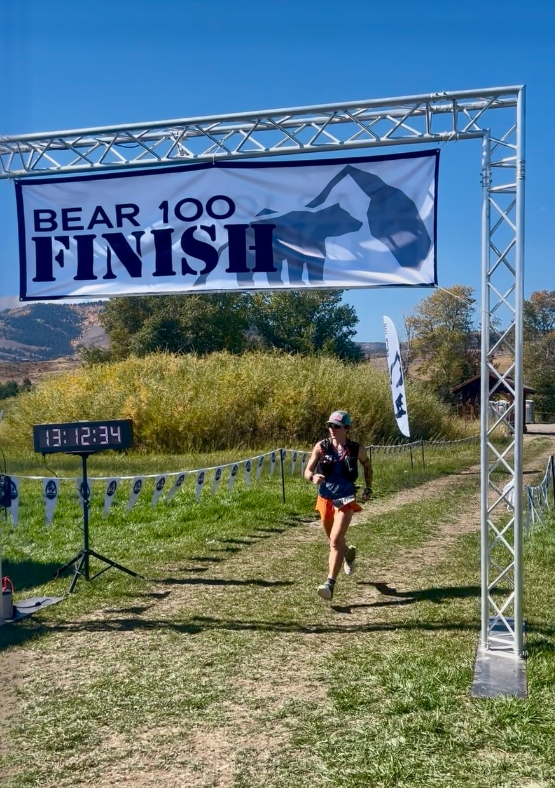
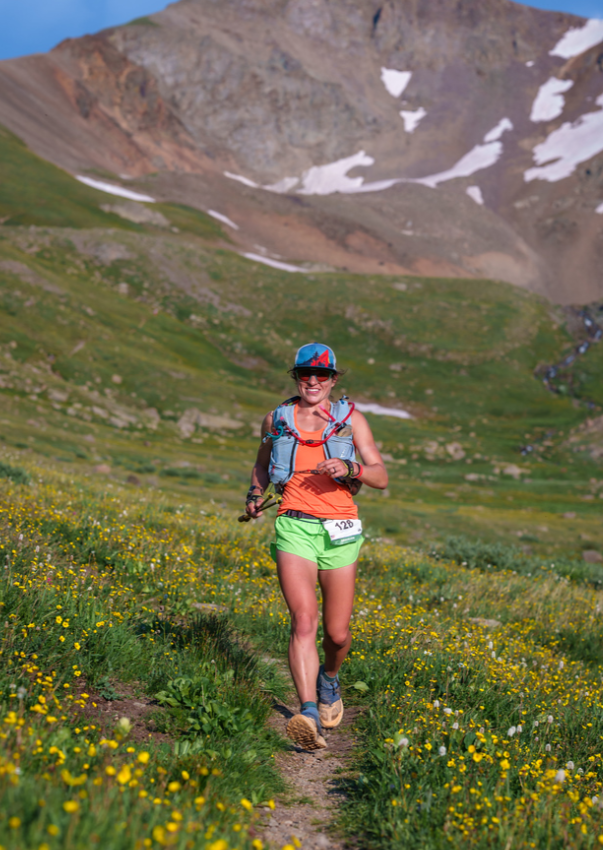
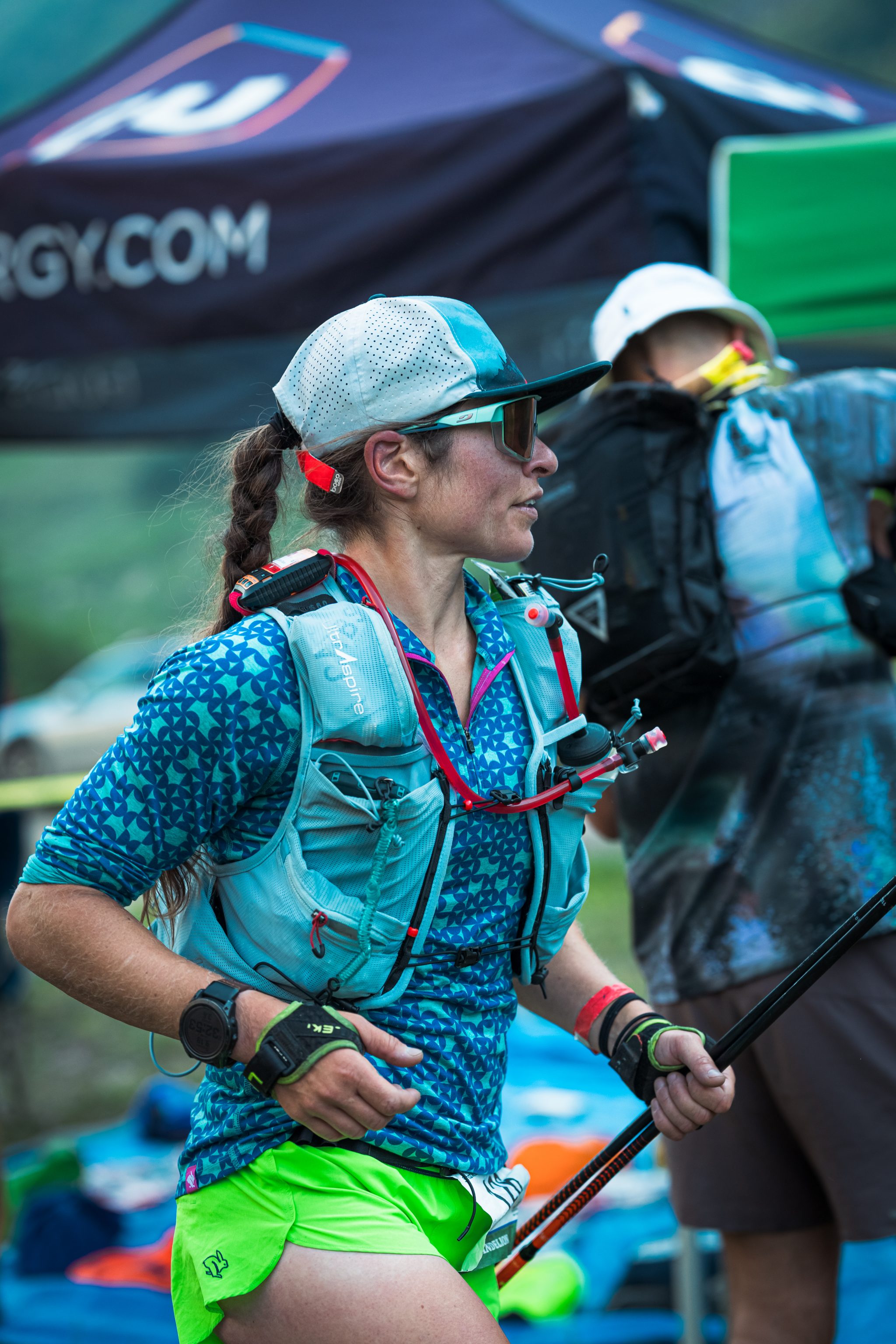
TRR Coach Dandelion completing the Bear 100. PC: Damien Scott

Runner: Team RunRun Coach Dandelion Dilluvio-Scott

Race Date: 09/26/2025

Location: Logan, UT

Result:  31 hours, 12 minutes, and 28 seconds; 126th overall, 4th female

3 Bests – What aspects of the race did you like the most?
  1. Autumn: This race is timed to coincide with peak fall colors!
  2. State-to-state traverse: It’s pretty unique for a 100-mile course to take runners across state borders.
  3. Porcupine sighting: During the night, a porcupine ran in front of me on the trail for a few seconds before moving off to the side. And no, I was not hallucinating!
Not so much – Aspects of the race that didn’t do it for you

I can’t think of anything. I suppose it would have been nice to have some more cloud cover midday, but that’s not something the RDs can control!

Weird factor – What’s the weirdest thing about this race?
Nothing weird. A unique factor is different buckles for various finish times:
–Black Bear Buckle: 30-36 hours
–Grizzly Bear Buckle: 24-30 hours
–Wolverine Buckle: under 24 hours
Highlights of your race – What did you do well and enjoy about your race in particular?
Pre-race mindset and expectations

My only goal for the Bear 100 Endurance Run was to focus only on the process of running 100 miles. This would be an internal journey to rediscover my “why”, which had become blurred. After almost two years of non-stop competing and tune up performance-based events, I wanted to go back to my roots and simply endure. I needed the Bear 100 to purely be about working with the terrain to get from Utah to Idaho. I wasn’t completely certain what focusing only on “the process” would look like in action when I toed the line, but I felt confident the best methodology would reveal itself.

Once we began the first climb, it didn’t take long for me to realize that I was carrying a massive amount of cumulative physical fatigue from racing Hardrock 100 earlier this summer. I also identified that I did not have the mental capacity yet to go back into the pain cave and embrace suffering like I did during the second day of Hardrock 100. My approach became clear in that moment: I would run the Bear 100 at a chill and causal pace. My goal was to be intentional, but not urgent. It didn’t matter how long it took me or where I placed.

Day 1

I was surprised at how easy it was for me to commit to this plan. I never once felt compelled to reel runners in or calculate a finish time based on my pace. Shockingly, I probably only checked the clock three times during the entire 31-hour event! Instead, I focused on moving efficiently through the course and proactive self-care.

During early portions of the first day, I pushed a bit harder uphill, drawing from my Hardrock training. Then I chilled on downhills to preserve my quads. Carbohydrates, electrolytes, and fluids were consumed regularly, and I maintained steady energy. By afternoon, the sun exposure became powerful in short sections and my focus switched to active cooling. I backed off on my intensity through these portions, stopping at creeks to throw water on myself whenever possible.
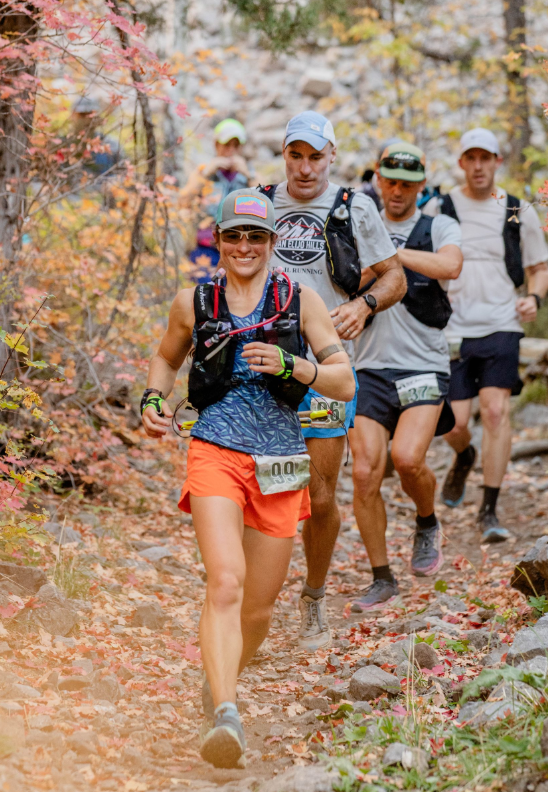
Dandelion running through fall foliage during the Bear 100. PC: Bethany Draper

Moving into the evening, I upped my consumption of solid hot foods at aid stations. I wasn’t going to be blasting through the climbs ahead and knew the reduced bouncing made GI distress unlikely. Hot foods (and drinks) would help me maintain a warm core, which would be essential to get through the night. The early hours of darkness were warm, so I stayed with light layers to reduce sweat; any moisture build up would cause me to freeze later. Later, when the temperature plummeted in the basins, every layer went on, plus hand warmers.

Running into the night

While I was never warm throughout the night, I wasn’t cold either. I stopped a bit longer at two aid stations to reset my internal temperature near the fire. I never got too close though, as I didn’t want to get overly warm and have the sudden cold suck the life out of me when I went back onto the trail! The miles clicked by as the long night wore on and I kept moving forward.

Warmth did not return upon sunrise. I continued eating hot food as I moved in and out of aid stations. I didn’t rush, but I also never lingered at aid stations throughout the event. After the final aid station at mile 91.8, I climbed the final hill. This is a notorious climb in the race because, although short, it’s mercilessly steep. I remember feeling indifferent about it, falling naturally into the mountaineer’s rest step. Unhurried, but efficient.

Day 2 to the finish

At the top of the ascent, it was finally warm enough to remove what remained of my nighttime layers. By no means did my body feel fresh! It was apparent that I had done something significant. Transitioning from hiking to running was bit awkward, but after a minute my body would adjust to the gait. Reading rocky terrain took a bit more mental effort, but I wasn’t tripping. My quads were sensitive, but not blown, so I could still maintain a gentle trot downhill. All things considered, physically and mentally, everything was still functioning well and my energy remained even. It stayed that way until I crossed the finish line in the afternoon on the shore of Bear Lake.

It sounds ridiculous to say that I ran a very casual and chill 100 miles, but that is honestly the best way I can describe this race. I truly stuck to my plan of running 100 miles for the sake of running 100 miles. I would not describe the experience as easy, but I cannot identify a moment of struggle either. The process felt familiar and intuitive to me. For the first time in a while I didn’t feel plagued by imposter syndrome. The Bear reminded me that I know how to run long distances through the mountains. Did I drain the tank? Absolutely not… but that wasn’t the point of completing The Bear 100. I was searching for something more internal.

Lessons for others – Share your pro-tips on the race to help the next runner

Cattle on the course! This is standard issue on many trails in the “Square States”, but folks less familiar may find loose livestock intimidating. There is no need to be afraid, and the bovines will move off the trail with gentle encouragement. Living in the ‘cowboy state’, I meet cattle all summer on training runs and have never had a negative encounter.

Lessons you learned that will help you next time around

My biggest lesson was very internal. Not every event needs to be a competition or even have a performance goal. So much joy can be found by simply running the course with no plan beyond being efficient and proactive with the process while appreciating the journey. Executing an event in this style helped me to reset my mental state so I can take on the challenge of competition again next season.

Most important course specific knowledge to know about the race

The Bear takes place during “Indian Summer.” This is the time of year in the Rockies where temperatures can swing wildly. Heat exhaustion can be a real danger during the day, while at night hypothermia can become a reality. Prepare with gear to avoid both dangers.

Many of the earlier aid stations are 8-10 miles apart, which is long for most 100 milers. It’s not problematic, but nutrition and hydration need to be planned accordingly.
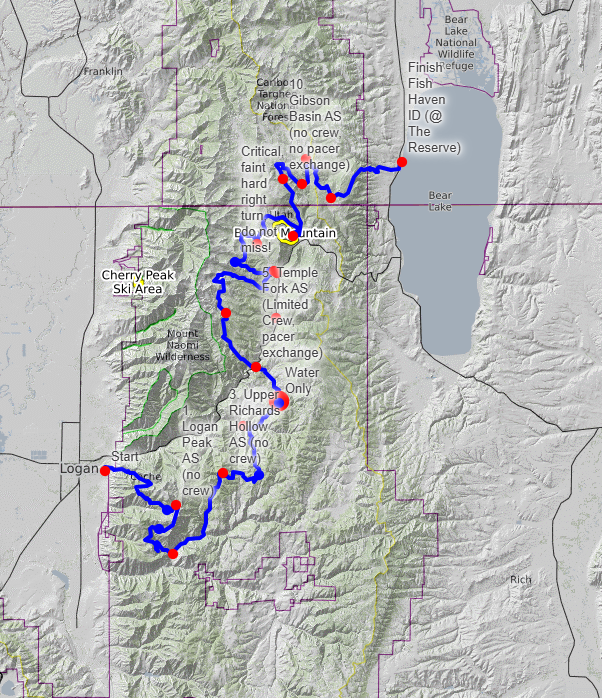
The Bear 100 course map.
Aesthetics – Is it a pretty course?

Yes! Think red maples, yellow aspens, golden grasses. The Bear 100 is timed when fall colors are peaking, and the sweeping mountain vistas are a ablaze with an autumn palette. It is a spectacular course!

Difficulty – Is it a tough course?

The Bear 100 is a proper Hardrock 100 qualifier. It has about 22,000 feet of vert in a mountainous environment, and covers a good amount of technical rocky terrain. However, many of the climbs are not aggressive (simply long), so a great deal of the course can be run if the athlete desires.

Organized and well run – Did it feel like a well-oiled machine or were they flying by the seat of their pants?

Cody and Bethany Draper are excellent RDs and have everything dialed. If anything went wrong during the event, I never found out about it.

Competition – Is there a strong field?

Yes! Elite athletes show up to this event regularly, and stellar times were put up this season on both the male and female podiums.

Logistics – Does it require a special handshake, registration a year in advance, hotels all booked? Give us the low down on the nuts and bolts of making the race happen.

This year (2025) was the final year The Bear 100 was available for first come first served registration. Moving forward it will be a lottery due to huge demand (it filled in about 8 minutes after opening in 2025!). Runners can also gain entry by acquiring a Bear Tag through winning a partner race. Further details can be found at https://bear100.com/lottery/.

Aid Stations – Standard fare or anything special to know about the aid stations in terms of what’s available or when?

The aid stations featured traditional fare: chips, soda, goldfish, broth, granola bars, quesadillas, trail mix, pickles, PB&J, etc. Gnarly and Gu sponsored the event, so their products were offered as the main engineered tech nutrition option. Later aid stations offered some special options like pizza, French toast sticks, hashbrowns, eggs, soup, tater tots, avocado sandwiches and perogies; a nice, wide range of options!

Weather and typical race conditions

Late September in the Rockies can be fickle. As was the case in 2025, this race usually has “Indian Summer” mild conditions: warm temperatures during the day, and colder nights. However, there have also been years with extremely hot daytime temperatures and bitterly frigid nights. Snow is also possible. In fact, the week after the 2024 edition it snowed a few inches on the course. Rain and electric storms are also possible. In general, anything and everything can happen this time of year in the mountains, so be prepared!

Gear – Did you need anything special or is there anything you’d recommend for the next runner?

I brought my standard mountain 100-mile race kit. My biggest recommendation is to be ready for a cold night. It drops into the 20s or 30s (degrees Fahrenheit) most years. During the day, I only carried a very light jacket. Leading into evening, I picked up an alpha fleece, hard-shell jacket, gloves, buff, long sleeved shirt, and hand warmers from a drop bag. I used every single item. The layers made the temperature tolerable while I was in motion, but I would not say I felt toasty warm.
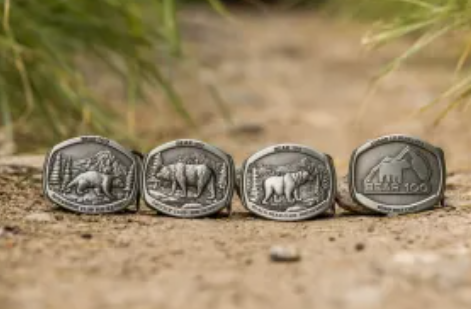
The different buckles on offer for finishing the Bear 100 based on finish time.
Spectators – Is this a friendly course for your friends?

As I did not have crew, I cannot comment much on the logistics of getting to aid stations. However, Right Hand Fork and Temple Fork aid stations have limited space, so runners must pick between one of the two locations to meet their crew at (a pass is provided). The start is certainly easy for speculators to get to as it is in the city of Logan, Utah. The finish line in Fish Haven, Idaho, is on the beach of Bear Lake: a beautiful set up for folks to hang out all day and enjoy watching runners complete their journey.

How’s the Swag?

The Bear 100 had plenty of pleasantly affordable swag available to buy at the pre-race check in. Additionally, all athletes received a shirt and socks in a nice tote bag. Finishers were awarded with a unique buckle and wood plaque.

The Overall Score – How many stars do you give this race and do you recommend that others run it?

10/10. If you love a classic Rocky Mountain ultra set against the colorful tones of autumn, do this event!
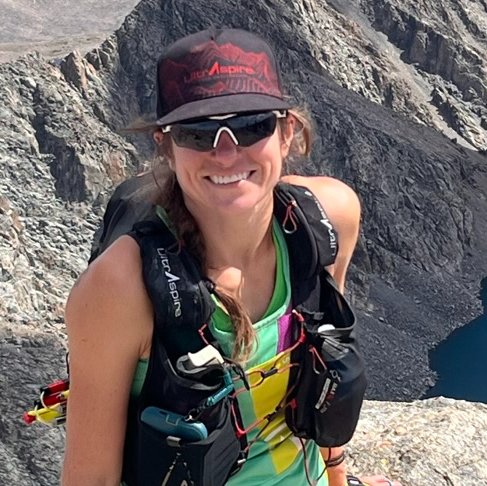
Dandelion Dilluvio-Scott is a multisport outdoor athlete, ultra-runner and certified coach. She is passionate about collaborating with driven athletes who love to explore, train and play outside.
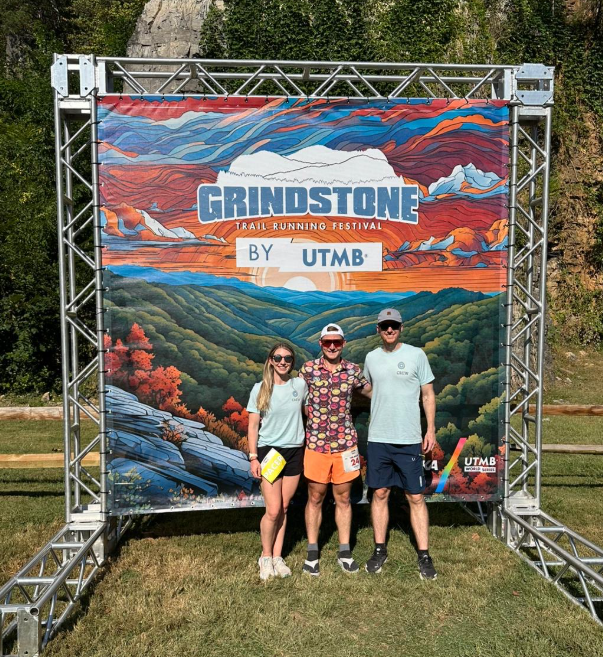
Grindstone 100 Race Report

Race: Grindstone 100 mile race by UTMB

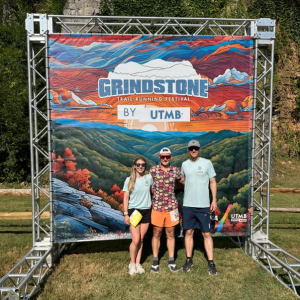
Lukas and his crew before starting the Grindstone 100 mile race.

Runner: TRR Coach Lukas Burrer

Race Date: 09/19/2025

Location: Natural Chimneys Park, VA

Result: 25:43:33, 8th overall and 3rd in age group

Strava link: https://strava.app.link/8zqeSaDGTWb

What aspects of the race did you like the most?

I liked that the Grindstone 100 is mostly on single track trails. Also, the 6pm start means everyone has to run through at least one full night, and this adds another challenge to the race.

Not so much – Aspects of the race that didn’t do it for you

The downside to all the single track was that some parts were pretty overgrown, making it harder to stay on pace.

Highlights of your race – What did you do well and enjoy about your race in particular?

The final miles are very smooth and runnable – a nice “treat” after 90+ miles of technical single track! It felt very good to drop the pace and finish the race strong. (Certainly not something you feel at the end of most 100 milers!)

Lessons for others – Share your pro-tips on the race to help the next runner

Above all, take the climbs easy! They are gnarly and long, so you need to measure your energy and effort appropriately.

Most important course specific knowledge to know about the race

The lollipop section (miles 53-66) of the Grindstone 100 course is very gnarly and tough to get through. Oh, and it’s 105.1 miles, not 100.

Aesthetics – Is it a pretty course?

Yes! The course is mostly on single track trails, providing continuous variety that keeps you motivated. And the upside to the gnarly climbs are the beautiful views you’re treated to at the top.

Difficulty – Is it a tough course?

Yes, undoubtedly so!!! Those climbs are tough, and the technical terrain makes it even harder! Plus, you gain 21,000 feet over the 105-mile course! Grindstone 100 is one of the most difficult 100-mile races in the US.

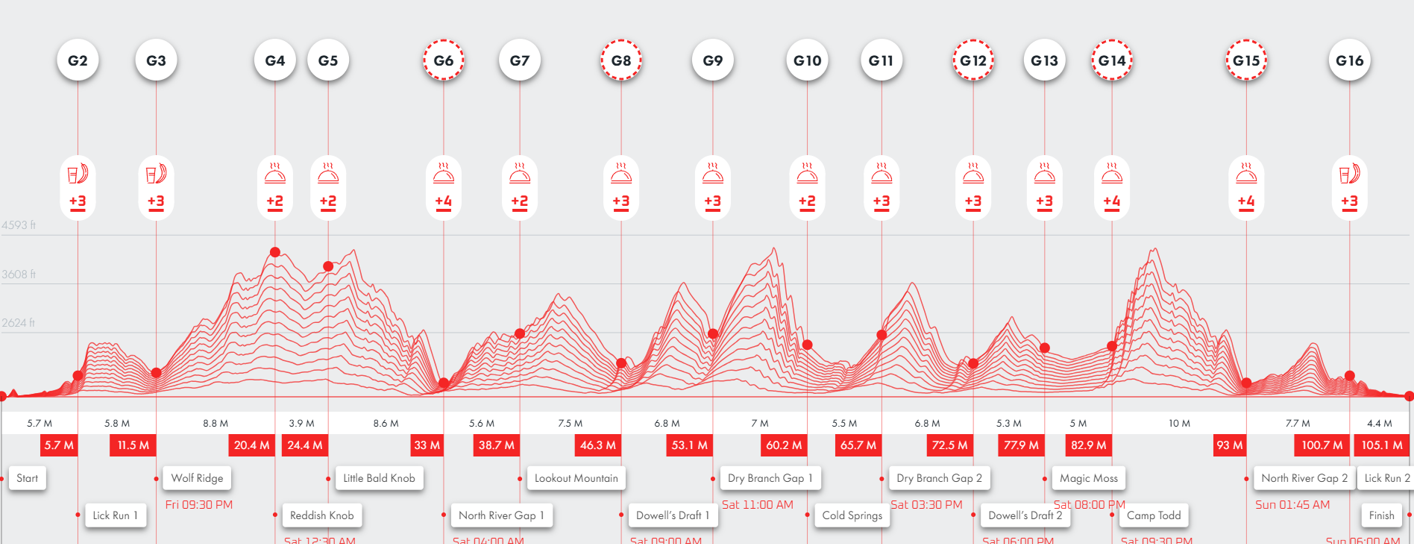
Grindstone 100 elevation map with aid stations and time cutoffs labelled.
Organized and well run – Did it feel like a well-oiled machine or were they flying by the seat of their pants?

Yes! It’s a UTMB race, so it’s very well organized.

Competition – Is there a strong field?

Yes! Again, with it being a UTMB race, it will always attract a strong field of athletes trying to qualify for the UTMB finals in France.

Logistics – Does it require a special handshake, registration a year in advance, hotels all booked? Give us the low down on the nuts and bolts of making the race happen.

No major logistical hurdles, simply go to the website and sign up!

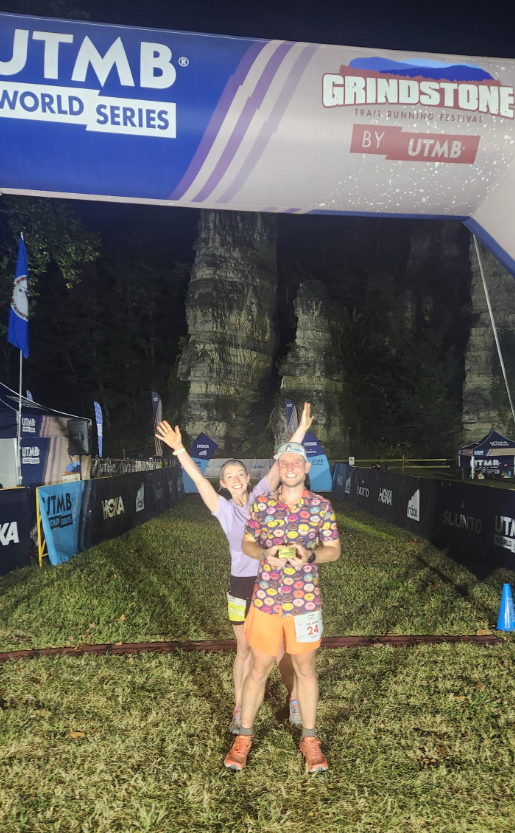
Lukas and his pacer at the finish line.

Note UTMB’s trail stewardship policy: all the Grindstone 100 racers are required to complete 8 hours of trail work prior to race day, which they submit via a Trail Work Form.

Aid Stations – Standard fare or anything special to know about the aid stations in terms of what’s available or when?

There are 15 aid stations throughout the Grindstone 100, 1 about every 6-8 miles, and you can have crew and/or drop bags at 5 of them. The offerings are standard, and Naak is the on-course nutrition and hydration brand. That said, the North River Gap aid station (which is also a crewable aid station) was the best, thanks to the variety of food options available!

Weather and typical race conditions

It was pretty hot and humid on race day this year! Therefore, I’d recommend asking your crew to have ice available at aid stations to stay cool.

Gear – Did you need anything special or is there anything you’d recommend for the next runner?

There is a mandatory gear list but, as far as UTMB races are concerned, it doesn’t list anything you shouldn’t already think to carry.

My #1 recommendation is poles! Bring poles, you won’t regret it!!

Spectators – Is this a friendly course for your friends?

There are a good number of crewed aid stations, meaning crew, friends, and spectators can see and support the runners more often than in a lot of 100-milers. However, trail ultramarathons are never the most spectator-friendly! There is a whole festival setup at the finish line area, perfect for spectators to await finishers.

How’s the Swag?

You get a nice 100-mile finishers belt buckle, race t-shirt, and picture from the park!

The Overall Score – How many stars do you give this race and do you recommend that others run it?

5/5! I would recommend the Grindstone 100 to anyone looking to gain some milestones for UTMB who likes technical and gnarly races.

For another tough 100-mile race report, check out: UTMB (Ultra-Trail du Mont-Blanc) Race ReportTRR Founder and Coach Matt Urbanski details his UTMB race: 108.1 miles with over 32,000 feet of vert and wild weather in the French Alps!

Lukas Burrer is a coach with Team RunRun originally from Germany, but now based in Atlanta, Georgia. He specializes in trail and ultrarunning, and loves helping athletes take on big challenges!

UTMB (Ultra-Trail du Mont-Blanc) Race Report

Race: UTMB (Ultra-Trail du Mont-Blanc)

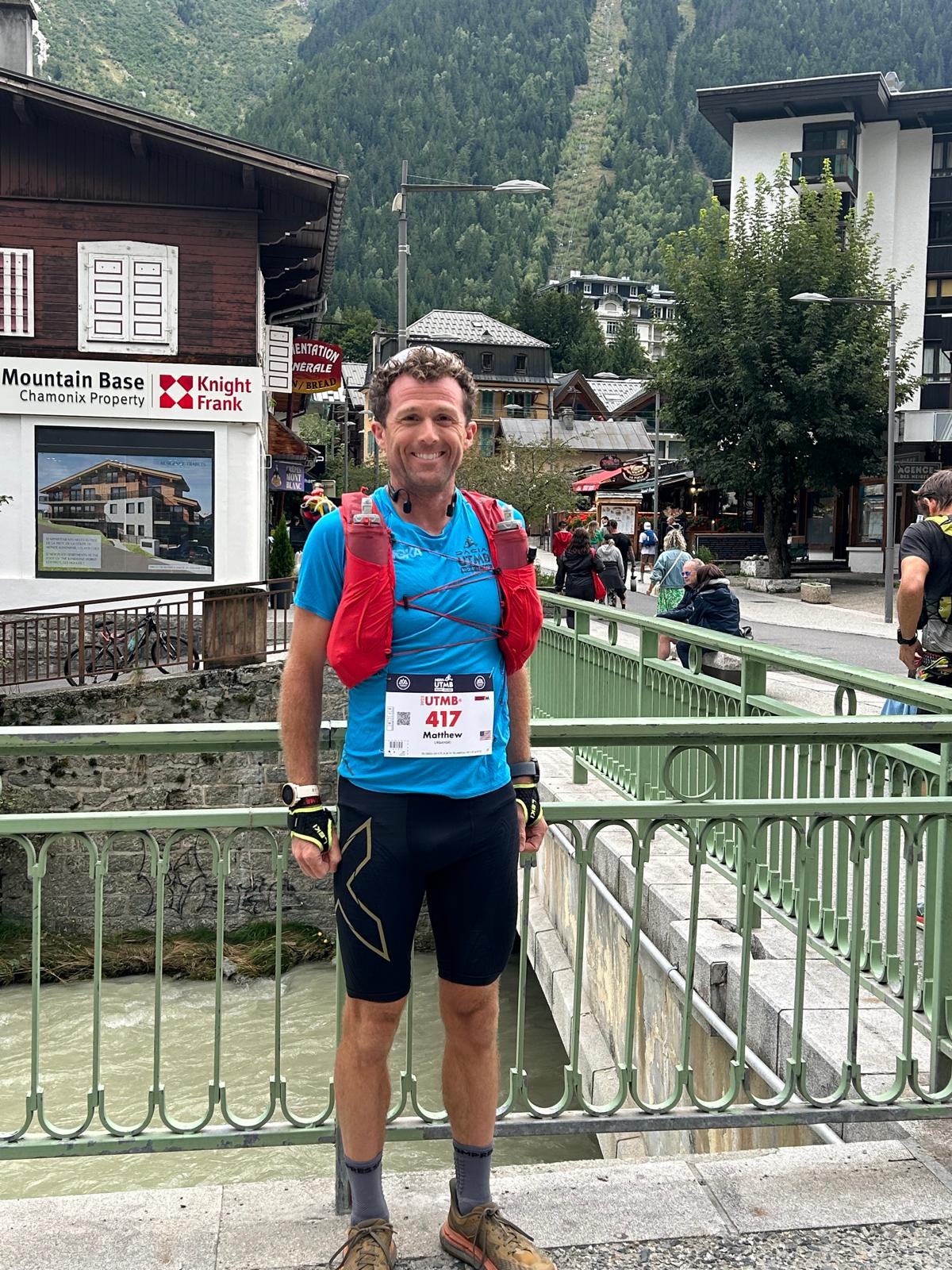
TRR Founder and Coach Matt Urbanski at the UTMB 108-mile race in Chamonix, France.

Runner: Matt Urbanski (Team RunRun founder and coach)

Race Date: 08/29/2025

Location: Chamonix, France

Result: 29:55:38, 170th out of 1665

Strava link: https://www.strava.com/activities/15645195041

What aspects of the race did you like the most?

I just love the racing environment of UTMB. They organize it so well, the energy is amazing, and the setting is absolutely epic. I have run this race three times, and I want to keep coming back!!

I also love that after having been in the trail running community for so many years, I can go to this race and see so many people I know from all around the world!

Not so much – Aspects of the race that didn’t do it for you

The start. I’m just outside of the “elite” category so I don’t get a spot near the front of the race. Two years ago when I raced, I got there more than an hour before the start and sat out in the sun waiting. This year, I got there 30 minutes before and was in the middle of the crowd. It took me 2 minutes to push/get pushed to the start line, and then we walked out of town. I wasn’t feeling super competitive this year, but walking slowly amid tons of runners with selfie-sticks, rather than running this nice flat part of the course was frustrating. I think they need to have corrals based on bib numbers (which are based on UTMB Index ranking).

Weird factor – What’s the weirdest thing about this race?
I’m still a bit in awe at all the deli meat and cheese available at the aid stations. They don’t have gels, and the overall food selection is noticeably different from US ultras. I basically lived on Naak waffles and Naak sports drink for 30 hours!
Highlights of your race – What did you do well and enjoy about your race in particular?
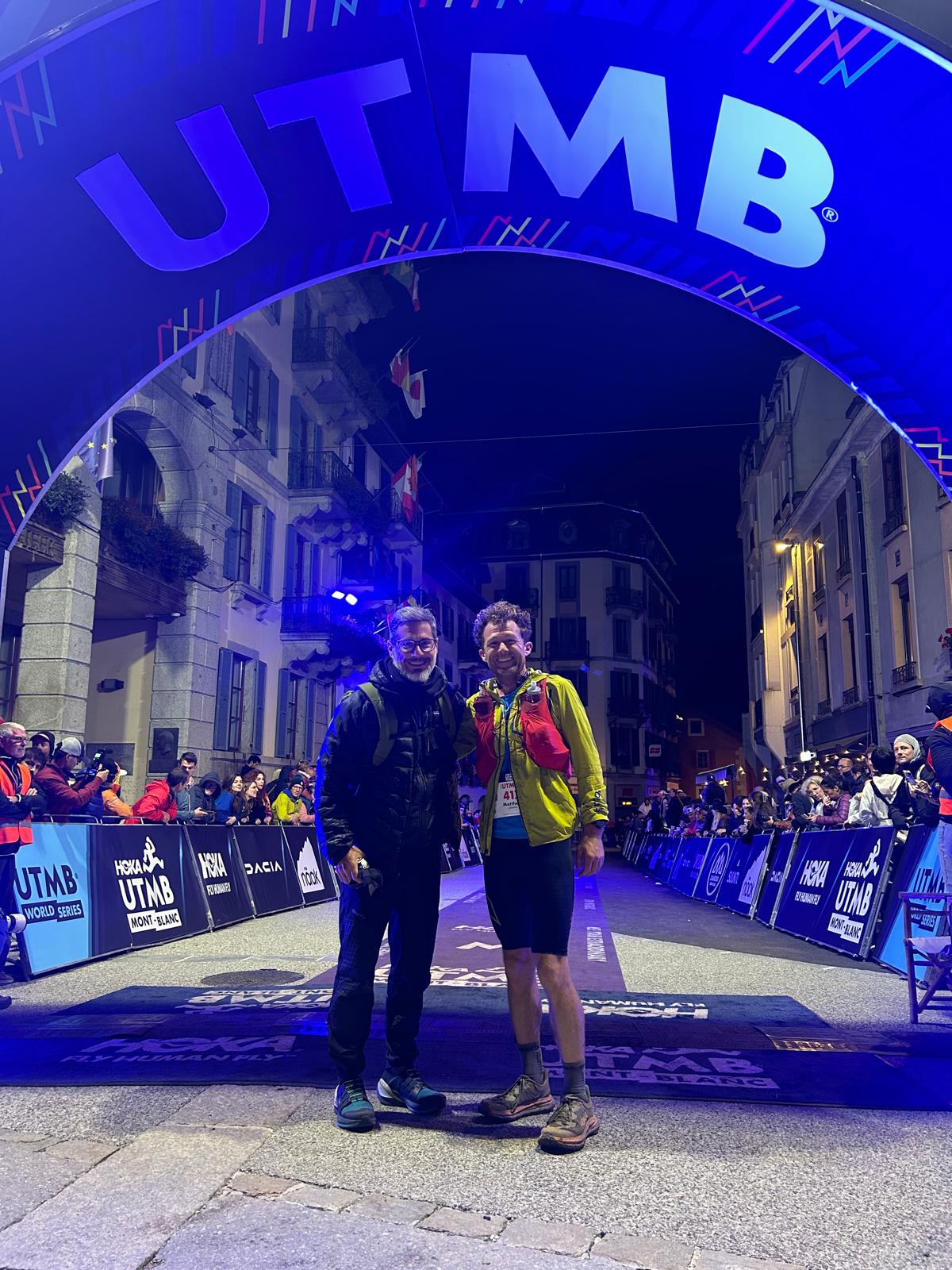
Matt at the finish line, greeted by TRR athlete and star crew, Jose Medina!
Matt at the finish line of UTMB, greeted by TRR athlete and star crew, Jose Medina!

I got out of trouble. I made a really big error on the climb to Col du Bonhomme: I didn’t layer up for the weather. It was raining, and I had on my rain jacket and rain mitts, but I didn’t put on more layers. By the time it was windy and snowing up high (at 2am!), and I knew I needed to get warm fast, my hands were too cold to function. I couldn’t get my vest off, let alone get it open, in order to get more warm layers out. Thankfully, they had a warming hut open at the top. It looked brutal in there with people shivering, crying, and just in total disarray – I was one of them, shaking violently for 30+ minutes.

I am proud that I eventually regrouped, got warm enough, got my gear on properly, and carried on to finish the race. But there was a brief period before that warming hut (which I didn’t know would be open to us!) where I was scared for my life, more than any other running event I’ve ever been in. But I got out of trouble and UTMB!

Lessons for others – Share your pro-tips on the race to help the next runner
  1. Get good at downhill running. There is so much downhill! Get good at running fast on steep long descents. That is a huge advantage.
  2. Be fit. The stronger a runner you are, the better you’ll do on the climbs and the various runnable sections.
  3. Know your gear. There’s a big required gear list, and while you might think it’s overkill, I needed all (well, almost all!) of it this year. Practice with it, know where it is in your pack, and be quick to use it! In training, simply practicing running with the weight of it all will be a big benefit, even if you never need to get into it!
  4. Relax and smile. It’s a really long race, and it’s really easy to get caught up early in the competition. Slap hands in St. Gervais and Les Contamines, soak in that crazy tunnel of people at the start of the big Col du Bonhomme climb. And then stay focused: it’s a long, long race!
Lessons you learned that will help you next time around

In future, I’ll be way quicker to get my cold gear on at any race where it might be getting cold!

It’s way more fun to be fit! I didn’t train well for UTMB this year. I was able to get by with good power hiking on the long climbs, and good descending skills. But it’s just a better race when you’re well prepared.

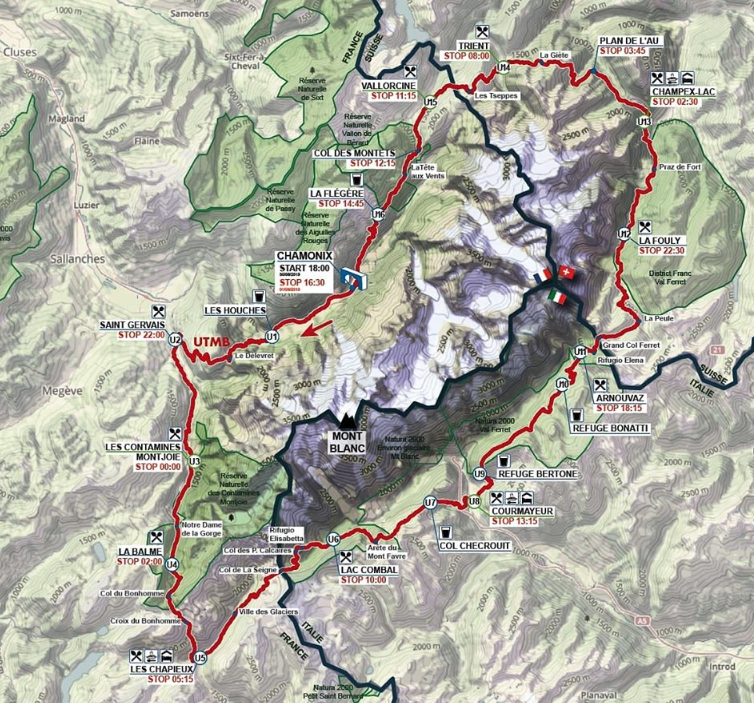
UTMB 108.1-mile race course map.
Most important course specific knowledge to know about the race

The last big section from Col des Montets to La Flégère is tough! You’re met with steep, big rocks, an up-and-down and then another long up, before you finally get to the last big up, which is a ski slope. It’s plain tough at this point in the race, so be ready for it!

Also, to me, that climb out of Trient is just a beast! So steep for so long!

Lastly, the rocky climb once you’re out of Champex-Lac is a pain. There are so many big rocks that it’s tough to find a rhythm (plus, I had my own special suffering going on through that section which didn’t help!).

Aesthetics – Is it a pretty course?

UTMB is one of the prettiest courses I know of. I just LOVE racing in Chamonix!

Difficulty – Is it a tough course?

Yes! With a 46.5-hour cutoff to cover 108 miles and over 32,000 feet of vert, it’s an awesomely difficult race!

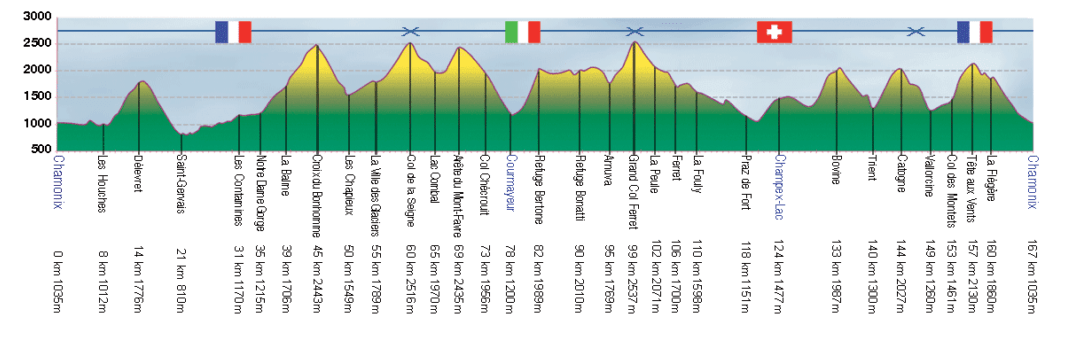
UTMB elevation chart with the main climbs labelled.
Organized and well run – Did it feel like a well-oiled machine or were they flying by the seat of their pants?

YES! The best in the world. While the buses and the start still need work, UTMB is the best run race out there.

Competition – Is there a strong field?

YES! Again, the best!

Logistics – Does it require a special handshake, registration a year in advance, hotels all booked? Give us the low down on the nuts and bolts of making the race happen.
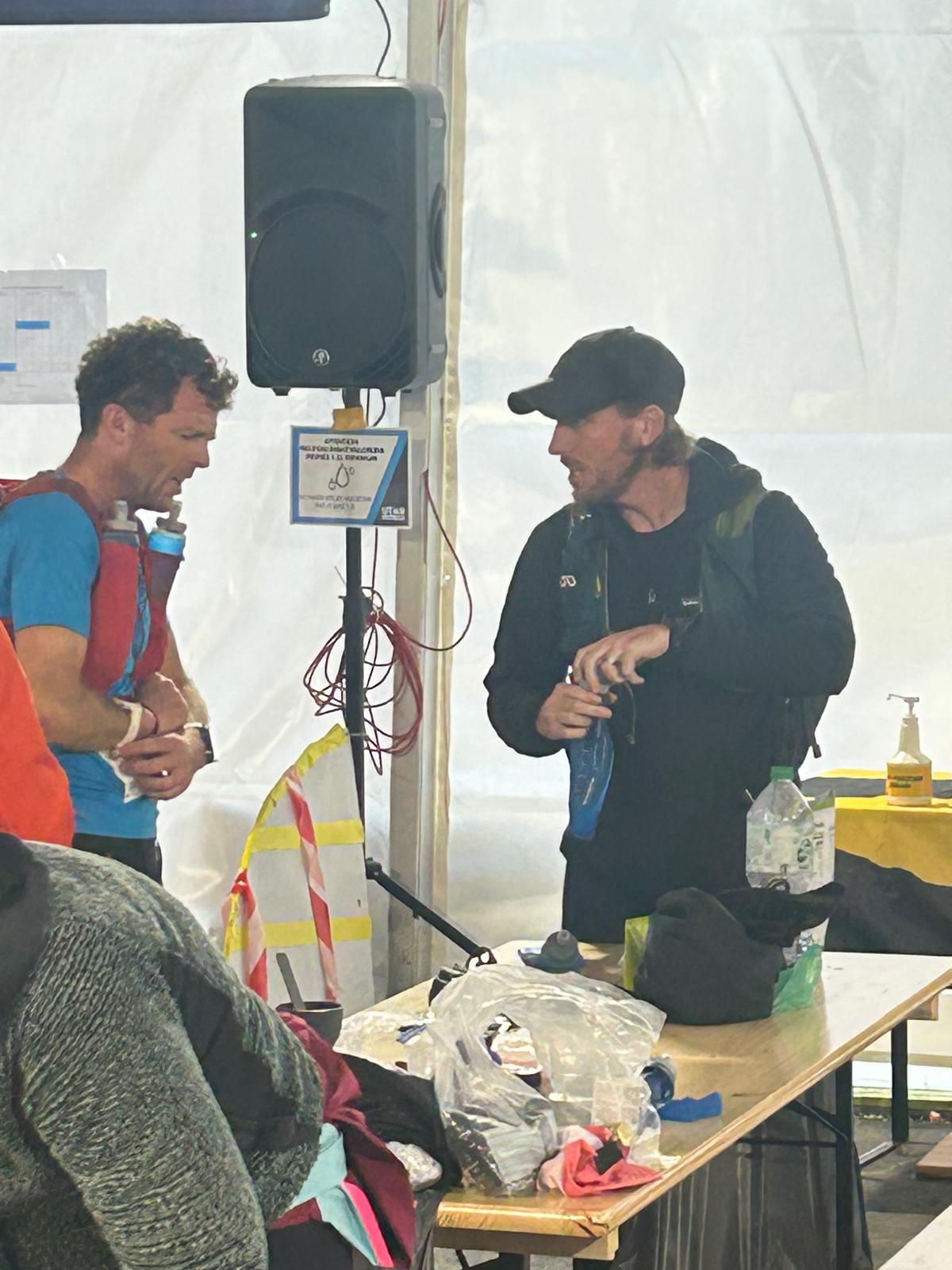
Matt meeting his crew at an aid station to refuel during UTMB.

Know the game with the UTMB stones and the qualifying system. It’s not that tough to get into (as of 2025) – certainly not as hard as some people make it out to be! I got in with 4 stones via the lottery in my first attempt.

Lodging is expensive in Chamonix now. Be ready to pay up. But it’s such a great town and we love visiting each year!

Aid Stations – Standard fare or anything special to know about the aid stations in terms of what’s available or when?

If you like Euro-style aid stations, you’re good to go. Meat, cheese, bread… But for me (vegan), there isn’t much. I had gels ready at the 5 crew stops, along with Skratch carbohydrate and electrolyte drink. Otherwise, I relied on Naak waffles (cut into 1/4s – I grabbed 4-6 of them each at aid station) and Naak sports drink. I picked up some veggie broth a couple times too, but it was so hot that it took forever to drink, so I didn’t stick with that.

The hype and energy of the aid stations is awesome though!

Be warned: Les Contamines’ aid station is an absolute shit show! It’s so busy and so crazy with people because the race hasn’t spread out yet. It’s hard to find your crew, and they won’t even be allowed into the tent area until they know you’re close. Be ready for chaos there!

Weather and typical race conditions

It can be hot, it can snow, it can be everything in between. They have a hot weather required kit and a cold weather one – I’ve had both activated during my 3 times running this race. Be ready for anything!

Gear – Did you need anything special or is there anything you’d recommend for the next runner?

There is a HUGE required gear list for UTMB. I know it’s expensive, but it’s worth spending time and money to get high quality stuff. Once you have the good gear, make sure you know how to use it! Practice running with the gear in training too. Take the required gear list seriously: they do check it at couple aid stations throughout the race. This year, I had to show my 3 upper layers (cold weather year) and my emergency blanket.

Spectators – Is this a friendly course for your friends?

Yes and no. There are tons of spectators on course and it’s awesome! But it’s tough to get around as a spectator. All crew and spectators had to buy bus passes by early July this year (I didn’t do that!). Fortunately, I was able to secure passes for my crew in the final days before the race, but only for them, no one else. It’s a bit pricey for bus passes too, but my crew had a blast with it all. Summary: there are tons of people on course, but it’s also tough to get around, so plan ahead.

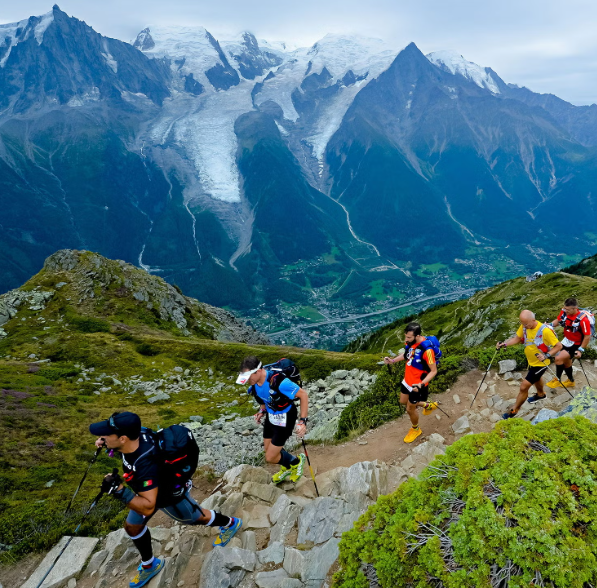
Runners on course during UTMB. PC: Pascal Tournaire/UTMB
How’s the Swag?

It’s lean: finisher vest only, no medals. People come for the race, not the swag. The t-shirt was sized large this year. The men’s small was too big for me. 🙁

The Overall Score – How many stars do you give this race and do you recommend that others run it?

10 out of 10! I love UTMB, and I will want to do it again (even though I said – multiple times – I was done with ultras mid-race!)!!

Matt Urbanski is the founder of Team RunRun, as well as a coach. He enjoys coaching self-motivated runners to optimize training time, push limits, transition to ultras, podium, BQ, and other big challenges!

Hardrock 100 Mile Endurance Run Race Report

For a thoughtful, more detailed write-up of Dandelion’s Hardrock 100 Mile race experience, from start to finish, check out “Hardrock 100: TRR Coach Dandelion’s Race Rundown“. You’ll read how her mental and physical strength allowed her to endure a myriad of challenges and still finish smiling!

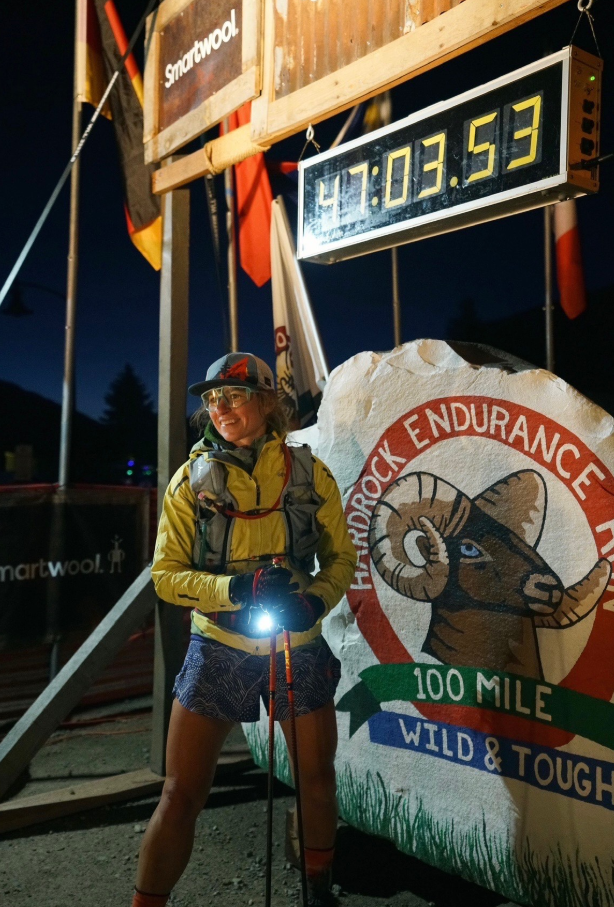
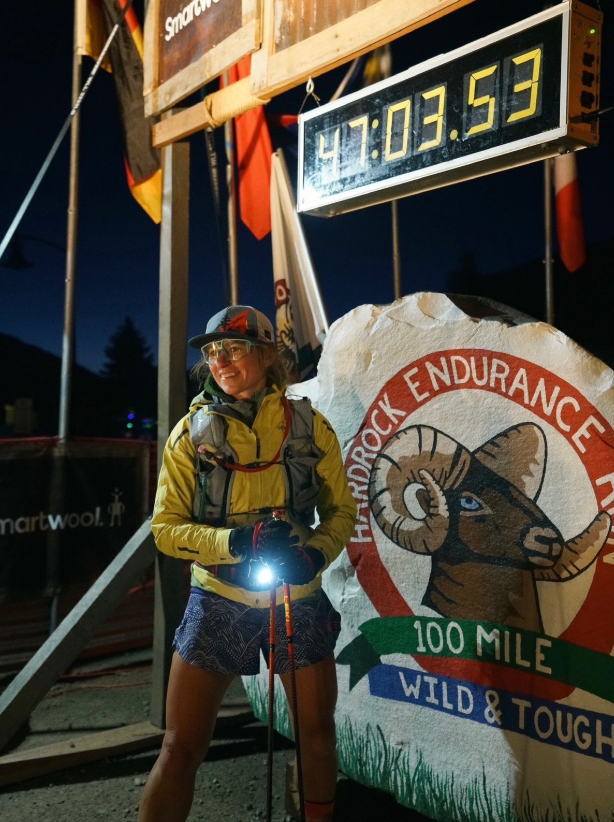
TRR Coach Dandelion Dilluvio-Scott finishing the Hardrock 100 Mile Endurance Run. PC: Andrew Podbielski

Race: Hardrock 100 Mile Endurance Run

Runner: Team RunRun Coach Dandelion Dilluvio-Scott

Race Date: 07/11/2025

Location: Silverton, CO

Result: 47:03:41; 104th Place; 17th Female

3 Bests – What aspects of the race did you like the most?
  1. Extreme mountain environment: With a high point of 14,048 feet and an average elevation of 11,000 feet, the Hardrock 100 Mile Endurance Run course is the definition of a high alpine setting. As an athlete who lives in the Wyoming Rockies and trains high, I am fascinated by altitude. I am also highly drawn to races with rough and rugged terrain. One of my favorite puzzles to solve is how to adapt and move with these kinds of mountain environments.
  2. The lure: There is something captivating and pleasantly intimidating about running a race that less than 2,000 people have completed in its 30 runnings!
  3. Handies Peak: Ascending to the summit of a 14’er (a mountain with a peak above 14,000-foot) in the middle of a 100-mile race is so uniquely special!
Not so much – Aspects of the race that didn’t do it for you

Nothing!

Weird factor – What’s the weirdest thing about this race?
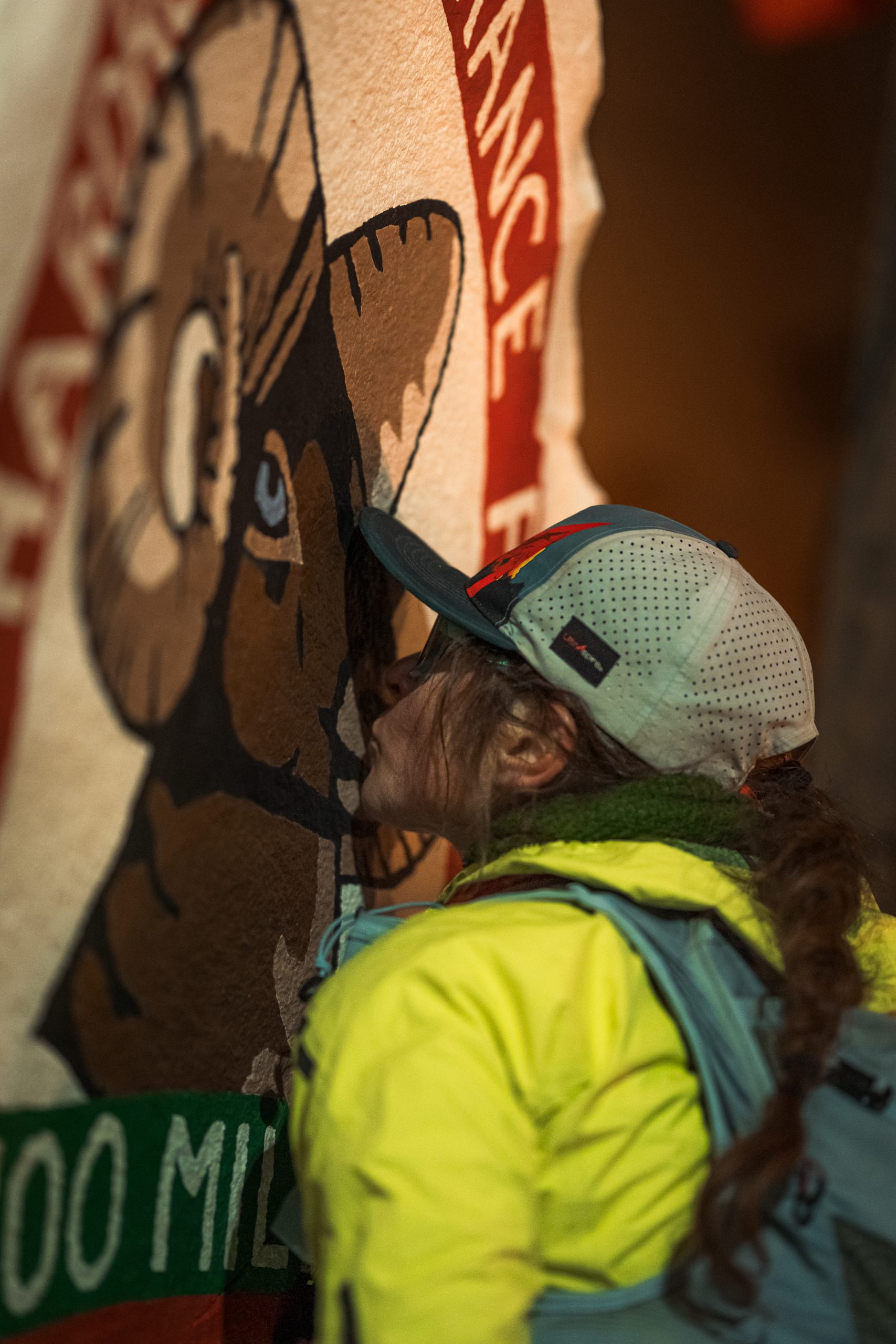
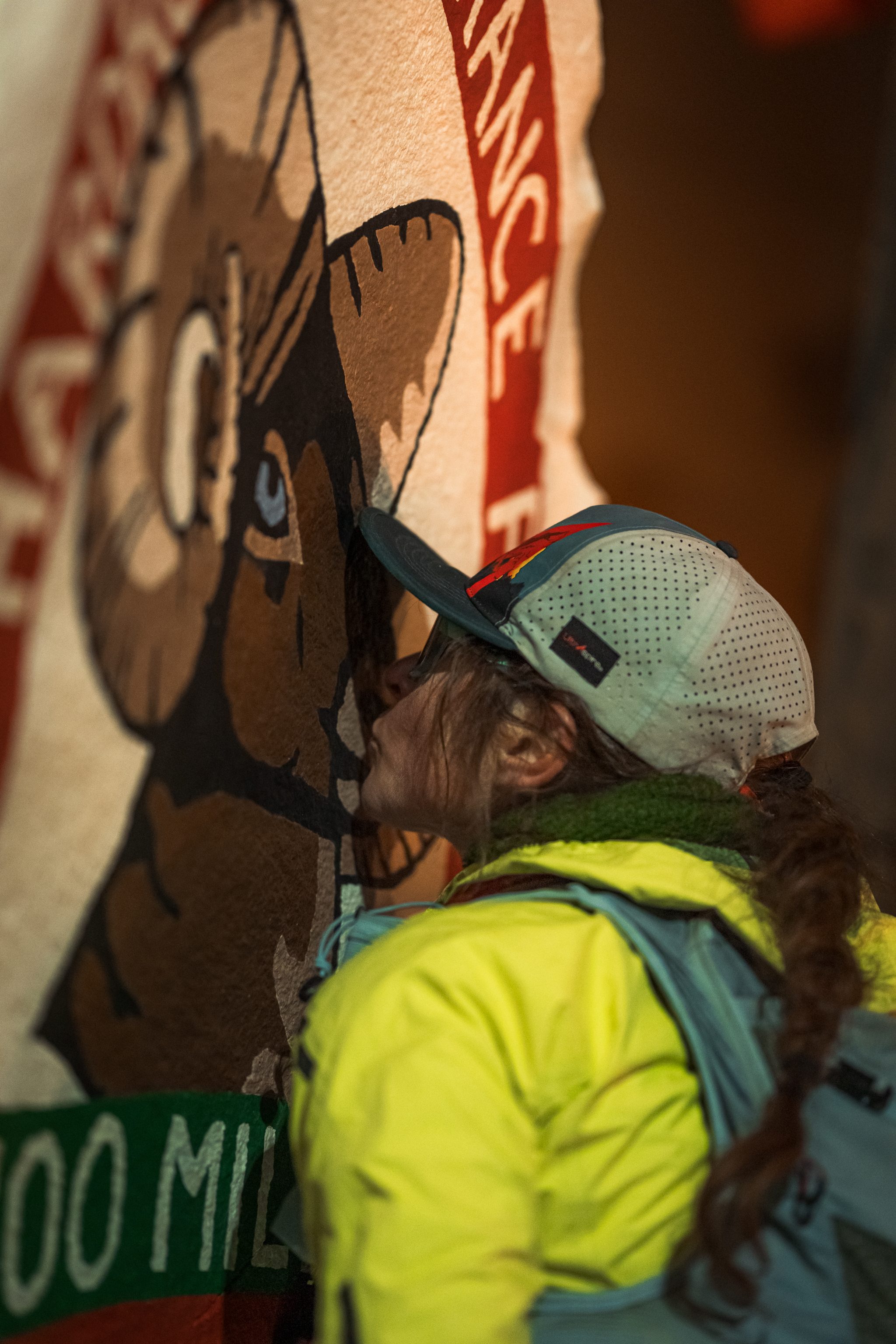
Kissing “the rock” at the finish is likely the most delightfully weird quirk of Hardrock! Another unique factor is that the race alternates between going clockwise and counter-clockwise each year. You’re not a “True Hardrocker” unless you have gone both directions.
Highlights of your race – What did you do well and enjoy about your race in particular?

One of the biggest highlights of Hardrock for me was how strong and smooth the first half felt. I was hitting my paces, my fueling was spot on, and I was genuinely enjoying myself out there. Climbing Handies Peak with a couple of other runners was probably my favorite moment—we worked together really well, and being on top of a 14er mid-race with that view was just unforgettable.

Dandelion kissing the infamous rock at the finish line. PC: Travis McWhorter

What made this race extra special, though, was how much I actually took it in. Usually in races I’m so focused on execution that I barely notice what’s around me. But during Hardrock, I made sure to stop for a second here and there to really appreciate the San Juans—the wildflowers, the ridgelines, the stillness. It felt like I was part of something much bigger.

I also feel proud of how I handled the second half when things got rough. My nutrition fell apart, and the heat and altitude started hitting hard. I had a moment where I broke down crying, but I didn’t let it derail me. My pacers were incredible, and once I got it out of my system, I reset, dug deep, and just kept going. That emotional turnaround—choosing to keep moving forward when it got really hard—is something I’ll carry with me for a long time.

More than anything, I loved the connection I felt: with the mountains, my crew, and even with myself. It was one of those experiences that shifts something inside you.

Lessons for others – Share your pro-tips on the race to help the next runner

Don’t think of each alpine running variable individually (exposure, weather, intensity, attitude, technical terrain, etc.). Instead consider how they might compound. For example, I live at altitude and sleep in an altitude tent, but I still struggled at elevation later in the event because of how the elements combined.

I also recommend working with a team of professionals while training for a rare opportunity event like the Hardrock 100 Mile. I believe that having a coach, in addition to a running specific physical therapist and sports chiropractor, allowed me to stay healthy and endure the massive training load this event required.

Finally, if you are running supported, choose crew and pacers you can 10,000% trust with the right mix of personalities. After I gave my team a pre-race orientation, I never thought about it again. I knew with absolutely certainly that they would carry out my plan and also make the appropriate changes when necessary. You don’t want to wonder if your team will have the right drink mixed for you upon your arrival while you’re climbing Handies!

Lessons you learned that will help you next time around

Be prepared to troubleshoot things that have never happened to you before. I never get GI distress… and yet I did big time at Hardrock!

Hardrock 100 course map.
Most important course specific knowledge to know about the race

A lot of focus is on the 33,000ft of uphill…. but you also have to descend the same amount! Practice your downhill technique and train for the eccentric loading.

Views of the beautiful Hardrock 100 Mile course.
Aesthetics – Is it a pretty course?

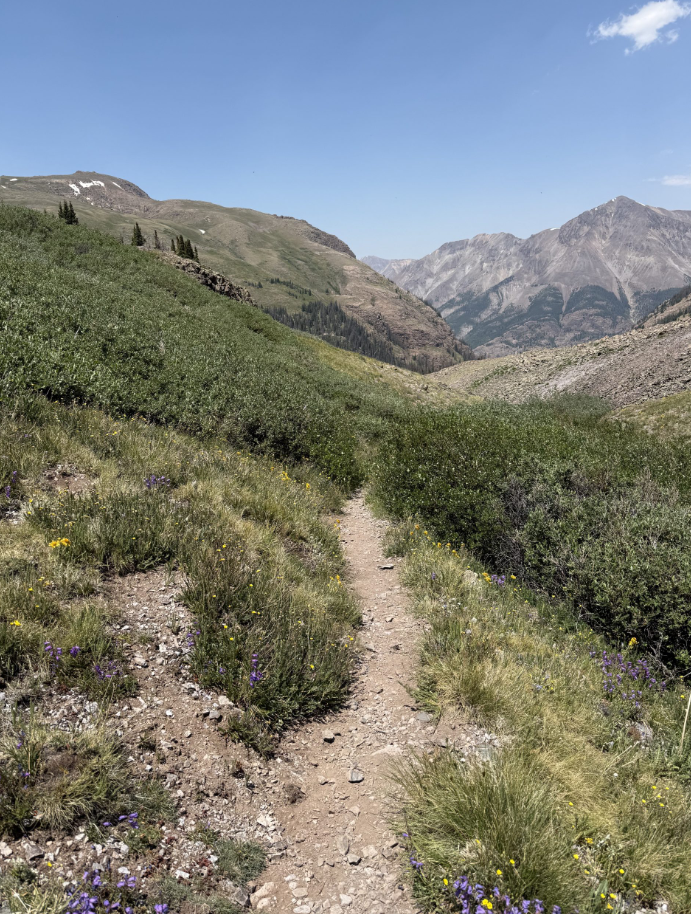
Imagine rugged, snowcapped mountains towering into the sky. Majestic sunsets/rises. Unique and colorful geology. Florescent wildflower meadows. Cascading waterfalls. Shimmering alpine lakes… yep it was pretty!

Difficulty – Is it a tough course?

YES! It was indeed both wild and tough, in addition to being hard and rocky! The terrain, exposure, elements, steep grades, and vert/descent are all huge undertakings on their own! It’s not the individual difficulties, but how they compound throughout 100 miles.

Organized and well run – Did it feel like a well-oiled machine or were they flying by the seat of their pants?

The Hardrock 100 Mile Endurance Run is a tremendously well-oiled machine! The care and attention to detail to ensure this event is a unique and remarkable experience for every runner present was unmatched. The check in process was seamless. Trail marking was exceptional. And, most of all, the volunteers at every aid station were knowledgeable, full of energy, and went above and beyond the call of duty. One thing that stands out is when I arrived at Sherman, I was directed to a volunteer who already had my drop bag items laid out on a table. She then proceeded to take care of anything I needed. My own personal volunteer! I’ve never encountered anything like it before. Mind blowing!

Competition – Is there a strong field?

YES! One of the strongest fields I have ever had the pleasure to race with!

Logistics – Does it require a special handshake, registration a year in advance, hotels all booked? Give us the low down on the nuts and bolts of making the race happen.

The Hardrock 100 Mile Endurance Run is a lottery race and you must run a qualifying race every 2 years to be considered. I was lucky enough to get into the race after only 2 years of applying, but there are folks who wait 10+ years! The process is nuanced, and more in-depth information can be found here.

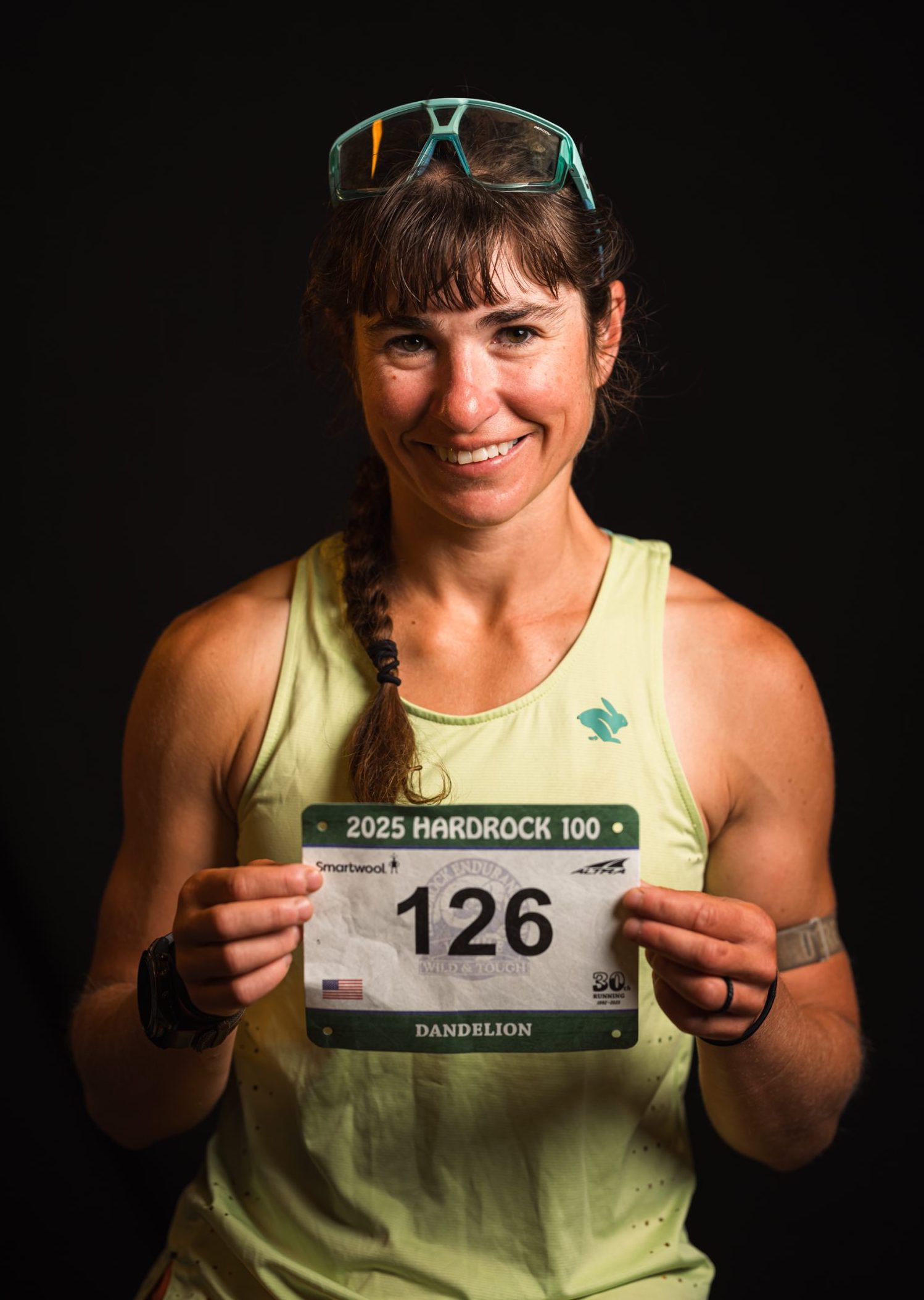
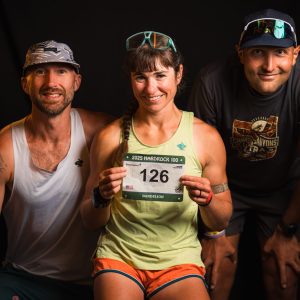
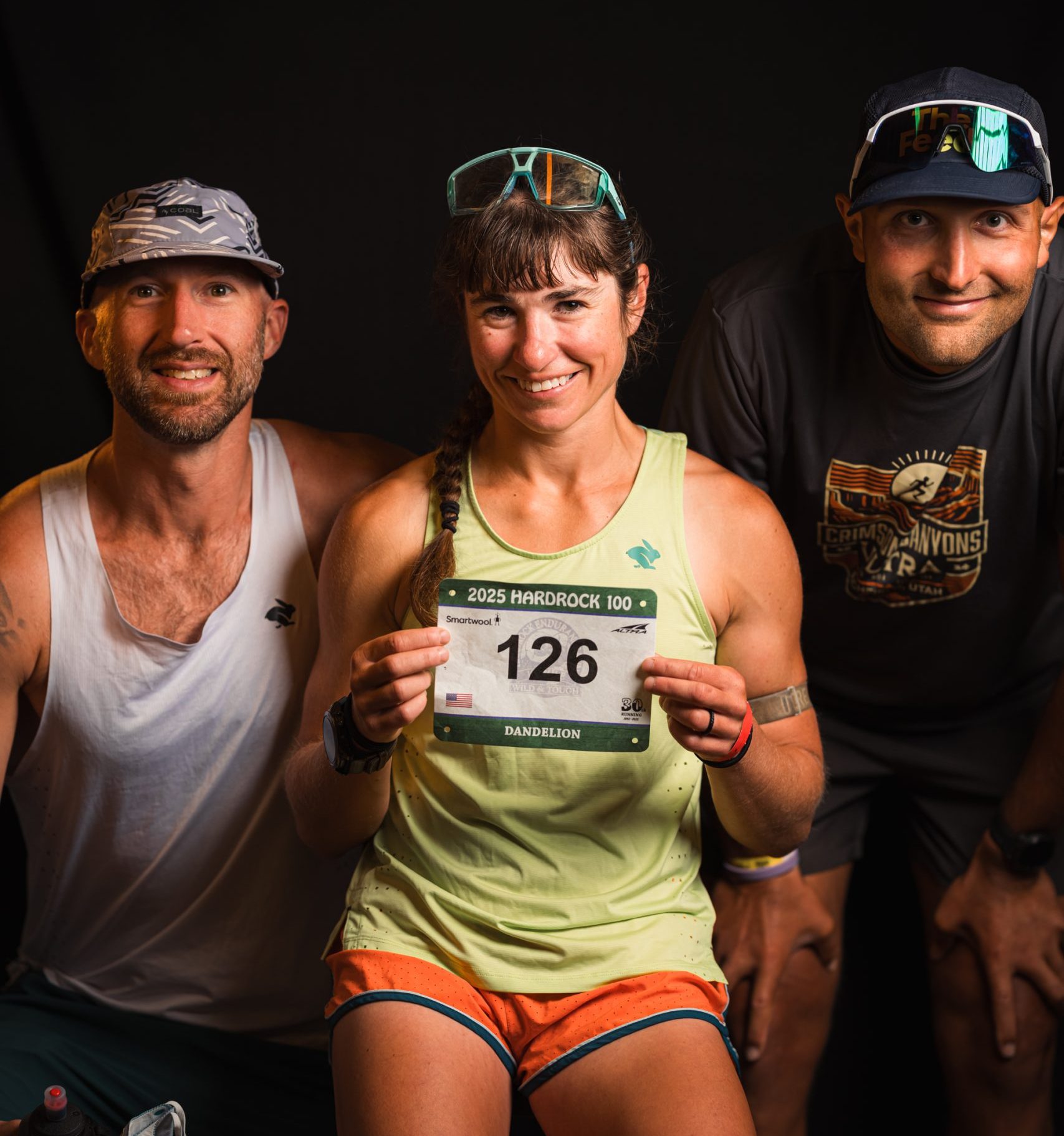
Dandelion pre-race holding her Hardrock 100 bib. PC: Travis McWhorter
Aid Stations – Standard fare or anything special to know about the aid stations in terms of what’s available or when?

The aid stations have the standard fare like PB&J, quesadillas, fruit, chips, cookies, broth, candy, etc. This year, engineered nutrition/hydration was provided by Tailwind and Maurten. Most aid stations also have a “special offering” that is unique to them: pizza, homemade rice krispies, perogies, etc.

Weather and typical race conditions

This is the San Juans! Anything and everything can happen. This year, there was smoke during the beginning of the race that cleared. Then it was hot during the day (70-85F) and mildly chilly at night (40-50F), which was unusual. Most years see some kind of electric event along with rain, hail or snow …or all of it! It is also common to experience very hot days followed by nights below freezing.

Gear – Did you need anything special or is there anything you’d recommend for the next runner?

Poles and backup poles. I would not want to do this race without them! Extra electrolytes come to mind as well, because at altitude you need so much more! Also, sun protection, rain and cold weather gear.

Spectators – Is this a friendly course for your friends?

The course passes though the towns of Silverton, Ouray and Telluride which are all very accessible for spectators. Other aid stations require a 4×4 or ATV.

How’s the Swag?

So much swag! I left check in with three shirts! Additionally, there were tables filled with items for purchase. And, of course, there’s the awesome Hardrock 100 Mile finishers’ buckle!

The Overall Score – How many stars do you give this race and do you recommend that others run it?

10,000 out of 10! This race is custom made for high alpine mountain runners who want to challenge themselves like never before and witness surreal beauty.

Dandelion Dilluvio-Scott is a multisport outdoor athlete, ultra-runner and certified coach. She is passionate about collaborating with driven athletes who love to explore, train and play outside.
Hardrock 100: TRR Coach Dandelion’s Race Rundown

Team RunRun Coach Dandelion Dilluvio-Scott finished the 2025 Hardrock 100 Mile Endurance Run in 47 hours, 3 minutes, and 41 seconds, less than 1 hour under the 48-hour time limit. Far from the 33-hour finish she’d trained for, Dandelion’s mental and physical strength allowed her to endure a myriad of challenges and still finish smiling. Alongside her traditional race recap, which can be found here, Dandelion details her race experience beautifully below.

“It Was The Best of Times; It Was The Worst of Times”

Dandelion at the finish of the Hardrock 100. PC: Travis McWhorter
Dandelion at the finish of the Hardrock 100. PC: Andrew Podbielski.

The quote from Charles Dickens’ A Tale of Two Cities perfectly sums up my Hardrock 100 Mile Endurance Run experience: “It was the best of times; it was the worst of times.” But let’s start from the beginning.

Lottery Luck: I’m Racing the Hardrock 100!

On December 1, 2024, I returned from a long desert run to a flood of congratulatory texts. I couldn’t fathom what I’d done to earn so much praise—until I opened my inbox and saw the UltraSignUp receipt. Against all odds, I’d gotten into the Hardrock 100 with only two tickets! In an instant, my 2025 plans were rearranged, and training for high-level mountain running became my mission. It would not be an exaggeration to say that the preparation
involved copious amounts of blood, sweat and tears! The volume of running, hiking, strength work, vert, cross-training, and corrective exercises was massive. Countless talks with my coach, visits to my chiropractor, and physical therapy sessions kept me on track and my body tuned for the intense workload. And then, abruptly, it was time to taper.

The Final Countdown

By the time I arrived in Silverton, Colorado, I felt like a caged tiger—I just wanted to GO! Thankfully, my team kept me in check: easy shakeout run, race check-in, gear review, nutrition planning, crew meeting, bedtime.

Surprisingly, I slept well the night before the race. There was a palpable sense of calm and tranquility. I trusted my crew, my training, and my experience with the distance. Yet I also recognized I was stepping into the great unknown—part of what made it so exhilarating—and I deeply respected the course. I felt confident I had done everything I could to prepare. Now it was time to execute the plan, adapt to the inevitable problems, and see what unfolded.

Dandelion pre-race holding her Hardrock 100 bib with her crew. PC: Travis McWhorter
Dandelion pre-race holding her Hardrock 100 bib with her pacers. PC: Travis McWhorter

I trained not just to finish but to perform. I wasn’t under any illusion I’d outrun the elite-level runners on the start list, but if everything went well, I believed I could finish in 33–35 hours. On race morning, Dale Garland called us to the corral, and I found myself lining up right next to legends Katie Schide and Zach Miller, two of the best runners in the world. It was surreal! The countdown began—and we were off, galloping down the road toward the mountains.

And We’re Off on the Hardrock 100!

As expected, everyone shot out hot. We were running Hardrock! I settled into my pacing strategy as the wide streets of Silverton gave way to trails, letting the field spread out. This was not the time to race—this was time to chase, savor the moment, and practice restraint. Meanwhile, smoke from wildfires drifted in overnight, and the air smelled of ash. Thankfully, as we climbed higher, the smoke thinned and finally disappeared, revealing astoundingly beautiful 360-degree views.

At the Cunningham Aid Station, my husband met me and guided me to Luke and Andrew. Vest swap. Food. Protein shake. NASCAR pit crew style—I was out of there. I wouldn’t see my team again for about 50K. (You can better understand the names and layout along the course of the aid stations here.)

50 Miles to Remember (Positively) 

Running ultras without crew support is my norm, so the solo 50K felt comfortable. The section to Burrows Aid Station included steep climbs and the most “rolly” terrain of the course. I trotted along, cooling off in creeks and snow patches as midday heat rose, bouncing in and out of a bubble of runners. Sometimes we chatted, other times we ran in shared silence, awestruck by vast wildflower meadows and stunning vistas. In most races, I barely notice scenery, absorbed in execution, but here I made sure to soak in the San Juans before returning to my race strategy. My fueling, salt, and hydration were on point. Everything was going to plan, and I was having a blast playing in the mountains.

After Burrows, the main objective loomed: Handies Peak—the course’s high point at 14,048 feet. I teamed up with two athletes on the ascent, and together we made efficient work of the climb. Between the great company and tagging a 14er summit mid-race, this was easily my favorite section. Nothing compares to standing atop a 14er during Hardrock!

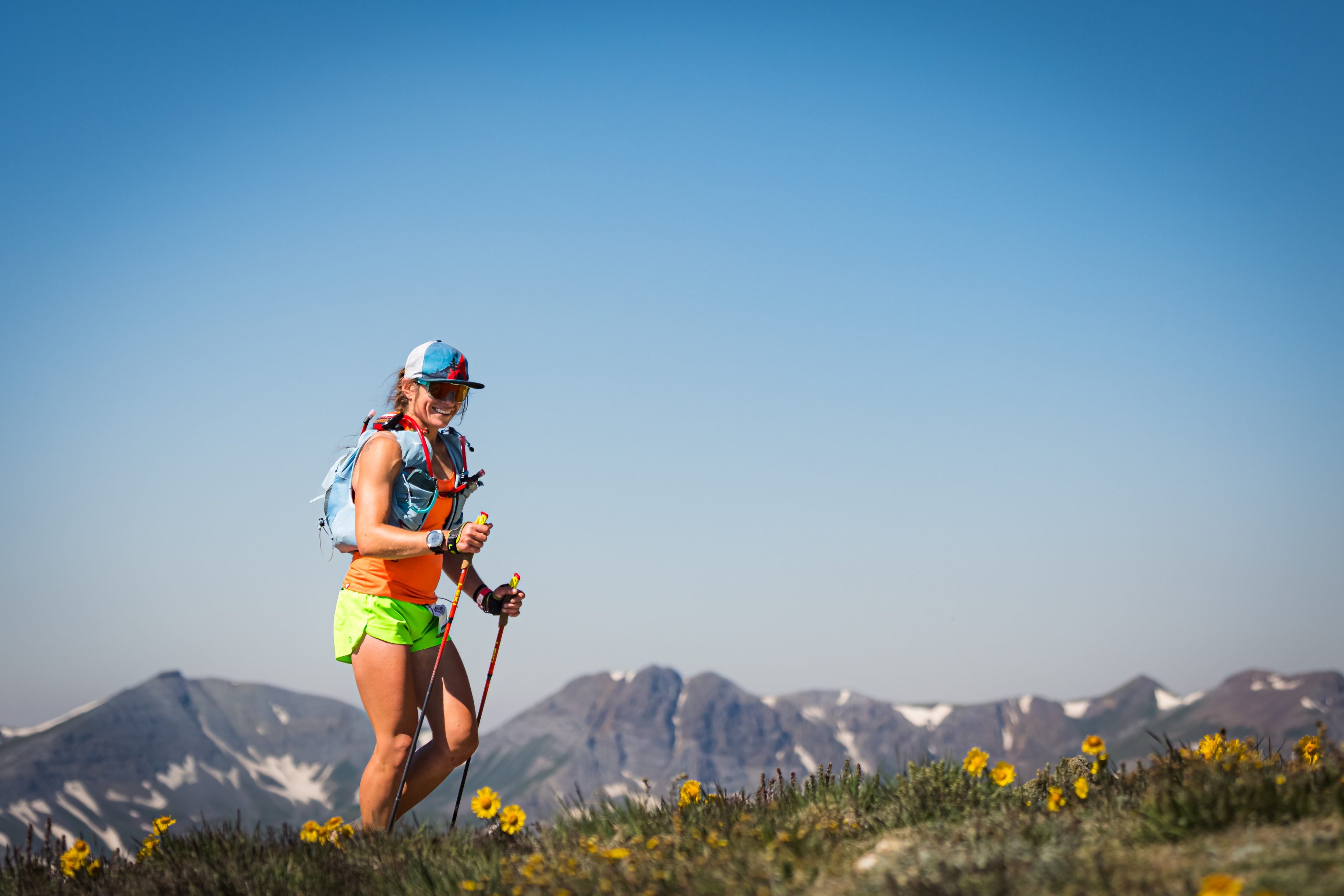
TRR Coach Dandelion Dilluvio-Scott enjoying the beautiful trails and scenery. PC: Travis McWhorter

Steep ascents are followed by steep descents, and this one felt endless but offered incredible scenery. At sunset, I rolled into Animas Forks Aid, reuniting with my crew. Toenail blister lanced, shoes swapped. I tried eating solid food but struggled to swallow—it all felt like sandpaper. Still, I could handle gels and liquids, so I didn’t overthink it.

Night #1: The Unravelling

Luke joined me for pacing duty, and we climbed toward Engineer Pass. Though we were moving efficiently, I observed that my breathing was getting more labored compared to earlier in the day. Then, at the next aid station, I realized solid food was no longer an option, and gels were becoming repulsive. Luke insisted on consistent gel consumption, monitoring each one to ensure I finished it. I was doing my best to keep calories coming in, but I knew I was starting to fall behind. The gorge descending into Ouray was electrifying at night! A narrow and technical trail beside a dark drop-off into nothing. Luckily, my background as an alpinist helped me feel comfortable with the mystery exposure!

Andrew took over pacing from Ouray. The climb out of town—up a dull, washboard road—was my least favorite section. Without Andrew’s engaging stories, those miles would’ve been excruciatingly monotonous. Higher up, the nearly full moon illuminated the craggy peaks, transforming the environment into something magical. By then, I couldn’t eat gels while walking anymore—the simple multitasking spiked my heart rate. Hilariously, consuming one now involved soft whimpers. Even in the moment, I saw the humor in it! Yet, despite everything, I kept drinking fluids (including liquid calories) and electrolytes never feeling dehydrated.

Hardrock Survival Tools: Consistent Training, Muscle Memory, and 5* Crew/Pacers!

Dandelion on course and still smiling during the Hardrock 100. PC: Travis McWhorter

As dawn broke, we climbed steep singletrack. Andrew watched carefully for signs of me sleepwalking off the trail. Though utterly exhausted, I stayed sure-footed. Nearing Kroger’s Canteen aid station, we climbed a 50-degree icy snow slope with a handline for good measure—like boot-packing a glacier with a full backcountry ski pack. Using the “rest step” from mountaineering, I reached Hardrock’s most remote aid station. Andrew remarked how impressed he was that my technical skills were intact after so many miles—a testament to years of ingrained muscle memory, even if I was moving slowly.

A brief stop at Kroger’s brought a few pierogis and broth—solid food was finally tolerable again! We descended into sun-drenched talus, making our way to Telluride. The sun felt revitalizing, but the night had taken a heavy toll. In Telluride, my legs were massaged, and I devoured solid calories, feeling almost normal again.

Andrew, continuing his marathon-long, 10,000 feet-vert pacing shift, set out with me for a remote 10-mile stretch. The first 1,000 feet of climbing went well, but then my body stopped responding. Whether from heat, steepness, or both, my pace collapsed. Concerned about heat illness, Andrew had me pause in the shade regularly and dunk my hat in cold streams. I continued forcing down revolting gels under Andrew’s watchful eye.

A Plan is Great… Until You Get Punched in the (Metaphorical) Face

The low calories overnight had triggered a cascade I couldn’t reverse. Hardrock is unforgiving: without sufficient calories, my body couldn’t regulate itself or cope with heat and altitude as I had the day before. Even though I live and train at altitude, slept in an altitude tent, and did a sauna protocol pre-race, the single issue of being unable to consume fuel overnight dominated.
The early wildfire smoke may have also contributed, but it likely wasn’t the main issue.

Negative thoughts crept in, swirling with imposter syndrome. I knew I was slipping behind, and I questioned if I belonged here. When we paused at yet another creek, I burst into tears.

Dandelion moving through an aid station. PC: Travis McWhorter

Andrew calmly put his arm around me and asked, “Are you going to finish this?”
“Yes,” I replied through tears.

And just like that, the pity party ended. I needed the emotional release, capped with self-affirmation. I started back up the hill so fast I knocked the wind out of myself—Andrew had to grab my vest to slow me down! Though I couldn’t push hard, my mood soared and determination set in.

Pacer Swap and Into Night #2

After an eternity of climbing, we reached a blustery ridge, then descended a steep talus slope. The San Juans were relentless. At Chapman aid station, I reunited with my crew and serendipitously crossed paths with Kat, a friend from Wy’east Wonder 50M. I ate, got a brief massage, and took a five-minute nap before following Luke up the next wooded trail.

At first, I felt decent, but soon a vague calf tightness escalated into searing pain. Luke, patient but firm, reminded me I had to maintain at least 2 mph on flats and descents to finish. Inside, I thought, Are you crazy? The downs are harder than the ups—and I can’t believe I’m heading into a second night! But I didn’t argue. He was right, and I willed myself to move.

Emerging from the forest, we slogged up ever-steepening talus and scree. I was zoning in and out of consciousness but recognized Grand Swamp Pass—infamously difficult and something I’d looked forward to. I broke the remaining miles into smaller goals: “Just get to the top.” Despite calf pain, I kept moving methodically, drawing on mountaineering experience.

To DNF or Not To DNF the Hardrock 100? 

We topped Grand Swamp Pass at sunset, catching the course’s most iconic panorama. One landmark down, next goal: KT Aid Station. I don’t remember much of the descent. At KT, Luke asked what I wanted to do, saying he believed I could finish but would support any choice. The aid station volunteers kindly insisted I still had time. I wasn’t worried about cutoffs—I was evaluating my calf. My personal rule is never to quit because it’s hard or performance isn’t as hoped, but I won’t risk injury that sidelines me for weeks or puts me in danger.

Dandelion kissing the infamous rock at the Hardrock 100 finish line. PC: Travis McWhorter

I recalled my husband mentioning a knot during the earlier leg massage, which reassured me. “Let’s go one more mile,” I said—classic!

We got up and headed out. I knew Luke wouldn’t hesitate to be a drill sergeant,
so I decided to not give him a chance to bark orders! Each step was agony and every
rock I stubbed a toe on felt like a knife. I didn’t try to push the pain aside anymore.
Instead, I embraced it. A mile went by… then another. My calf didn’t get worse so I
settled on it being a wicked knot and kept trudging. The truth is, when I left KT Aid
Station I had completely committed to making it to the finish. I just couldn’t mentally handle
thinking about that monumental task yet. One mile seemed much more attainable.

The Final 5 Miles: Putnam to Kissing the [Hard]Rock!

False summits revealed more headlamps, but I accepted there’d be no reprieve until Silverton and pressed on. At the final aid station, Putnam, we quickly refilled bottles before heading into the last six miles. Normally, I follow my pacer, but in this instance, Luke stayed behind, gently herding me down the trail. Moving urgently, but knowing I’d make it within the time cutoff, we even managed some casual conversation, lightening the mood. The final miles flew by: crossing the river, traversing the hillside, climbing up the road, descending into Silverton, through the chute—and finally, I kissed the rock.

Hardrock 100 Post-Race Reflections

Did the race unfold as I’d hoped? Nope, not at all! But oddly, I’m not upset. It’s almost comical: my best 50 miles ever were in the same event as my worst 50 miles—endless comedic value! More importantly, races that don’t go to plan teach the greatest lessons. The grit, determination, and resilience I needed to finish were unmatched in any event I’ve done—including Cocodona 250. I’ll carry what I learned at Hardrock 100 into every future race and adventure. That holds far more value to me than a podium finish. Performance goals push me beyond perceived limits, but what I truly seek is self-discovery on the wilderness path of endurance—adapting and moving with the environment, building grit, remaining a student of the sport, and having a life-changing adventure. Hardrock delivered all that and more.

Dandelion Dilluvio-Scott is a multisport outdoor athlete, ultra-runner and certified coach. She is passionate about collaborating with driven athletes who love to explore, train and play outside.
Is Running An Ultramarathon For Me?

Runners smiling during an ultramarathon.

And why would I want to run an ultra when I hated the marathon?


For many endurance athletes (and if you’re reading this, I assume you are one of them) then the thought “Is running an ultramarathon for me?” may have crossed your mind. You also may have just as quickly dismissed it.

While road marathons and ultra distance races have similarities–tough training, events lasting several hours–they can almost feel like different sports.

Before I start, I have a confession: I have never run a road marathon. 26.2 miles on the road doesn’t appeal to me, and I decided to trust my doctor when he told me it was bad for my knees, so I haven’t. He didn’t say anything about ultramarathons though…

Ultramarathons can be kinder to your body

While “shorter” 50K ultras are only 10K more than a road marathon, expect them to take much longer if you go down the classic ultra route and choose to run on some form of trail.  Fortunately, on trails you avoid the jarring of the tarmac and the same repetitive stress from the same foot strike pattern. Instead, you’re exploring a variety of terrains, from lush forest trails and dirt roads, to rocky mountains and sandy beaches. Your body is constantly adapting to each surface, sharing the load across different muscles, joints and bones. Of course, there are road options available if you do love the road marathon.

What you’ll see along the way

If you hate running on pavements through urban areas (‘sidewalks’ for my American friends), then this is where ultramarathons shine. Take your pick of scenery, from stunning mountain ranges through to desert expanses. Again, if you actually don’t mind the tarmac, there are ultra distance road races. Just have a look at some of the coverage on YouTube of the big ultras and tell me that it isn’t stunning–all you have to do is remember to look up!

Two women running the Javelina Jundred 100-mile race in costumes. PC: Howie Stern

The ultrarunning community

Every race that you do will have some sort of vibe, but in my opinion, this is one of the most beautiful things about trail and ultrarunning. You get it all! Small community style races with weird and wacky traditions, to huge events with thousands of runners and festival style feel.  The Javelina Jundred and Lakeland 100 spring to mind for mad, festival-feeling ultramarathons.  Either way, I have found that everyone, aid station volunteers and fellow competitors included, just want you to do well and have a good time. Yes, they are ‘technically’ races but the competition side, certainly for us that are mid- to back-of-the-packers, doesn’t feel that important.  The sense of community and finding your tribe is a consistent theme I hear from all the ultrarunners I interview on my podcast

The supportive ultrarunning atmosphere at an aid station.

Because it’s hard

Are you looking for your next big running challenge? Running an ultramarathon is the way to go. While a 50K is no easy feat, it’s still something that most marathoners could do, it’s just the hook that reels you in! Finish your first 50K and you’ll then find yourself thinking: “I wonder if I could…”, and off you go, down the ultrarunning rabbit hole! Of course, ultras test you physically, but as the distance increases, the challenge becomes (at least) as much mental, and with that you also get to learn so much about yourself.     

Time is irrelevant for ultramarathons

If you have been running for a while then you might pick up on what a “good” performance is, from the world records to ‘good for age’ times. But for ultras, well nobody knows, and even if they did, I don’t think they’d care! People ask about the race distance not the time, joke that they don’t drive that far, look a bit confused then walk off (usually impressed). 

Ultrarunning camaraderie and enthusiasm during a race.

And on the subject of time, pure speed is less relevant than in road marathons. So much so that you may continue to see performance improvements well into your fifties (that’s what I am betting on). There is so much more to becoming a good ultrarunner than simply running, and that comes with experience.

David Taylor is a coach with Team RunRun based in Glasgow, UK. He specializes in trails and ultras for both beginner and intermediate runners, whether you’re just bumping up in distance or looking to improve your next trail race.

Western States 100 Race Report

Race: Western States Endurance Run 100 Miles

Runner: Matt Urbanski (Team RunRun founder and coach)

Race Date: 06/29/2024

Location: Olympic Valley, CA, to Auburn, CA

Result: 22 hours 48 minutes, 72nd place overall

Strava link: Part 1 Part 2 (You know it’s a long race when there are 2 Strava files!)

Matt at the finish of Western States 100
Matt still smiling at the finish of the Western States 100, showcasing his “funky button down finisher shirt”!

3 Bests – What aspects of the race did you like the most?
  1. My crew. I had such a good time with my crew and my pacers. Getting so many of my favorite people together is the best!
  2. The volunteers. The volunteer to runner ratio is amazing. I had people sponging me down with ice water at nearly every aid station!
  3. The race vibe. It just feels like a special race, and everyone realizes that we’re all fortunate to be there doing this together.
Highlights of your race – What did you do well and enjoy about your race in particular?

Even though I didn’t achieve my primary goals for the race, I stayed positive throughout. While the outcome was unsatisfying, I never despaired and I never gave up. I stayed positive and made the most of a situation that was not what I was planning or hoping for. I’m especially happy that I was able to enjoy the last 20 miles with my brother pacing me despite having to walk most of that.

My short sad story is that my left hip flexor started hurting 3.5 hours into the race. I was mentally ready to start feeling tired at this point and to not feel great by the 15 to 20 mile mark of the race, but the feeling in my hip was not fatigue but more acute pain. I stopped briefly, rubbed it out, and then finally took some ibuprofen (I usually save that for way later in the race!). From then on, I was able to run easily for a long while – thanks to Chris Harrington, I was able to latch on and get into a steady groove.

At that point, I still believed I was able to run low 18s or even sneak into the 17s. But the hip kept coming back. Me and my crew worked hard to solve it, and even from Foresthill to Green Gate my pacer, Teddy, and I were moving well. But once it got dark, my hip pain got to be too much (the darkness wasn’t the cause, just coincidence!) so Jeff and I tried a walk run strategy for a bit, but eventually I had to just walk. My energy level was fine, my mind was fine, but I couldn’t lift my left leg to run.

I went through some more rationale negativity – it didn’t have the depth of despair that I’ve felt in other disappointing ultras. But I talked seriously about not wanting to race anymore. I questioned whether I had the fire to keep doing these when I’ve had so many unsatisfying races over the past few years. The disappointment that comes with not reaching my potential made me question my desire to keep trying. But there was no doubt I would finish this race. I knew I could and would finish the Western States 100. And I was able to walk quickly in and walk the track in with my awesome friends!

Lessons for others – Share your pro-tips on the race to help the next runner
  1. If you don’t live at altitude, be prepared to feel the elevation in the first 30 miles.
  2. It gets hot! Pre-race: heat train! Include sauna sessions and running when it’s hot. I did a lot of sauna sessions and think that it helped a lot. During the race: stay cool and keep wet! Wear a hat, use the ice available at aid stations, sponge yourself down with water and ice, keep hydrating often.
  3. There are so many runnable sections on this course, so be patient and save your energy for the sections that fit your strengths. There was more single track than I anticipated, so be prepared, and train to run faster on narrow trails that aren’t totally smooth.
Lessons you learned that will help you next time around

I would do more workouts on single track trails, trying to make faster running on narrow trails feel easier.

Matt putting his single track trail skills to the test.
Most important course specific knowledge to know about the race

Break the Western States 100 into three main parts:
1. The High Country. It was less smooth than I was anticipating. It isn’t overly technical or difficult, but it’s also not smooth. There were a number of sections with baseball-sized rocks strewn around the trail that made it necessary to be more focused than I was expecting. Some sections were more overgrown or difficult to see than I was expecting. Additionally, the higher elevation is noticeable for someone coming from sea level, so I had to be extra cautious and patient while up high.


2. The Canyons. The steepest climbs and descents are in this section and it feels hottest here. The two bigger descents were more narrow single track with rocks than I remembered, and coupled with my aching hip flexor, I took this section way slower than I would have liked. The two big climbs are the only sections I really felt like I needed to hike. Poles (not allowed) would have been great here.


3. The rest of the course. The Cal Street section from Foresthill to the river was not as fast as I was expecting. There were lots of little rollers and single track that kept me from really getting going fast. We worked well through here and I’m happy with it, but it was slower than I was expecting. I liked the climb up from the river. There was a lot of runnable faster stuff in the last 20 miles of the course that I walked given my hip, but knowing that there is a lot of runnable stuff to finish is key. This is why conserving energy and staying patient is important: if you have legs, you can really fly the last 20 miles!

Summary: There was more single track and rocks than I was anticipating. That said, there were still plenty of fast and runnable dirt roads.

Aesthetics – Is it a pretty course?

It’s a great course with a lot of unique features. I loved the high country landscape, and I liked the canyons section – dry and sort of lonely – I wasn’t around a lot of runners during this section. Contrasted with the busy sections like the start, Michigan Bluff, Foresthill, and the finish, the mix of people and solitude was great! Another course highlight were the lovely sections by the river in the late afternoon/early evening light.

Looks are deceiving: don't be fooled, Western States 100 is one of the most challenging races in the US!
Looks are deceiving: don’t be fooled, Western States 100 is one of the most challenging races in the US!

Difficulty – Is it a tough course?

Definitely a tough course with unique elements! However, they’re all things that one could prepare for; they’re still difficult, but less so if you prepare.

Organized and well run – Did it feel like a well-oiled machine or were they flying by the seat of their pants?

The best! This race is dialed in. The only negative I heard was from my crew in that the driving directions were less clear than they could have been. Simply providing a GPS waypoint for Google Maps would have been helpful opposed to the “turn left and then go east” sort of directions.

Competition – Is there a strong field?

Undoubtedly! The Western States 100 is the most competitive and historic 100 miler in the US!

Matt still smiling at mile 62 coming through the Foresthill aid station.
Logistics – Does it require a special handshake, registration a year in advance, hotels all booked? Give us the low down on the nuts and bolts of making the race happen.

It’s not easy to get into the race as the field size is limited to only 375 runners. I started trying to get into the race in 2017 and finally got into the 2024 race – 8 years later!

Aid Stations – Standard fare or anything special to know about the aid stations in terms of what’s available or when?

There are 20 aid stations throughout the Western States 100, some allow crew and some don’t. The aid stations are great and stock a wide range of real food options including fresh fruit, trail mix, potato chips, candy, and more. I filled my bottles with GU Roctane Energy drink from the aid stations but otherwise used all my own gels. They had GU brand sports nutrition and I’m not a fan of GU. In hindsight, I would have taken the GU Chomps (chews) but I forgot about them and didn’t realize they were there until my brother grabbed some from the last aid station! I fueled mainly on Precision Fuel & Hydration gels, SiS Beta Fuel and Isotonic gels, along with some Skratch drink mix for electrolytes.

They had ice water and sponges at most aid stations. Some seemed to have some odd rules about runners not being allowed to touch the sponges themselves though. I wanted to just go for it and really douse myself but they often wouldn’t let me. But the service and the desire to help from the volunteers was huge and very felt amazing!

Weather and typical race conditions
Matt's crew of Teddy Bross, Ruby Wyles and Jeff Urbanski at the start of the Western States 100.
Matt’s crew of Teddy Bross, Ruby Wyles and Jeff Urbanski at the start of the Western States 100.

Be prepared for it all! The race starts early in the high country, making it cool and sometimes (not this year though) snow on the grounds, which can be a big factor to be prepared for! The toughest conditions happen in the middle where it’s blazing hot – expect over 90 degrees, plus the direct sun and humidity makes it feel even worse. We had a moderate year where it maybe got to the high 80s/low 90s, but it was still hot!

Gear – Did you need anything special or is there anything you’d recommend for the next runner?

I wore a Naked Brand belt with two water bottles, Janji tight shorts with pockets for my gels, and a singlet with arm sleeves. Thankfully my crew had ice bandanas for me at aid stations which helped me stay cool.

I switched to wearing a Salomon ADV5 pack at Foresthill. My hip flexor on my left leg started giving me troubles 20 miles into the race and bothered me the rest of the day (I’m still not running 2 weeks post-race because it’s still messed up!). My crew thought that maybe it was the stress/pressure of the tight belt with the two bottles up near my front that could have been causing it, so I switched to a pack. The other advantage of the pack was that we filled the back part with ice for most of the remainder of the race.

Spectators – Is this a friendly course for your friends?

We split our crew into two for the first half. Crew 1 went from the start to Duncan Canyon and Dusty Corners, while Crew 2 went to Robinson Flat and Michigan Bluff. This worked out great for me, but it did make for a long and tiring day for my crew, wife and kids! From there on, I saw my crew at Foresthill and Pointed Rocks, and then again at Robie Point.

The fanfare and energy on the course was awesome! At the same time, there were long stretches where I saw no one, including runners. The race spread out surprisingly quickly!

How’s the Swag?

Really impressive: a Hoka backpack and slides, Goodr sunglasses, a new pair of socks. Nike were even giving away free trail shoes to all Western States 100 racers! The belt buckle for finishers is sweet, and they gave a funky button down shirt to all finishers when we crossed the line – the shirt was totally my style too!

The Overall Score – How many stars do you give this race and do you recommend that others run it?

10 out of 10!

I’m bummed that I didn’t race well. I put a lot into training and I believed I could do more on race day. But I made the most of the day and will have good memories from it. The race itself is totally worth the hype and everyone should do it if they get the chance!

For more on the Western States Endurance Run, check out Matt’s pacer Teddy Bross’ own Western States 100 race report from his 2017 race.

Matt Urbanski is the founder of Team RunRun, as well as a coach. He enjoys coaching self-motivated runners to optimize training time, push limits, transition to ultras, podium, BQ, and other big challenges!

How To Tame the Devil

Set yourself up for success at the Devil’s Gulch 100-Miler with these tips.

I think most of us can agree that there really isn’t such a thing as an “easy” ultramarathon. Certainly some races and routes are relatively easier than others, but, for the most part, ultras are hard! Well, the Devil’s Gulch 100-Miler turns up the heat even more! In preparation for this sizzling hot ultra, learn how to tame the devil and everything else this race throws at you with these tips.

Runners following these tips can maximize their odds of a successful race at the Devil's Gulch 100-Miler.

5 “D.E.V.I.L” Training and Racing Tips:

D – Drink! 

A lot! When it comes to hydration, getting enough of both fluid and sodium intake is potentially the most crucial aspect of success come race day. Figure out an appropriate amount of both to consume on an hourly basis: given the heat and the higher exertion rates, to tame this devil expect to be on the higher end of your usual recommended ranges. Andrew Baker also goes into more detail here in his Hydration Strategy Guide, so check that out too! Finally, do what you can to stay cool! The easiest and most effective strategy you can employ on race day is known as topical cooling. Keep yourself wet as temperatures rise by utilizing those clever iced bandanas, crushing ice into arm sleeves or hydration packs, as well as using any creek crossings to your advantage!

E – Experiment 

Trial a wide array of food and fueling options into your training. When it comes to these very long endurance events, it’s hard to predict what you will and won’t be craving at mile 84: sticking to only sweet options or just one single gel flavor of a gel can leave you wanting a lot more. Before and during your runs, experiment with salty, savory, and sweet options, in addition to more solids of different textures and flavors. Give high-carb drink mixes a try: when food can’t stay down, often fluids can! Start trying to consume ~60-90g of carbohydrate per hour, adjusting from there based on your personal needs!

V – Verbalize 

If you’re deciding to have crew support, clearly communicate your expectations ahead of time before the race. Nail down the nitty gritty details of which food and drink items that you’d like to be restocked with and when. Create a list of any items you want laid out at aid stations ahead of time: a camp chair, new shoes/socks, sunblock, headlamp, iced bandanas, arm sleeves, etcetera. 

The same communication of expectations applies to your pacer as well! It goes without saying that a good partnership ahead of race day is a must: ensure you’ve talked through how you think you’ll best respond to executing on race day, as well as when you’re in a state of high mental or physical fatigue. Do you want them to be chatty, tell jokes, and just keep the mood light? Do you prefer very minimal talking and to stay calm and focused on the task at hand?

Adapting your training to the specific demands of the Devil's Gulch 100-Miler course will prepare you best for race day.

I – Incorporate 

Adapt your training to the specific demands of the course. Look over the elevation profile, and make note of how the longer uphills and downhills unfold. For the Devil’s Gulch, this could mean averaging the race’s 240’ vertical gain per mile over the course of a long run. Try incorporating longer downhills, followed by a sustained climb to get a good neuromuscular match for what you’ll see on race day!

L – Lean 

Lean into the discomfort. Embrace it. This will be a key mindset in helping manage the inevitable challenges you will experience throughout the race. And remember to smile and celebrate, regardless of the end result! 

This runner verbalized ahead of time that they wanted to pick up poles at the aid station, and is leaning into the discomfort of a steep uphill.

Tame the devil with these tips, and save your day from boiling over in the Devil’s Gulch! Catch me volunteering at the Devil’s Spur aid station this year, and I’m wishing every runner who takes on this challenge success!

See you on the trails!

Keith Laverty is a coach with Team RunRun. To learn more about him or to work with him, check out his coach profile.

tri cities running coach

Badger Mountain Challenge 50/100 Race Info

Summary: The Badger Mountain Challenge is a big mix of surfaces, including footpaths, multi-use trails, rocky and rolling jeep trails, dirt roads, and pavement, 100 miler runners run the 50 mile course twice and start at the same time as the 50 milers. With about 15 miles total of pavement and ~13,000 feet of gain, and with several short, steep climbs of 800-1000+ feet of climbing, the challenge comes from the unique landscape, which has very few trees and therefore is quite exposed to the elements, mainly wind and rain. Temps tend to be chilly in the daytime and therefore even colder at night. The course has great crew access with fairly minimal miles between aid stations, and other distances offered include a 15k, 50k, and 50 miler.

Lessons Learned from Race Reports

  • If it’s been raining, the jeep roads will have fairly slick mud
  • If it’s windy, be prepared to feel all of it, with it being such an exposed course
  • It tends to get cold on McBee Ridge, so have layer options either with you or in a drop bag
  • Some running along a highway, which could be a love/hate, depending on your view of running alongside a highway!
  • Spooky tunnel that goes under the highway (apparently called a culvert) around miles 7, 43, 57, and 93, where you’re in total darkness for a short time
  • Have good wind and rain gear on hand, no matter what the forecast says
  • Weather is one of the biggest DNF factors, with wind and rain being factors, and the nights being cold and you’re already wet and likely cold. Have lots of clothes options and dry clothing changes along the way
  • Easy to feel overwhelmed by the difficult sections on your first lap, knowing you have to do it again. Have mental strategies ready for tackling this.
  • Lots of course changes in the last several years, so keep that in mind when looking at past race reports and results
  • The jeep road sections are more challenging than you think in terms of footing, mud, and the fact that they are so steep
  • Think of clothing layers that will keep you dry, and those that will keep you warm

Elevation

Total gain/loss: 13,000ft/13,000

Ft/mile gain: 130

Total climbs: 2x ~1500ft, 4x ~800ft, 4x~600ft, all quite steep, and countless other “smaller” climbs

Course Map/Elevation profile

Aid stations

Total aid stations: 19

Furthest distance apart: 7.5 miles (twice)

Locations: Miles 4.6, 10, 17.3, 18.5, 23.3, 30.2, 31.5, 39, 44.5, 50 (start/finish), 54.6, 60, 67.3, 68.5, 73.3, 80.2, 81.5, 89, 94.5

What’s available: Typical aid station fare, with exact offerings in the aid station chart

Aid Station Chart

Crew access

Access Locations: Start/finish (0, 50, 100) Candy Mountain (miles 4.6, 44.5, 54.6, 94,5), Jacobs Road (miles 10, 39, 60, 89), Field Road (miles 17.3, 31.5, 67.3, 81.5), or McBee Parking (18.5, 30.2, 68.5, 80.2)

Crew instructions/directions

Pacers

Yes, starting at 50 miles. One pacer at a time only after 50 mile turnaround at Trailhead Park or at the crew-accessible aid stations after 50 miles (Candy Mountain, Jacobs Road, Field Road, or McBee Parking).

Race qualifiers

5 UTMB points

Race reports

Badger Mountain Challenge 50 Race Report – Annika Brubaker

Badger Mountain Challenge 100 Miler Race Report – Michael Linscott

https://trr.chadswork.com/badger-mountain-50/

https://trr.chadswork.com/badger-mountain-50-dan-l/

https://trailrunning100.com/2017/03/30/badger-mountain-challenge-100-miler/

http://www.therunnershigh.net/2012/04/badger-mountain-challenge-100-race.html (good pictures)

https://tuff-it-out.blogspot.com/2014/05/badger-mountain-challenge-100.html?fbclid=IwAR1_AeR9llkQXIoP3xLyZpLcmtKu-GnkbqJpczW8GjWfVhP8fmAENPY7mqs (great pictures)

Strava activities and GPX files

https://www.strava.com/activities/913296835

Race Website

http://www.badgermountainchallenge.com/

Prepping for an ultra? Check out our 7 Steps Towards Running your First Ultra!

Pistol Ultras 100 Mile Race Info

Date

3/16/2019

Location

Alcoa, TN (near Knoxville)

Avg Temps f.

62/39

Gain/Loss in ft

~2,000/2,000

ft/mile gain

20

Highest Elev.

~800 ft

Start

8:00am

Surface

Paved greenway

Time Limit

32 hours

Sunrise/set

7:46am/7:44pm

Furthest Aid

~4 miles


Summary: An urban ultra on the paved greenway trail in Alcoa, TN, runners will complete 10 laps of 10.35 miles, with about 200 feet of gain per lap. The path is lighted, paved, and passes through 2 main aid stations twice on each lap, with the ability to see crew every 10 miles, and the ability to have pacers right from the start. Other distance options include a 1 mile family friendly fun run/walk, a 10 miler, or the 50K, 50 miler, 100K, and/or 100 miler ultra distances. There is also a 2 or 3 person relay option for the 50K distance.

Lessons Learned from Race Reports

  • Many different races going on at once, with different courses. Don’t just follow who is in front of you – pay attention to course markings
  • Cupless event
  • With the two aid stations so close to each other at each end of the course, it’s easy to lose a lot of time if you stop at all 4 of them (2 each), so consider stopping at one per lap if that’s all you need.
  • Bring layers – lots of temperature swings in the past with morning, daytime, and nighttime, and the setup of the race allows for passing by your layer options often
  • While it’s minimal elevation gain, any little hills along the way will feel harder each lap, so be ready for more hills to appear on each ensuing lap
  • Music helps, especially at night, since you repeat the course so often. Also helpful to have a pacer at night, since it’s such a mental shift to run in the dark vs. daylight

Elevation

Total gain/loss: ~2,000/2,000

Ft/mile gain: 20

Course Map/Elevation profile

Aid stations

Total aid stations: 4 per lap

Furthest distance apart: ~4 miles

Locations: Miles 4.19 and 5.05 (same aid station), then miles 9.28 and 10.0 (same aid station, the start/finish at Alcoa High School)

What’s available: The usual ultra fare: gels (mostly Honey Stinger and GU), oranges, bananas, hot broth, salty/sweet foods, PB&Js, etc. Starting at night there will be heated items such as soups, grilled cheese sandwiches, burritos, etc. Specialty items can often be short-order cooked to your specifications while you complete the loop past the aid station. Then you can pick it up as you pass back by. There are 24/7 stores nearby (including Kroger and WalMart), if you or your crew need to purchase any special food items.

Crew access

Access Locations: Alcoa High School, the start/finish, where you’ll see your runner 2x per lap, at miles 9.28 and miles 10 of each lap.

Crew instructions/directions: See Map of high school for where to park and setup to crew.

Pacers

Yes, one pacer at a time, starting at any point during the race, even at the start.

Race qualifiers

None

Race reports

http://ultrarunningcommunity.com/13-report/750-292-pistol-100-race-report

https://runningoffthebeatenpath.wordpress.com/2016/03/05/pistol-100-2016/

https://ashruns100s.com/2014/03/04/the-pistol-vendetta/

Strava activities and GPX files

https://www.strava.com/activities/1460292341/overview

Race Website

http://www.pistolultra.com/

Runner’s Manuals

rocky raccoon 100 matt urbanski

Rocky Raccoon 50M/100M Race Info

Summary: Rocky Raccoon 50M and 100M are popular trail races for beginners looking to complete their first ultras or veterans looking for a PR in either distance. All runnable trails on soft pine needles, wooden bridges and minimally technical, yet sometimes rooty terrain, with minimal elevation change. Loop course with generous cutoffs, and includes a 100k on the day of the 100m and a 50k on the same day as the 50M. In 2016 the course was adjusted to accommodate construction, and in 2018 was changed from 20 mile loops to 25 mile loops because of damage from Hurricane Harvey.

Race Details

Lessons Learned from Race Reports

  • It’s more rooty raccoon than it is rocky, with tons of roots to stub your toes on and trip over, and the later into the race, the more likely you are to trip on them. Pick up your feet, know that you’ll stop picking them up as well as the race progresses, and stay positive in spite of stubbing your toes along the way.
  • Not a hilly course, but not many flat sections. Constantly rolling along and the small rollers feel like big hills by the end.
  • With it being a loop course that you repeat 4 times (2 for the 50), this has its benefits of learning the course and knowing what’s coming, but also the mental challenge of taking on the exact same loop several times.
  • Weather is incredibly unpredictable, as previous years have seen freezing temps, snow, torrential downpours, heat and humidity, and everything in between, even as the race progresses. Have drop bags and/or crew with lots of different clothing, gear, and fueling options to adjust with the weather.
  • Have a good headlamp – you will start in the dark and nearly every runner will run several hours or more in the dark, so have a good headlamp to see all the roots to trip over.
  • Make sure crew has chairs to sit on at Dogwood; otherwise they have to sit on the ground. A tarp will work too.
  • Some sections of forest roads along the park border, which are more runnable. If it’s been particularly wet, this can be a muddy mess, and if it’s been particularly dry, it can be a sandy, dusty mess. Again, weather plays a big factor in this race.
  • If it’s wet, the mud can be more like clay, which gets very slick
  • The first loop will be the most crowded, then it thins out and it’s nice to see people on the out and back portions
  • This is a CUPLESS Race! No cups given for cold food/drink (cups given for hot food/drink at night). You are required to stay at the aid station with any paper and/or styrofoam cups/bowls and risk being DQ’d if you leave the aid station with them.
  • There is a $5 park fee to be paid upon entrance to the park for anyone over 12.
  • No dogs allowed on course or at any aid station.

Elevation

Total gain/loss: ~11,128 (100M), ~5,564 (50M)

Ft/mile gain: ~111

Total climbs: Countless rollers per loop, anywhere from 20-80 feet with a couple of 100 foot climbs

Elevation profile / Course Map


Aid stations

Total aid stations: 7 per loop – Dogwood (start/finish), Nature Center, Gate, Damnation, Far Side (water and gels only), Damnation (again), Nature Center (again)

Furthest distance apart: 4.27 (100M), 4.27 (50M)

Locations:

100M:  3.78, 6.5, 9.5, 14, 18.3, 21.3, 25.1

50M: 3.78, 6.5, 9.5, 14, 18.3, 21.3, 25.1

What’s available: Typical aid station fare plus Tailwind, Vfuel gels, and Saltstick. Depending on the weather, cold stuff when it’s extra hot and hot stuff when it’s cold. Not all aid stations will have the same foods. There will be meat & vegetarian options with no claims to gluten free or vegan needs.

Crew access

Access at all locations. No parking at Gate, Nature Center, Damnation, or Far Side. No tents at the Start/Finish, but pop up shelters allowed.

Link to list:

100M – https://static1.squarespace.com/static/55a8251be4b08d94f1f6db9d/t/5b22c759aa4a99c446cf459a/1529005914144/A.S.+Chart+RR100+2019.pdf

50M –

https://static1.squarespace.com/static/55a8251be4b08d94f1f6db9d/t/5b22c858f950b7dfe1891aaf/1529006168642/A.S.+Chart+Rocky+50+2019.pdf

Crew instructions/directions: Best places to crew are at Dogwood (Start/Finish) and Nature Center. There is one road in and out of the park, Park Road, and the distance from Dogwood to Nature Center is about 1 mile. No parking at Nature Center, so it’s best to walk/run/bike, as you have plenty of time to get between the two aid stations.

Pacers

100M – Allowed to start from any aid station after 50 miles. Only one pacer at a time, no muling, if age 60+ you can have a pacer the entire race

50M – Allowed to start from any aid station after dark. Only one pacer at a time, no muling.

Race qualifiers

100 miler is a Western States qualifier

100 miler is 5 UTMB points

Race reports

Alan V’s 2019 100m race report

Stephen D’s 2018 100m race report

Matt U’s 2017 100m race report

Julie U’s 2017 50m race report

http://hotrockhoppers.com/2018/02/rocky-raccoon-2018-race-report-by-eric-lamkin/

http://www.irunfar.com/2014/02/matt-layes-2014-rocky-raccoon-100-race-report.html

http://sharmanian.blogspot.com/2015/02/rocky-raccoon-100-usatf-national.html

http://sharmanian.blogspot.com/2012/10/how-to-train-fora-flatter-100-miler.html


Strava activities and GPX files

100M

https://www.strava.com/activities/1431259790/overview

https://www.strava.com/activities/1393767741/overview


50M

https://www.strava.com/activities/1401501310/overview


Race Website

http://www.tejastrails.com/rocky100/

http://www.tejastrails.com/#/rocky50/


100 Mile race document

50 Mile race document

hurt 100 race info

Hurt 100 Race Info

Summary: Situated in the mountains above the city of Honolulu, the HURT 100 course is characterized by its latticework of roots across the single track trails. Runners cover the 100 milers over the course of 5 loops with some partial out and backs, gaining and losing 24,500 feet, crossing 20 streams, and of course, running over countless roots, rocks, puddles and “mud wallows”. It’s certainly not for the faint of heart and takes lots of perseverance and an adventurous mindset.

Lessons Learned from Race Reports

  • Average temps listed are for the city of Honolulu. Expect lower highs and lows, more precipitation, and high humidity (the race is in a rainforest)
  • The dense canopy in the forest causes shorter daytime hours than the sunrise/sunset listed, so be aware of when you need your headlamp during the race
  • Very little of the course lends itself to a consistent stride – be ready to be consistently inconsistent in how you run and navigate the footing and elevation changes of the course
  • There are wild pigs in the forest – exercise caution if you see any, especially any momma and baby pigs
  • Mosquitos are a factor, especially in areas with little air movement
  • Dehydration and hypothermia are big risk factors for runners in this race because of the hot and humid days and cooler night temperatures
  • Of the two stream crossings, one is technical and another is not. Be ready to get your feet wet (if they aren’t wet and muddy already), and be ready to cross scattered and slippery rocks
  • Hiking poles are allowed (and by the looks of course, aren’t a bad idea!)
  • Be sure you know the runner, pacer and crew rules in the Book of Hurt
  • Lots of other day hikers out on the trails, so be aware and respectful of other trail users
  • Sauna sessions as part of training are helpful because of the high humidity in the race
  • The course takes constant mental focus because of the technical footing and twists and turns
  • If you don’t run well with wet feet, have a plan for changing socks and shoes often to have dry feet
  • The first climb starts out in in the dark and will likely feel crowded with runners all in a line, so if you want to be in front, you’ll need to get out fast. If not, do your own pace and don’t be rushed by others pushing from behind.
  • Lots of runners fall apart on loop 4, when the darkness settles in and they still have 40 miles left
  • Know that your pace will slow, likely considerably, once it gets dark. Be prepared to hike.
  • If it’s muddy, which is likely, the mud gets worse as the day progresses because of so many people running over the same trails over and over again
  • Have a very strong headlamp – seems intuitive and normal for any ultra at night, but several races reports noted having a weak headlamp and really suffering because of it.

Tips from Coach Masazumi:

  • Trekking poles save you, so train how to use them before the race if possible. HURT 100 is very technical, and they help place your steps stable. Many use it regardless of whether a runner is fast or slow. Last year, 2nd place runner was using them in his last lap.
  • In addition to Sauna, try the fitness gym. It’s warmer than outside and easier to stay longer than in the Sauna.
  • Loop course is one of the big factors of high DNF rate. It’s getting harder to start another loop when you are tired. Be strong and stay focused on your goal.

Elevation

Total gain/loss: 24,500/24,500

Ft/mile gain: 245

Total climbs: 3 major per lap, each ~1200 feet, for 15 total, along with countless small, steep climbs and descents along the way of each major climb

Course Map (PDF), Elevation profile (page 23), and Google Course Map

Aid stations

Total aid stations: 3 aid stations per lap (5 laps)

Furthest distance apart: 7.4 miles

Locations: Anywhere from 5.2 to 7.4 miles apart on each lap

What’s available: All aid stations have bottled water, an electrolyte drink, and carbonated beverages. Standard aid station fare with hot and cold food options and some vegetarian options. Runners are responsible for their own gels, energy bars, electrolyte supplements, medications (e.g., anti-inflammatory products), personal hygiene products (e.g., sunscreen, lip balm), and typical first-aid items (e.g., bandages, blister treatment).

Crew access

Access Locations: Crew can access all 3 aid stations, but not before 11:00am at aid station #2 or #3. First aid station, Nature Center, is also Start/Finish.

Crew instructions/directions: See Book of Hurt for directions, parking and information.

Pacers

Yes, they are allowed after 60 miles or beginning at 17:00 on Saturday, whichever comes first. One pacer at a time and they must start from an aid station.

Race qualifiers

Western States 100 qualifier

Race reports

https://masazooomirunning.wordpress.com/2017/01/30/h-u-r-t-100/ (Coach Masazumi’s race report with lots of pics)

http://www.hawaiirunninglab.com/race-report/guest-race-report-jeff-frank-hurt-100/

http://crockettclan.org/running/hurt100.html

Strava activities and GPX files

https://www.strava.com/activities/472884761/overview

https://www.strava.com/activities/834058495/overview (lots of photos!)

Race Website

https://www.hurt100.com/

Runner’s Manual (aka Book of Hurt)

Prepping for an ultra? Check out our 7 Steps Towards Running your First Ultra!

orcas island 25k dionne himmelfarb

Orcas Island Race Reports and Info

Summary: The Orcas Island races are quintessential PNW races – challenging terrain, beautiful scenery (if the weather cooperates) and they bring a strong crowd of local Seattle trail runners and Rainshadow Running fans. With so many distance options, you have plenty of challenges to choose from! Information below is particularly helpful for the 100 mile an 50k distances:

Orcas Island 100 miler:

Lessons Learned from Race Reports

  • Race reports note a fair amount of runnable sections, at least on the first time through, with the exception of the Powerline climb, which brings you to Mt. Constitution. Many notes about the climb being a major grind and mentally tough, especially knowing you have to do it 3 more times.
  • Regarding the climb up to Mt. Constitution, one runner noted the first lap is about 50-80% runnable, 70% hiking by the 3rd lap, and all hiking by the 4th lap
  • Always easy to go out too fast, but that makes loop courses all the more difficult, especially mentally, with major slowdowns loop after loop
  • Lots of changes in body temps with how the weather can be at the top and bottom of climbs, so have some layers on you, as well as in drop bags/at aid stations for changes of clothing
  • With how many hours of darkness there are at this time of the year, have a great headlamp that’s super bright with plenty of backup batteries
  • With how long some of the climbs are, it’s best not to wonder when they’ll be over and just be pleasantly surprised when they are
  • The weather will likely vary a lot over the course of the race – have lots of clothing options and a change of clothes for each loop
  • Expect the second half to take longer simply because it’s in the dark
  • Lots of race reports talk about the first loop feeling way easier and faster than expected, but then it gets way harder after that
  • Laps 3 and 4 are all about how fast your slow pace is as you manage the same climbs but in the dark

Elevation

Total gain/loss: ~26,000/26,000

Ft/mile gain: 260

Total climbs: Four major per loop ranging from 800-1500 feet for each climb

Course Map / Elevation profile

Aid stations

Total aid stations: 5 per 25.2 mile loop

Furthest distance apart: 5.8 miles

Locations: Miles 4.7, 10, 14.1, 19.9, and 25.2 of each loop (25.2 is also start/finish); Bold indicates crew accessible

What’s available: Water, assorted GU (gels) + GU Brew, chips, fresh fruit, chocolate, pb & j sandwiches (and tortillas), soda, hot water, hot soup/broth, and a wide variety of other ultra fare

Crew access

Access Locations: Cascade and Camp Moran, available at Mt Constitution during the runner’s last lap.

Crew instructions/directions: Crews are limited to one vehicle per runner. There is no crew access at Mt. Pickett or Mountain Lake.  Crews may only provide aid to their runners at the designated aid stations; any help or assistance outside of the designated aid stations may result in disqualification of your runner.

Pacers

None

Race reports

https://trr.chadswork.com/orcas-island-100-ricardo-h/

https://jordanmaki.wordpress.com/2016/02/26/orcas-100-race-report/

http://dirigoendurance.com/2016/02/27/670/

http://www.dynamicallyhuman.com/blog/the-2018-orcas-100-miler-my-first-hundred

http://jamiekingfit.com/orcasisland100/

https://bfcblackhorse.wordpress.com/2018/02/21/mulligan-an-orcas-island-100-race-report/ (good section by section descriptions and photos)

https://gabejoyes.com/a-whale-of-a-tale-2018-orcas-island-100/

Strava activities and GPX files

https://www.strava.com/activities/1401231768/overview

https://www.strava.com/activities/1419535534/overview

Race Website

http://www.rainshadowrunning.com/orcas-island-100m.html

How to Stay Warm at the Orcas 100

Orcas Island 50k:

Lessons Learned from Race Reports

  • Cupless race – bring your own cup/water bottle for liquids at aid stations and post-race
  • You will need a DISCOVER PASS to park in Moran State Park. Any runners who are staying overnight in the bunkhouses do not need a Discover Pass as it’s included in your overnight fee.
  • It is highly recommended that you make a ferry reservation for your trip.  They sail less frequently in the winter and certain sailing times WILL sell out. Follow this link to book your trip via Washington State Ferries: secureapps.wsdot.wa.gov/Ferries/Reservations/Vehicle/default.aspx
  • Road running for the first ~3.5 miles as you head up the first climb of the day, about 1600 feet, which makes the climb more runnable, but still, you start out with a big climb
  • Typical Rainshadow run – fairly difficult course with lots of climbing, beautiful views (if weather permits), some aid but not tons, well-organized, and a good race atmosphere with other runners
  • Weather in February in the PNW – expect to be wet with minimal sun!
  • Fairly easy to find lodging nearby – see race website for more details
  • Have proper trail shoes – be ready for slick mud and rocks
  • Do your downhill training! Quads will be trashed by the end
  • Miles 5-9 of the course are fairly runnable
  • Miles 12.5-14.5 is a fast, wide, runnable downhill trail, followed immediately by a steep uphill – a tough transition to make
  • Miles 15.5-19ish are again, nice and runnable, until you reach aid station 3 (20.3) and the Power Line section
  • Power Line climb is 1600 feet from miles ~19-21.2 and is probably the hardest climb on the course (at least according to race reports) and the make or break section in the race. If you’ve got the legs to power hike this climb and still keep it together, you’re in a good place
  • Downhill off the power line climb is again fairly runnable
  • Steep set of switchbacks up the final climb to Mt. Constitution
  • Some steep, rocky, technical downhill stretches in the final 6 miles down from Mt. Constitution to the finish

Elevation

Total gain/loss: 8400/8400

Ft/mile gain: ~271

Total climbs: 6 major climbs

~1600ft miles 0-3.6, ~750ft miles 9-10.4, ~500ft miles 11.6-12.1, ~750ft miles 14.3-15.4, ~1600ft miles 19-21.2, ~1000ft miles 23.2-24.4

Longest climb: 1600ft miles 0-3.6

Steepest climb: 1000ft miles 23.2-24.4 (all but the first climb have a similar grade)

Course Map/Elevation profile

Aid stations

Total aid stations: 4

Furthest distance apart: 8.2 miles

Locations: Miles 5.1, 13.3, 20.3, and 25.6

What’s available: Fully stocked with standard ultra-fare, including peanut butter and jelly sandwiches/wraps, fresh fruit, salty chips, pickles, GU brew, soda and water.

Crew access

Access Locations: Miles 5.1 (limited parking), 20.3, and 25.6 (if the weather is bad the park rangers may choose to close the gate, allowing only aid station volunteers.)

Crew instructions/directions: Will announce day of the race if crew access at mile 25.6 is closed due to inclement weather

Pacers

None

Race reports

orcas island trail marathon race report

Orcas Island Trail Marathon Race Report – Mark Droge

Race: Orcas Island Trail Marathon Runner: Mark Droge Race Date: 05/08/2021 Location: Orcas Island, WA Results: 5:48 Strava Activity Link: https://www.strava.com/activities/5264600518 3 Bests – What aspects of the race did you like the most? This is by far the most beautiful run to date. The straits of Juan de Fuca, around a couple of lakes, along creeks, a waterfall and ...
orcas island 50k race report

Orcas Island 50k Race Report – Tyler Sprague

Race: Orcas Island 50k Runner: Tyler Sprague Race Date: 02/01/2020 Location: Orcas Island, WA Results: 3rd OA Strava Activity Link: https://www.strava.com/activities/3066423971 3 Bests – What aspects of the race did you like the most? 1. Views -- one of the prettiest races out there without venturing into true wilderness or deep into public lands/national parks. 2. People and community -- ...
orcas island 50k race report

Orcas Island 50k Race Report – Jon-Erik J

Race: Orcas Island 50K Runner: Jon-Erik J Race Date: 02/01/2020 Location: Moran State Park, Orcas Island, WA Results: 2nd, 5:08:08 Strava Activity Link: https://www.strava.com/activities/3067128328 3 Bests – What aspects of the race did you like the most? The race is held on an island in the San Juans of the Salish Sea giving this even a feeling of getting away, ...
orcas island half marathon

Orcas Island Half Marathon Race Report – Paul G

Orcas Island ½ Marathon – May 11, 2019 “This course is well marked! In fact, you’ll probably find it the best marked course you’ve ever run” I overhear the announcer say at the pre-race meeting. This is about all I glean from the pre-race meeting as we are saying good bye and good luck to our friends, family, kids and ...
orcas island 50k

Orcas Island 50k Race Report – Yvonne Naughton

Race: Orcas 50K Runner: Yvonne Naughton Race Date: 02/02/2019 Location: Orcas Island, WA Results: 3rd Female 3 Bests – What aspects of the race did you like the most? Location! It's difficult to top a magical PNW island when it comes to running a trail race. Race weekend is a very special experience from riding the ferry, experiencing the slow ...

Orcas Island 50k Race Report – Amber P

Race: Orcas Island 50 km Runner: Amber P Race Date: 02/02/2019 Location: Moran State Park, Orcas Island Results: 8:15:55 3 Bests – What aspects of the race did you like the most? The course is fast and not super technical. In the right conditions, you can fly on the downhill. The scenery is amazing. You run past lakes and through ...
orcas island 25k race report

Orcas Island 25k Race Report – Elizabeth Carey

Race: Orcas Island 25k Runner: Elizabeth Carey Race Date: 01/26/2019 Location: Orcas Island, Washington Results 4th female - https://ultrasignup.com/results_event.aspx?did=58181#id1246103 Strava Activity Link https://www.strava.com/activities/2105335799 3 Bests – What aspects of the race did you like the most? Scenery: What an incredible location to visit! It's no wonder Oprah bought property on the island. Atmosphere: Rainshadow Running's events really embody and foster ...
orcas island 25k race report

Orcas Island 25k Race Report – Paul Weeks

Race: Orcas Island 25k Runner: Paul Weeks Race Date: 01/26/2019 Location: Moran State Park, Orcas Island, WA Results: 2nd place, 2:08:38, https://ultrasignup.com/results_event.aspx?did=58181 Strava Activity Link: https://www.strava.com/activities/2105374065 3 Bests – What aspects of the race did you like the most? The people. Rainshadow puts on great events that have a warm and local feel. Lots of smiling faces pre, during, and post-race. The ...
orcas island 50k race report

Orcas Island 50k Race Report – Pritam D

Race: Orcas Island 50k Runner: Pritam D Date: 2/3/2018 Location: Orcas Island, WA Results: 8:10:25 Strava Activity Link: https://www.strava.com/activities/1390339932 3 Bests – What aspects of the race did you like the most? Orcas Island in the beautiful Pacific Northwest and the views from Mt. Constitution are stunning! Tough race! 8400 feet of vert over 31 miles! Great race, friendly volunteers and ...

Orcas Island 50k Race Report – Roey P

Race: Orcas Island 50k Runner: Roey P Race Date: 2/3/2018 Location: Orcas Island, WA. Results: 7:17 Strava Activity Link: https://www.strava.com/activities/1390322486 3 Bests – What aspects of the race did you like the most? Scenery: By far one of the most gorgeous routes I've ever run. Even though the top of Mt. Constitution was fogged in, there were plenty of waterfalls, ...

Strava activities and GPX files

https://www.strava.com/activities/490758708

https://www.strava.com/activities/251757618

Race Website

http://www.rainshadowrunning.com/orcas-island-50k.html

indiana 100

Indiana 100 and 100k Race Info

Summary: The course is a 20 mile loop (approximately 1200 ft/mile of gain per loop), with a mixture of wide and narrow trails, from rolling hills, dirt, and off-camber grass sections, and very little road running. Located in Chain O’Lakes State Park in Albion, Indiana, the terrain and woods provides protection from the wind, and past years have seen rain. Race distances include 100 mile, 100k, and 50 mile options.

Lessons Learned from Race Reports

  • As with most courses, if it rains, expect slick, muddy terrain, especially being a loop course where runners are going over the terrain multiple times
  • Be sure to have a change of clothes for the nighttime loops, especially if it’s been raining, as temps will drop
  • Again, if it’s wet, have changes of shoes and socks and be prepared to fix blisters or the other problems that arise from very wet feet
  • Loop courses have their own special mental tactics – be ready with a plan for mentally getting through 5 laps
  • If it rains, be ready for wading through water, as deep as thigh deep!
  • Be ready with a plan for what you need heading into the start/finish aid station if your crew and/or drop bag is there. That way you have something to think about while running, and you don’t waste too much time at the aid station, and you (hopefully) don’t forget something, like leaving without a headlamp on a loop where it will get dark.

Elevation

Total gain/loss:

100m: 6,000/6,000

100k: ~3,600/3,600

Ft/mile gain: 60

Total climbs: Rolling course featuring climbs of 20-80 feet throughout

Course Map/Elevation profile

Aid stations

Total aid stations: 5 per loop

Furthest distance apart: 5.3 miles

Locations: Miles 3, 7.7, 12.1, 17.4, finish line

What’s available: Typical aid station fare, an assortment of hot and cold food, as well as water, electrolyte drinks, and carbonated beverages, along with some gels. Bring your own specialty food if you need it.

Crew access

Access Locations: Start/finish, miles 3 and 12.1 of each loop.

Crew instructions/directions:

South Park – mile 3  crew accessible

Schoolhouse (hilltop) – mile 7.7  not crew accessible

Rally – mile 12.1 crew accessible

Schoolhouse – mile 17.4  not crew accessible

Main Tent – mile 20  crew accessible

Pacers

Allowed for both 100m and 100k after 40 miles.

Race qualifiers (100m)

Western States

5 UTMB points

Part of the Midwest Super Slam

Race reports

Emily Morrison’s 2018 100k Race Report

https://trr.chadswork.com/indiana-100-dave-s/

https://trr.chadswork.com/moment-dave-scheibel/

http://paulstofko.blogspot.com/2015/05/2015-indiana-trail-100-race-report.html

https://nicksrunningresource.weebly.com/indiana-trail-100.html

http://clutchrunner.blogspot.com/2013/04/indiana-trail-100.html

Strava activities and GPX files

https://www.strava.com/activities/964572032

https://www.strava.com/activities/964613973

https://www.strava.com/activities/964615533

Race Website

https://ignitetrailseries.com/indianatrail.html

Prepping for an ultra? Check out our 7 Steps Towards Running your First Ultra!

mountain lakes 100

Mountain Lakes 100 Race Info

Summary: One of the more scenic 100 milers in a remote area in Central Oregon (Olallie Lake), this race is mainly an out and back course with a 26 mile loop at the start and a 15 mile loop at the furthest point out. Along with featuring 60 miles of the Pacific Crest Trail, the course is a mix of singletrack (87.7 miles), jeep roads (12 miles) and pavement (.2 miles), along with a gain of ~10,800 feet. 2017 was a different course due to wildfires, so the gain was ~2,000 feet more, and at least 8 inches of recent snow made for a very challenging race.

Lessons Learned from Race Reports

  • All aid stations are cupless
  • Unlikely to have cell service at the race, so if you are meeting people or pacers and/or crew are coming, have a plan for meeting without needing cell service
  • The area in general has not much more than campsites, so come with all the supplies you need, plenty of gas and food, and give yourself enough time to drive there with really slow, pot-holed roads
  • First loop has some of the more technical trails
  • PCT miles are traditionally more runnable, but don’t expect them to be non-technical
  • Have warm layers for when the sun goes down, as it will be chilly at night
  • Roads for crew are fairly rough and tough to navigate, especially at night. Make sure your crew knows this going in.
  • Course is very well marked
  • Rocks are slick in the morning at the start and the next morning from morning dew or if it’s rained – be careful not to slip
  • Have a change of clothes in a drop bag for changeover from night to day so you stay warm with the big temperature swings
  • Likely running through the entire night, so have a backup headlamp and/or backup batteries, as it’s about 12 hours of nighttime

Elevation

Total gain/loss: 10,800/10,800

Ft/mile gain: 108

Total climbs: 1×2000, 1×1700, 4×500, 3x~750-1000

Course Map / Elevation profile

Caltopo Map (loads faster than PDF course map)

Aid stations

Total aid stations: 16

Furthest distance apart: 10

Locations: Miles 5, 11, 21, 26, 30, 37, 45, 50, 55, 61, 66, 70, 75, 81, 88, 96

What’s available: Typical ultra food (i.e. chips, PBJ, fruit, cookies, crackers, candy), in addition to S-Caps, water, GU Hydration, and GU gels. There is also warm food available during the night.

Crew access

Access Locations:

Aid Station #2/Powerline (mile 11.4)
Aid Station #4/Olallie Lake (mile 26)
Aid Station #5 & 16/Olallie Meadows (mile 30 & mile 96)
Aid Station #9 & 12/Clackamas Ranger Station (mile 55 & mile 70)
Aid Station #11/Timothy Lake Dam (mile 66)

Crew instructions/directions (pdf), also on website

Pacers

Allowed starting at mile 55 or 70 (Clackamas Ranger station) and runners age 60 or over are allowed a pacer starting at mile 26.

Race qualifiers

Western States 100

6 UTMB Points

Race reports

Christy S’s 2019 Race Report

Roey P’s 2018 Race Report

Daisy C’s 2016 Race Report

https://ultrarunning.com/featured/mountain-lakes-100-smoke-and-fire-turns-to-ice-and-snow/

https://donnerpartymountainrunners.com/2016/09/28/picking-the-right-100-miler-mountain-lakes-100-race-report/

https://runforyourlife.live/2016/10/04/mountain-lakes-100-a-lesson-learned/

Strava activities and GPX files

https://www.strava.com/activities/726061984?hl=en-GB

Race Website

https://gobeyondracing.com/races/mountain-lakes-100/

Prepping for an ultra? Check out our 7 Steps Towards Running your First Ultra!

teanaway country 100 race report

Teanaway Country 100 Race Info & Reports

Summary: Teanaway 100 is a gnarly 100 hosted by Seattle Fleet Feet and organized by the store’s owner, seasoned runner and ultra vet, Brian Morrison. The course is out and back, beginning and ending in Salmon La Sac, which is about 90 miles East of Seattle, off I-90, and traverses the Teanaway Valley from West to East and back again, gaining 28,000 cumulative feet in the process. With a 40 hour cutoff, runners should expect rugged, challenging trails amidst beautiful scenery.

Important pre-race info

  • Potential for snow in higher elevations
  • Have layers for warm days and cool nights
  • Be prepared for wildlife encounters – bears, cougars and possibly wolves
  • Recommended that runners carry at least 40 ounces of water with them and 3-4 hours worth of food given that the rugged terrain could take a lot of time between aid stations
  • Prerequisites are 50 miler in the last 3 years or a 100 mile finish and 8 hours of trail work pre-race
  • Expect rugged trails and slow pacing and be pleasantly surprised when you’re moving well!
  • Elevation profile is mainly one 2,000ft climb and descent after another – be ready to be going either a sustained climb up or down

Elevation

Total gain/loss: 28,000/28,000

Ft/mile gain: 280

Total climbs: 11 major (1500-3000ft), 2x3000ft, 6×2000-2500ft, 1x1500ft), 2x1000ft, countless climbs under 1000ft

Longest climb: 3000ft from miles 0-7.5 and 2500ft from miles 45-52

Course Map/Elevation Profile (on website). CalTopo version

Aid stations

Total aid stations: 12

Furthest distance apart: 11.8

Locations: Miles 5.5, 14.7, 20.9, 28, 34.3, 43.4, 50, 57.7, 67.8, 74.1, 82, 88.2

What’s available: Nothing specific noted on website – assume ultra standard fare and bring your own specialty food, or contact RD for more info

Crew access

Access Locations: 28, 34.3, 43.4, 57.7, 67.8, 74.1

Crew instructions/directions: Accessible on Forest Service Roads 9737 and 9703. Look up Twentynine Pines Campground, which is accessible via Teanaway and find the fork in the road on the map where you can see the two Forest Service Roads. There are 6 access locations, but it’s really 3 aid stations that runners pass through twice, on their way out and then back. See course map for more details.

Pacers

Allowed as of mile 57.7 (after lollipop loop) and can switch in/out at any crew accessible aid station after that point.

Race reports

Teanaway Country 100 Race Report – Keith Laverty

Race: Teanaway Country 100 Runner: Keith Laverty Race Date: 9/11/2021 Location: Salmon La Sac Sno-Park / Teanaway Mountains in Washington State Results: 10th OA, 30:30:08 Strava Activity Link: https://www.strava.com/activities/5955010160 3 Bests – What aspects of the Teanaway Country 100 did you like the most? 1. The well-thought out and cared ...
teanaway trail run race report

Teanaway Trail Run HM Race Report – Renee Gale

Race: Teanaway Trail Run - Half Marathon Runner: Renee Gale Race Date: 05/02/2021 Location: Teanaway Community Forest near Cle Elum, WA Results: 2:44:25, 147 of 177 overall, 64 of 82 female (first trail HM) Strava Activity Link: https://www.strava.com/activities/5232096896 3 Bests – What aspects of the race did you like the ...

The Teanaway Trail Marathon Race Report – Elizabeth Carey

Race: The Teanaway Trail Run Marathon Runner: Elizabeth Carey Race Date: 06/02/2019 Location: Teanaway Community Forest - Cle Elum, Washington Results: https://www.webscorer.com/race?raceid=183212 (1st F, 3rd OA) Strava Activity Link: https://www.strava.com/activities/2418955154 3 Bests – What aspects of the race did you like the most? Flowy runnable trails Beautiful wildflowers Post-race river-icing Not so ...
teanaway trail marathon

Teanaway Trail Marathon Race Report – Shannon P

Race: Teanaway Trail Marathon Runner: Shannon P Race Date: 06/02/2019 Location: Cle Elum, WA Results: I finished although I seriously considered the alternative! Strava Activity Link: https://www.strava.com/activities/2418914844 3 Bests – What aspects of the race did you like the most? There's so much to love about this race, but the ...
teanaway country 100 race report

Teanaway Country 100 Race Report – Ricardo H

Race: Teanaway Country 100 Runner: Ricardo H Race Date: 09/15/2018 Location: Teanaway, WA Results: 27:20:58 12th overall 3 Bests – What aspects of the race did you like the most? The climbs! I personally love big climbs. They had this well covered with 28,000 ft of vert on the course ...

Strava activities and GPX files

See Cal Topo

Race Website

http://teanawaycountry100.com/

run rabbit run race info

Run Rabbit Run 100 Race Info

Summary: Run Rabbit Run is a challenging race on the trails outside of Steamboat Springs, CO, with both a Tortoise (earlier start, no prize money, pacers allowed) and a Hare (later start, prize money, more rules) division, this race usually draws a deep, competitive field because of the large amount of prize money offered in the Hare division. The race includes both loops and out and backs, mainly on singletrack or double track dirt roads, and ranges from about 6,800-10,600 feet, with the biggest challenge being the huge swing in temperature from the warm sun in the daytime (70s) to the cold nights (<10). The race begins on a Friday and a 50 mile race is run on Saturday. 

View from the gondola as runners head up the first ski slope climb

Lessons Learned from Race Reports

  • Weather is very unpredictable, and varies greatly between day time and night time, and the highest and lowest altitude.
  • #1 reason people quit is because they are cold at night. Previous years have seen 70s in the daytime and single digits (8 degrees in 2015) at night at Dry Lake aid station. Have layers in your kit and have them in a drop bag or with crew, including puffies, long pants, warm gloves, and hats.
  • Make sure crew bring warm layers and sleeping bags to the aid stations, especially Dry Lake, where runners will be going through at night.
  • It’s difficult for runners and crew to recognize each other at night at the aid stations because everyone is bundled up, at least the crew will be if they bring sleeping bags.
  • You’ll likely see bear and moose out on the course
  • Know the rules if you’re a tortoise vs. a hare
  • Be sure crew know the rules and the shuttles to get to/from aid stations
  • Many people go out way too hard on that first climb and it takes them a lot of time to recover from it because of it
  • Descent down to Fish Creek Falls is fairly technical, with rocks, roots, and slick spots
  • Temperature drops really fast at sunset, so be prepared in terms of timing more clothes/dry clothes with aid stations and drop bags/crew
  • Have a good headlamp – it’s likely you’ll be going through the entire night, so it needs to last 12 hours, or have a spare battery.
  • Long, quad-busting downhills just as hard as the long uphills
  • Use sunscreen, hat and sunglasses! High altitude, exposed sections, and lots of sun during the daytime. This goes for crew too!
  • Course changed in 2018 to include more single track and less road, which means the course is harder in a sense with more trail and it will feature more climbing, but it is also shorter and closer to the 100 mile distance.

Elevation

Total gain/loss: 20,191/20,191

Ft/mile gain: ~200 (course slightly longer than 100)

Total climbs: 4 major – 2x3500ft, 1x3000ft, 1x1500ft

Longest climb: 15 miles and 3500ft from ~65-80

Steepest climb: 3500ft in 4.8 miles from the Start

100 mile course

Aid stations

Aid station info

What’s usually available: At least Tailwind and water, Honey Stinger waffles and chews, a cola and a non-cola beverage, peanut butter and jelly sandwiches, turkey and cheese wraps or sandwiches, potato chips, cookies, some fruit and carrots. Hot food at night like soup, pancakes, beans and maybe eggs, bacon and sausage and breakfast burritos. No gel packets given out because of the high probability of a litter problem.

Crew access

See FAQs on site

Pacers

Tortoises: Pacers allowed starting from mile 50.9 (Olympian Hall); runners age 60 and over allowed pacers for entire race. Family/friends allowed to ride the gondola up/hike up final four miles and accompany runners the final 4 miles.

Hares: None

Race qualifiers

Western States qualifier

Hardrock qualifier

Race reports

Teddy B’s 2018 Race Report

https://andrewskurka.com/2015/notes-for-next-time-run-rabbit-run-100/

http://www.therunnerstrip.com/2017/09/bad-day-sunshine-my-2017-run-rabbit-run-100-race-report/

https://lynnkhall.com/2015/09/22/on-not-quitting-run-rabbit-run-100-race-report/

Strava activities and GPX files

https://www.strava.com/activities/396717623 (updated course in 2018 with more singletrack and less road, see Course Elevation profile)

Race Website

http://runrabbitrunsteamboat.com/

First time tackling ultras? Check out our 7 Steps Towards Running your First Ultra

keys 100 race report

Keys 100 Mile Race Info

Summary: With the race slogan of, “Think Turquoise,” runners should expect to see a lot of water as they run from Key Largo to Key West, crossing over more than 30 islands and 40 bridges on their way to the finish. Runners will be on a mix of mainly bike path, pedestrian bridges, service roads, and road shoulders as they make their way under the hot Florida sun. This race produces some fast times, being minimal elevation gain, and offers other distances such as 50k, 50 mile, and relay options.

Lessons Learned from Race Reports

  • Be sure to read all the race rules, especially regarding the nighttime lights and clothing requirements: 7:30pm Saturday until 6:00am Sunday, ALL racers (and pacers, if any,) must wear a vest or similar item with reflective material clearly visible 360 degrees, as well as colored blinking LED lights facing front and rear. Requirements are checked at packet pickup
  • Heat and humidity, heat and humidity, heat and humidity
  • Limited shade, so not only is it hot and humid, there’s no hiding from the sun
  • The aid station mile markers count down during the race
  • Ice, ice, baby – ice towels at each crew spot, ice bandanas, ice in arm sleeves, anything to keep your core temp cool
  • Around mile 43 you enter the Tunnel of Hell, which is a path off the highway, and home to utility poles, high trees, grass, and marshy water.
  • Around mile marker 47, runners make their way onto Seven Mile Bridge, where they run close to bustling traffic, with orange cones between the runners and cars. Not for the faint of heart!
  • With aid every 5 miles, you can micromanage the course quite a bit and break it into smaller chunks
  • With sweating so much from humidity, have a plan for preventing and/or treating chafing and/or foot blisters
  • Lots of GI issues with this kind of heat and the massive amount of sweating. Know your body’s signs for too much/too little water/electrolytes/calories and be prepared to adjust as you go
  • Be ready for stretches without other runners, so whatever you can do that motivates you, engages you (music, podcasts, creating new recipes 🙂
  • Quite a few race reports with crew snafus getting to the right aid station at the right time, so be prepared to adjust if that happens and try and keep it together mentally
  • Quite a few gas stations along the way – cool off in the air conditioning inside if you have to (recommended that you buy something if you go inside to cool off/use the bathroom)
  • While you don’t need a crew to run this, it was apparent in the race reports that they provide so much more than supplies, as they provide a mental boost, a desire to make it to the next spot, and help in problem-solving small to large problems when the runner’s brain isn’t working (which most of the time started around mile 10!)

Elevation

Total gain/loss: < 500 ft

Detailed Course Map broken into 5-10 mile segments

Aid stations

Total aid stations: 11

Furthest distance apart: ~10 miles between full aid stations, ~5 miles between water/ice stations, plus full at mile markers 73.9 and 25

Locations: See website for detailed locations, including stopping points for crew, and detailed mile markers here.

What’s available: Typical aid station fare at the full aid stations

Crew access

See Individual Crew Support Locations and Rules here

Pacers

Allowed after the first 10 miles, and pacers must comply with the same lighting requirements as the runners at night (see race rules)

Race qualifiers

None

Race reports

Stacey N’s 2018 race report

https://ultrarunning.com/featured/keys-100-lessons-in-survival/

http://www.jodiweiss.net/keys-100-the-little-bags-journey/

https://davekrupski.wordpress.com/2014/05/07/how-to-survive-and-thrive-in-the-keys-my-keys-100-playbook/

https://www.youtube.com/watch?v=tKD4G3RbVOY

Strava activities and GPX files

https://www.strava.com/activities/1000095010

Race Website

http://www.keys100.com/

Prepping for an ultra? Check out our 7 Steps Towards Running your First Ultra!

Umstead 100 Race Reports and Info

Summary: A good race for first-timers or those looking for a faster time, the Umstead 100 Ultra is a 100 mile endurance run through the William B. Umstead State Park in Raleigh, NC. The course is along a running, biking, and horse trail and the width varies between 8 and 15 feet and the footing is excellent. There is no single track trail on the course. There’s also a 50 mile option, which runs 4 of the 12.5 mile “loops”, whereas the 100 mile race runs 8 loops. Both races happen simultaneously.

Race Details

  1. The course is essentially a 12.5-mile lap in Umstead Park that you repeat eight times to reach 100 miles and 4 times to reach 50 miles. In that 12.5 mile lap, there are two spurs and then one bigger loop from miles 3.5-10.5, giving runners a chance to see those ahead and behind them for some of the spur miles.
  2. The entire course is very runnable. On the vehicle access road portion of the course leading into Camp Lapihio/Race Headquarters (.4 mile), there is larger crushed gravel that is typical for automotive traffic.
  3. The course is rolling hills with a total of 8,000 feet of climb over the 100 miles (1,000 feet per loop). The entire course is runnable with nicely spaced hills.

Lessons Learned from Race Reports

  • Don’t start out too fast
  • Pacers are definitely helpful, and helpful to switch out at each lap
  • Lap by lap goals are good
  • While crew isn’t necessary, it’s certainly helpful, especially for a mental boost each lap
  • The course warms up quickly if it’s a sunny day, as a lot of it is exposed, so enjoy that first cooler lap and be ready to deal with the heat through laps 2-4, at the least.
  • Being a lap course, this is a big mental challenge as much as physical
  • The park is open to other users, so be aware of other users like runners, walkers, and cyclists while on course

Elevation

Total gain/loss: 8,000/8,000ft (4,000/4,000 for the 50), which equates to 1,000 feet of gain per lap

Total climbs: Lots of rollers of 50-150 feet

Link to Course Profile: http://www.umstead100.org/profile.html

Link to Course Map: http://www.umstead100.org/course.html#lap

Aid stations

Total aid stations: 6 (2 Full Aid and 7 Water) per loop

Furthest distance apart: ~2 miles

Locations: miles 0 (which is also 12.5, the start/finish) 0.6, 2.1, 3.4, 5.6, 7 (Full), 8.7, 10.6, 11.9, and 12.5 (Full).

What’s available: Typical full aid station fare at start finish and mile 7 of each lap. Water only at all others. The 3.4/10.6 mile point, Water Point #1, will also have Gatorade and a food box with a limited number of items such as cookies, trail mix, candy bars and pretzels.

Crew access

Crew instructions/directions: Only allowed at Start/Finish (mile 12.5 of each loop)

Drop bags: Drop bags allowed at the Start/Finish and AS#2.

Pacers

One crew member at a time is allowed on the course to pace their runner either after 6 pm, Saturday, or at the start of lap 5, if started earlier than 6pm, or as expressly permitted by the Race Director or Aid Station Captain.

Race reports

Umstead Trail Marathon Race Report

Umstead Trail Marathon – Erin Hunt

Race: Umstead Trail Marathon Runner: Erin Hunt Race Date: 03/07/2020 Location: Umstead State Park-Raleigh, NC Results: 3rd Place female-3:54:41 Strava Activity Link: https://www.strava.com/activities/3163117112 3 Bests – What aspects of the race did you like the most? The low key, ultramarathon vibe Each year the mascot of the race is a ...
umstead 100 race report

Umstead 100 Race Report – Matt Urbanski

Race: Umstead 100 Runner: Matt Urbanski Date: 4/07/2018 Location: Raleigh, NC Results: 3rd OA, 15:26 Strava Activity Link: https://www.strava.com/activities/1496682914 3 Bests – What aspects of the race did you like the most? The course is runnable. Literally every step of the course can be run. There are some hills that are ...
umstead 50 race report

Umstead 50 Race Report – Emily M

Race: Umstead 50 Runner: Emily M Date: 04/07/2018 Location: Raleigh, NC Results: 12:32:42 3 Bests – What aspects of the race did you like the most? It was a 12.5mi looped course The volunteers were outstanding! Mainly gravel path Not so much – Aspects of the race that didn’t do it for ...
jeff urbanski umstead 100

Umstead 100 – Jeff U

Race: Umstead 100 Runner: Jeff U Date: 4/1/17 Location: Raleigh, NC Results - 18:33:00, 8th place 3 Bests – what aspects of the race did you like the most I loved how the course was super smooth and easily runable. It was all wide clean trail with no technical sections, ...

Strava activities and GPX files

https://www.strava.com/activities/856153349

https://www.strava.com/activities/170150886

Course Pictures

https://plus.google.com/photos/113178421254708971483/albums/5097990144019112225?banner=pwa

Race Website

http://www.umstead100.org/

rio del lago 100 race report

Rio Del Lago 100 Race Reports and Info

The Rio Del Lago 100 endurance run is an annual race in California for ultra runners. Here, we round up everything you need to know about the course before running, including lessons learned the hard way from Team RunRun athletes!

What is the Rio Del Lago 100 Mile Run?

The Rio Del Lago 100 Mile is an annual ultra race in Northern California.

When is it?

The Rio Del Lago 100 mile race takes place on a weekend every November. Traditionally, the race takes place on the Saturday/Sunday when the USA observes the change to Daylight Savings Time, though the race doesn’t change its clocks until after the runners have completed the course.

What should I know about the course?

The race starts and finishes at Beal’s Point, at Folsom Lake State Recreation Area in the Sierra-Nevada Foothills. It consists of 2 lollipops that both have out and back sections but loops at the “end” of each out and back, and it runs on much of the same course as the American River 50 and the Way Too Cool 50k. The course features a variety of terrain, from single track trail, to fire roads, to paved bike path. Link to PDF Map

Lessons Learned from Team RunRun Athletes

With the first 19 miles being on a paved bike path, it’s easy to go out too fast and burn out your legs. A lot of people ended up running into the cutoffs throughout the night and were surprised by how much slower they moved at night, especially on the challenging ascents. Note: you are not allowed to bring trekking poles on the trail. Oh, and it heats up quickly during the day!

Elevation

While the elevation gain seems tame, it’s scrunched in the middle ~37 miles, so actually quite challenging. Here is the elevation profile:

Total gain/loss: 13,500/13,500

Total climbs: 3 climbs 800-900ft, 2x 300 ft, several smaller ones of ~100ft

800ft from mile ~40-43.5, 900 ft from ~52.5 to 57.5, 800ft from 69-73

Longest climb: 900 ft from ~52.5 to 57.5

Steepest climb: ~350ft from ~66-67

Elevation profile: Strava link for elevation


Where are the aid stations?

Total aid stations: 17 plus Start/Finish, which is at Beals Point

Furthest distance apart: 10.3 miles

Locations: Miles 0, 6.5, 14, 18.7, 23.8, 32.5, 35.3, 41.3, 44.4, 48.4, 58.7, 67.3, 70.6, 74.6, 77.7, 83.7, 86.5, 95.1, 100.3. Bold indicates crew access (which includes start/finish)

What’s available: Roctane Engery Gel and Roctane Energy Drink, Clif Bars, Water, Coke/Pepsi, 7-Up, Ginger Ale, boiled potatoes and the normal lineup of  ultra sweet and salty foods. Night time aid stations will have hot soup, hot chocolate, quesadillas and grilled cheese.

Where can my crew access the Rio Del Lago 100?

Access Locations: Miles 0, 18.7, 23.8, 35.3, 44.4, 74.6, 83.7, 100.3 (Includes start/finish). Our runners recommend having the crew ready to be there much earlier than expected in those early miles because they tend to be fast

Crew instructions/driving directions


Can I run with pacers?

Yes, pacers can join a runner at the Overlook on the outbound (mile 44.52), No Hands Bridge on the outbound (mile 48.52) and the inbound/return (mile 70.72), the Overlook on the inbound/return (mile 74.72) and also at Rattlesnake Bar (mile 83.78).

Is Rio Del Lago 100 a race qualifier?

Yes, Western States

Check out the Team RunRun Race Reports!

rio del lago 100 ultra race report

Rio Del Lago 100 Race Report – Alan R

In this Rio Del Lago 100 Race Report, runner Alan shares his experience of the endurance run, including which aid stations to skip! "Everything worked - from my training provided by Team RunRun coach Maxx Antush, to fuel and tempo that allowed me to stay in a zone where I could use more fat as fuel to prolong top performance, ...
rio del lago 100 race report

Rio Del Lago 100 Mile Race Report – Dan S

Runner Dan S shares his experience of the Rio Del Lago 100 mile endurance run, including his tips for what to eat during the ultra race. Check out his full review! Race: Rio Del Lago 100 Mile Runner: Dan S Date: 11/4/17 Location: Folsom Lake, CA (Outside of Sacramento) Results: 27:35:36 Strava Activity Links: https://www.strava.com/activities/1263942231/overview https://www.strava.com/activities/1264088425/overview 3 Bests – What ...
rio del lago 100 race report

Rio Del Lago 100 Race Report – Daisy

In this Rio Del Lago 100 Mile Run race report, runner Daisy C shares her experience of the race. Find out her advice for running this ultra course! Race: Rio Del Lago 100 Mile Run Runner: Daisy C Date: 11/4/17 Location: Folsom Lake (East of Sacramento, CA) Results: DNF at mile 84. Rattlesnake Bar aid station Strava Activity Link: I’ve ...

Strava activities and GPX files

https://www.strava.com/routes/6761525