Bear 100 Endurance Run Race Report

Race: Bear 100 Endurance Run
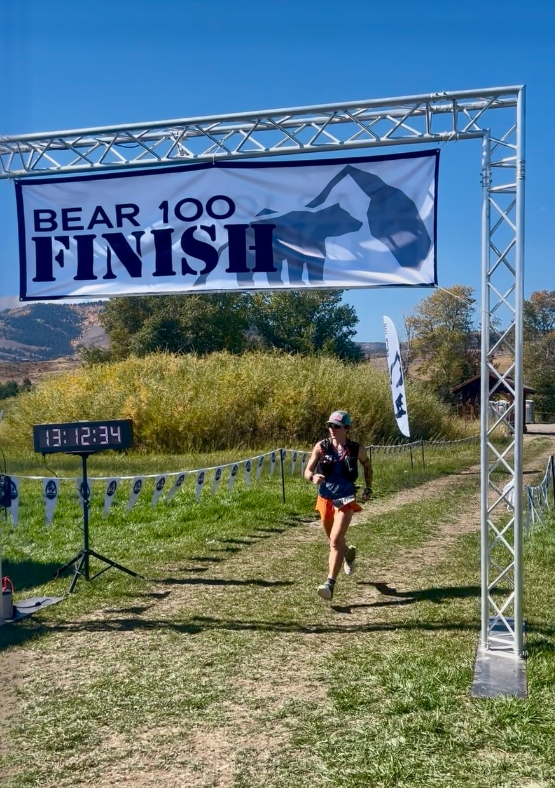
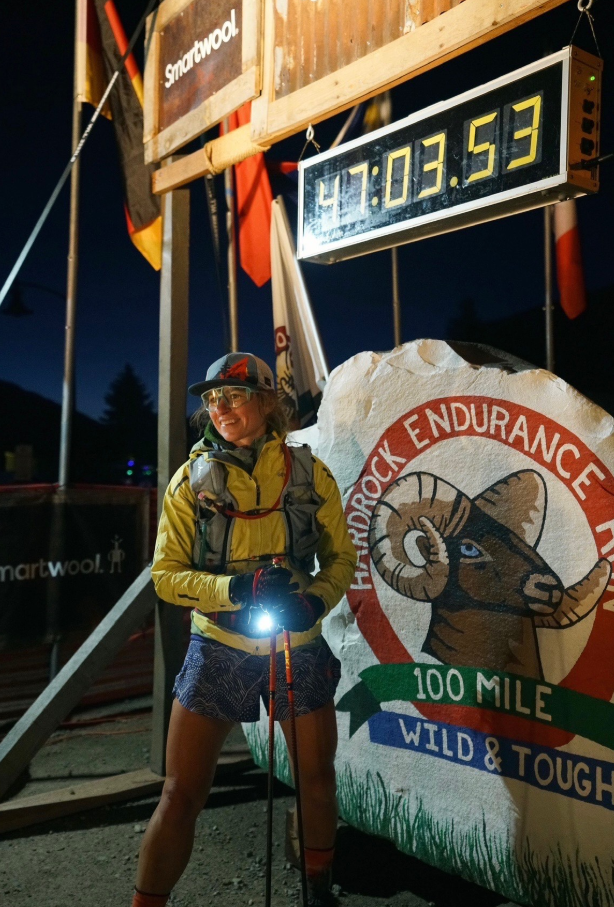
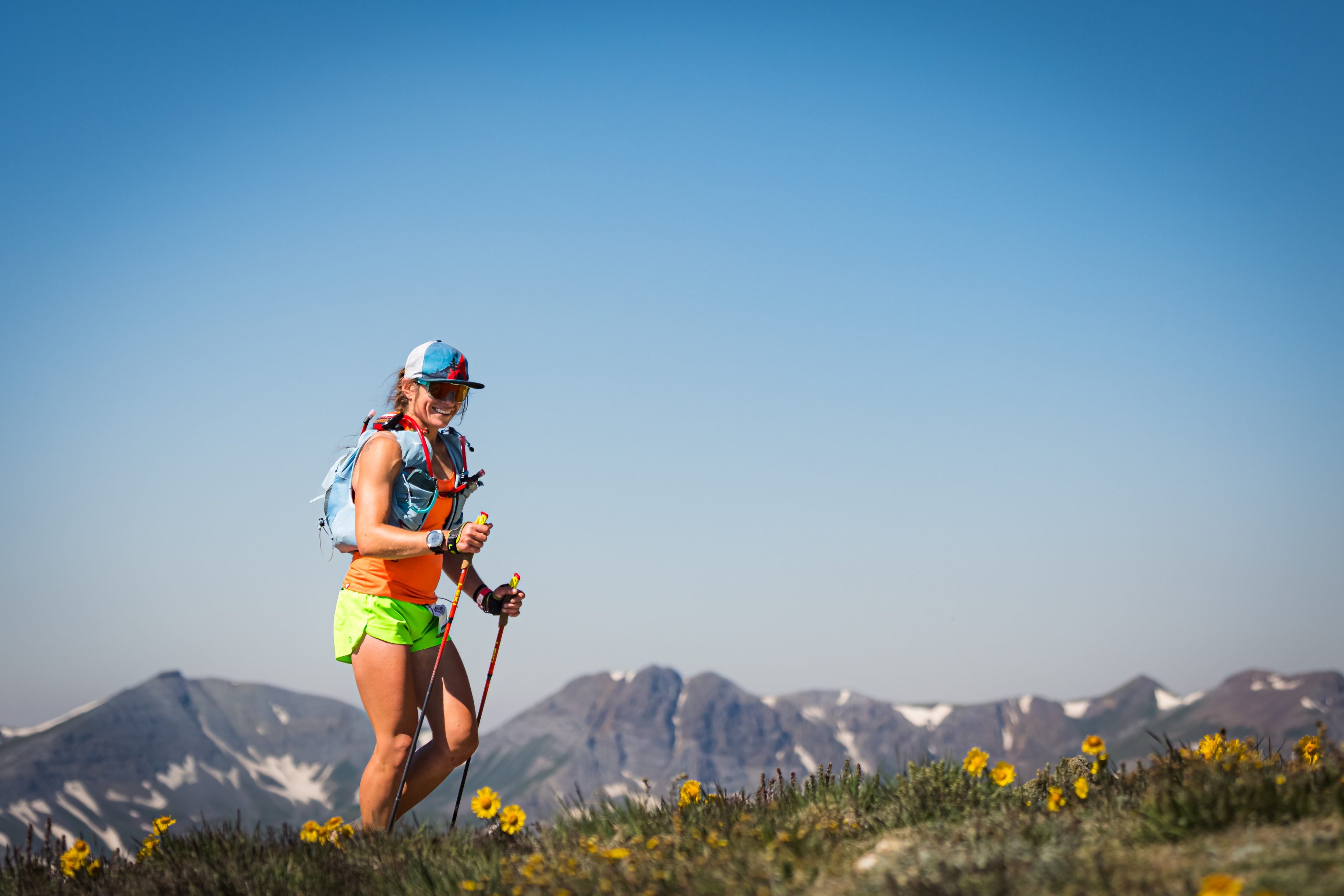
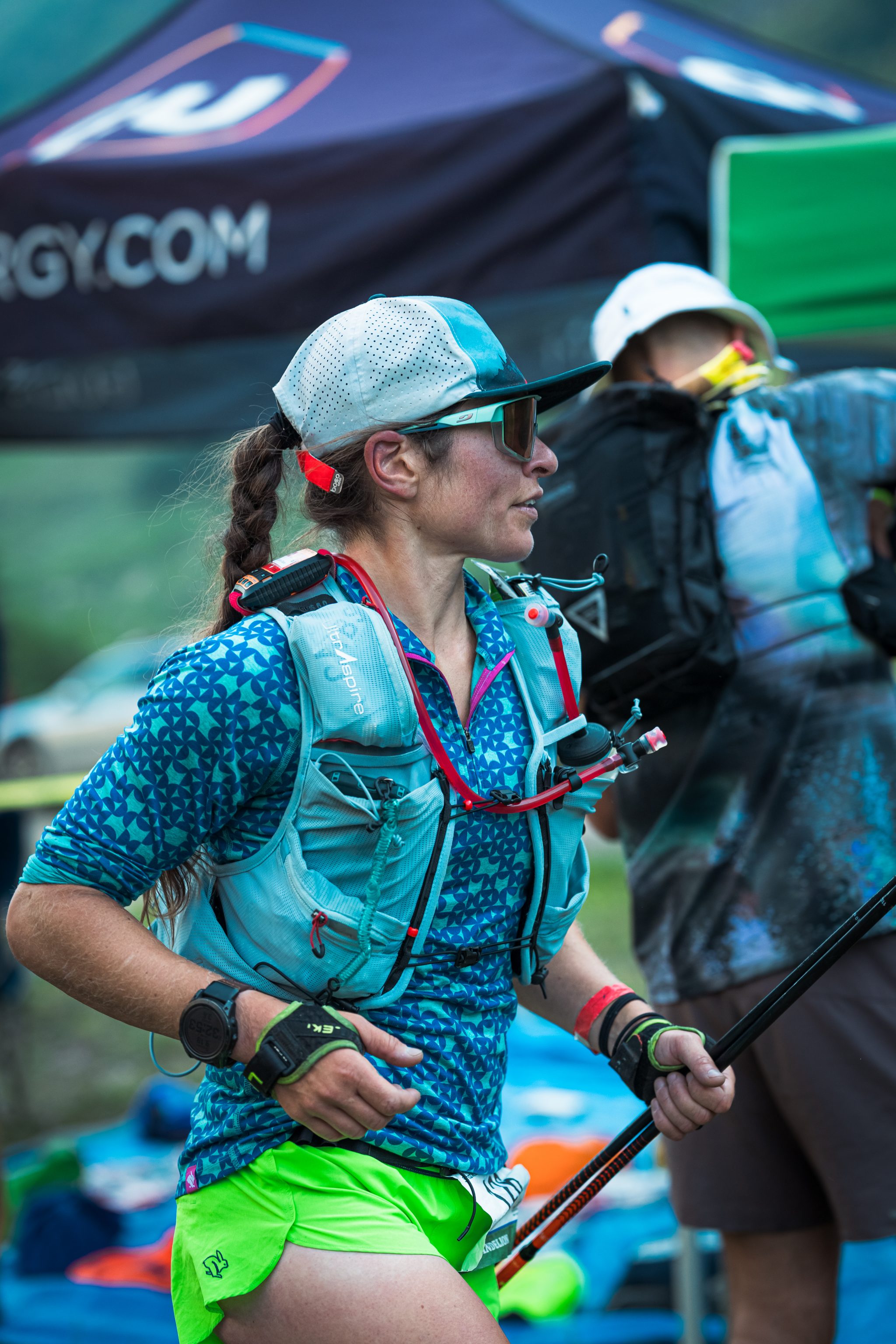
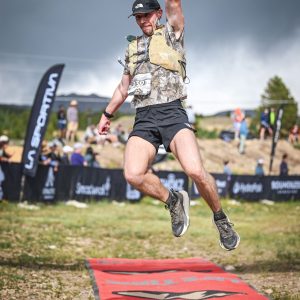
TRR Coach Dandelion completing the Bear 100. PC: Damien Scott

Runner: Team RunRun Coach Dandelion Dilluvio-Scott

Race Date: 09/26/2025

Location: Logan, UT

Result:  31 hours, 12 minutes, and 28 seconds; 126th overall, 4th female

3 Bests – What aspects of the race did you like the most?
  1. Autumn: This race is timed to coincide with peak fall colors!
  2. State-to-state traverse: It’s pretty unique for a 100-mile course to take runners across state borders.
  3. Porcupine sighting: During the night, a porcupine ran in front of me on the trail for a few seconds before moving off to the side. And no, I was not hallucinating!
Not so much – Aspects of the race that didn’t do it for you

I can’t think of anything. I suppose it would have been nice to have some more cloud cover midday, but that’s not something the RDs can control!

Weird factor – What’s the weirdest thing about this race?
Nothing weird. A unique factor is different buckles for various finish times:
–Black Bear Buckle: 30-36 hours
–Grizzly Bear Buckle: 24-30 hours
–Wolverine Buckle: under 24 hours
Highlights of your race – What did you do well and enjoy about your race in particular?
Pre-race mindset and expectations

My only goal for the Bear 100 Endurance Run was to focus only on the process of running 100 miles. This would be an internal journey to rediscover my “why”, which had become blurred. After almost two years of non-stop competing and tune up performance-based events, I wanted to go back to my roots and simply endure. I needed the Bear 100 to purely be about working with the terrain to get from Utah to Idaho. I wasn’t completely certain what focusing only on “the process” would look like in action when I toed the line, but I felt confident the best methodology would reveal itself.

Once we began the first climb, it didn’t take long for me to realize that I was carrying a massive amount of cumulative physical fatigue from racing Hardrock 100 earlier this summer. I also identified that I did not have the mental capacity yet to go back into the pain cave and embrace suffering like I did during the second day of Hardrock 100. My approach became clear in that moment: I would run the Bear 100 at a chill and causal pace. My goal was to be intentional, but not urgent. It didn’t matter how long it took me or where I placed.

Day 1

I was surprised at how easy it was for me to commit to this plan. I never once felt compelled to reel runners in or calculate a finish time based on my pace. Shockingly, I probably only checked the clock three times during the entire 31-hour event! Instead, I focused on moving efficiently through the course and proactive self-care.

During early portions of the first day, I pushed a bit harder uphill, drawing from my Hardrock training. Then I chilled on downhills to preserve my quads. Carbohydrates, electrolytes, and fluids were consumed regularly, and I maintained steady energy. By afternoon, the sun exposure became powerful in short sections and my focus switched to active cooling. I backed off on my intensity through these portions, stopping at creeks to throw water on myself whenever possible.
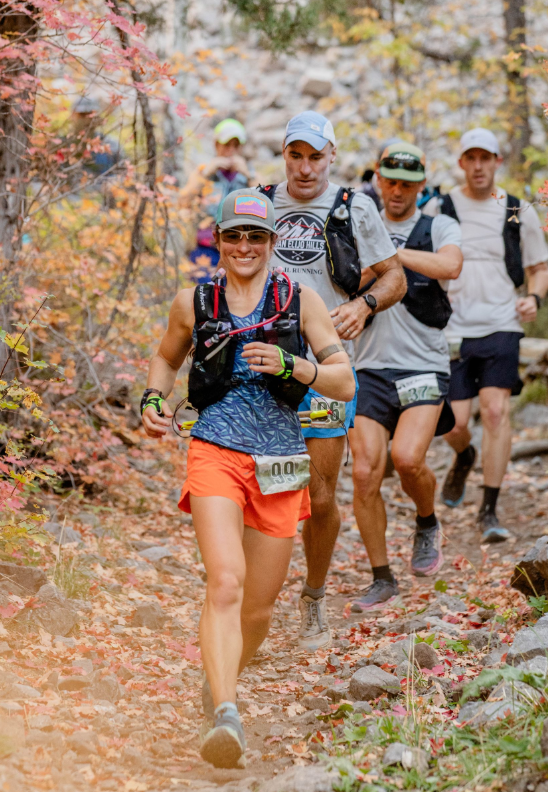
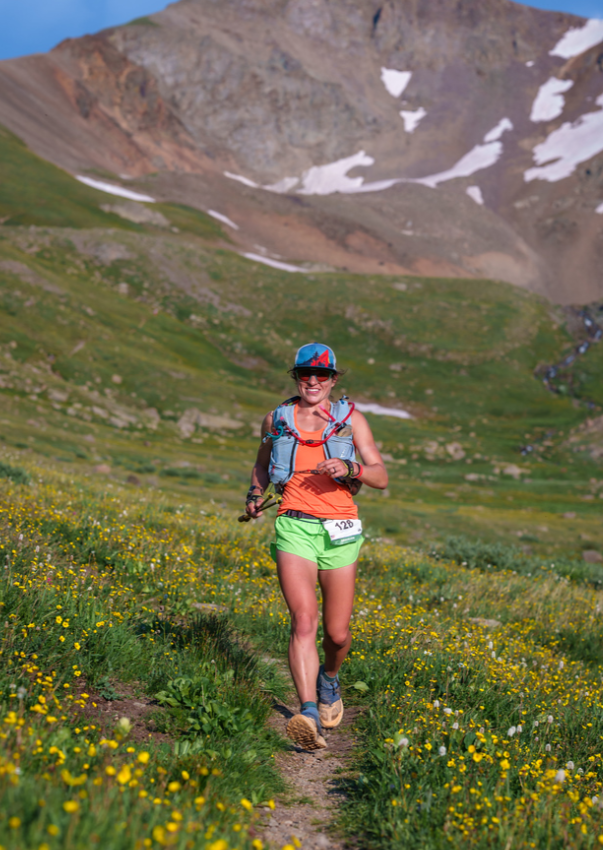
Dandelion running through fall foliage during the Bear 100. PC: Bethany Draper

Moving into the evening, I upped my consumption of solid hot foods at aid stations. I wasn’t going to be blasting through the climbs ahead and knew the reduced bouncing made GI distress unlikely. Hot foods (and drinks) would help me maintain a warm core, which would be essential to get through the night. The early hours of darkness were warm, so I stayed with light layers to reduce sweat; any moisture build up would cause me to freeze later. Later, when the temperature plummeted in the basins, every layer went on, plus hand warmers.

Running into the night

While I was never warm throughout the night, I wasn’t cold either. I stopped a bit longer at two aid stations to reset my internal temperature near the fire. I never got too close though, as I didn’t want to get overly warm and have the sudden cold suck the life out of me when I went back onto the trail! The miles clicked by as the long night wore on and I kept moving forward.

Warmth did not return upon sunrise. I continued eating hot food as I moved in and out of aid stations. I didn’t rush, but I also never lingered at aid stations throughout the event. After the final aid station at mile 91.8, I climbed the final hill. This is a notorious climb in the race because, although short, it’s mercilessly steep. I remember feeling indifferent about it, falling naturally into the mountaineer’s rest step. Unhurried, but efficient.

Day 2 to the finish

At the top of the ascent, it was finally warm enough to remove what remained of my nighttime layers. By no means did my body feel fresh! It was apparent that I had done something significant. Transitioning from hiking to running was bit awkward, but after a minute my body would adjust to the gait. Reading rocky terrain took a bit more mental effort, but I wasn’t tripping. My quads were sensitive, but not blown, so I could still maintain a gentle trot downhill. All things considered, physically and mentally, everything was still functioning well and my energy remained even. It stayed that way until I crossed the finish line in the afternoon on the shore of Bear Lake.

It sounds ridiculous to say that I ran a very casual and chill 100 miles, but that is honestly the best way I can describe this race. I truly stuck to my plan of running 100 miles for the sake of running 100 miles. I would not describe the experience as easy, but I cannot identify a moment of struggle either. The process felt familiar and intuitive to me. For the first time in a while I didn’t feel plagued by imposter syndrome. The Bear reminded me that I know how to run long distances through the mountains. Did I drain the tank? Absolutely not… but that wasn’t the point of completing The Bear 100. I was searching for something more internal.

Lessons for others – Share your pro-tips on the race to help the next runner

Cattle on the course! This is standard issue on many trails in the “Square States”, but folks less familiar may find loose livestock intimidating. There is no need to be afraid, and the bovines will move off the trail with gentle encouragement. Living in the ‘cowboy state’, I meet cattle all summer on training runs and have never had a negative encounter.

Lessons you learned that will help you next time around

My biggest lesson was very internal. Not every event needs to be a competition or even have a performance goal. So much joy can be found by simply running the course with no plan beyond being efficient and proactive with the process while appreciating the journey. Executing an event in this style helped me to reset my mental state so I can take on the challenge of competition again next season.

Most important course specific knowledge to know about the race

The Bear takes place during “Indian Summer.” This is the time of year in the Rockies where temperatures can swing wildly. Heat exhaustion can be a real danger during the day, while at night hypothermia can become a reality. Prepare with gear to avoid both dangers.

Many of the earlier aid stations are 8-10 miles apart, which is long for most 100 milers. It’s not problematic, but nutrition and hydration need to be planned accordingly.
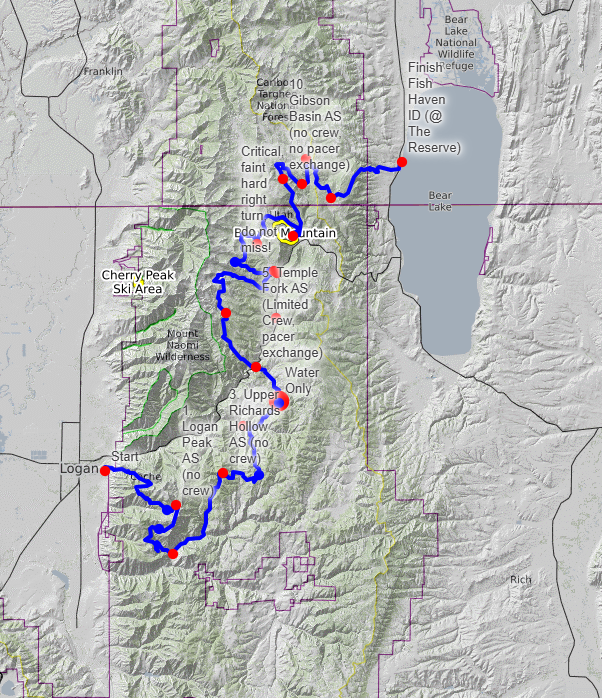
The Bear 100 course map.
Aesthetics – Is it a pretty course?

Yes! Think red maples, yellow aspens, golden grasses. The Bear 100 is timed when fall colors are peaking, and the sweeping mountain vistas are a ablaze with an autumn palette. It is a spectacular course!

Difficulty – Is it a tough course?

The Bear 100 is a proper Hardrock 100 qualifier. It has about 22,000 feet of vert in a mountainous environment, and covers a good amount of technical rocky terrain. However, many of the climbs are not aggressive (simply long), so a great deal of the course can be run if the athlete desires.

Organized and well run – Did it feel like a well-oiled machine or were they flying by the seat of their pants?

Cody and Bethany Draper are excellent RDs and have everything dialed. If anything went wrong during the event, I never found out about it.

Competition – Is there a strong field?

Yes! Elite athletes show up to this event regularly, and stellar times were put up this season on both the male and female podiums.

Logistics – Does it require a special handshake, registration a year in advance, hotels all booked? Give us the low down on the nuts and bolts of making the race happen.

This year (2025) was the final year The Bear 100 was available for first come first served registration. Moving forward it will be a lottery due to huge demand (it filled in about 8 minutes after opening in 2025!). Runners can also gain entry by acquiring a Bear Tag through winning a partner race. Further details can be found at https://bear100.com/lottery/.

Aid Stations – Standard fare or anything special to know about the aid stations in terms of what’s available or when?

The aid stations featured traditional fare: chips, soda, goldfish, broth, granola bars, quesadillas, trail mix, pickles, PB&J, etc. Gnarly and Gu sponsored the event, so their products were offered as the main engineered tech nutrition option. Later aid stations offered some special options like pizza, French toast sticks, hashbrowns, eggs, soup, tater tots, avocado sandwiches and perogies; a nice, wide range of options!

Weather and typical race conditions

Late September in the Rockies can be fickle. As was the case in 2025, this race usually has “Indian Summer” mild conditions: warm temperatures during the day, and colder nights. However, there have also been years with extremely hot daytime temperatures and bitterly frigid nights. Snow is also possible. In fact, the week after the 2024 edition it snowed a few inches on the course. Rain and electric storms are also possible. In general, anything and everything can happen this time of year in the mountains, so be prepared!

Gear – Did you need anything special or is there anything you’d recommend for the next runner?

I brought my standard mountain 100-mile race kit. My biggest recommendation is to be ready for a cold night. It drops into the 20s or 30s (degrees Fahrenheit) most years. During the day, I only carried a very light jacket. Leading into evening, I picked up an alpha fleece, hard-shell jacket, gloves, buff, long sleeved shirt, and hand warmers from a drop bag. I used every single item. The layers made the temperature tolerable while I was in motion, but I would not say I felt toasty warm.
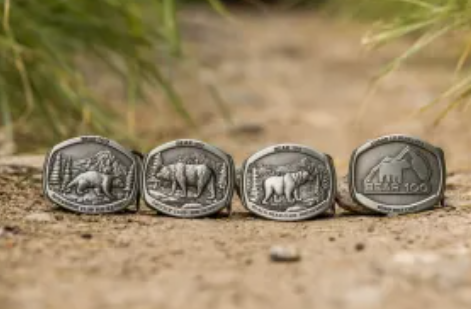
The different buckles on offer for finishing the Bear 100 based on finish time.
Spectators – Is this a friendly course for your friends?

As I did not have crew, I cannot comment much on the logistics of getting to aid stations. However, Right Hand Fork and Temple Fork aid stations have limited space, so runners must pick between one of the two locations to meet their crew at (a pass is provided). The start is certainly easy for speculators to get to as it is in the city of Logan, Utah. The finish line in Fish Haven, Idaho, is on the beach of Bear Lake: a beautiful set up for folks to hang out all day and enjoy watching runners complete their journey.

How’s the Swag?

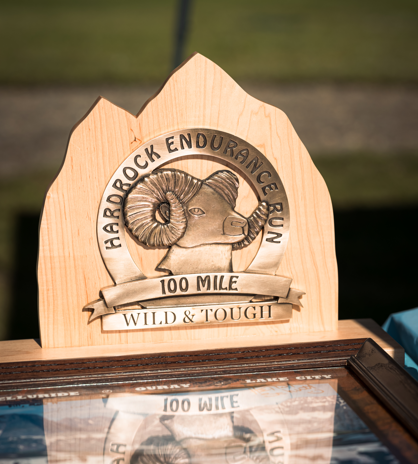
The Bear 100 had plenty of pleasantly affordable swag available to buy at the pre-race check in. Additionally, all athletes received a shirt and socks in a nice tote bag. Finishers were awarded with a unique buckle and wood plaque.

The Overall Score – How many stars do you give this race and do you recommend that others run it?

10/10. If you love a classic Rocky Mountain ultra set against the colorful tones of autumn, do this event!
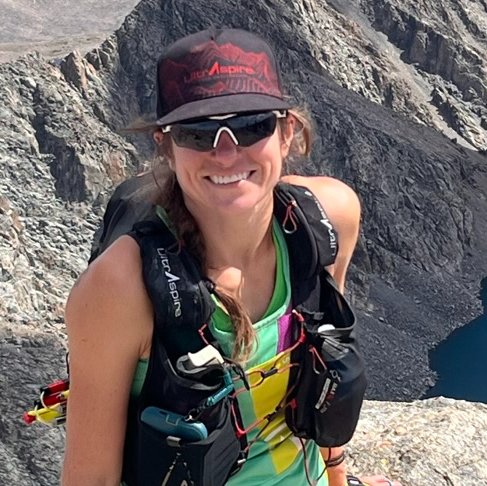
Dandelion Dilluvio-Scott is a multisport outdoor athlete, ultra-runner and certified coach. She is passionate about collaborating with driven athletes who love to explore, train and play outside.
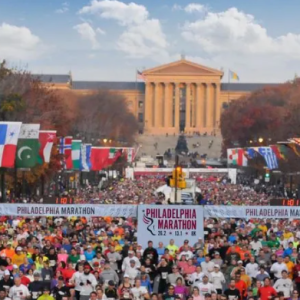
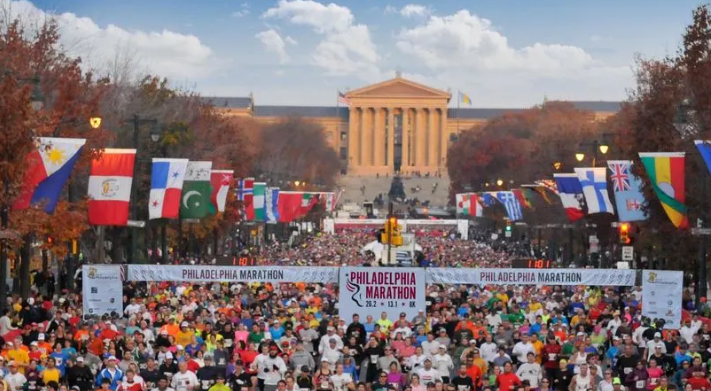
Philadelphia Marathon 101

Often overlooked in favor of the World Marathon Majors, the Philadelphia (Philly) Marathon is one of the most popular in the United States, for good reason!

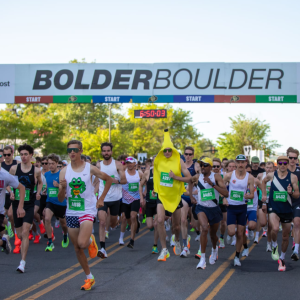
Philadelphia Marathon race start.

1. Pre-Race Zoom Call 

With the Philadelphia Marathon coming up soon, we’re bringing veterans and first-timers together to ask questions, share insights and build some excitement heading into race weekend!

Join our drop-in Zoom call on Monday, Nov. 10, 2025 at 7:00 pm EST where first-time Philly runners can get answers from athletes and coaches who have run this race before. 

Zoom link: https://us02web.zoom.us/s/3883695228 

If you think you can make it, or want to submit a question in advance, email your host TRR coach Elaina Raponi at elaina@trr.chadswork.com.

Can’t make the call? We’ll record the call and share the link in the following week’s newsletter. 

2. Philadelphia Marathon Race Intel

Date: Sunday, November 23, 2025

Philadelphia Marathon course map.

Location: Philadelphia, Pennsylvania

Start: 22nd Street & Benjamin Franklin Parkway, near the Philadelphia Museum of Art

Finish: Eakins Oval on Kelly Drive, near the Philadelphia Museum of Art

Course type: Mostly a loop; take a look at this page for more Philadelphia Marathon course info

Boston Qualifier: Yes

Elevation gain: 744 feet/ 226 meters

Elevation loss: 744 feet/ 226 meters

Temperature:

Average high: 51°F/ 10°C
Average low: 34° F/ 1°C

Tips from Coaches

“Practice hills! Philly is not classified as hilly, but the rolling hills from miles 7–16 and the tougher climbs in Manayunk (miles 19–22) add up.” – Coach Jonathan Gooch

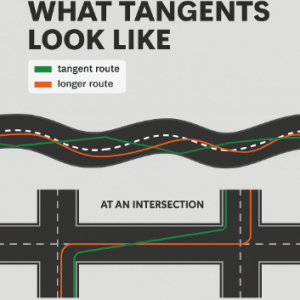
“Stick to the tangents. Kelly Drive is wide and winding, and poor tangents can add up to half a mile to your race, so minimize side-to-side movement to stay on the shortest course.” – Coach Jonathan Gooch

“The race ends with a 10 mile out-and-back on the river that feels longer than the first 16; save some mental energy to get back from the turn around.” – Coach Matt Weller

Philadelphia Marathon elevation map. PC: findmymarathon.com

3. Shakeout Run 

Date: TBD

Time: TBD

Location: TBD

4. Philadelphia Marathon Coaching Info

At Team RunRun, we have 100s of wonderful, experienced coaches ready to help you crush your goals, regardless of your ability, budget, or lifestyle. Specifically, for Philadelphia Marathon race advice, here are some coaches to start with:

In addition, see the official race website here for even more information.

Above all, good luck!

Indianapolis Monumental Marathon 101

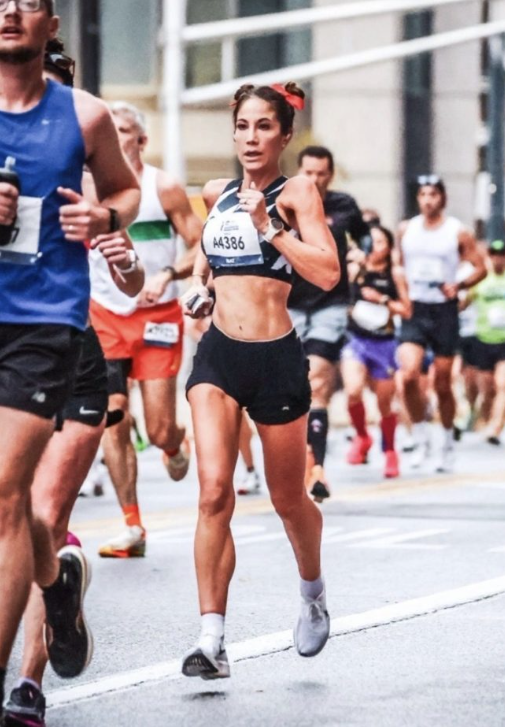
TRR Coach Natalie Lutz running the 2023 Indy Marathon.

Often overlooked in favor of the World Marathon Majors, the Indianapolis (Indy) Monumental Marathon is a flat, fast race perfect for PR-seekers and first-timers.

1. Pre-Race Zoom Call 

With the Indianapolis Monumental Marathon coming up soon, we’re bringing veterans and first-timers together to ask questions, share insights and build some excitement heading into race weekend!

Join our drop-in Zoom call on Monday, Oct. 27, 2025 at 7:00 pm EST where first-time Indy runners can get answers from athletes and coaches who have run this race before. 

Zoom link: https://us02web.zoom.us/s/3883695228 

If you think you can make it, or want to submit a question in advance, email your host TRR coach Elaina Raponi at elaina@trr.chadswork.com.

Can’t make the call? We’ll record the call and share the link in the following week’s newsletter. 

2. Indianapolis Monumental Marathon Race Intel

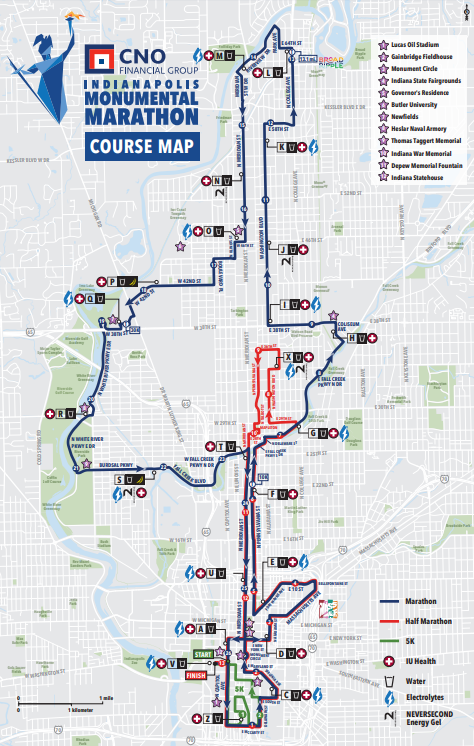
Indianapolis Monumental Marathon course map.

Date: Saturday, November 8, 2025

Location: Indianapolis, Indiana

Start: Near the Indiana State House

Finish: Near the Indiana State House

Course type: Loop; take a look at this page for more course info

Boston Qualifier: Yes

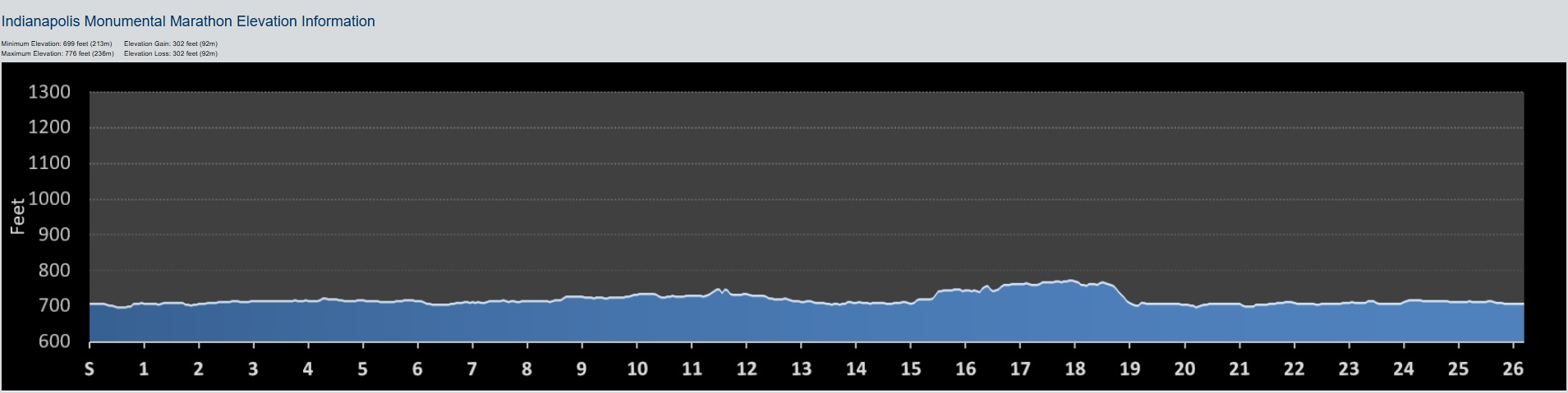
Elevation gain: 302 feet/ 92 meters

Elevation loss: 302 feet/ 92 meters

Temperature:

Average high: 58°F/ 14°C
Average low: 39° F/ 3°C

Tips from Coaches

“The half marathon and marathon start at the same time. So, especially if you are in the top corrals, be aware that the race goes out very fast. Try not to get caught up and pulled along with the half marathoners in the beginning. Run your own race and pace to avoid hitting the wall too early!” – Natalie Lutz

“Be extra vigilant of your footing and the road bifurcations during the first 3 miles. In 2024, there were a few pot holes in the beginning of the race.” – Natalie Lutz

3. Race Reports

Want even more intel on the Indy Marathon? Read some of the race reports from Team RunRun coaches: 

Indianapolis Monumental Marathon Race Report – Natalie Lutz

Indianapolis Monumental Marathon elevation map. PC: findmymarathon.com

4. Shakeout Run 

Date: TBD

Time: TBD

Location: TBD

5. Indianapolis Monumental Marathon Coaching Info

At Team RunRun, we have 100s of wonderful, experienced coaches ready to help you crush your goals, regardless of your ability, budget, or lifestyle. Specifically, for Indianapolis Monumental Marathon race advice, here are some coaches to start with:

In addition, see the official race website here for even more information.

Above all, good luck!

Golden Ultra 60K Race Report

Race: The Golden Ultra 60K – Stage 2 – Sweat & Conquer

Runner: TRR Coach Jennifer Kozak

Race Date: 09/13/2025

Location: Golden, British Columbia, Canada

Result: 9th/46 in age group for the single day event, 19th/90 of all women running the 60K (both single and three-day participants)

Strava link: https://www.strava.com/activities/15801575706/overview

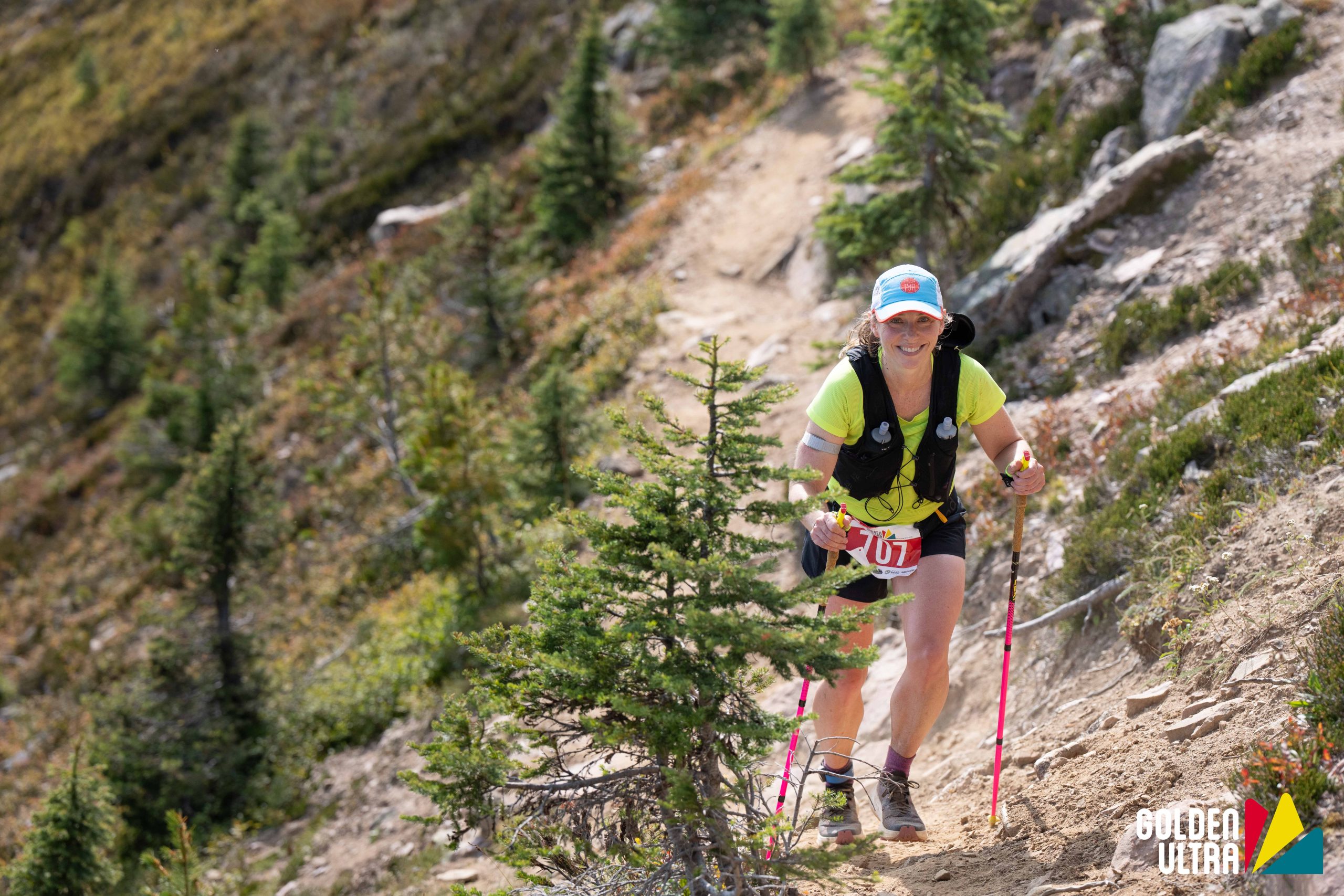
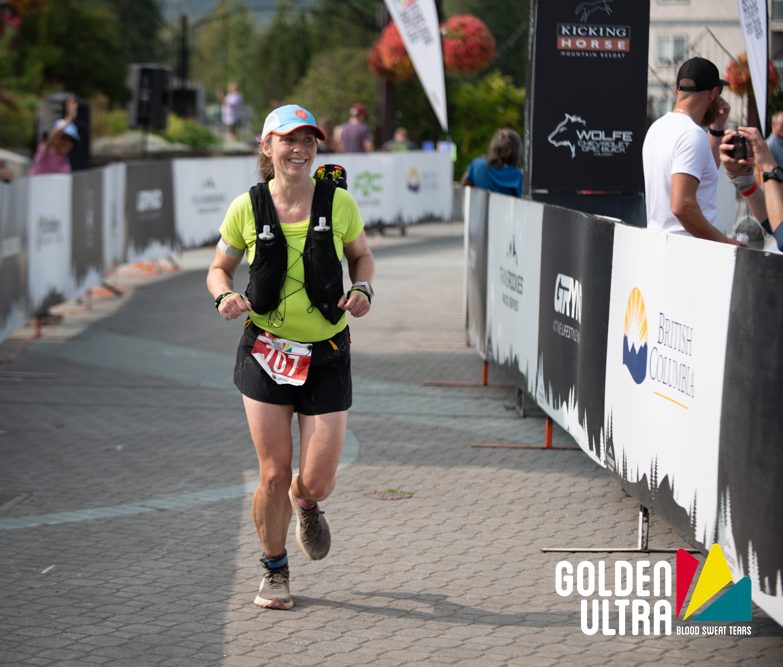
TRR Coach Jennifer Kozak running the Golden Ultra 60K race. PC: Jonathan McLeod
3 Bests – What aspects of the race did you like the most?

The Golden Ultra is a three-day stage race or a one-day ultra running race in Golden, BC, Canada. I chose the one-day, 60K ultra option.

1. Volunteers/Aid stations: This was by far the highlight of the race for me! The aid station volunteers went so above and beyond, it felt like I had crew! I would arrive, and immediately one person was helping me find my drop bag, while two other people were filling my bottles, and a fourth was holding my poles. They put ice in my hat, dumped water down my back, offered me tater tots, bacon, and quesadillas, all while telling me how good I looked, ha! As we approached the summit for the day, we were greeted with a team of dancing men dressed as fairies encouraging us up to the top. All of these amazing people meant I had a smile on my face for most of the day.

2. Flagging: The course was very well marked for the day. The few instances where I was worried that I had taken a wrong turn, I simply had to wait one minute, and the next flag would appear. Any turn was either manned or flagged so well that you knew exactly where to go. Despite some hesitancy that I missed something when I ultimately would zone out for a while, not a single turn was missed.

3. Course: The mountainous course is beautiful and challenging, and you get a little bit of everything: flowy single track through the forest, a technical, steep ridge climb to the top of the Kicking Horse Mountain Resort Gondola, and some quad busting descents.

Not so much – Aspects of the race that didn’t do it for you

1. Timing: From a participant perspective, it seemed like something went awry with the timing. When crossing the finish line, the zone4.ca updated your time automatically based on the chip you are wearing. Then, later in the day, all of the times had between 45 seconds to a couple minutes added to them. We were informed that this was an adjustment for gun time. This would seem fine, except for the fact that even with video evidence of crossing under the timing clock at a certain time, it was still off by nearly a minute. While it might not seem like a big deal, as it did not affect placements, for those of us who were aiming for a certain time and thrilled to squeak in just under, it was frustrating to not have that time be ‘official’. Why did we wear those bulky chips around our ankles then?!

2. Medal mishaps: They forgot to hand out medals for the 60K/30K racers. Oops! They have offered to mail them out though if we want it!

3. No watermelon? All I wanted was watermelon at the aid stations!

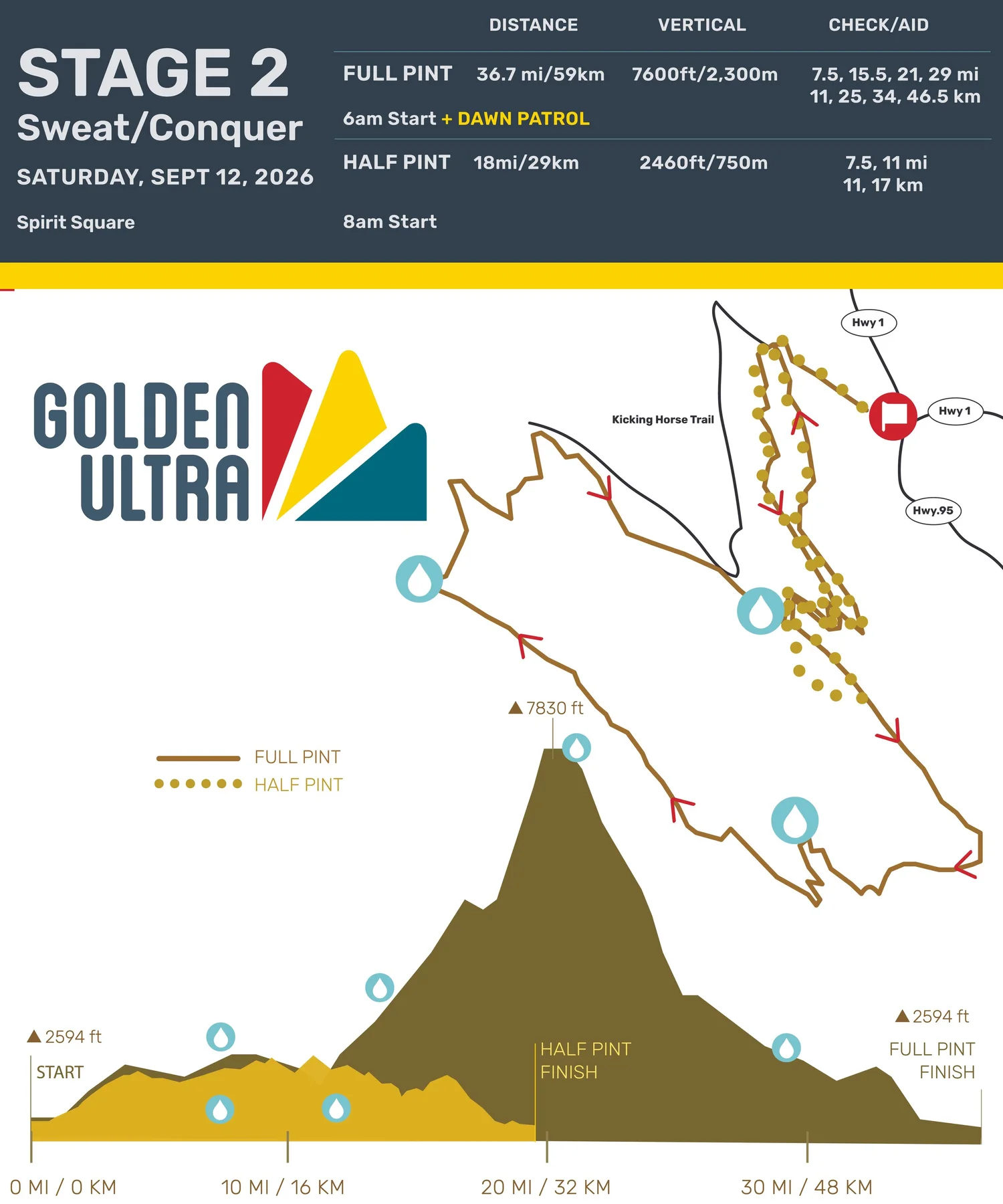
4. Drop bags: They only had drop bags available at one aid station (though runners visited it twice), which was at 7.5 miles (11 km) and 29 miles (47 km) into the race. I did utilize it, but it seemed too early/late in the race to need much. I would have preferred one 21 miles (34 km) into the race, at Aid Station 3, especially if I had no crew/supporters on course to help bring things.

Golden Ultra 60K Stage 2 course profile.
Highlights of your race – What did you do well and enjoy about your race in particular?
  1. Overall pacing: The Golden Ultra 60K was my first ultra, so I wasn’t too sure how exactly to pace for a longer race. In hindsight, I feel like I did go out a bit hot, but felt soooo so good up until the last 12k, when the temps hit 27oC (81oF) and the quads had had enough.
  2. Fueling: I am very happy with how fueling went for the most part. I had practiced hard for this, and it paid off!
Lessons for others – Share your pro-tips on the race to help the next runner

Bring a headlamp! The 6 am start isn’t too early, but it is dark at this time of year until around 7 am. You’ll need a headlamp to feel confident on the forest trails. The headlamp can be dropped at the first aid station if you’ve got a drop bag there.

Lessons you learned that will help you next time around

If I could go back and do it again, I would have slowed down for the first 6 miles. That said, it is very challenging to be on single track, with a group of people behind you, and not push a little more than you intend.

Most important course specific knowledge to know about the race

I think the most challenging part of the Golden Ultra 60K course is the final 12 km (6-7 miles). There are lots of little punchy climbs and descents that feel so challenging after pushing on the main climb/descent earlier on in the race. If you can manage your effort, or build your durability to withstand the last 12 km, you’ll be golden (I had to)!

Aesthetics – Is it a pretty course?

Beautiful! Unfortunately, some wild fire smoke had entered the area for the weekend. That said, it wasn’t too bad as we ascended into the alpine, and it gave the mountains a very moody feel (see picture below). The smoke cleared later in the day, and we were treated to some epic views at the top of the gondola. Running through the lower trails was also really enjoyable.

Difficulty – Is it a tough course?

Yes! The Golden Ultra 60K is ~59 km with 2500 m (or around 8200 feet) of vertical gain. The course progresses from rolling trails into one giant climb, followed by one giant descent, and then more rolling trails to the finish. There are a few sections that also require careful footing, such as the approach the aid station at the top of the gondola, and when descending the first section of the ski resort.

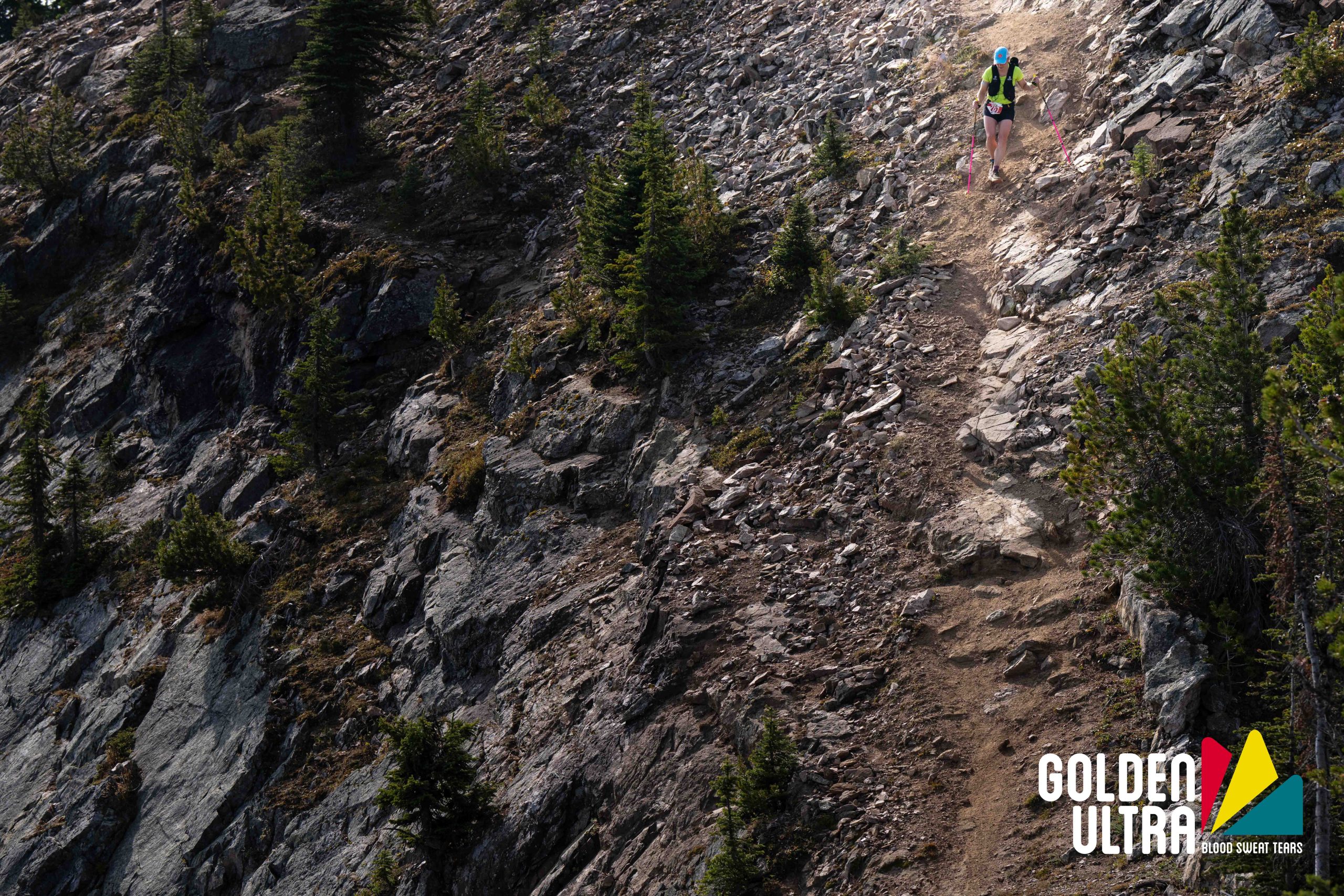
Jennifer Kozak descending a steep climb during the Golden Ultra 60K. PC: Jonathan McLeod
Organized and well run – Did it feel like a well-oiled machine or were they flying by the seat of their pants?

Everything (aside from the timing) seemed like a well-oiled machine. Package pick up/drop bag drop off was super smooth. Helpfully, race information was shared quite a few times leading up to the race via email or on the Golden Ultra Facebook forum. As mentioned above, the aid stations were incredible.

Competition – Is there a strong field?

Yes, there are some very strong runners in this race! People travel from all over to attend, but you’ll find the majority from in and around BC/Alberta.

A moody, early morning shot of the major course climbs. PC: Jonathan McLeod
Logistics – Does it require a special handshake, registration a year in advance, hotels all booked? Give us the low down on the nuts and bolts of making the race happen.

They usually have tiered pricing for the Golden Ultra event, so, if you are the first to register, you’ll get a cheaper price than if you book a month after registration opens. Because of this, they had a lot of traffic the first day of registration and it caused a few glitches. They worked hard to remedy this, and fixed any issues people had with their registration. The race itself did not seem to sell out though until a month or two before the actual race start. Accommodation was trickier as the town is quite small. If you stay at the resort (where a lot of the vacation rentals are), be prepared to be trained getting to the start line!

Aid Stations – Standard fare or anything special to know about the aid stations in terms of what’s available or when?

As mentioned above, these were the best aid stations! This was more so for the people than the food itself (which I barely ate any of). They had Xact Bars as their sponsored nutrition and F2C as their electrolyte. I knew neither of these would work for me, so I didn’t partake. And despite their lack of watermelon, they had seemingly everything else: oranges, grapes, cookies, candy, chips, pretzels, tater tots, bacon, quesadillas, and more.

Weather and typical race conditions

Last year, the weather was colder and quite socked in (perfect running temps)! This year, it was hot with a bit of smoke in the air. With it being a higher alpine environment, the weather can change very quickly: expect every type of weather from blazing sun to snow.

Gear – Did you need anything special or is there anything you’d recommend for the next runner?
Jennifer Kozak finishing her first ultramarathon. PC: Jonathan McLeod

They have a required gear list for the Golden Ultra 60K: jacket, gloves, toque/beanie, and emergency blanket. Bear spray is optional. Personally, I liked having poles for the major climb and tucked them away for the rest of the race after that. While it’s not on the required list, a headlamp is 100% needed for the first hour or so.

Spectators – Is this a friendly course for your friends?

Yes, there are quite a few spots to view. The first spot would be at the first aid station (I believe you can walk/drive in). The most popular spot would be at the top of the gondola. Spectators would need to buy a sightseeing gondola pass for the day from the resort, and make it up there to see your runner (and the views)! I was able to see my family at the top of the gondola (where they provided aid), at the bottom of the long descent down the ski hill, and again at the finish line.

How’s the Swag?

I loved it! Runners received a T-shirt (non-technical) and a metal cup branded with Golden Ultra at check in. Before the race start, the race director was handing out collapsible cups for use at aid stations during the race (which is great because I had forgotten mine). At the finish, a hard-earned medal (pending…see above) and pint glass await.

The Overall Score – How many stars do you give this race and do you recommend that others run it?

4.5/5! I loved the Golden Ultra 60K and would 100% run it again! My little annoyances of the race pale in comparison to the overall event and weekend, which was nothing but enjoyable. I would highly recommend any runner coming to BC to try one of these events!

Jennifer Kozak is a coach with Team RunRun who knows how to balance training with family, on both the roads and the trails. Jenn works with athlete of all abilities, from those dipping their toes in trail races or tackling new goals on the roads, from the 5k up to the marathon.

Grindstone 100 Race Report

Race: Grindstone 100 mile race by UTMB

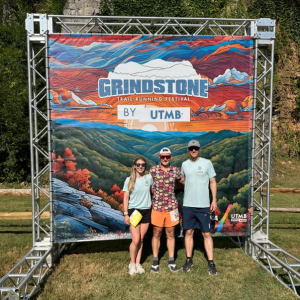
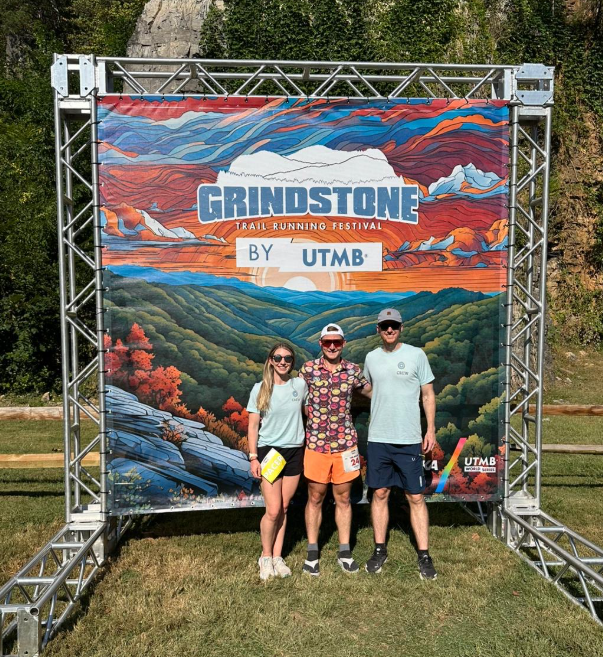
Lukas and his crew before starting the Grindstone 100 mile race.

Runner: TRR Coach Lukas Burrer

Race Date: 09/19/2025

Location: Natural Chimneys Park, VA

Result: 25:43:33, 8th overall and 3rd in age group

Strava link: https://strava.app.link/8zqeSaDGTWb

What aspects of the race did you like the most?

I liked that the Grindstone 100 is mostly on single track trails. Also, the 6pm start means everyone has to run through at least one full night, and this adds another challenge to the race.

Not so much – Aspects of the race that didn’t do it for you

The downside to all the single track was that some parts were pretty overgrown, making it harder to stay on pace.

Highlights of your race – What did you do well and enjoy about your race in particular?

The final miles are very smooth and runnable – a nice “treat” after 90+ miles of technical single track! It felt very good to drop the pace and finish the race strong. (Certainly not something you feel at the end of most 100 milers!)

Lessons for others – Share your pro-tips on the race to help the next runner

Above all, take the climbs easy! They are gnarly and long, so you need to measure your energy and effort appropriately.

Most important course specific knowledge to know about the race

The lollipop section (miles 53-66) of the Grindstone 100 course is very gnarly and tough to get through. Oh, and it’s 105.1 miles, not 100.

Aesthetics – Is it a pretty course?

Yes! The course is mostly on single track trails, providing continuous variety that keeps you motivated. And the upside to the gnarly climbs are the beautiful views you’re treated to at the top.

Difficulty – Is it a tough course?

Yes, undoubtedly so!!! Those climbs are tough, and the technical terrain makes it even harder! Plus, you gain 21,000 feet over the 105-mile course! Grindstone 100 is one of the most difficult 100-mile races in the US.

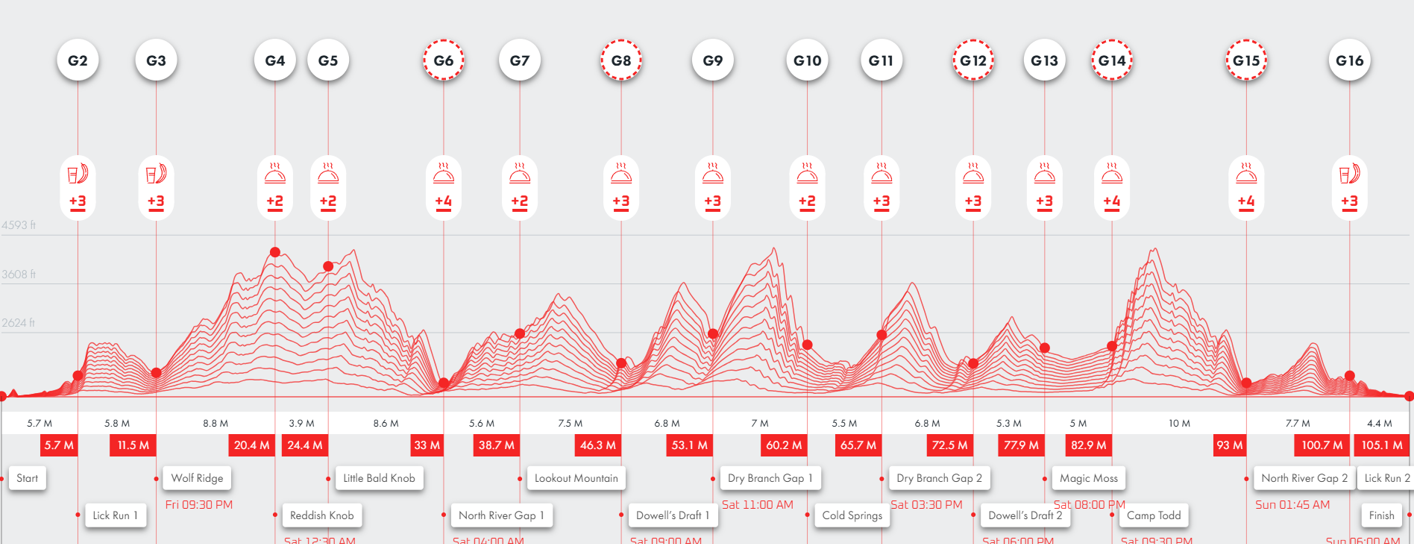
Grindstone 100 elevation map with aid stations and time cutoffs labelled.
Organized and well run – Did it feel like a well-oiled machine or were they flying by the seat of their pants?

Yes! It’s a UTMB race, so it’s very well organized.

Competition – Is there a strong field?

Yes! Again, with it being a UTMB race, it will always attract a strong field of athletes trying to qualify for the UTMB finals in France.

Logistics – Does it require a special handshake, registration a year in advance, hotels all booked? Give us the low down on the nuts and bolts of making the race happen.

No major logistical hurdles, simply go to the website and sign up!

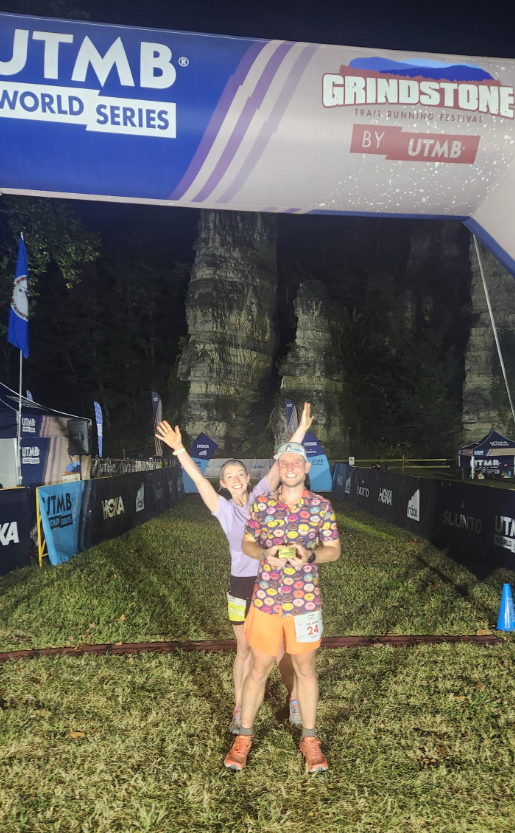
Lukas and his pacer at the finish line.

Note UTMB’s trail stewardship policy: all the Grindstone 100 racers are required to complete 8 hours of trail work prior to race day, which they submit via a Trail Work Form.

Aid Stations – Standard fare or anything special to know about the aid stations in terms of what’s available or when?

There are 15 aid stations throughout the Grindstone 100, 1 about every 6-8 miles, and you can have crew and/or drop bags at 5 of them. The offerings are standard, and Naak is the on-course nutrition and hydration brand. That said, the North River Gap aid station (which is also a crewable aid station) was the best, thanks to the variety of food options available!

Weather and typical race conditions

It was pretty hot and humid on race day this year! Therefore, I’d recommend asking your crew to have ice available at aid stations to stay cool.

Gear – Did you need anything special or is there anything you’d recommend for the next runner?

There is a mandatory gear list but, as far as UTMB races are concerned, it doesn’t list anything you shouldn’t already think to carry.

My #1 recommendation is poles! Bring poles, you won’t regret it!!

Spectators – Is this a friendly course for your friends?

There are a good number of crewed aid stations, meaning crew, friends, and spectators can see and support the runners more often than in a lot of 100-milers. However, trail ultramarathons are never the most spectator-friendly! There is a whole festival setup at the finish line area, perfect for spectators to await finishers.

How’s the Swag?

You get a nice 100-mile finishers belt buckle, race t-shirt, and picture from the park!

The Overall Score – How many stars do you give this race and do you recommend that others run it?

5/5! I would recommend the Grindstone 100 to anyone looking to gain some milestones for UTMB who likes technical and gnarly races.

For another tough 100-mile race report, check out: UTMB (Ultra-Trail du Mont-Blanc) Race ReportTRR Founder and Coach Matt Urbanski details his UTMB race: 108.1 miles with over 32,000 feet of vert and wild weather in the French Alps!

Lukas Burrer is a coach with Team RunRun originally from Germany, but now based in Atlanta, Georgia. He specializes in trail and ultrarunning, and loves helping athletes take on big challenges!

UTMB (Ultra-Trail du Mont-Blanc) Race Report

Race: UTMB (Ultra-Trail du Mont-Blanc)

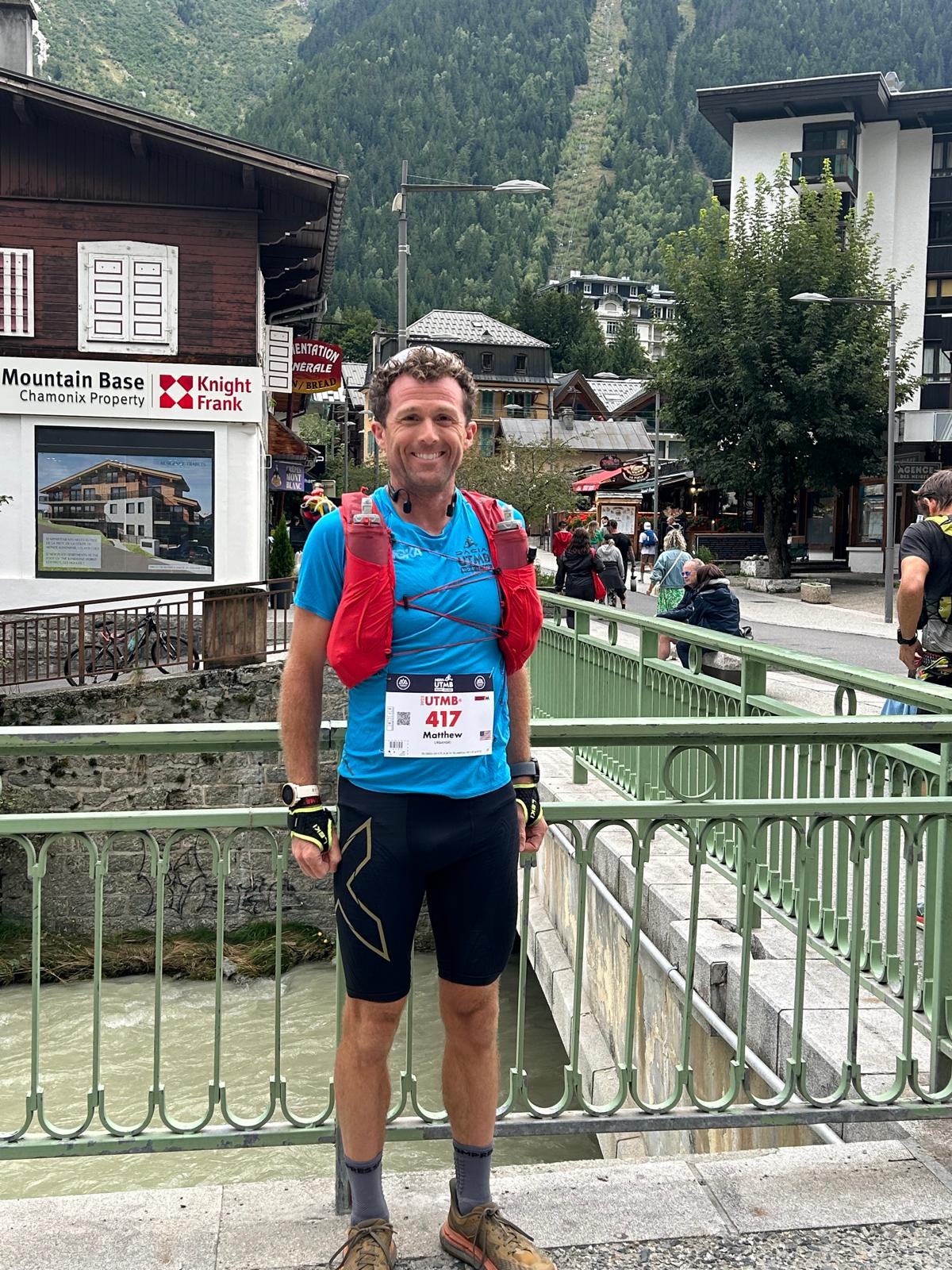
TRR Founder and Coach Matt Urbanski at the UTMB 108-mile race in Chamonix, France.

Runner: Matt Urbanski (Team RunRun founder and coach)

Race Date: 08/29/2025

Location: Chamonix, France

Result: 29:55:38, 170th out of 1665

Strava link: https://www.strava.com/activities/15645195041

What aspects of the race did you like the most?

I just love the racing environment of UTMB. They organize it so well, the energy is amazing, and the setting is absolutely epic. I have run this race three times, and I want to keep coming back!!

I also love that after having been in the trail running community for so many years, I can go to this race and see so many people I know from all around the world!

Not so much – Aspects of the race that didn’t do it for you

The start. I’m just outside of the “elite” category so I don’t get a spot near the front of the race. Two years ago when I raced, I got there more than an hour before the start and sat out in the sun waiting. This year, I got there 30 minutes before and was in the middle of the crowd. It took me 2 minutes to push/get pushed to the start line, and then we walked out of town. I wasn’t feeling super competitive this year, but walking slowly amid tons of runners with selfie-sticks, rather than running this nice flat part of the course was frustrating. I think they need to have corrals based on bib numbers (which are based on UTMB Index ranking).

Weird factor – What’s the weirdest thing about this race?
I’m still a bit in awe at all the deli meat and cheese available at the aid stations. They don’t have gels, and the overall food selection is noticeably different from US ultras. I basically lived on Naak waffles and Naak sports drink for 30 hours!
Highlights of your race – What did you do well and enjoy about your race in particular?
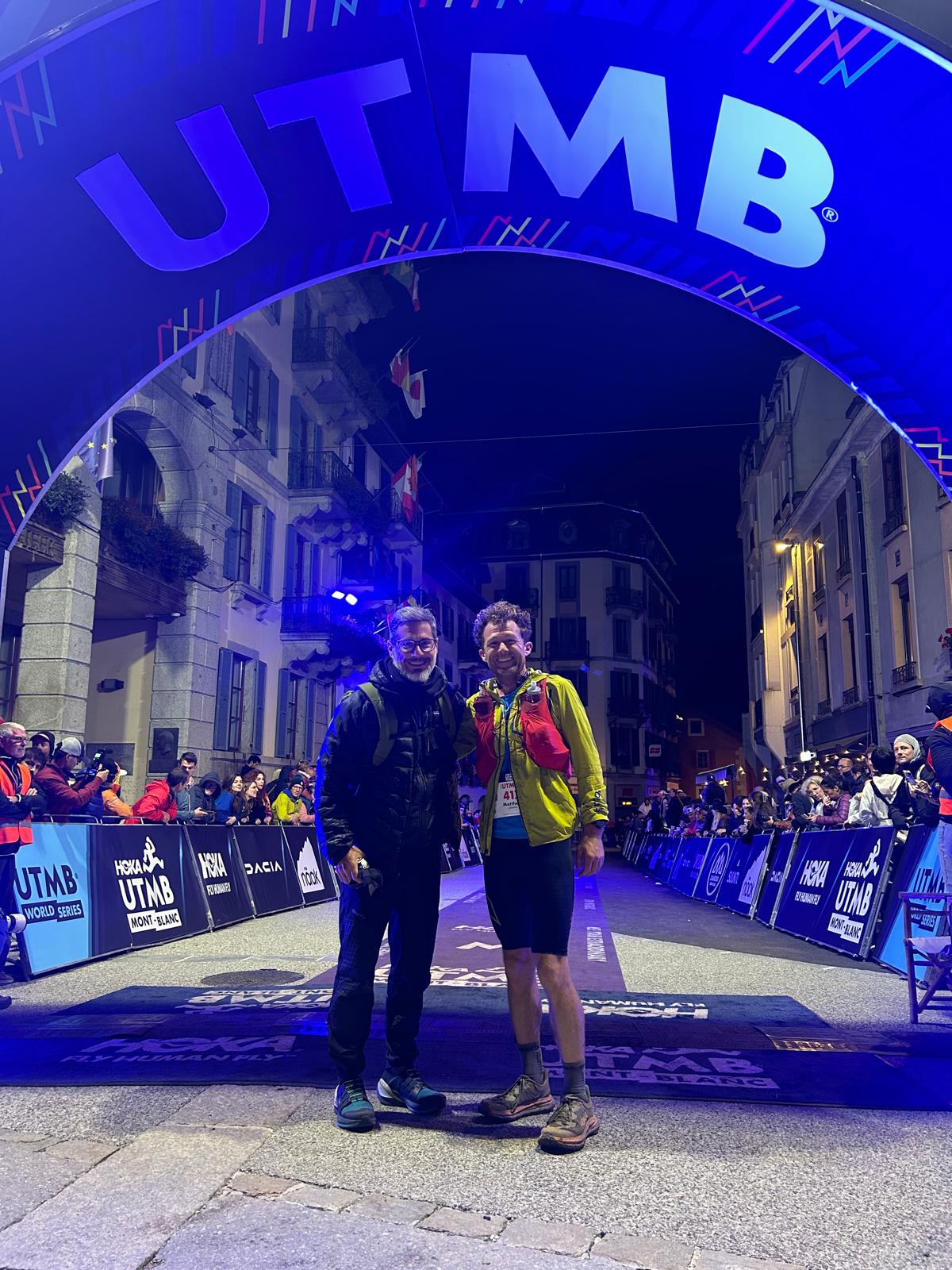
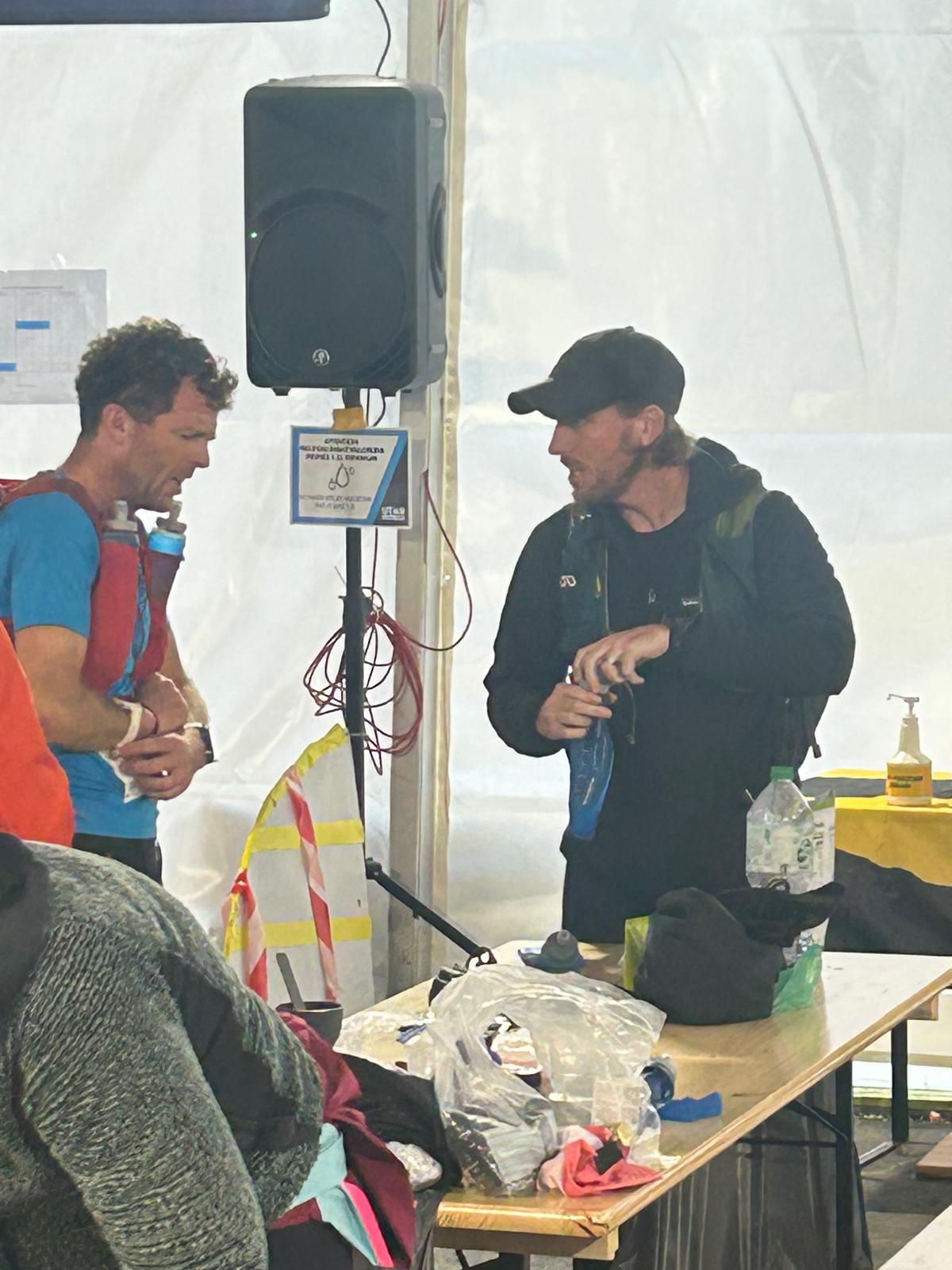
Matt at the finish line, greeted by TRR athlete and star crew, Jose Medina!
Matt at the finish line of UTMB, greeted by TRR athlete and star crew, Jose Medina!

I got out of trouble. I made a really big error on the climb to Col du Bonhomme: I didn’t layer up for the weather. It was raining, and I had on my rain jacket and rain mitts, but I didn’t put on more layers. By the time it was windy and snowing up high (at 2am!), and I knew I needed to get warm fast, my hands were too cold to function. I couldn’t get my vest off, let alone get it open, in order to get more warm layers out. Thankfully, they had a warming hut open at the top. It looked brutal in there with people shivering, crying, and just in total disarray – I was one of them, shaking violently for 30+ minutes.

I am proud that I eventually regrouped, got warm enough, got my gear on properly, and carried on to finish the race. But there was a brief period before that warming hut (which I didn’t know would be open to us!) where I was scared for my life, more than any other running event I’ve ever been in. But I got out of trouble and UTMB!

Lessons for others – Share your pro-tips on the race to help the next runner
  1. Get good at downhill running. There is so much downhill! Get good at running fast on steep long descents. That is a huge advantage.
  2. Be fit. The stronger a runner you are, the better you’ll do on the climbs and the various runnable sections.
  3. Know your gear. There’s a big required gear list, and while you might think it’s overkill, I needed all (well, almost all!) of it this year. Practice with it, know where it is in your pack, and be quick to use it! In training, simply practicing running with the weight of it all will be a big benefit, even if you never need to get into it!
  4. Relax and smile. It’s a really long race, and it’s really easy to get caught up early in the competition. Slap hands in St. Gervais and Les Contamines, soak in that crazy tunnel of people at the start of the big Col du Bonhomme climb. And then stay focused: it’s a long, long race!
Lessons you learned that will help you next time around

In future, I’ll be way quicker to get my cold gear on at any race where it might be getting cold!

It’s way more fun to be fit! I didn’t train well for UTMB this year. I was able to get by with good power hiking on the long climbs, and good descending skills. But it’s just a better race when you’re well prepared.

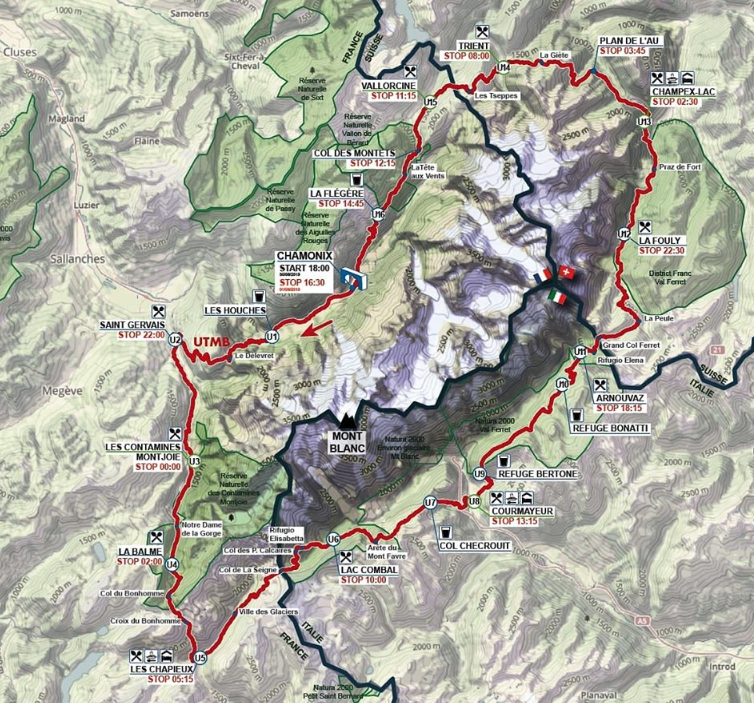
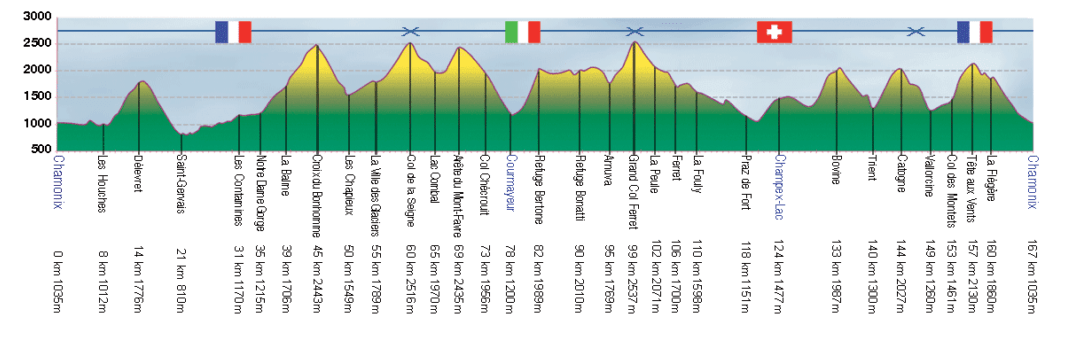
UTMB 108.1-mile race course map.
Most important course specific knowledge to know about the race

The last big section from Col des Montets to La Flégère is tough! You’re met with steep, big rocks, an up-and-down and then another long up, before you finally get to the last big up, which is a ski slope. It’s plain tough at this point in the race, so be ready for it!

Also, to me, that climb out of Trient is just a beast! So steep for so long!

Lastly, the rocky climb once you’re out of Champex-Lac is a pain. There are so many big rocks that it’s tough to find a rhythm (plus, I had my own special suffering going on through that section which didn’t help!).

Aesthetics – Is it a pretty course?

UTMB is one of the prettiest courses I know of. I just LOVE racing in Chamonix!

Difficulty – Is it a tough course?

Yes! With a 46.5-hour cutoff to cover 108 miles and over 32,000 feet of vert, it’s an awesomely difficult race!

UTMB elevation chart with the main climbs labelled.
Organized and well run – Did it feel like a well-oiled machine or were they flying by the seat of their pants?

YES! The best in the world. While the buses and the start still need work, UTMB is the best run race out there.

Competition – Is there a strong field?

YES! Again, the best!

Logistics – Does it require a special handshake, registration a year in advance, hotels all booked? Give us the low down on the nuts and bolts of making the race happen.
Matt meeting his crew at an aid station to refuel during UTMB.

Know the game with the UTMB stones and the qualifying system. It’s not that tough to get into (as of 2025) – certainly not as hard as some people make it out to be! I got in with 4 stones via the lottery in my first attempt.

Lodging is expensive in Chamonix now. Be ready to pay up. But it’s such a great town and we love visiting each year!

Aid Stations – Standard fare or anything special to know about the aid stations in terms of what’s available or when?

If you like Euro-style aid stations, you’re good to go. Meat, cheese, bread… But for me (vegan), there isn’t much. I had gels ready at the 5 crew stops, along with Skratch carbohydrate and electrolyte drink. Otherwise, I relied on Naak waffles (cut into 1/4s – I grabbed 4-6 of them each at aid station) and Naak sports drink. I picked up some veggie broth a couple times too, but it was so hot that it took forever to drink, so I didn’t stick with that.

The hype and energy of the aid stations is awesome though!

Be warned: Les Contamines’ aid station is an absolute shit show! It’s so busy and so crazy with people because the race hasn’t spread out yet. It’s hard to find your crew, and they won’t even be allowed into the tent area until they know you’re close. Be ready for chaos there!

Weather and typical race conditions

It can be hot, it can snow, it can be everything in between. They have a hot weather required kit and a cold weather one – I’ve had both activated during my 3 times running this race. Be ready for anything!

Gear – Did you need anything special or is there anything you’d recommend for the next runner?

There is a HUGE required gear list for UTMB. I know it’s expensive, but it’s worth spending time and money to get high quality stuff. Once you have the good gear, make sure you know how to use it! Practice running with the gear in training too. Take the required gear list seriously: they do check it at couple aid stations throughout the race. This year, I had to show my 3 upper layers (cold weather year) and my emergency blanket.

Spectators – Is this a friendly course for your friends?

Yes and no. There are tons of spectators on course and it’s awesome! But it’s tough to get around as a spectator. All crew and spectators had to buy bus passes by early July this year (I didn’t do that!). Fortunately, I was able to secure passes for my crew in the final days before the race, but only for them, no one else. It’s a bit pricey for bus passes too, but my crew had a blast with it all. Summary: there are tons of people on course, but it’s also tough to get around, so plan ahead.

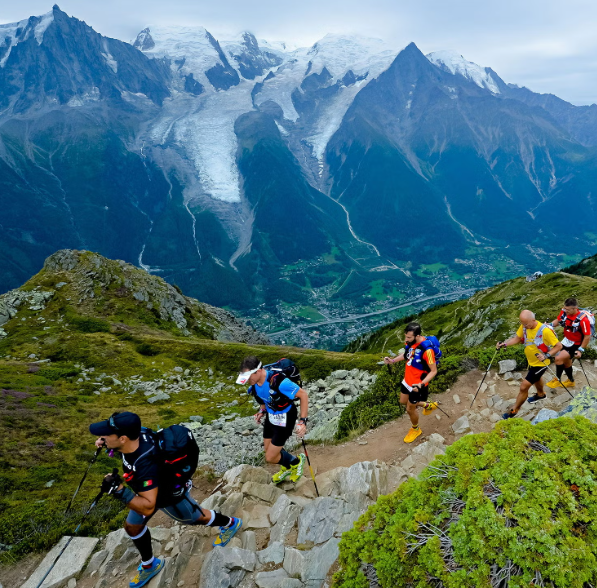
Runners on course during UTMB. PC: Pascal Tournaire/UTMB
How’s the Swag?

It’s lean: finisher vest only, no medals. People come for the race, not the swag. The t-shirt was sized large this year. The men’s small was too big for me. 🙁

The Overall Score – How many stars do you give this race and do you recommend that others run it?

10 out of 10! I love UTMB, and I will want to do it again (even though I said – multiple times – I was done with ultras mid-race!)!!

Matt Urbanski is the founder of Team RunRun, as well as a coach. He enjoys coaching self-motivated runners to optimize training time, push limits, transition to ultras, podium, BQ, and other big challenges!

New York City Marathon 101

Did you know that the 2024 New York City Marathon became the world’s largest marathon ever with 55,646 total finishers? Now you do!

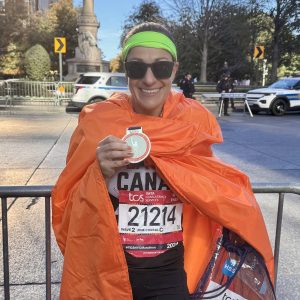
Team RunRun athlete, Laura, after crushing the New York City Marathon!

And with all the intel below, you’re on your way to your own historic NYC finish!

1. Pre-Race Zoom Call 

With the New York City (NYC) Marathon coming up soon, we’re bringing veterans and first-timers together to ask questions, share insights and build some excitement heading into race weekend!

We had a great drop-in Zoom call full of NYC Marathon racing insights, information, and tips.

Catch the replay here

2. New York City (NYC) Marathon Race Intel

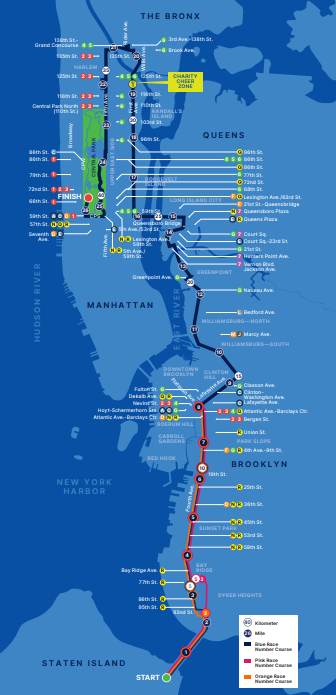
New York City Marathon course map.

Date: Sunday, November 2, 2025

Location: New York City, NY

Start: Fort Wadsworth on Staten Island, near the Verrazzano-Narrows Bridge

Finish: Central Park, between West 67th Street and West 68th Street

Course type: Point-to-point; take a look at this page for more course info

Boston Qualifier: Yes

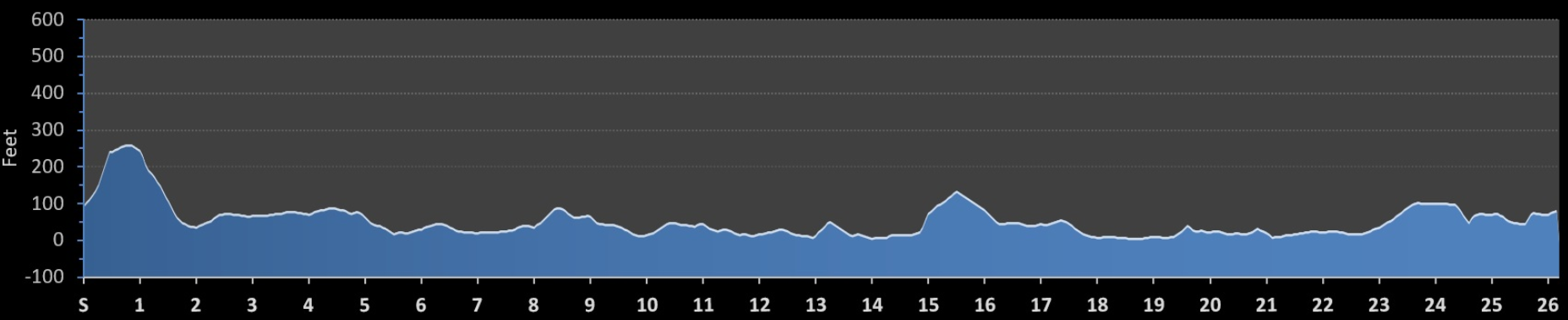
Elevation gain: 810 feet/ 246 meters

Elevation loss: 824 feet/ 251 meters

Temperature:

Average high: 57°F/ 13°C
Average low: 36° F/ 2°C

Tips from Coaches

“While crossing the Madison Avenue Bridge (Last Damn Bridge) around mile 21, move to your right for tons of encouragement and goodies to help propel you to the finish!” – Coach Dana Caruso

”The Verrazano is a suspension bridge, so there’s subtle bounce that reduces perceived exertion. Combined with the adrenaline of starting the New York City Marathon, it doesn’t feel as tough — be sure to hold back and not get too excited so early in!” – Coach Martina Nadeau

”The bridges lie and make your GPS go wild. Therefore, pace by effort, not GPS. Splits will be wrong in multiple spots, so do not panic.” – Coach Martina Nadeau

”The first mile is crowded and a lot of folks stop mid-course to take photos – try not to get too frustrated! Instead, be cautious of the runners around you to avoid twisting an ankle or short stopping.” – Coach Martina Nadeau

New York City Marathon elevation map.

3. Race Reports

Want even more intel on the New York City Marathon? Read some of the race reports from Team RunRun coaches: 

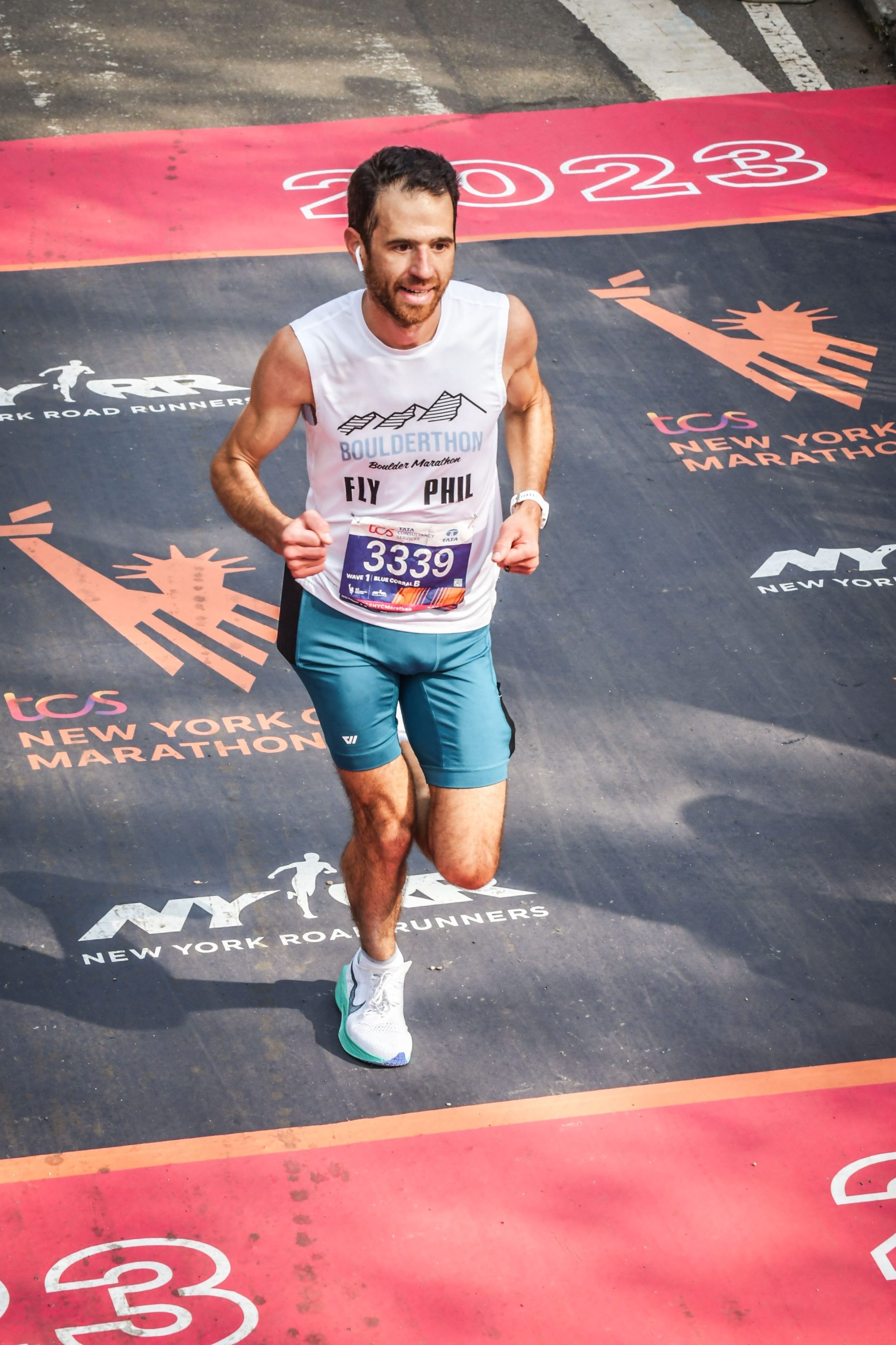
Team RunRun athlete, Phil, setting a 14-minute PR at the 2023 New York City Marathon.

NYC Marathon Race Report – Austin Meyers

NYC Marathon Race Report – Matt U

4. Shakeout Run 

Date: TBD

Time: TBD

Location: TBD

5. New York City Marathon Coaching Info

At Team RunRun, we have 100s of wonderful, experienced coaches ready to help you crush your goals, regardless of your ability, budget, or lifestyle. Specifically, for New York City Marathon race advice, here are some coaches to start with:

In addition, see the official race website here for even more information.

Above all, good luck!

Marine Corps Marathon 101

Your go-to spot for all things Marine Corps Marathon, one of the largest marathons in the US and the world, nicknamed “The People’s Marathon.” 2025 will mark the event’s 50th anniversary!

1. Pre-Race Zoom Call 

With the Marine Corps Marathon coming up soon, we’re bringing veterans and first-timers together to ask questions, share insights and build some excitement heading into race weekend!

Join our drop-in Zoom call on Tuesday, Oct. 14, 2025 at 7:00 pm EST where first-time Marine Corps runners can get answers from athletes and coaches who have run this race before. 

Zoom link: https://us02web.zoom.us/s/3883695228 

If you think you can make it, or want to submit a question in advance, email your host TRR coach Elaina Raponi at elaina@trr.chadswork.com.

Can’t make the call? We’ll record the call and share the link in the following week’s newsletter. 

2. Marine Corps Marathon Race Intel

Marine Corps Marathon course map.

Date: Sunday, October 26, 2025

Location: Arlington, Virginia

Start: Arlington, between the Pentagon and Arlington National Cemetery

Finish: U.S. Marine Corps War Memorial

Course type: Loop; take a look at this great, interactive course map

Boston Qualifier: Yes

Elevation gain: 699 feet/ 213 meters

Elevation loss: 666 feet/ 203 meters

Temperature:

Average high : 64°F/ 17°C
Average low: 46° F/ 7°C

Tips from Coaches

“Miles 20–22 (14th Street Bridge) feel endless. There are no spectators, the pavement is hot and there is little shade – prepare yourself mentally and physically for this tough stretch of the course” – Coach Leah Pan


“The finish at Iwo Jima has a sharp incline. Save a little energy to power up for your strong finish photo!” – Coach Leah Pan

”Mile 20 is tough at every race — at thMarine Corps, there’s a sneaky hill that won’t look like much but you’ll feel it. Because it’s around mile 20, this can lead many runners to think they’re bonking. Push those thoughts aside, push through this tough and quiet section of the course, and you’ll be just fine!” – Coach Nicole Thome

Marine Corps Marathon elevation map. PC: marinecorpsmarathon.com

3. Race Reports

Want even more intel on the marathon? Read some of the race reports from Team RunRun coaches: 

Marine Corps Marathon Race Report – Navindra G.

Marine Corp Marathon and 50k Race Info

4. Shakeout Run 

Date: Saturday, October 25, 2025

Time: 9:30 a.m. local time

Location: Meet in Rosslyn at the Rosslyn Gateway Park. There is street parking, and/or paid parking at nearby Upside on Moore (where you can also grab breakfast and/or coffee after the run).

Shake off the pre-race jitters and meet us for 2.5 miles at a leisurely pace! Complete this short questionnaire if you’re interested in attending so we can plan accordingly.

All paces are welcome and the more the merrier! Feel free to bring a friend, even if they’re not a Team RunRun athlete! 

5. Marine Corps Marathon Coaching Info

At Team RunRun, we have 100s of wonderful, experienced coaches ready to help you crush your goals, regardless of your ability, budget, or lifestyle. Specifically, for Marine Corps Marathon race advice, here are some coaches to start with:

In addition, see the official race website here for even more information.

Above all, good luck!

Chicago Marathon 101

Team RunRunner Michael Norton after finishing the 2024 marathon.

Your go-to spot for all things Bank of America Chicago Marathon, one of the fastest Abbott World Marathon Majors, occurring each October in the United States of America.

1. Pre-Race Zoom Call 

With Chicago coming up soon, we brought veterans and first-timers together to ask questions, share insights and build some excitement heading into race weekend!

We had a great drop-in Zoom call full of Chicago Marathon racing info and tips: Catch the replay here

2. Chicago Marathon Race Intel

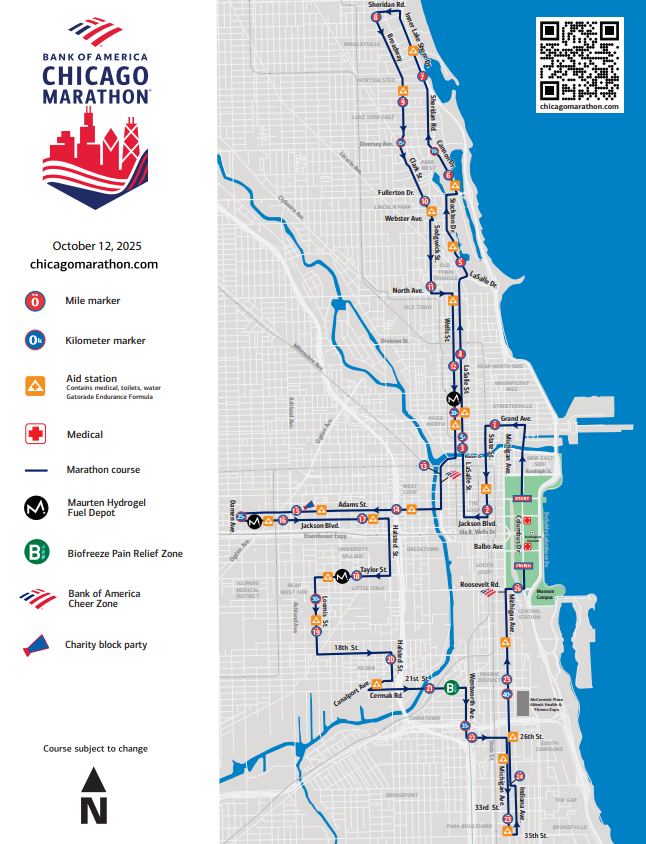
Chicago course map.
Chicago course map.

Date: Sunday, October 12, 2025

Location: Chicago, USA

Start: Grant Park

Finish: Grant Park

Course type: Loop; undeniably fast and flat!

Boston Qualifier: Yes

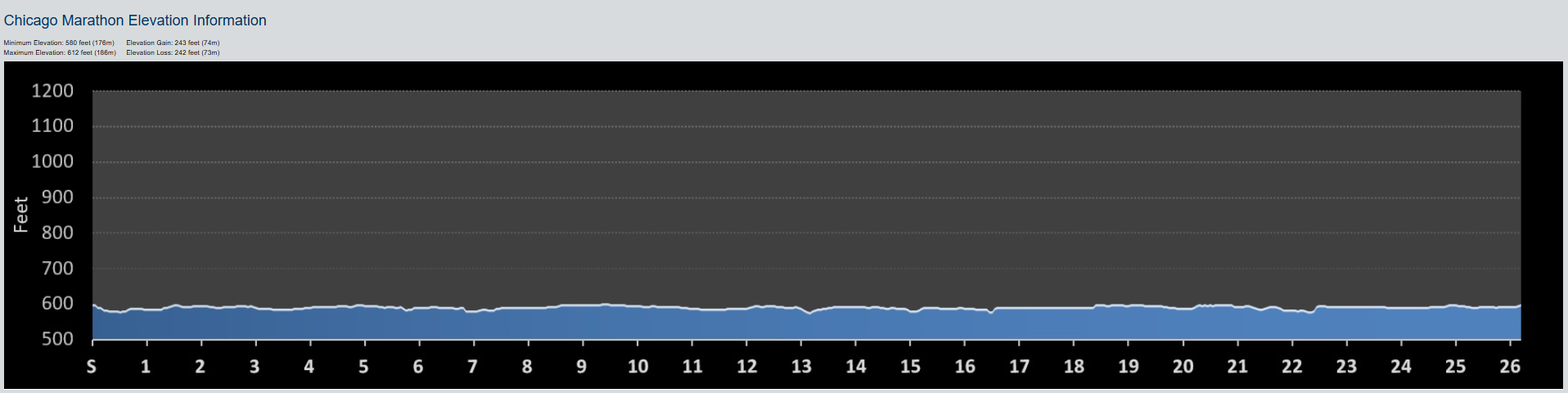
Elevation gain: 243 feet/ 74 meters

Elevation loss: 242 feet/ 73 meters

Temperature:

Average high : 64°F/ 17°C
Average low: 46° F/ 7°C

Tips from Coaches

”Enjoy the final stretch down Columbus Drive. In any case, soak it all in!” – Coach Christina Mather

Chicago Marathon elevation map. PC: findmymarathon.com

3. Race Reports

Want even more intel on the marathon? Read some of the race reports from Team RunRun coaches: 

Chicago Marathon Race Report – John Gregson

Chicago Marathon Race Report – Drew Mikhail

4. Shakeout Run 

Date: Saturday, October 11th
Time: 
9 am CST (Chicago local time)
Location: 
Millennial Park, Cloud Gate “the Bean”

All paces are welcome and the more the merrier! Feel free to bring a friend, even if they’re not a Team RunRun athlete! 

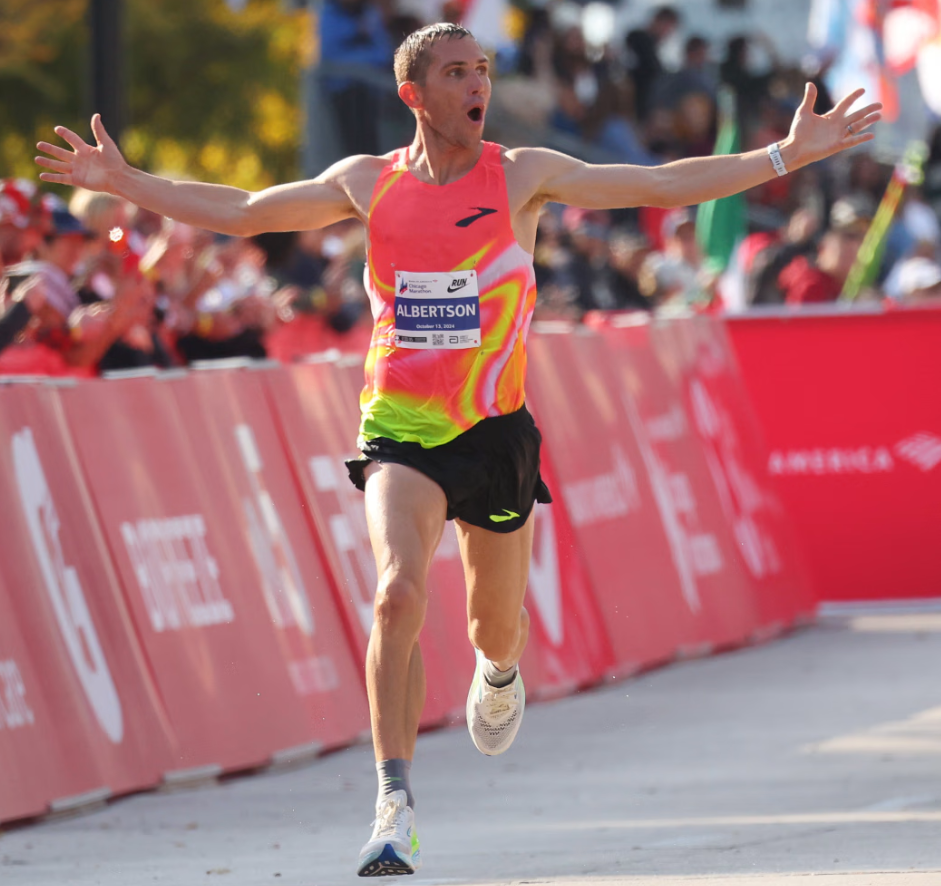
TRR Coach CJ Albertson finishing the 2024 Chicago Marathon in 7th overall and 1st American in a time of 2:08:17! PC: Michael Reaves/ Getty Images

5. Chicago Marathon Coaching Info

At Team RunRun, we have 100s of wonderful, experienced coaches ready to help you crush your goals, regardless of your ability, budget, or lifestyle. Specifically, for Chicago race advice, here are some coaches to start with:

In addition, see the official race website here for even more information.

Above all, good luck!

Berlin Marathon 101

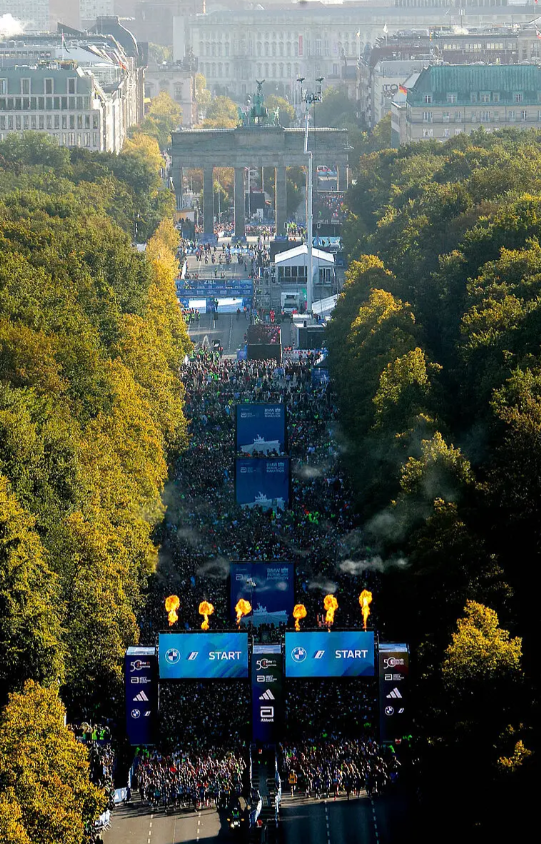
2024 race start. PC: SCC Events

Your go-to spot for all things Berlin Marathon, one of the fastest Abbott World Marathon Majors, occurring each September in Germany.

1. Pre-Race Zoom Call 

With the Berlin Marathon coming up soon, we’re bringing Berlin veterans and first-timers together to ask questions, share insights and build some excitement heading into race weekend!

We had a great drop-in Zoom call full of Berlin Marathon racing insights, information, and tips.

Catch the replay here and use password: J6mr^&Yi

2. Berlin Marathon Race Intel

Date: Sunday, September 21, 2025

Location: Berlin, Germany

Start: Straße des 17, between the Brandenburg Gate and the “Kleiner Stern”

Finish: Straße des 17, just after the Brandenburg Gate

Course type: Loop; undeniably fast and flat!

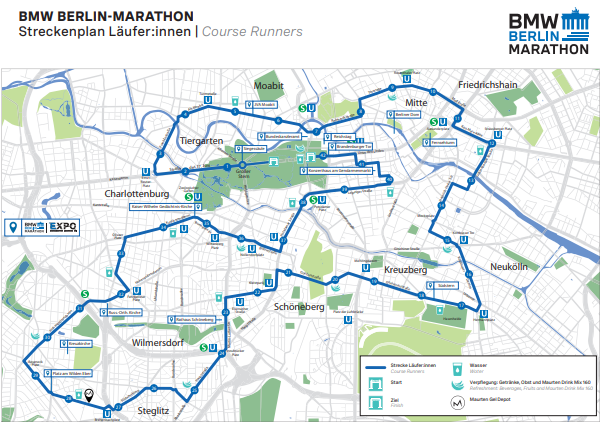
Berlin Marathon course map.

Boston Qualifier: Yes

Elevation gain: 241 feet/ 73 meters

Elevation loss: 260 feet/ 79 meters

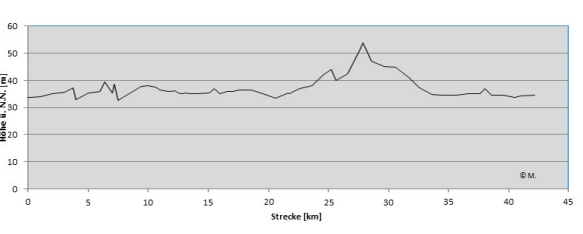
Berlin Marathon elevation map.

Temperature:

Average high : 63°F/ 17°C
Average low: 47° F/ 8°C

Tips from Coaches:

“Like most Majors, it’s a crowded race. Unlike many Majors, they don’t do a great job of enforcing waves/corrals. For that reason, you’ll want to manage expectations for the first couple of miles. Take it easy, stay calm and know that things will ‘settle in’ after the first 5k or so.” – Coach Nicole Thome

”There is a decent walk from the gate to the start corral, so allow for plenty of time!” – Coach Heather Gutekunst

”Remember, the Berlin Marathon paints a blue line on the road to mark the tangents (the shortest possible route) of the course, so follow that for an “easier” route!” – Coach Vivian Vassall

”You’ll feel the urge to pick up the pace as soon as the Brandenburg Gate comes into your view (and you’ll notice other runners doing so), but know that the actual finish line is 400m past the gate!” – Coach Vivian Vassall

3. Race Reports

Want even more intel on the Berlin Marathon? Read some of the race reports from Team RunRun coaches: 

Berlin Marathon Race Report – Matt Urbanski

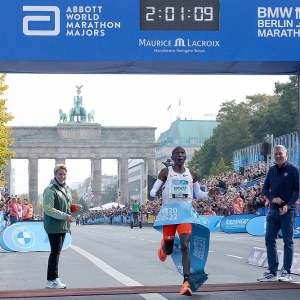
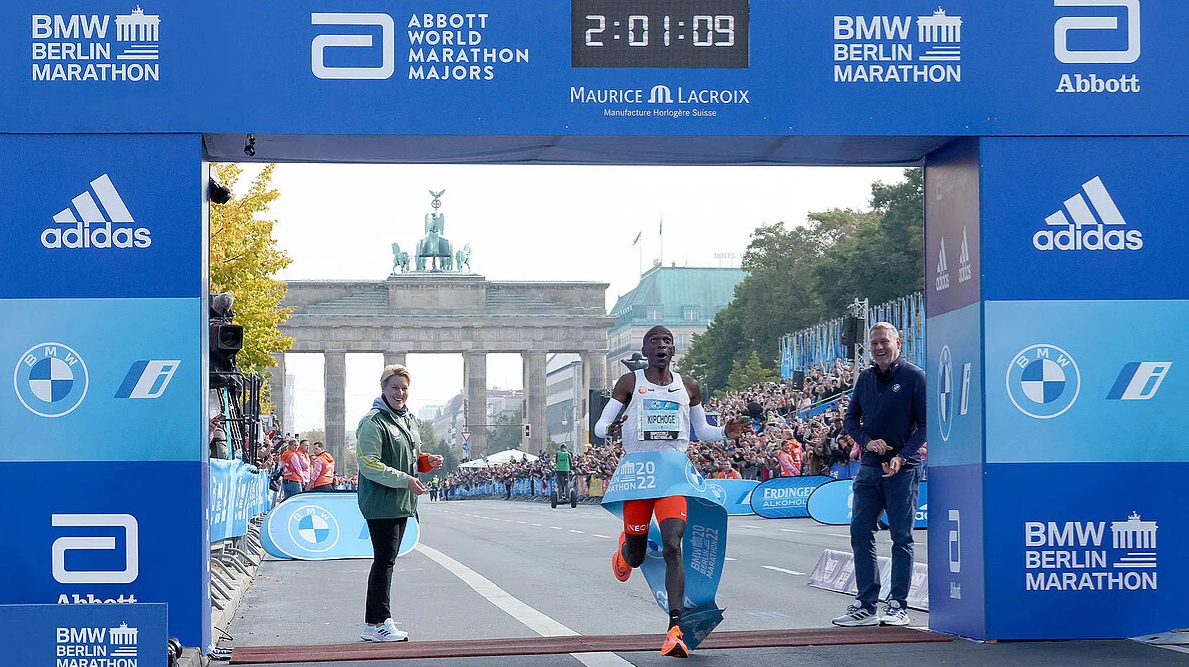
Eliud Kipchoge winning with a new World Record at the 2022 BMW Berlin Marathon! PC: SCC Events

4. Shakeout Run 

Date: TBD
Time:
TBD
Location: 
TBD

All paces are welcome and the more the merrier! Feel free to bring a friend, even if they’re not a Team RunRun athlete! 

5. Berlin Marathon Coaching Info

At Team RunRun, we have 100s of wonderful, experienced coaches ready to help you crush your goals, regardless of your ability, budget, or lifestyle. For Berlin Marathon-specific advice, here are some coaches to start with:

Above all, good luck!

Hardrock 100 Mile Endurance Run Race Report

For a thoughtful, more detailed write-up of Dandelion’s Hardrock 100 Mile race experience, from start to finish, check out “Hardrock 100: TRR Coach Dandelion’s Race Rundown“. You’ll read how her mental and physical strength allowed her to endure a myriad of challenges and still finish smiling!

TRR Coach Dandelion Dilluvio-Scott finishing the Hardrock 100 Mile Endurance Run. PC: Andrew Podbielski

Race: Hardrock 100 Mile Endurance Run

Runner: Team RunRun Coach Dandelion Dilluvio-Scott

Race Date: 07/11/2025

Location: Silverton, CO

Result: 47:03:41; 104th Place; 17th Female

3 Bests – What aspects of the race did you like the most?
  1. Extreme mountain environment: With a high point of 14,048 feet and an average elevation of 11,000 feet, the Hardrock 100 Mile Endurance Run course is the definition of a high alpine setting. As an athlete who lives in the Wyoming Rockies and trains high, I am fascinated by altitude. I am also highly drawn to races with rough and rugged terrain. One of my favorite puzzles to solve is how to adapt and move with these kinds of mountain environments.
  2. The lure: There is something captivating and pleasantly intimidating about running a race that less than 2,000 people have completed in its 30 runnings!
  3. Handies Peak: Ascending to the summit of a 14’er (a mountain with a peak above 14,000-foot) in the middle of a 100-mile race is so uniquely special!
Not so much – Aspects of the race that didn’t do it for you

Nothing!

Weird factor – What’s the weirdest thing about this race?
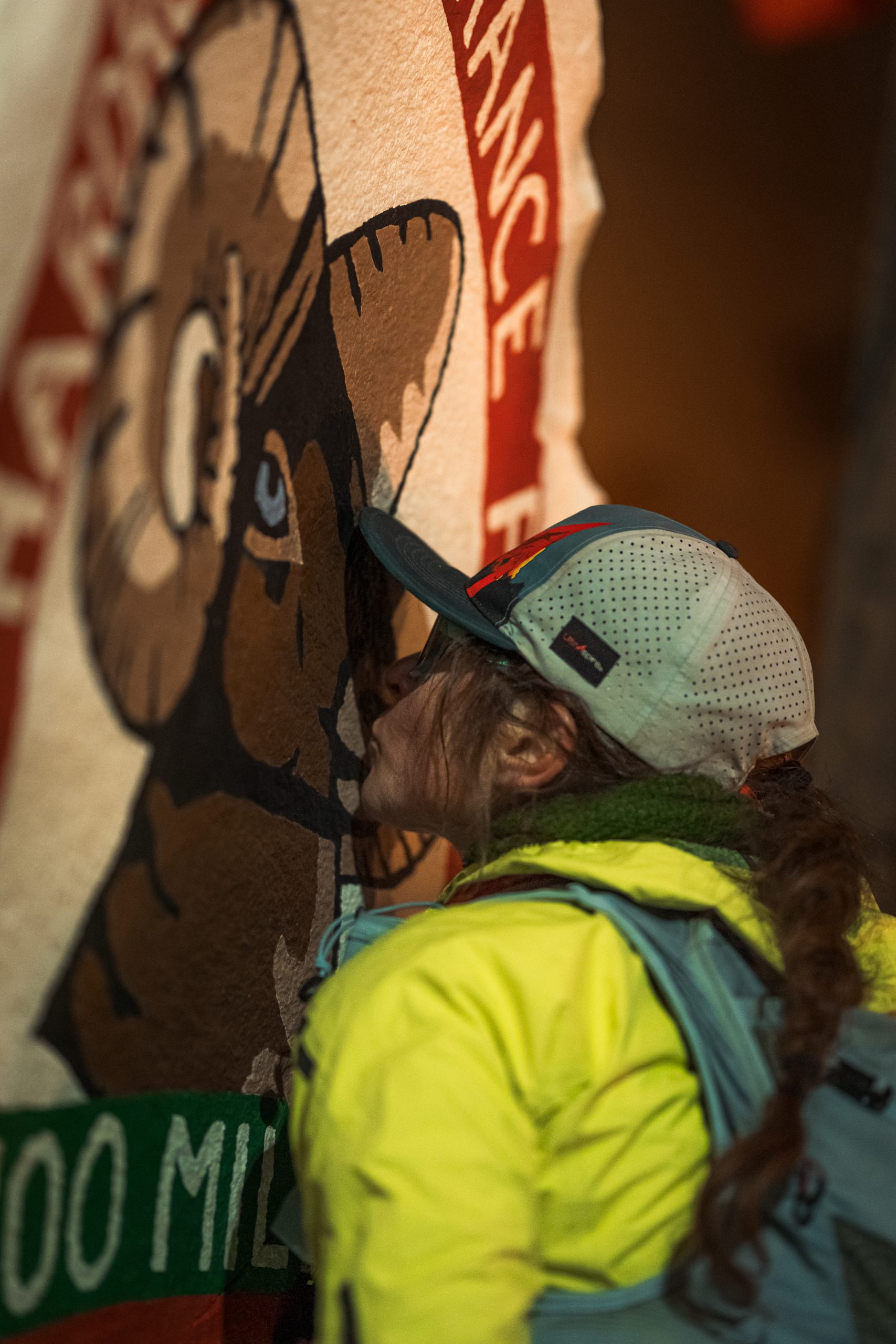
Kissing “the rock” at the finish is likely the most delightfully weird quirk of Hardrock! Another unique factor is that the race alternates between going clockwise and counter-clockwise each year. You’re not a “True Hardrocker” unless you have gone both directions.
Highlights of your race – What did you do well and enjoy about your race in particular?

One of the biggest highlights of Hardrock for me was how strong and smooth the first half felt. I was hitting my paces, my fueling was spot on, and I was genuinely enjoying myself out there. Climbing Handies Peak with a couple of other runners was probably my favorite moment—we worked together really well, and being on top of a 14er mid-race with that view was just unforgettable.

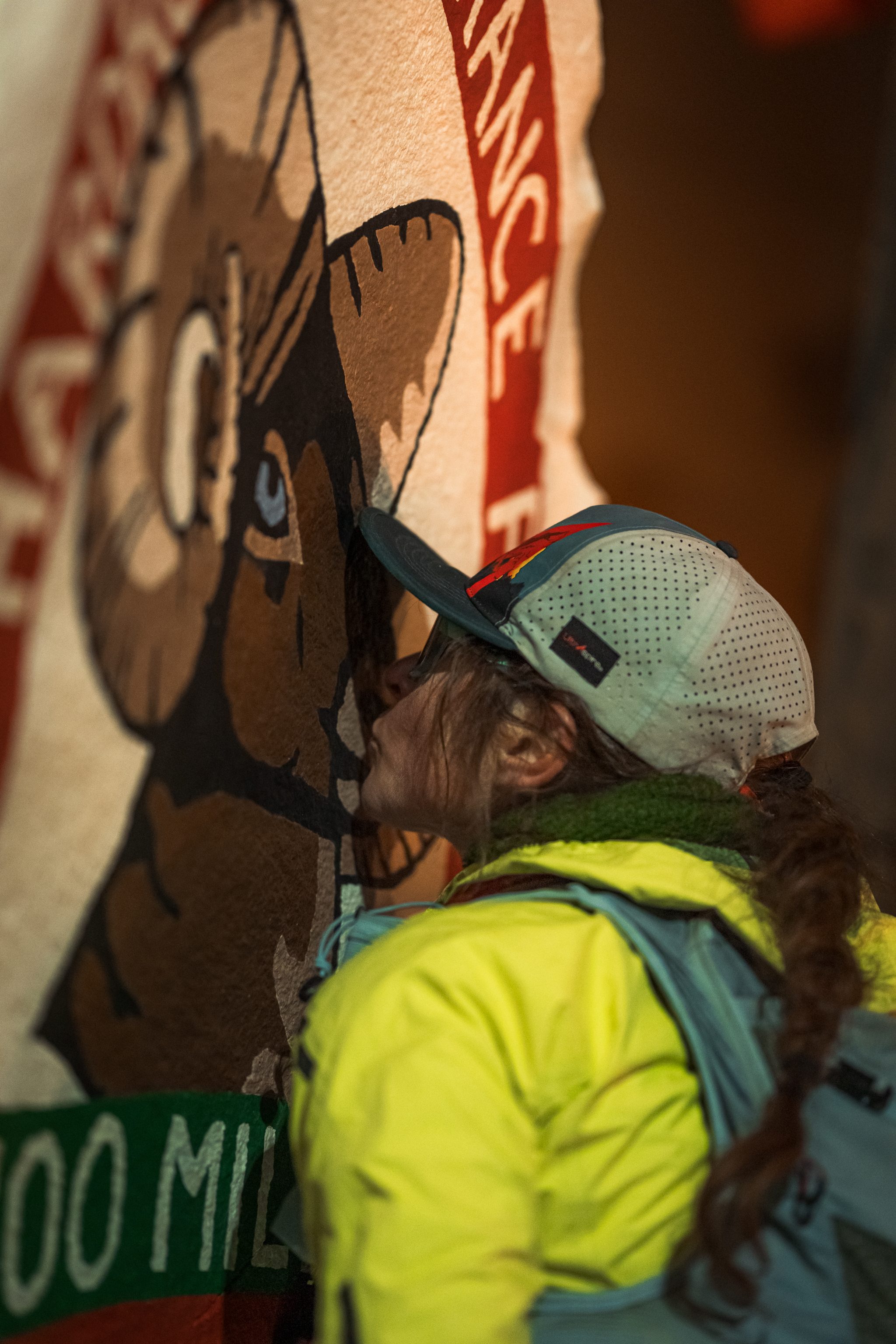
Dandelion kissing the infamous rock at the finish line. PC: Travis McWhorter

What made this race extra special, though, was how much I actually took it in. Usually in races I’m so focused on execution that I barely notice what’s around me. But during Hardrock, I made sure to stop for a second here and there to really appreciate the San Juans—the wildflowers, the ridgelines, the stillness. It felt like I was part of something much bigger.

I also feel proud of how I handled the second half when things got rough. My nutrition fell apart, and the heat and altitude started hitting hard. I had a moment where I broke down crying, but I didn’t let it derail me. My pacers were incredible, and once I got it out of my system, I reset, dug deep, and just kept going. That emotional turnaround—choosing to keep moving forward when it got really hard—is something I’ll carry with me for a long time.

More than anything, I loved the connection I felt: with the mountains, my crew, and even with myself. It was one of those experiences that shifts something inside you.

Lessons for others – Share your pro-tips on the race to help the next runner

Don’t think of each alpine running variable individually (exposure, weather, intensity, attitude, technical terrain, etc.). Instead consider how they might compound. For example, I live at altitude and sleep in an altitude tent, but I still struggled at elevation later in the event because of how the elements combined.

I also recommend working with a team of professionals while training for a rare opportunity event like the Hardrock 100 Mile. I believe that having a coach, in addition to a running specific physical therapist and sports chiropractor, allowed me to stay healthy and endure the massive training load this event required.

Finally, if you are running supported, choose crew and pacers you can 10,000% trust with the right mix of personalities. After I gave my team a pre-race orientation, I never thought about it again. I knew with absolutely certainly that they would carry out my plan and also make the appropriate changes when necessary. You don’t want to wonder if your team will have the right drink mixed for you upon your arrival while you’re climbing Handies!

Lessons you learned that will help you next time around

Be prepared to troubleshoot things that have never happened to you before. I never get GI distress… and yet I did big time at Hardrock!

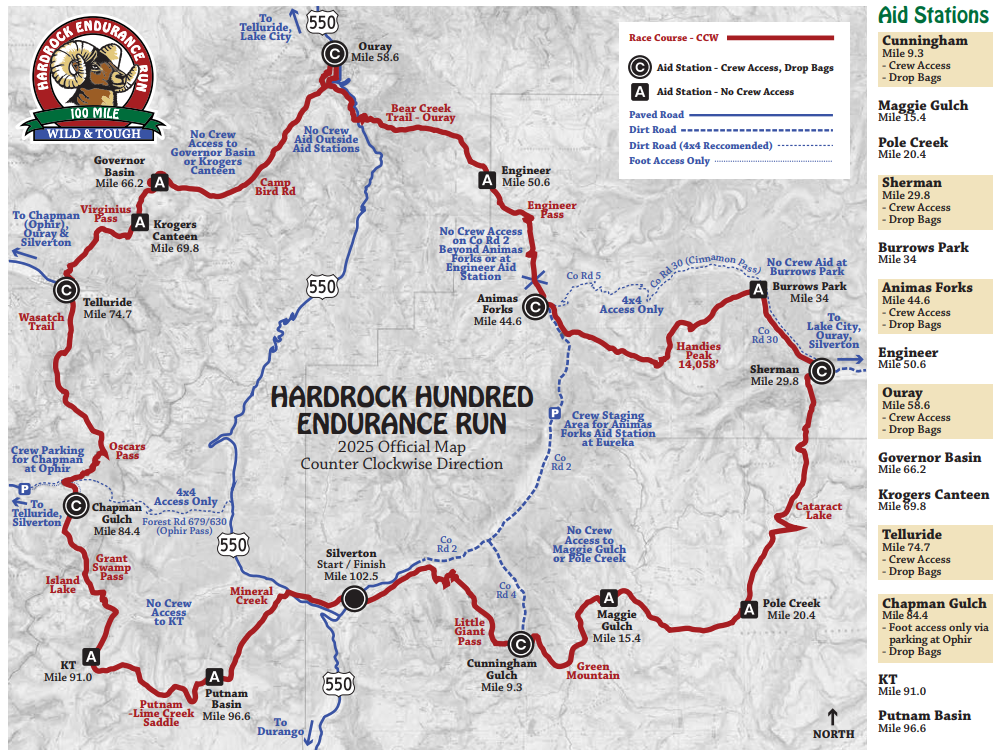
Hardrock 100 course map.
Most important course specific knowledge to know about the race

A lot of focus is on the 33,000ft of uphill…. but you also have to descend the same amount! Practice your downhill technique and train for the eccentric loading.

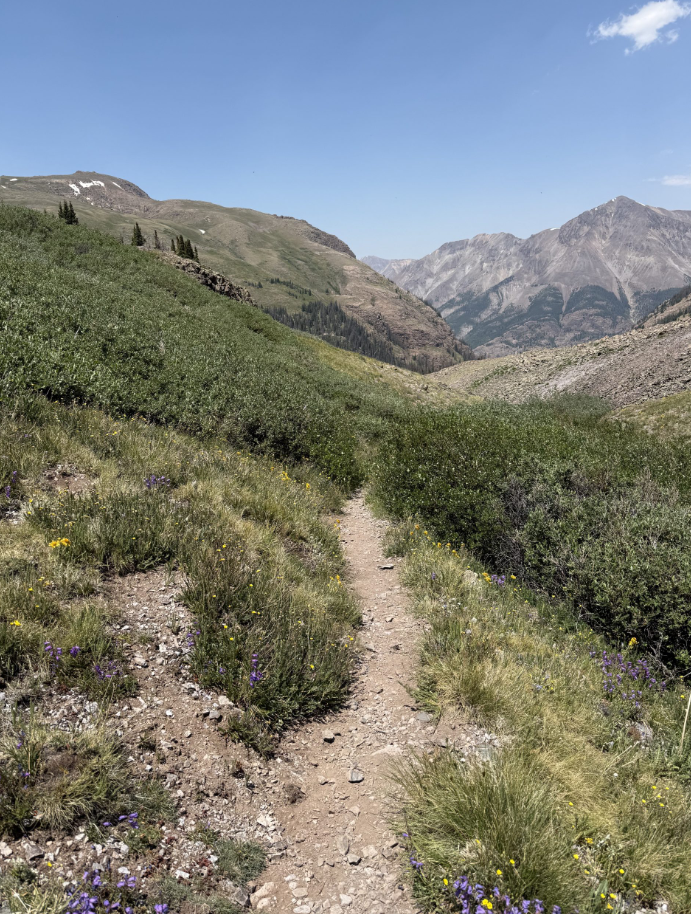
Views of the beautiful Hardrock 100 Mile course.
Aesthetics – Is it a pretty course?

Imagine rugged, snowcapped mountains towering into the sky. Majestic sunsets/rises. Unique and colorful geology. Florescent wildflower meadows. Cascading waterfalls. Shimmering alpine lakes… yep it was pretty!

Difficulty – Is it a tough course?

YES! It was indeed both wild and tough, in addition to being hard and rocky! The terrain, exposure, elements, steep grades, and vert/descent are all huge undertakings on their own! It’s not the individual difficulties, but how they compound throughout 100 miles.

Organized and well run – Did it feel like a well-oiled machine or were they flying by the seat of their pants?

The Hardrock 100 Mile Endurance Run is a tremendously well-oiled machine! The care and attention to detail to ensure this event is a unique and remarkable experience for every runner present was unmatched. The check in process was seamless. Trail marking was exceptional. And, most of all, the volunteers at every aid station were knowledgeable, full of energy, and went above and beyond the call of duty. One thing that stands out is when I arrived at Sherman, I was directed to a volunteer who already had my drop bag items laid out on a table. She then proceeded to take care of anything I needed. My own personal volunteer! I’ve never encountered anything like it before. Mind blowing!

Competition – Is there a strong field?

YES! One of the strongest fields I have ever had the pleasure to race with!

Logistics – Does it require a special handshake, registration a year in advance, hotels all booked? Give us the low down on the nuts and bolts of making the race happen.

The Hardrock 100 Mile Endurance Run is a lottery race and you must run a qualifying race every 2 years to be considered. I was lucky enough to get into the race after only 2 years of applying, but there are folks who wait 10+ years! The process is nuanced, and more in-depth information can be found here.

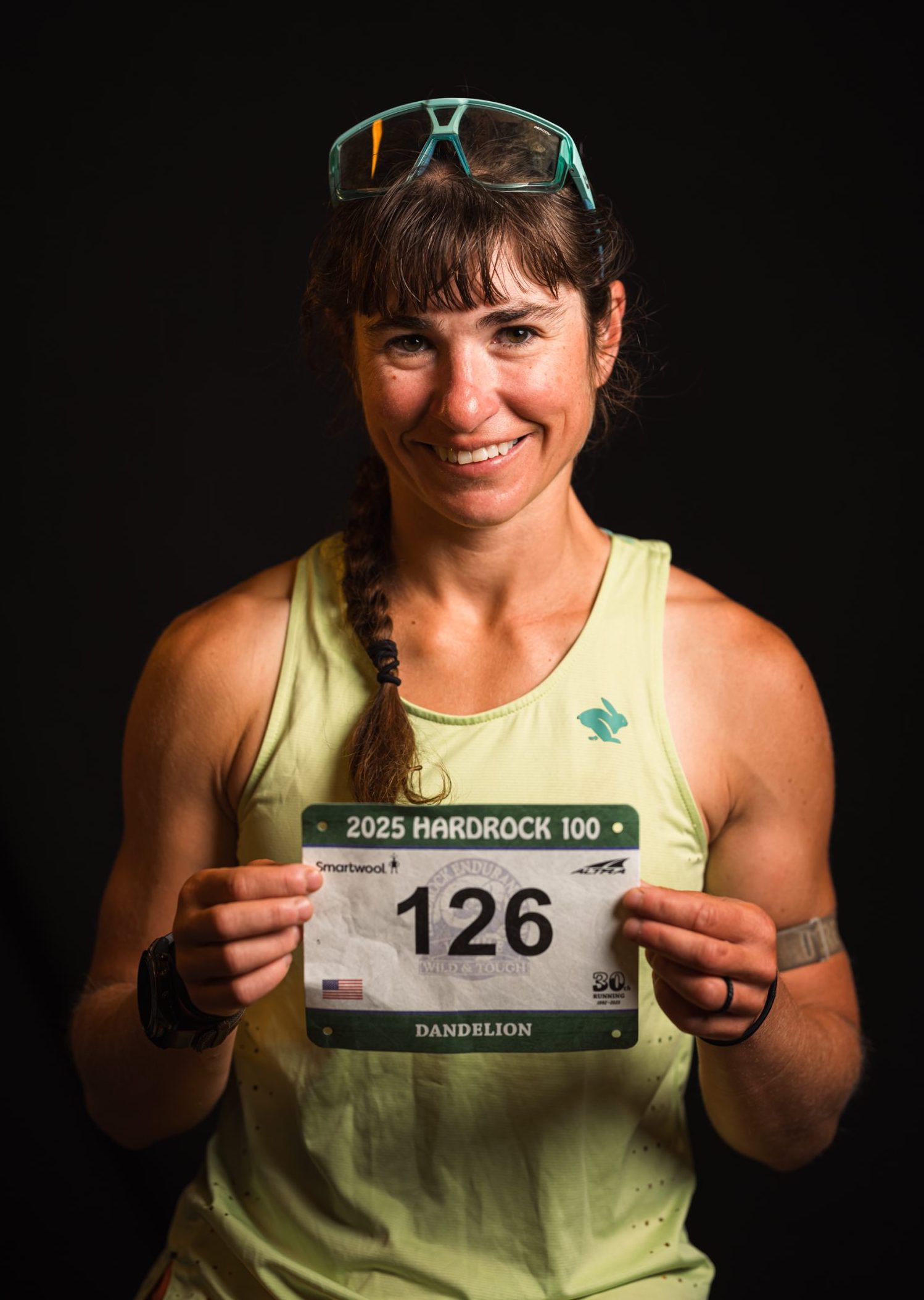
Dandelion pre-race holding her Hardrock 100 bib. PC: Travis McWhorter
Aid Stations – Standard fare or anything special to know about the aid stations in terms of what’s available or when?

The aid stations have the standard fare like PB&J, quesadillas, fruit, chips, cookies, broth, candy, etc. This year, engineered nutrition/hydration was provided by Tailwind and Maurten. Most aid stations also have a “special offering” that is unique to them: pizza, homemade rice krispies, perogies, etc.

Weather and typical race conditions

This is the San Juans! Anything and everything can happen. This year, there was smoke during the beginning of the race that cleared. Then it was hot during the day (70-85F) and mildly chilly at night (40-50F), which was unusual. Most years see some kind of electric event along with rain, hail or snow …or all of it! It is also common to experience very hot days followed by nights below freezing.

Gear – Did you need anything special or is there anything you’d recommend for the next runner?

Poles and backup poles. I would not want to do this race without them! Extra electrolytes come to mind as well, because at altitude you need so much more! Also, sun protection, rain and cold weather gear.

Spectators – Is this a friendly course for your friends?

The course passes though the towns of Silverton, Ouray and Telluride which are all very accessible for spectators. Other aid stations require a 4×4 or ATV.

How’s the Swag?

So much swag! I left check in with three shirts! Additionally, there were tables filled with items for purchase. And, of course, there’s the awesome Hardrock 100 Mile finishers’ buckle!

The Overall Score – How many stars do you give this race and do you recommend that others run it?

10,000 out of 10! This race is custom made for high alpine mountain runners who want to challenge themselves like never before and witness surreal beauty.

Dandelion Dilluvio-Scott is a multisport outdoor athlete, ultra-runner and certified coach. She is passionate about collaborating with driven athletes who love to explore, train and play outside.
Hardrock 100: TRR Coach Dandelion’s Race Rundown

Team RunRun Coach Dandelion Dilluvio-Scott finished the 2025 Hardrock 100 Mile Endurance Run in 47 hours, 3 minutes, and 41 seconds, less than 1 hour under the 48-hour time limit. Far from the 33-hour finish she’d trained for, Dandelion’s mental and physical strength allowed her to endure a myriad of challenges and still finish smiling. Alongside her traditional race recap, which can be found here, Dandelion details her race experience beautifully below.

“It Was The Best of Times; It Was The Worst of Times”

Dandelion at the finish of the Hardrock 100. PC: Travis McWhorter
Dandelion at the finish of the Hardrock 100. PC: Andrew Podbielski.

The quote from Charles Dickens’ A Tale of Two Cities perfectly sums up my Hardrock 100 Mile Endurance Run experience: “It was the best of times; it was the worst of times.” But let’s start from the beginning.

Lottery Luck: I’m Racing the Hardrock 100!

On December 1, 2024, I returned from a long desert run to a flood of congratulatory texts. I couldn’t fathom what I’d done to earn so much praise—until I opened my inbox and saw the UltraSignUp receipt. Against all odds, I’d gotten into the Hardrock 100 with only two tickets! In an instant, my 2025 plans were rearranged, and training for high-level mountain running became my mission. It would not be an exaggeration to say that the preparation
involved copious amounts of blood, sweat and tears! The volume of running, hiking, strength work, vert, cross-training, and corrective exercises was massive. Countless talks with my coach, visits to my chiropractor, and physical therapy sessions kept me on track and my body tuned for the intense workload. And then, abruptly, it was time to taper.

The Final Countdown

By the time I arrived in Silverton, Colorado, I felt like a caged tiger—I just wanted to GO! Thankfully, my team kept me in check: easy shakeout run, race check-in, gear review, nutrition planning, crew meeting, bedtime.

Surprisingly, I slept well the night before the race. There was a palpable sense of calm and tranquility. I trusted my crew, my training, and my experience with the distance. Yet I also recognized I was stepping into the great unknown—part of what made it so exhilarating—and I deeply respected the course. I felt confident I had done everything I could to prepare. Now it was time to execute the plan, adapt to the inevitable problems, and see what unfolded.

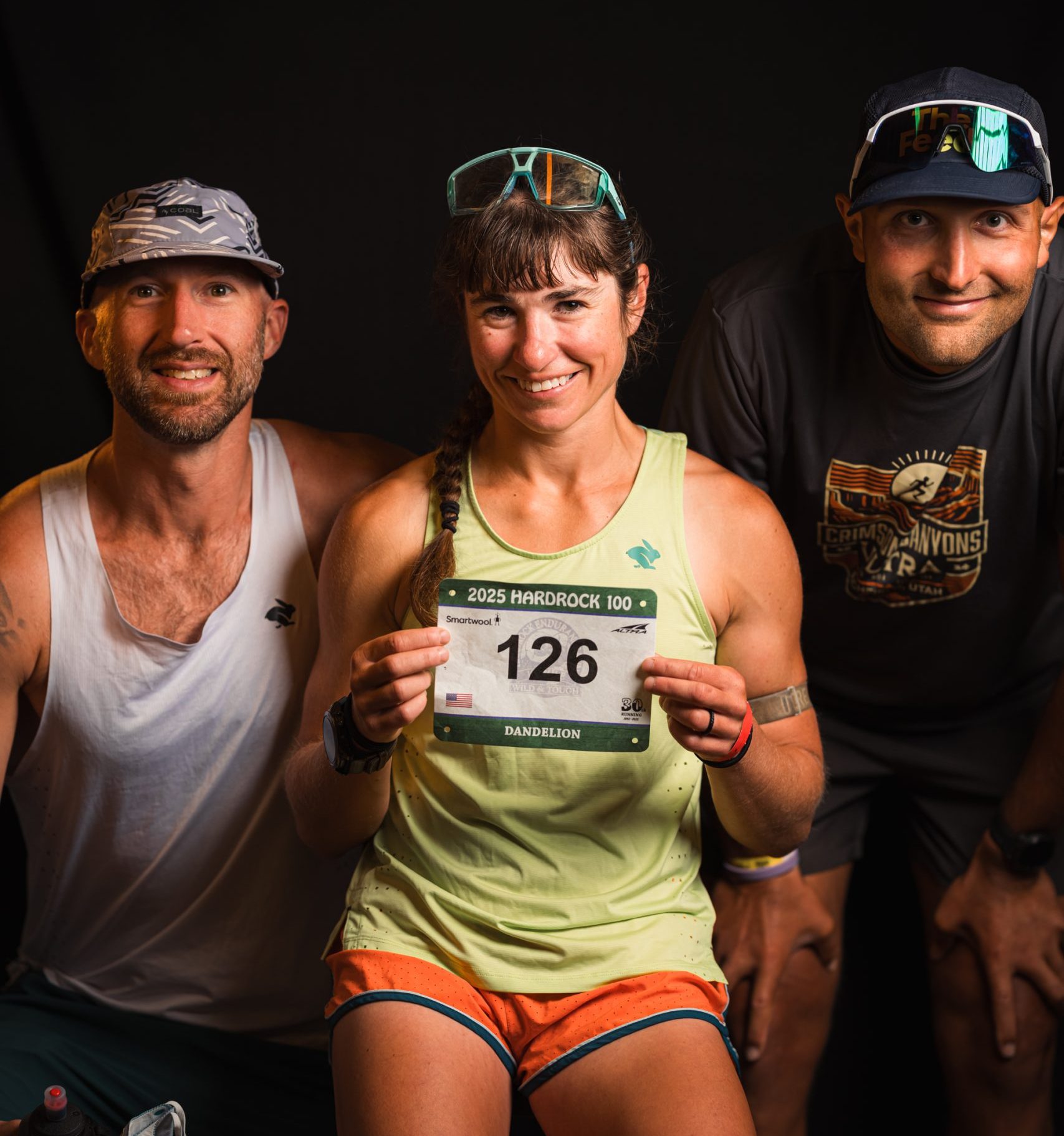
Dandelion pre-race holding her Hardrock 100 bib with her crew. PC: Travis McWhorter
Dandelion pre-race holding her Hardrock 100 bib with her pacers. PC: Travis McWhorter

I trained not just to finish but to perform. I wasn’t under any illusion I’d outrun the elite-level runners on the start list, but if everything went well, I believed I could finish in 33–35 hours. On race morning, Dale Garland called us to the corral, and I found myself lining up right next to legends Katie Schide and Zach Miller, two of the best runners in the world. It was surreal! The countdown began—and we were off, galloping down the road toward the mountains.

And We’re Off on the Hardrock 100!

As expected, everyone shot out hot. We were running Hardrock! I settled into my pacing strategy as the wide streets of Silverton gave way to trails, letting the field spread out. This was not the time to race—this was time to chase, savor the moment, and practice restraint. Meanwhile, smoke from wildfires drifted in overnight, and the air smelled of ash. Thankfully, as we climbed higher, the smoke thinned and finally disappeared, revealing astoundingly beautiful 360-degree views.

At the Cunningham Aid Station, my husband met me and guided me to Luke and Andrew. Vest swap. Food. Protein shake. NASCAR pit crew style—I was out of there. I wouldn’t see my team again for about 50K. (You can better understand the names and layout along the course of the aid stations here.)

50 Miles to Remember (Positively) 

Running ultras without crew support is my norm, so the solo 50K felt comfortable. The section to Burrows Aid Station included steep climbs and the most “rolly” terrain of the course. I trotted along, cooling off in creeks and snow patches as midday heat rose, bouncing in and out of a bubble of runners. Sometimes we chatted, other times we ran in shared silence, awestruck by vast wildflower meadows and stunning vistas. In most races, I barely notice scenery, absorbed in execution, but here I made sure to soak in the San Juans before returning to my race strategy. My fueling, salt, and hydration were on point. Everything was going to plan, and I was having a blast playing in the mountains.

After Burrows, the main objective loomed: Handies Peak—the course’s high point at 14,048 feet. I teamed up with two athletes on the ascent, and together we made efficient work of the climb. Between the great company and tagging a 14er summit mid-race, this was easily my favorite section. Nothing compares to standing atop a 14er during Hardrock!

TRR Coach Dandelion Dilluvio-Scott enjoying the beautiful trails and scenery. PC: Travis McWhorter

Steep ascents are followed by steep descents, and this one felt endless but offered incredible scenery. At sunset, I rolled into Animas Forks Aid, reuniting with my crew. Toenail blister lanced, shoes swapped. I tried eating solid food but struggled to swallow—it all felt like sandpaper. Still, I could handle gels and liquids, so I didn’t overthink it.

Night #1: The Unravelling

Luke joined me for pacing duty, and we climbed toward Engineer Pass. Though we were moving efficiently, I observed that my breathing was getting more labored compared to earlier in the day. Then, at the next aid station, I realized solid food was no longer an option, and gels were becoming repulsive. Luke insisted on consistent gel consumption, monitoring each one to ensure I finished it. I was doing my best to keep calories coming in, but I knew I was starting to fall behind. The gorge descending into Ouray was electrifying at night! A narrow and technical trail beside a dark drop-off into nothing. Luckily, my background as an alpinist helped me feel comfortable with the mystery exposure!

Andrew took over pacing from Ouray. The climb out of town—up a dull, washboard road—was my least favorite section. Without Andrew’s engaging stories, those miles would’ve been excruciatingly monotonous. Higher up, the nearly full moon illuminated the craggy peaks, transforming the environment into something magical. By then, I couldn’t eat gels while walking anymore—the simple multitasking spiked my heart rate. Hilariously, consuming one now involved soft whimpers. Even in the moment, I saw the humor in it! Yet, despite everything, I kept drinking fluids (including liquid calories) and electrolytes never feeling dehydrated.

Hardrock Survival Tools: Consistent Training, Muscle Memory, and 5* Crew/Pacers!

Dandelion on course and still smiling during the Hardrock 100. PC: Travis McWhorter

As dawn broke, we climbed steep singletrack. Andrew watched carefully for signs of me sleepwalking off the trail. Though utterly exhausted, I stayed sure-footed. Nearing Kroger’s Canteen aid station, we climbed a 50-degree icy snow slope with a handline for good measure—like boot-packing a glacier with a full backcountry ski pack. Using the “rest step” from mountaineering, I reached Hardrock’s most remote aid station. Andrew remarked how impressed he was that my technical skills were intact after so many miles—a testament to years of ingrained muscle memory, even if I was moving slowly.

A brief stop at Kroger’s brought a few pierogis and broth—solid food was finally tolerable again! We descended into sun-drenched talus, making our way to Telluride. The sun felt revitalizing, but the night had taken a heavy toll. In Telluride, my legs were massaged, and I devoured solid calories, feeling almost normal again.

Andrew, continuing his marathon-long, 10,000 feet-vert pacing shift, set out with me for a remote 10-mile stretch. The first 1,000 feet of climbing went well, but then my body stopped responding. Whether from heat, steepness, or both, my pace collapsed. Concerned about heat illness, Andrew had me pause in the shade regularly and dunk my hat in cold streams. I continued forcing down revolting gels under Andrew’s watchful eye.

A Plan is Great… Until You Get Punched in the (Metaphorical) Face

The low calories overnight had triggered a cascade I couldn’t reverse. Hardrock is unforgiving: without sufficient calories, my body couldn’t regulate itself or cope with heat and altitude as I had the day before. Even though I live and train at altitude, slept in an altitude tent, and did a sauna protocol pre-race, the single issue of being unable to consume fuel overnight dominated.
The early wildfire smoke may have also contributed, but it likely wasn’t the main issue.

Negative thoughts crept in, swirling with imposter syndrome. I knew I was slipping behind, and I questioned if I belonged here. When we paused at yet another creek, I burst into tears.

Dandelion moving through an aid station. PC: Travis McWhorter

Andrew calmly put his arm around me and asked, “Are you going to finish this?”
“Yes,” I replied through tears.

And just like that, the pity party ended. I needed the emotional release, capped with self-affirmation. I started back up the hill so fast I knocked the wind out of myself—Andrew had to grab my vest to slow me down! Though I couldn’t push hard, my mood soared and determination set in.

Pacer Swap and Into Night #2

After an eternity of climbing, we reached a blustery ridge, then descended a steep talus slope. The San Juans were relentless. At Chapman aid station, I reunited with my crew and serendipitously crossed paths with Kat, a friend from Wy’east Wonder 50M. I ate, got a brief massage, and took a five-minute nap before following Luke up the next wooded trail.

At first, I felt decent, but soon a vague calf tightness escalated into searing pain. Luke, patient but firm, reminded me I had to maintain at least 2 mph on flats and descents to finish. Inside, I thought, Are you crazy? The downs are harder than the ups—and I can’t believe I’m heading into a second night! But I didn’t argue. He was right, and I willed myself to move.

Emerging from the forest, we slogged up ever-steepening talus and scree. I was zoning in and out of consciousness but recognized Grand Swamp Pass—infamously difficult and something I’d looked forward to. I broke the remaining miles into smaller goals: “Just get to the top.” Despite calf pain, I kept moving methodically, drawing on mountaineering experience.

To DNF or Not To DNF the Hardrock 100? 

We topped Grand Swamp Pass at sunset, catching the course’s most iconic panorama. One landmark down, next goal: KT Aid Station. I don’t remember much of the descent. At KT, Luke asked what I wanted to do, saying he believed I could finish but would support any choice. The aid station volunteers kindly insisted I still had time. I wasn’t worried about cutoffs—I was evaluating my calf. My personal rule is never to quit because it’s hard or performance isn’t as hoped, but I won’t risk injury that sidelines me for weeks or puts me in danger.

Dandelion kissing the infamous rock at the Hardrock 100 finish line. PC: Travis McWhorter

I recalled my husband mentioning a knot during the earlier leg massage, which reassured me. “Let’s go one more mile,” I said—classic!

We got up and headed out. I knew Luke wouldn’t hesitate to be a drill sergeant,
so I decided to not give him a chance to bark orders! Each step was agony and every
rock I stubbed a toe on felt like a knife. I didn’t try to push the pain aside anymore.
Instead, I embraced it. A mile went by… then another. My calf didn’t get worse so I
settled on it being a wicked knot and kept trudging. The truth is, when I left KT Aid
Station I had completely committed to making it to the finish. I just couldn’t mentally handle
thinking about that monumental task yet. One mile seemed much more attainable.

The Final 5 Miles: Putnam to Kissing the [Hard]Rock!

False summits revealed more headlamps, but I accepted there’d be no reprieve until Silverton and pressed on. At the final aid station, Putnam, we quickly refilled bottles before heading into the last six miles. Normally, I follow my pacer, but in this instance, Luke stayed behind, gently herding me down the trail. Moving urgently, but knowing I’d make it within the time cutoff, we even managed some casual conversation, lightening the mood. The final miles flew by: crossing the river, traversing the hillside, climbing up the road, descending into Silverton, through the chute—and finally, I kissed the rock.

Hardrock 100 Post-Race Reflections

Did the race unfold as I’d hoped? Nope, not at all! But oddly, I’m not upset. It’s almost comical: my best 50 miles ever were in the same event as my worst 50 miles—endless comedic value! More importantly, races that don’t go to plan teach the greatest lessons. The grit, determination, and resilience I needed to finish were unmatched in any event I’ve done—including Cocodona 250. I’ll carry what I learned at Hardrock 100 into every future race and adventure. That holds far more value to me than a podium finish. Performance goals push me beyond perceived limits, but what I truly seek is self-discovery on the wilderness path of endurance—adapting and moving with the environment, building grit, remaining a student of the sport, and having a life-changing adventure. Hardrock delivered all that and more.

Dandelion Dilluvio-Scott is a multisport outdoor athlete, ultra-runner and certified coach. She is passionate about collaborating with driven athletes who love to explore, train and play outside.
Leadville Silver Rush 50 Run Race Report

TRR Coach Tanner Amrhien finishing the Leadville Silver Rush 50 Run. PC: Marathon FOTO

Race: Leadville Silver Rush 50 Run

Runner: TRR Coach Tanner Amrhien

Race Date: 07/12/2025

Location: Leadville, Colorado

Result: 11:28:43; 259/572 overall, 202/434 male

3 Bests – What aspects of the race did you like the most?
  1. Outstanding race organization
  2. Supportive spectators and crew 
  3. Beautiful and challenging course 
Not so much – Aspects of the race that didn’t do it for you

The whole race is at an elevation above 10,000 feet, and this was definitely a factor. Coming from Charlotte, North Carolina (basically sea level), it took about 10–12 miles before my heart rate settled into a manageable rhythm. Even after a few training runs in Colorado in the days leading up to the Silver Rush 50, there were still moments where the thin air made it tough to breathe.

Fueling was also bit tricky (which is common at high altitude). It was warm, and I didn’t feel very hungry during the race. I relied mostly on liquid calories, which worked fine until around mile 40 when I started feeling a little lightheaded. Looking back, I would have worked on eating more solid foods earlier on to help keep things balanced.

The climbs were no joke. Some sections had over 4 miles of steady uphill grades that tested the legs. If I were to do it again, I’d target more specific training spots to better simulate those long, sustained climbs.

Weird factor – What’s the weirdest thing about this race?

The Leadville Silver Rush 50 Run kicks off at the base of a snow tubing hill in downtown Leadville. As the starting gun fires, runners begin with a steep uphill climb. One of the most exciting aspects of this race is that the first male and female to reach the top earn a coveted Leadville 100 Run lottery coin, gaining them entry into that race!

Highlights of your race – What did you do well and enjoy about your race in particular?

The breathtaking views. Running through the mountains at over 10,000 feet offered some of the most stunning scenery I’ve ever experienced. The views around Leadville were truly surreal—there were moments I had to pinch myself to believe it was real. Leadville holds a special place in the ultra-running world, and I felt incredibly fortunate just to be out there running.

My crew—made up of my parents, aunt, and best friend—meant everything to me. They’re my anchor during these long endurance events, and I love sharing the energy, excitement, and sense of accomplishment with them. Being part of a community like this, with their support, is something I’ll never take for granted.

Lessons for others – Share your pro-tips on the race to help the next runner

Advice from a sea-level runner:

Coming from close to sea level, my biggest piece of advice for anyone considering the Silver Rush 50 Run is to train for elevation. If possible, spend time in Colorado—or another high-elevation area—and get in a few long runs to help your body adjust. If that’s not an option, try to arrive a few days before the race to give yourself time to acclimate.

Another important tip: be mindful of your hydration and nutrition. Hyponatremia can be a real issue out there. Not taking in enough calories or overhydrating without proper electrolytes can seriously impact your race—and cost you that strong finish you’ve trained for. Be conscious of what you’re putting into your body and make a fueling plan that works for you. Always practice with your fuel before you race to ensure it sits right in your stomach!

Leadville Silver Rush 50 Run course elevation profile.
Most important course specific knowledge to know about the race

The Silver Rush 50 course features mostly rocky roads rather than single-track trails, with plenty of climbing and power hiking. I recommend training specifically for steep uphill climbs to prepare your body for this event. Prepare to be shocked by the stunning views as well!

Aesthetics – Is it a pretty course?

This course is absolutely stunning! Throughout the race, you’ll pass through historic mining areas—especially as you near the turnaround point—and be treated to breathtaking views of the Rocky Mountains from nearly every angle. The course winds past several majestic 14,000-foot peaks, with vibrant wildflowers lining the trail. You’ll even cross a few small streams, which are perfect for cooling off by dunking your hat when the heat kicks in. I’d give the views a solid 10/10! For many, this might just be the most beautiful course they’ve ever run.

Difficulty – Is it a tough course?

The Silver Rush 50 presents a unique challenge for runners. The trail is scattered with rocks, making footing tricky for anyone who isn’t paying close attention. It’s easy to see how one wrong step could lead to a twisted ankle. Both the climbs and descents are tough and relentless, demanding not just physical stamina but serious mental grit. Because the race is an out-and-back, it can be difficult to stay in the moment—you know exactly what’s waiting for you on the return trip. Mental strength is key here. The best approach is to focus on one mile at a time and stay locked into the present.

Organized and well run – Did it feel like a well-oiled machine or were they flying by the seat of their pants?

Life Time put on outstanding events. Their strong reputation for top-notch race organization really shines throughout the entire day. From the well-stocked aid stations and energetic volunteers, to the smooth award ceremony and exciting LT100 lottery drawing, every detail reflects their passion and dedication. The course is marked with signs and ribbons on the trees, leaving no guesswork for runners. Life Time truly capture the spirit of the trail running community, uplifting the Leadville area, and leaving a lasting impression on everyone involved.

TRR Coach Tanner Amrhien during the Leadville Silver Rush 50 Run. PC: Marathon FOTO
Competition – Is there a strong field?

The Silver Rush 50 Run boasts an exceptionally competitive and stacked field across all categories, including male, female, and non-binary participants. Any Leadville 100 qualifier race will be competitive!

Logistics – Does it require a special handshake, registration a year in advance, hotels all booked? Give us the low down on the nuts and bolts of making the race happen.

Since there aren’t commercial flights into Leadville, most people fly into Denver and then rent a car for the roughly 2 hour and 15 minute drive to the Leadville area. While Leadville has some smaller hotels and motels, my crew and I chose an Airbnb in Twin Lakes, about 23 minutes away. Leadville offers a variety of dining options, but we decided to pick up groceries at a local store and prepare our own meals at the Airbnb. Race registration opens in January, right after the LT100 Run lottery results are announced. I recommend signing up as soon as registration opens, since the race tends to sell out quickly as summer approaches. Likewise, booking your lodging early is a good idea because accommodations fill up fast. The 2025 registration fee was $125: a great value for a top notch 50-mile race.

Aid Stations – Standard fare or anything special to know about the aid stations in terms of what’s available or when?

The aid stations were well-stocked with classic favorites like bananas, M&Ms, and pretzels. They also offered a variety of Skratch Labs carbohydrate mixes, Neversecond C30 gels, and Skratch Labs chews. These options were especially helpful for runners who hadn’t been able to bring all their own nutrition for the race.

Weather and typical race conditions

This year, 2025, the race started at 6 am with a crisp temperature of around 47°F. As the day went on, it warmed up to the low 70s under bright sunshine—pretty typical for Leadville this time of year. Also, it’s not uncommon to have a brief late morning/afternoon rain shower. It does not last very long and will probably feel good if you’re hot!

One key tip: don’t forget your sunscreen. At this high elevation, the sun’s intensity is stronger, so make sure to use a sunscreen that suits your skin and helps keep you cool while you run . Another thing to keep in mind is to bring ice for your crew to give you. You can pat your neck or face with it to help control your body temperature. Personally, I preferred going without a hat throughout the afternoon. I felt extremely hot wearing my hat from miles 31 to 45. If you’re determined to wear a hat the whole time, I recommend investing in a lightweight spandex hat that still provides UV protection and keeps you cool.

Gear – Did you need anything special or is there anything you’d recommend for the next runner?

I highly recommend using poles for the long uphill sections of this race, especially the climb between Stumptown and Printer Boy aid stations. That stretch features several miles of steady uphill, and poles can really help save your legs.

A runner racing on the Leadville trails with beautiful scenery in the background. PC: Life Time
Spectators – Is this a friendly course for your friends?

The aid stations were staffed with high-energy crews who were incredibly encouraging to all runners. There are shuttles available to transport your crew to the aid stations, which can be helpful, but they don’t always guarantee your crew will arrive before you do. According to my crew, getting to the Stumptown aid station (the turnaround point) was a bit tricky, so I’d recommend giving yourself (as crew or spectators) plenty of time to make that drive.

How’s the Swag?

Runners receive a high quality Leadville Silver Rush 50 Run shirt, some snacks, and a set of rubber stretch bands. All finishers are awarded a custom finisher medal and a copper cup engraved with “Leadville Finisher.”

The Overall Score – How many stars do you give this race and do you recommend that others run it?

10/10! I thoroughly enjoyed every part of the Leadville Silver Rush 50 Run—from the infectious positive energy of the runners, event staff, crews, and spectators, to the challenging yet manageable course. I’d highly recommend signing up for this, or another Life Time event!

Tanner Amrhien is a coach with Team RunRun based in Charlotte, North Carolina. He helps athletes improve performance through thoughtful training, science-based nutrition guidance, and injury prevention strategies.

BOLDERBoulder 10K Race Report

Race: BOLDERBoulder 10K

TRR Coach Nicole Thome after running the 2024 BOLDERBoulder 10K.

Runner: TRR Coach Nicole Thome

Race Date: 05/26/2025

Location: Boulder, Colorado

Result: 54:51, 15th in age group

3 Bests – What aspects of the race did you like the most?
  1. Well-organized
  2. Festivities and race atmosphere: The BOLDERBoulder 10K takes place on Memorial Day, and the entire event is a party!!
  3. Something for everyone: Choose your own race experience. You can make it as competitive as you want, or ‘fun run’ it and enjoy all the on course entertainment!
Not so much – Aspects of the race that didn’t do it for you

I always arrive early (~6 am), so this wasn’t an issue for me, but I have heard that parking can be difficult. So I’d recommend arriving early!

Also, you can submit to move up to a higher wave (which is a good thing), but your ‘official’ time won’t appear for WEEKS and doesn’t show up on live tracking. So, depending on how far back you’re placed, it could be worth staying put if real-time results are important to you.

Weird factor – What’s the weirdest thing about this race?

I don’t know if this is a “weird” thing, but the race doesn’t offer finisher’s medals. While that doesn’t bother me personally, I know that’s an expectation for many.

Highlights of your race – What did you do well and enjoy about your race in particular?
Party vibes on the race course.

A unique highlight of the BOLDERBoulder 10K is the way the organizers start it; for a race this large (over 2300 finishers!), the waves are very small. This allows you to race it without a lot of human traffic to weave through! The waves are released about 90 seconds apart, and every wave gets its own gun and trumpet start. Very fun!

Lessons for others – Share your pro-tips on the race to help the next runner

I always arrive early (~6 am), so this wasn’t an issue for me, but I have heard that traffic and parking can be difficult, especially if you get there after 7 am. So I’d recommend arriving early! If you have a later wave, have some coffee, warm up, take in the atmosphere, but DON’T WAIT to get there!

If you’re coming from out of town, remember that Boulder is at an altitude of 5,430 feet. This is not considered “high elevation” but will require you to slow down a bit. Your sea-level 10K race pace will feel harder here, especially on the hilly course, so focusing on 10K effort rather than pace is the way to go!

Lessons you learned that will help you next time around

I’ve run this a few times and have it pretty dialed in. As mentioned above, try to avoid parking and traffic issues by arriving early.

The start of the BOLDERBoulder 10K.
Most important course specific knowledge to know about the race

It’s Boulder so… expect hills. The course is over mostly rolling hills, nothing too extreme but pretty consistent. The most significant inclines are halfway in so, on one hand, don’t be afraid to go out a little fast; however, it’s also beneficial to conserve some energy for the middle.

You’re better off racing this one on effort. Once you hit mile 5, it’s a nice downhill to flat… until you hit the big hill into the stadium at the end. The stadium finish is awesome!

Aesthetics – Is it a pretty course?

While you are definitely surrounded by beauty, it isn’t as “pretty” as the surrounding trails, given that the course runs through towns and neighborhoods. Spend any time in Boulder, though, and you’ll see plenty of beautiful scenery!

Difficulty – Is it a tough course?

With rolling hills and elevation, it’s far from the fastest course. However, it’s not impossible to PR (many runners do!) but you definitely have to prepare for the hills (and if from out of town, the altitude!)

Organized and well run – Did it feel like a well-oiled machine or were they flying by the seat of their pants?

The BOLDERBoulder 10K is impressively organized and well run. As one of the biggest road races in the world and 2nd largest 10K in the US, it would be easy for BOLDERBoulder to feel messy: it doesn’t. It’s one of *the* most well-oiled races you’ll ever experience.

BOLDERBoulder Men's Pro Race, led by Conner Mantz (bib 1).
BOLDERBoulder Men’s Pro Race, led by Conner Mantz (bib 1).
Competition – Is there a strong field?

Yes, the earlier start waves and professional races are always stacked! BOLDERBoulder has a history of deep, international competition, and this year, Olympian and American Record holder Connor Mantz showed up to win it for the 3rd year in a row! A cool feature of this event is that (unlike most races) the elites have a later start time, so all of us “regular” runners can sit in the stadium and watch them finish. It’s a lot of fun!

Logistics – Does it require a special handshake, registration a year in advance, hotels all booked? Give us the low down on the nuts and bolts of making the race happen.
Runners taking a mid-race slip n' slide!
Runners taking a mid-race slip n’ slide!

No special handshake, but BOLDERBoulder is unique in that you can submit a qualifying time that the race uses for seeding into waves. These waves run from ~6:50 am until after 9 am. If you don’t submit a time, you’ll get placed in the mass start (ie, party wave!) after 9 am.

Aid Stations – Standard fare or anything special to know about the aid stations in terms of what’s available or when?

They have the standard aid station fare of water and Gatorade. BUT, the fun stuff is what the local residents and on course spectators provide. Since it’s on Memorial Day, the community comes out in force! There’s all kinds of food (including bacon at mile 3!) and booze if you want it.

Weather and typical race conditions

It’s Colorado, so you never know what you’ll get! It could be 80 degrees and sunny, or cold and raining (which it did this year). Prepare for anything!

Gear – Did you need anything special or is there anything you’d recommend for the next runner?

No.

A runner bouncing on a trampoline during the BOLDERBoulder 10K!
Spectators – Is this a friendly course for your friends?

Very much so!!! The course and stadium are lined with spectators cheering everyone on and creating a great race atmosphere!

How’s the Swag?

The race shirts are great! They offer different styles, which you can choose from when you register. While they don’t have finisher medals, they DO offer various prizes, like key chains for the top 15 in each age group, and other cool incentives. If you finish under 40 minutes, you’ll be rewarded with a t-shirt for the “Sub-40” club. And if you run faster than your age in minutes, you’ll receive an “Ageless Wonder” certificate.

After the race, you receive a BOLDERBoulder lunch sack with lots of snacks and a beer from Avery Brewing!

The Overall Score – How many stars do you give this race and do you recommend that others run it?

5 out of 5 stars! I love this race and would recommend it for anyone — whether you want to run it competitively or just for fun! Check out the race website here.

Nicole Thome is a coach with Team RunRun based in Denver, Colorado. She specializes in road races up to the marathon, with a focus on first-time marathoners, female athletes over 40, athletes looking to get into trail running or set new PRs, and runners who have plateaued and need a jumpstart.

Run the Tangents and Race Faster!

How to save time and distance in races by understanding tangents.

Team RunRun athlete running the tangents at the Chicago Marathon.

Are you Adding Unnecessary Distance (and Time) to your Races?

Ever crossed the finish line of a marathon only to realize your watch reads 26.6 miles instead of 26.2? That extra 0.4 miles might not look like much on paper, but on race day, it can mean minutes tacked onto your time. And if you’re chasing a personal best—or even a Boston-qualifying standard—every second counts.

GPS errors aside, that extra distance often comes down to not running the most efficient line. Maybe you’ve heard the phrase “run the tangents” but didn’t know exactly what it meant: read on, you’re about to learn!

What Does it Mean to Run the Tangents?

Running the tangents simply means following the shortest possible path around a course, especially when it curves or turns. It’s all about minimizing unnecessary distance by taking the most direct line from Point A to Point B, such as the start line to the finish line of a race. 

While it sounds simple, it’s something many runners overlook in the excitement of race day—and it can cost them.

Courses are measured along the shortest possible route. That means weaving wide around corners adds distance—just like running around the outside of a track lane instead of staying in lane one.

Think of a road that curves to the left. If you stay on the outside edge of the bend, you’re running farther than someone hugging the inside. Multiply that by dozens of turns over the length of a half or full marathon, and you might run an extra quarter to half of a mile. That’s free distance—and time—you’re giving away.
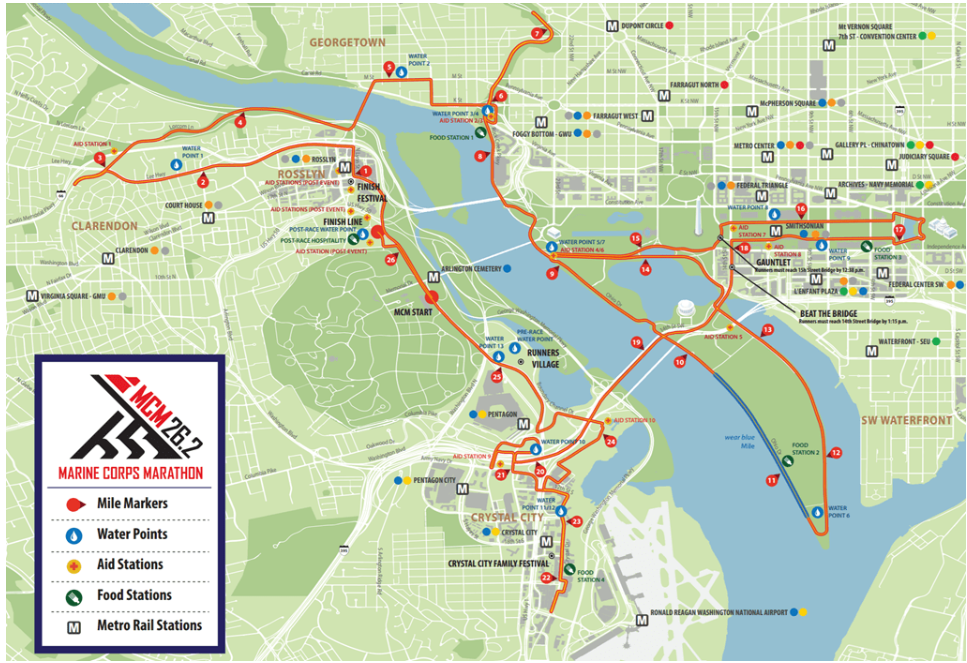
How to Run the Tangents

Running the tangents doesn’t mean cutting corners or breaking course rules. It means staying mindful and strategic as you move through the course from the start to finish. And for those wondering, it is a perfectly acceptable strategy that the pros harness in every race, and you should too! 

Here are a few ways to improve: 

In training:

  • Practice running efficient lines. On your long runs or routes with curves, get used to spotting and running the straightest line possible. Make it second nature.

Before the race:

  • Study the course map. Identify turns, loops, or sections where you might need to adjust your line.

On race day:

  • Look ahead. Don’t just react to a curve once you’re in it. Keep your eyes forward so you can anticipate and run the cleanest line.
  • Avoid drifting with the pack. Runners often spread out and take wide turns—don’t blindly follow.
Chicago Marathon course map.

Go Faster, not Further!

The good news is that running the tangents doesn’t require more fitness or effort—just a little awareness. And that bit of additional awareness can be the difference between almost hitting your goal and crushing it.

Elaina Raponi is a coach with Team RunRun based in Kingston, Ontario. Elaina loves helping athletes of all abilities and experiences achieve their goals, while finding confidence and joy in the process!

My Cancer-Filled Ultramarathon: Part 3

This is part 3 of a multipart blog series about one Team RunRunner’s, Vincent Rossi, cancer-filled ultramarathon. Catch up on part 1 and part 2

The physical startline of Vincent's cancer-filled ultramarathon at the Rocky 50. PC: Let's Wander Photography
The physical startline of Vincent’s cancer-filled ultramarathon at the Rocky 50. PC: Let’s Wander Photography

The First Lap: A Challenge From Step One

Right from the start, this race was hard. My training leading up to the Rocky 50 had been entirely on the flat streets of Washington, D.C., and I had almost no trail running experience. Running with Chris the first five miles was invaluable. He taught me the power hike method for hills that I had read about, but never practiced. 

Immediately, the hills took their toll, as did the heat. As a total newcomer to trail running, the most challenging part was the uneven ground and the tree roots. Oh, the tree roots. The Rocky Raccoon races are known for large pine tree roots on the trail: traps for tired runners. About 10 miles in, I tripped on a root and landed hard. The wind was knocked out of me. “Holy shit,” I thought. “Ok, my first fall.” I told myself iIt was part of the race, and then got up, brushed myself off, and started running again. It must have looked bad because runners around me stopped to check on me. “I’m good!” I yelled, stunned but not hurt. 

Blood, Sweat, and Pee

Later in loop one, I stopped to pee and saw I was already peeing blood. It was a lot—my urine was dark red and thick. This blood was not from running; it began before the race: a sign that the cancer had spread to my kidneys. This, plus my abbreviated training build to this race, made understanding my fluid losses and hydration needs impossible. My right kidney ached: my cancer-filled ultramarathon continued. That was the area surgeons would soon inspect, and then possibly remove. I put thoughts of cancer aside and kept running.

Runner navigating lots of tree roots on the Rocky 50 ultramarathon course.

At the end of the first loop, I had run 16.7 miles. In training, 16 miles was normal for me. I had been running about 50 miles per week. But this was different. The heat, hills, and uneven ground left me completely exhausted. “Oh fuck,” I thought. Finishing felt impossible after that first lap. I had promised myself I would not quit. I would push myself as far as possible, no matter what.

Before the race, Chris, who seemed worried he had gotten me into a dangerous situation, said, “Hey man, if you feel like you are hurting yourself, it’s just not worth it.” With my cancer history and new diagnosis, I knew today was my only chance. My future was uncertain, so I would push hard. I thought, “Hell, to die during an ultra would be more badass than dying on fentanyl in a hospital bed.” I smiled at Chris and said, “I think I am ready to do hard things.” Chris smiled nervously back. Two more 16.7-mile loops to go.

Lap Two: “Run the Mile You Are In”

Lap two was brutal. I had told my coach I wanted to suffer, and there’s no doubt my wish was granted! Despite refilling my ice bandana at each aid station, the Texas heat meant it quickly became a wet rag. I fell two more times, each time so suddenly and hard I did not even catch myself. One moment I was running, the next I was on the ground. 

I chose not to show my mileage on my running watch; ultramarathon math would not help me right now! I feared that constantly seeing how much distance was left—like 40, 30, or 20 miles to go—would make me lose the mental battle, which I knew was key to staying in the race.

On the flight to Texas, I listened to an ultrarunning audiobook. The author warned about the dangers of ultrarunning math, instead advising runners to simply “run the mile that you are in.” Thinking about running another 30 miles could have broken me easily. During the second lap, this advice came to mind and became my race mantra. I felt a large blister on my right foot from sand in my shoe, but I was too tired to stop and empty it. “Run the mile that you are in,” I thought. My quad muscles began to shake with intense pain. For a moment, I thought, “How can I keep going for another 30 miles?” The mantra returned: “Run the mile you are in.”

Cancer, Caution, and Crew Stations

By the end of the second lap, I reached my crew station where my wife had my race vest ready and waiting. She had packed it with gels, trail mix, salt tablets, and hydration powder for my final lap. The first two laps were so hot that I had opted to run with a belt instead of a vest. 

As I approached, my wife immediately saw I was in trouble. Due to cancer treatments, I had lost the ability to sweat and control my body temperature. For me, 83 degrees Fahrenheit felt like 120! I walked up to the five-gallon ice bucket my wife had also prepared, and put my arms in the ice water, trying to recover from near heat stroke. Chris was there and decided to stop after two laps and about 55 miles, since his main race, the Umstead 100, was coming up. Wisely, he did not want to hurt his performance. 

Rocky 50 ultramarathon aid station.

I was a zombie. Chris talked to me and gave advice, but I do not think I heard anything he said. I struggled to stand. From what I had read about ultras, I knew sitting down was not a good idea. Finishing the second lap meant I had officially run an ultramarathon–beyond the 26.2 mile (42K) marathon distance. But my goal was 50 miles, not 33.4. 

As if Rocky 50 wasn’t already challenging enough, then the nausea hit. I removed a handful of gels from my vest, knowing that if I ate one more, I would throw up. From then on, I would only drink water. I managed to give Chris what might have looked like a smile, unable to speak, and a fist bump on my way out.

Rocky 50 race bibs: "43" for Vincent, "pacer" for his wife.
Rocky 50 race bibs: “43” for Vincent, “pacer” for his wife.

The Final Lap

The third lap started. I had no idea how I would get through the next 16.7 miles. As we began, some of the 50K finishers clapped as I went back on the course. Race rules allowed a pacer for the last lap, and my wife joined me—she was my savior. She did the ultramarathon math for me and tried her best to keep me moving at a pace to finish. Before the race, our plan was for me to speed up on the last lap, maybe run a 9:30-minute mile. Now in real time, the thought of running that fast would have been funny if I was not so scared. My wife ran far ahead, then looked back to see me limping. “Oh man, I am in trouble,” I thought.

At one point, I sat to tie my shoe. An abdominal muscle cramped so badly the pain was unbearable. I screamed, surprising myself. My wife looked at me, very worried, but I got up and kept going. She knew the plan: keep me moving no matter what. “Run the mile that you are in,” I thought again. 

It’s Me Against the Clock 

Near the end of the last lap, with four miles to go, I started to believe I could finish this cancer-filled ultramarathon. But I did not want to get too confident. If my pace slowed or I fell again, I could miss the cutoff time. As we walked up a steep hill, my wife checked her watch. She turned to me and said, “Okay, we need to pick it up now.” Her tone scared me, though not as much as the thought of a DNF (did not finish). I had come so far, endured so much: it was now or never.

I dug deep, trying my best to keep up with my wife. She was jogging at a slow 12-minute mile pace, but for me, it felt like a sprint. My legs were completely raw, and both my feet were bleeding. But for a moment, the thought of crossing that finish line gave me goosebumps. Despite the pain, I felt a fleeting giddiness. I smiled through this new kind of pain.

About Vincent

Vincent Rossi is a father, husband, cancer survivor, and newly minted ultramarathoner! Check out Vincent’s website and Instagram @gnocchi_dinner. He continues to fundraise for the Bladder Cancer Advocacy Network (BCAN). Take a look at Vincent’s BCAN fundraising page here. 

Part 4 of My Cancer-Filled Ultramarathon will be released soon.

Slay the Dragon 25K Race Report

Race: Slay the Dragon 25K Trail Race

TRR Coach Jenn Kozak after finishing the Slay the Dragon 25K.

Runner: TRR Coach Jennifer Kozak

Race Date: 06/21/2025

Location: Silver Star Resort, Vernon, British Columbia

Result: 2 hours, 59 minutes, and 58 seconds (congrats on that sub 3-hour finish!); 19th female, 42nd overall, 5th in age group

Strava Activity Link: https://www.strava.com/activities/14873033376/overview

3 Bests – What aspects of the race did you like the most?

The Slay the Dragon 25K race, put on by Bush Babes Trail Running, is a trail race on Silver Star Mountain Resort just outside of Vernon, British Columbia. You can choose from a 50K, 25K, 13.6K distance, or an epic Slay the Baby Dragon Kids Race. The second day also features a Dragon King/Queen Vertical Climb.

  1. Organization and information: The Bush Babes Trail Running company does a fantastic job of putting on events! From the informational emails leading up to the race, to a well written event guide, smooth waiver signing and package pick up, to logistics of race day, everything seemed to go relatively smoothly from a participant standpoint! The race director even went through a thorough play by play of what to expect on each route on social media a week before race day. It was much appreciated.
  2. On course flagging/volunteersIf you look at the route map, you’ll notice what looks like a spaghetti network of trails all intersecting! I was a little concerned about getting lost or taking a wrong turn. I didn’t need to be worried. Everything was very well marked and volunteers out on course had us going in the correct direction.
  3. Runnability: This might not seem like a big deal, but trail races in BC can be quite gnarly with lots of vertical gain and descent. With snow still lingering in the alpine, it can be hard to train for these bigger races early in the year. I appreciated having a faster trail race somewhat close to home to start the season.
Not so much – Aspects of the race that didn’t do it for you

The only thing I could have done without is the colder temperatures! It started at 37 Fahrenheit/ 3 Celsius and was moody and drizzly for the majority of the run. As one friend running said “at least I don’t have to be distracted by nice views”.

TRR Coach Jenn Kozak during the Slay the Dragon 25K race. PC: Vanessa Garrison Photography
Weird factor – What’s the weirdest thing about this race?

I’m not sure this is actually weird, but they had massage students giving out free massages to runners post-run to get some hands massage training hours. It seems like a great idea to me!

Highlights of your race – What did you do well and enjoy about your race in particular?

I really enjoyed the Slay the Dragon 25K; you got a little bit of everything. From starting on a paved path, to flowing single track, to a very runnable climb, and a moderately technical descent, it seemed to have it all. A highlight of my race personally was managing my energy (and fueling/hydration) well so that I did not fade super hard at the end of the race.

Lessons for others – Share your pro-tips on the race to help the next runner

1. It is very easy to go out hot on this course as it is a paved road. Save some juice for the undulating trails in the last miles of the race!
2. Book accommodations early if you plan on staying at the resort.
3. Think about what you want to eat the night before and plan on if you’ll be heading the 30 mins into town or not. The food options were limited (no pasta anywhere!) at the resort and I ended up eating something unplanned for dinner.
4. Line up early for the post race burger! The line got long, and the wait was substantial, but the burgers were delicious.
5. Race photographers! Keep your eyes out for them. I was so focused and they were hiding around corners so I don’t remember seeing any of them at all. No smiling photos from me!

Lessons you learned that will help you next time around

Next time I will NOT put my hydration vest OVER my jacket. After the first two miles, despite the rain and cold, I got very very warm and had to pull aside on the single track to remove the vest and jacket before continuing on. While not always the best advice, we have a saying that would certainly have been appropriate today: be bold, start cold!

Slay the Dragon 25K elevation profile chart.
Most important course specific knowledge to know about the race

I would recommend knowing where the big climb and big descent are during your race (the timing of them is different for the 50K course) so that you can manage your energy for the final miles. The last half mile is one fairly punchy climb back up to the finish line! Also, this is fairly high in elevation for BC. The race starts at around 5200 ft and gets up over 6000 ft before coming back down. It’s certainly something to be aware of if you’re coming from sea level.

Aesthetics – Is it a pretty course?

I imagine on clear day the views would have been lovely. From the top of the resort you can see down to Kal Lake (I’ve heard). Today, the course was pretty in the sense that you were running through moody forest which, at certain points, seemed quite dense. The course itself is fully run on a ski resort and is a mix of cat tracks and mountain biking trails.

Difficulty – Is it a tough course?

No, this is not a tough course. If you were new to trail running, you might find some of the descent technical due to rock slabs that make up “stairs” here and there, but otherwise it was mostly fast and flowy. Much of the climb was actually done on a cat track/dirt road.

Organized and well run – Did it feel like a well-oiled machine or were they flying by the seat of their pants?

The Slay the Dragon 25K (and all the races) were very well organized and well run. As I mentioned above, I really appreciated all of the information that was provided without prompting ahead of time. Bush Babes runs a tight ship!

Slay the Dragon 25K race course map.
Competition – Is there a strong field?

There are always very strong people that come out of the woodwork for local races in BC! So, yes, the competition is tough, though perhaps not on the global scale.

Logistics – Does it require a special handshake, registration a year in advance, hotels all booked? Give us the low down on the nuts and bolts of making the race happen.

It was very easy to register for the Slay the Dragon 25K. They did end up selling out about a week before the race, but opened up a few more spots in the final week. The only thing that made it slightly difficult was that the race itself is done on a resort about 30 minutes away from the city of Vernon. There are hotels at the resort, but they are few unless you are looking for a fancier lodge or a longer stay.

Aid Stations – Standard fare or anything special to know about the aid stations in terms of what’s available or when?

I did not stop to ponder the wares at the aid stations for too long. They did seem to have all the usual aid station goods: watermelon, chips, gels, Tailwind nutrition and hydration, water, Coca Cola, candy, potatoes, cookies, and more. I certainly wasn’t left wanting!

Jenn facing sub-optimal weather conditions while running this trail race. PC: Vanessa Garrison Photography
Weather and typical race conditions

The weather can be unpredictable. BC had just finished a heat wave the week before the race that saw temperatures in the 90’s F/30’s C. The temperatures then plummeted somewhat unexpectedly for race day. A few days out, there was snow in the forecast. Luckily, this changed to light rain and a lot of fog for race day. The bottom line, expect any and all weather conditions!

Gear – Did you need anything special or is there anything you’d recommend for the next runner?

This is a very runnable course. For the Slay the Dragon 25K distance, I did not feel that poles were necessary at any point, and might even be more of a hindrance when entering the final miles on flowy single track with close trees all around you. All you really needed was nutrition, hydration, appropriate clothes for the weather, and definitely trail shoes.

Post-race burgers! PC: Vanessa Garrison Photography
Spectators – Is this a friendly course for your friends?

The start and finish line are in the same location, making it easy for spectators to see people off and then climb their way back to the finish line. There are locations along the course if you’re willing to hike/bike in, or buy a ticket to go up the gondola. With the weather being so abysmal on race day, the only spectators we saw were volunteers.

How’s the Swag?

Great for a smaller local race! In the welcome bag we got a locally made chocolate bar, bar of soap, and some coupons. We also received a casual T-shirt, and, of course, a finishers medal.

The Overall Score – How many stars do you give this race and do you recommend that others run it?

8 out of 10!! I have nothing bad to say about the race organization, and, as mentioned, it was nice to have a fast, runnable course close to home (2 hours away – things are spread far and wide in BC). I would dock a star or two as the course is a bit uninspiring, being done on a ski hill with cat track and MTB trails. Then again, maybe I just couldn’t see anything through the fog.

Jennifer Kozak is a coach with Team RunRun who knows how to balance training with family, on both the roads and the trails. Jenn works with athlete of all abilities, from those dipping their toes in trail races or tackling new goals on the roads, from the 5k up to the marathon.

North Fork 50 Race Report

Race: North Fork 50 Mile

TRR Coach Kyle Fulmer during the North Fork 50. PC: Liberty Pro Imaging

Runner: TRR Coach Kyle Fulmer

Race Date: 05/31/2025

Location: Buffalo Creek, Colorado

Result: 11 hours, 58 minutes and 54 seconds (including 8 bonus miles!), 39th overall

Strava Activity Link: https://www.strava.com/activities/14657170724

3 Bests – What aspects of the race did you like the most?
  1. Super smooth, runnable trails: A wide variety of runnable trails, all with tons of views: in and out of pines, burn scar, mountain bike rollers and more.
  2. Location: It’s not too far from the Front Range. It took 1 hour and 15 minutes to drive from Boulder on race morning.
  3. Scenery: Wildflowers were popping along the trails!
Not so much – Aspects of the race that didn’t do it for you

Well, I did run an extra eight miles because the out-and-back wasn’t marked very well. About a dozen of us missed the turn, and proceeded to run about 4 past the turnaround before realizing our mistake. Only 4 of us actually went back and completed the course. So, we got 8 bonus miles for free!

Weird factor – What’s the weirdest thing about this race?

The aforementioned out-and-back was kind of weird, because then you had to run “back” to the previous aid station and then “back” again past the out-and-back point. In previous years, they marked bibs and color-coded the signs to make this clearer, but not this year. The takeaway… don’t be like me! Instead, remember to study the North Fork 50 course map before race day!

Highlights of your race – What did you do well and enjoy about your race in particular?

I really enjoyed the running trails. With only ~6500 feet of climbing in the standard 50-mile route, you can get into a good groove and practice chugging along. Also, I’m proud of my mindset when I realized I’d run off course. I chose to focus on the positives: logging more miles on great trails, getting better value for my race entry fee, and finishing 1st in what I termed the North Fork XL!

TRR Coach Kyle Fulmer at the start of the North Fork 50. PC: Liberty Pro Imaging
Lessons for others – Share your pro-tips on the race to help the next runner

Be prepared for a variety of weather conditions. It can get hot, though you reach pretty high elevations, above 8000 feet at points, so that makes it a bit cooler. We did get hailed on pretty good, and had a brief but intense thunderstorm. Also, remember to study the map and know when to expect the out-and-back!

Lessons you learned that will help you next time around

I now know where the confusing out-and-back is, and the right way to navigate the course!

North Fork 50 mile course map with the out-and-back at Rolling Creek Aid.
Most important course specific knowledge to know about the race

You’ve guessed it: the darn out-and-back!

Aesthetics – Is it a pretty course?

The North Fork 50 is a very pretty course! You can expect stunning views of the surrounding mountains, snow-capped peaks, tons of wildflowers and aspen sections. You could see all the way to Pikes Peak and beyond!

Difficulty – Is it a tough course?

Not especially tough, but the runnable trails will test your running fitness!

Organized and well run – Did it feel like a well-oiled machine or were they flying by the seat of their pants?

The North Fork 50 is organized by Aravaipa Running, one of the best trail race organizers out there, so you can trust it will be well-run. This race was no exception: it was dialed, especially the aid stations. And with free burgers at the finish line, Aravaipa did well!

TRR Coach Kyle Fulmer crossing the finish line. PC: Liberty Pro Imaging
Competition – Is there a strong field?

Any race in Colorado is always going to have strong local runners in the field. This year, the men’s and women’s champions were particularly strong, both setting new course records!

Logistics – Does it require a special handshake, registration a year in advance, hotels all booked? Give us the low down on the nuts and bolts of making the race happen.

Very easy logistically. The North Fork 50 was easy to enter and didn’t sell out. Parking at the start was also hassle free.

Aid Stations – Standard fare or anything special to know about the aid stations in terms of what’s available or when?
Kyle running the North Fork 50 mile race. PC: Silke Koester

Really good aid stations, 8 in total. You were allowed crew at 4 of the aid stations, but crew wasn’t necessary. There were great offerings at the aid stations, including avocado and bean burritos, which I loved!

Weather and typical race conditions

As noted above, be prepared for anything! It can get toasty, but a sizable thunderstorm also rolled in on us!

Gear – Did you need anything special or is there anything you’d recommend for the next runner?

Not really. It was a little cold at the start at 6:00am, but warmed up quickly, so avoid overdressing.

Spectators – Is this a friendly course for your friends?

 Average for a trail race. There were 4 aid stations with spectators and crew access.

How’s the Swag?

Solid. We got a pint glass and a casual t-shirt.

The Overall Score – How many stars do you give this race and do you recommend that others run it?

8.5 out of 10!! I would rate the North Fork 50 higher except for the course marking issue. My bad, but still a little more detail there would have been appreciated. Instead, I finished first in the “North Fork XL” (almost 100K)!

Kyle Fulmer is a coach with Team RunRun and our social media manager extraordinaire. He is an experienced trail and ultra coach and athlete based in Boulder, Colorado.

Broad Street Run Race Report

TRR Coach Jonathan Gooch during the Broad Street Run.

Race: Broad Street Run 10 mile race

Runner: TRR Coach Jonathan Gooch

Race Date: 05/04/2025

Location: Philadelphia, Pennsylvania

Result: 1 hour and 46 seconds

Strava Activity Link: https://www.strava.com/activities/14380683457

3 Bests – What aspects of the race did you like the most?
  1. Crowd support and race atmosphere: The city of Philadelphia always shows out for the big races and with almost 40,000 runners, there was a ton of support and a contagious sense of excitement for the race.
  2. Course: It is a straight shot with a net downhill grade, allowing you to open up your stride and run fast!
  3. “After party”: Once you’re done, there is a lot of variety for post-race fueling and you are able to walk right over and cheer on other runners as they finish!
Not so much – Aspects of the race that didn’t do it for you

To get to the start of the Broad Street Run, most take the Broad Street Line from the Sports Complex in South Philly. These trains are packed like sardines for the 30-40 minute long ride. Then, when you finish in the Naval Yard, you need to walk back to the Sport Complex which is at least three quarters of a mile from the finish.

The expo was a letdown. It use to be better 10 years ago, and I always enjoyed looking around and seeing what “freebies” and “samples” they may be giving away. But in recent years, minus a vendor or two, the expo did not feel welcoming and I had a “This is it?” feeling for such a big race.

The start of the race can be hectic with so many runners. Racers are split up in 7+ corrals that go off 5 minutes apart. The back corrals tend to have the most runners, so you are running very tightly for the first half (if not most) of the race.

Weird factor – What’s the weirdest thing about this race?

Runners can take the Broad Street Line train to the race area free of charge when you show your race bib at the station. Unfortunately, our train had mechanical issues and we were forced to walk/jog over a mile to the start line. Luckily, we had enough time before the race started.

Broad Street Run course.
Highlights of your race – What did you do well and enjoy about your race in particular?

My plan was to go sub-60 minutes, but the weather had other ideas. Despite needing to adjust my plan midrace due to the heat, I did not let the negativity take over. I was proud to gut it out and mentally push through the last few miles when it got really tough.

Lessons for others – Share your pro-tips on the race to help the next runner

Pro tip: If you park at the Sports Complex, use the porto-potties before getting on the train. They are usually open. Otherwise it’s a 30-40 minute train ride to the start and lines are ridiculously long if you need to use the restroom there.

Lessons you learned that will help you next time around

No matter what a race may throw at you, stay calm and positive. Accept the challenge that appears and adjust accordingly. If you do, it will still make for a great race!

Most important course specific knowledge to know about the race

The Broad Street Run course is a straight shot for the 10 miles (minus the City Hall go around) and is as wide as 7 lanes. Try to stay on one side of the road and avoid weaving in and out of other runners, as this will only add distance (and time) to your race. Personally, I always line up on the right and only drift by a lane because that is the direction you turn to go around City Hall.

Aesthetics – Is it a pretty course?

The crowd support and hype around this race is top notch. From the Temple Band, to the Philadelphians that show up in droves to support the runners. The Broad Street Run is a 10 mile party!

Difficulty – Is it a tough course?

A very easy course. The first half is a downhill grade with a couple “bumps” that mainly go unnoticed, then a flat second half from City Hall to the finish.

Broad Street Run course elevation profile.
Organized and well run – Did it feel like a well-oiled machine or were they flying by the seat of their pants?

Yes, well put together. Just expect to be surrounded by swarms of other runners for restrooms, as well as before, during, and after the race.

Competition – Is there a strong field?

Runners of all abilities are welcome. You get the fastest of the fast for a 10 miler, alongside many who come to enjoy the fun, party atmosphere of the Broad Street Run.

Logistics – Does it require a special handshake, registration a year in advance, hotels all booked? Give us the low down on the nuts and bolts of making the race happen.

You must enter your name in the lottery between February 1st to February 15th of that race year. This is the only time window to register for the Broad Street Run.

On race day, arrive early! The start is at 7:00 am, so aim for a Broad Street Line train (EXPRESS) before 5:30 am. The earlier trains will not be as crowded and you’ll have time for potty stops with shorter lines.

Aid Stations – Standard fare or anything special to know about the aid stations in terms of what’s available or when?

Standard road race aids stations with water and Gatorade every 2 miles, then each mile from Mile 7 to finish.

Weather and typical race conditions

The weather this year was warm and humid: 67 degrees Fahrenheit with humidity levels at 95% at the start of the race. It started cloudy, but when the sun came out, it became more of a challenge!

Typically, the race temperature is between 45-55 degrees. Weather is hit or miss on this day in Philly. I have run in beautiful sunny conditions (2022) and monsoonal rains (2023).

Gear – Did you need anything special or is there anything you’d recommend for the next runner?

Maybe an obvious points, but fueling makes a big difference, even in a 10 mile race. I had two gels, one before the start and another at halfway. They definitely helped get me through the second half strong.

Spectators – Is this a friendly course for your friends?

It really is! Depending on the runner’s pace, you can view them in the first couple miles, then take the Broad Street Line to watch them finish!

How’s the Swag?

Their tech shirts are always comfy and the medal is decent.

The Overall Score – How many stars do you give this race and do you recommend that others run it?

4.5 out of 5 stars! The race itself is a blast, and the after party in the Naval Yard is also a great time, but getting to the start line has proved to be a challenge at times. This might be more on the Southeastern Pennsylvania Transportation Authority (SEPTA) and not necessarily the race organizers though.

Jonathan Gooch is a coach with Team RunRun based in Philadelphia, PA. He blends science, strategy, and support to help runners train smart, stay consistent, and believe in themselves.

Toronto 10K 2025 Race Recap

Wind, Grit, and Smart Racing at Canada’s Fastest 10K

The Toronto 10K race, part of the Canada Running Series, is often seen as the place where fast times happen early in the season. With its flat roads, closed course, and scenic downtown location, it’s a favorite for elites and age-groupers alike.

However in 2025, wind off Lake Ontario turned a usually quick course into a strategic, energy-managing test of patience. This year’s race become the ultimate lesson in smart racing.

TRR Coaches Thomas Nobbs, Brant Stachel, and Teagan Robertson (left to right) at the Toronto 10K.

Wind Wins (and Loses) Races

Runners lined up for the Toronto 10K expecting fast splits. What they got instead was a stiff east wind, with sustained gusts hitting 30 km/h making kilometers 3 to 8 a grind. That stretch, typically the fastest part of the course, became a place where the race could be lost if runners didn’t adjust. For those that have run the Toronto Waterfront Marathon, it’s roughly the same stretch as km 8-17!

As a coach to six athletes on the day, including both the men’s winner and third overall female, I knew the race would come down to who managed the wind the best. We changed plans mid-week to emphasize position over pace. During the race, I rode alongside the course to check in with athletes live, reminding them to stay composed until the final tailwind stretch.

Thomas Nobbs: Racing Smart, Surging Late

TRR Coach Thomas Nobbs had already proven his fitness by running over 30 seconds faster just two weeks prior in Ottawa. We came into the Toronto 10K knowing it wouldn’t be about chasing a PR. Rather, we focused on pack running, conserving energy into the wind, and waiting for the 8K turnaround.

From the bike path, I could see he was executing exactly as we’d planned staying tucked in the front group, relaxed but alert. At the final turn, with the wind finally at his back, he struck hard and surged clear to win in 29:35. No fireworks early. Instead, just patience, awareness, and a killer move at the right time.

Teagan Robertson: Making the Hill Count

TRR Coach Teagan Robertson also came in sharp and ready, but like everyone else, had to reframe her goals once the wind became a factor. She started in 5th place, staying calm through the early chaos. Then, when opportunity struck, Teagan used the hill at 5.5K as a launchpad, not a fear zone.

She did just that attacking uphill and into the headwind, consequently breaking away from two rivals who had been running stride for stride. From there, she ran alone in 3rd for the final few kilometers, holding strong and finishing in 34:50. It was a bold mid-race move, backed by confidence in her training and trust in the plan.
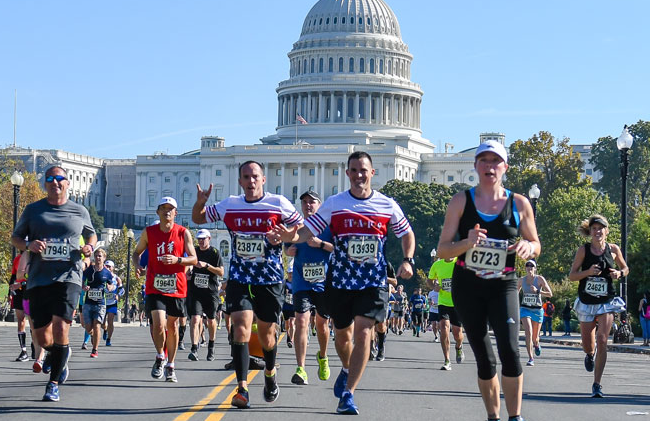
Toronto 10K Course Breakdown + Tips

Whether you’re racing this in 2026 or just scoping out top-tier Canadian 10Ks, here’s a look at the course:

Location & Start Area

  • Start/Finish: Just west of downtown Toronto, near Ontario Place / CNE Grounds
  • Travel Tip: Stay local because driving to the start is a mess with road closures. Hotels like Hotel X let you warm up on foot via the lakeshore path.

Course Layout

  • Out-and-back along Lake Shore Blvd W
  • Entirely flat, with just one short hill at ~5.5K
  • Final 2K after the turnaround is often tailwind-supported
Toronto 10K course map.

Race Day Wind Considerations

  • A west wind = ideal (tailwind on the way out).
  • An east wind, like this year’s, means a slog in the middle. Adjust your pacing plan accordingly.
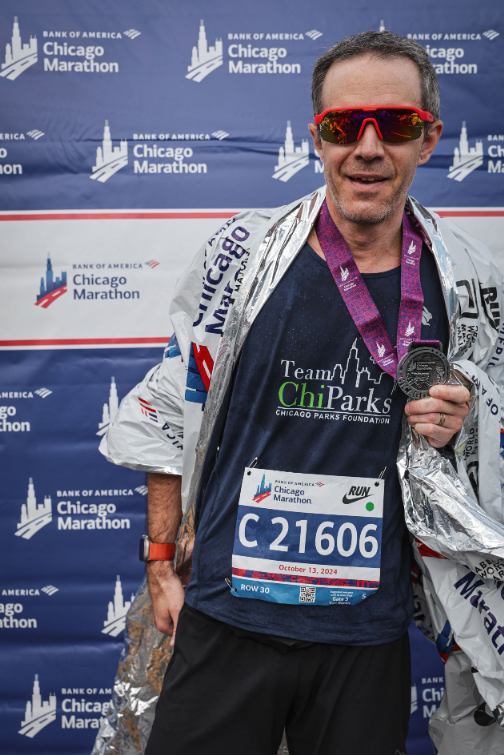
A Coach’s Perspective on the Toronto 10K

One of the best parts of the Toronto 10K, especially from a coach’s point of view, is how accessible the route is. The Martin Goodman Trail runs parallel to the course, which meant I could ride alongside on my bike, offering encouragement, tactical reminders, and quick adjustments on the fly. It’s rare to have this kind of access during a 10K road race, and it made a difference in helping my athletes stay focused when the wind kicked in.

Final Takeaways

The 2025 Toronto 10K was a reminder that road racing isn’t just about being fit — it’s about racing smart. The most successful athletes weren’t necessarily the fittest on paper. They were the ones who managed their effort, read the wind, and made decisions at the right time.

For anyone eyeing this event in the future:

  • Expect a fast course
  • Prepare for the wind
  • And remember, smart racing beats perfect conditions every time

Brant Stachel is a coach with Team RunRun based in Kingston, Canada. He works with runners and triathletes of all skill levels, from beginners to international and professional athletes.